Lille · Self-guided audio walk

Vieux Lille and the Grand'Place

A compact line through Lille's Flemish Renaissance old town, from a Gothic chapel to a 1625 gate, ending among the estaminets of Rue de Gand.

  • 8Stops
  • 1.9 kmDistance
  • 30+ minTime
Vieux Lille and the Grand'Place

Photo by Velvet on Wikimedia Commons

Begin at the Palais Rihour, where the only Flamboyant Gothic survivors of a ducal palace hide behind a 19th-century facade. Cross the permanently pedestrian Grand'Place and step into the Vieille Bourse courtyard, where secondhand book dealers work most afternoons from Tuesday to Sunday. Follow Rue Esquermoise to Méert for a vanilla gaufre, then continue north to the neo-Gothic cathedral and its translucent marble front of December 1999. Rue de la Monnaie's brick and stone shopfronts lead on to the Hospice Comtesse, a hospital founded in 1237 and now a museum closed on Tuesdays. The walk finishes at the Porte de Gand, built in 1625, with the estaminets and restaurants of Rue de Gand around it.

Hear it on the street

Get the turn-by-turn audio guide in the app. The narration plays itself as you reach each stop, hands-free and offline.

Stop by stop

The route

Interactive map of the route. The full stop list below works without it.

Palais RihourMust see

Photo by Velvet on Wikimedia Commons

Palais Rihour

0:00

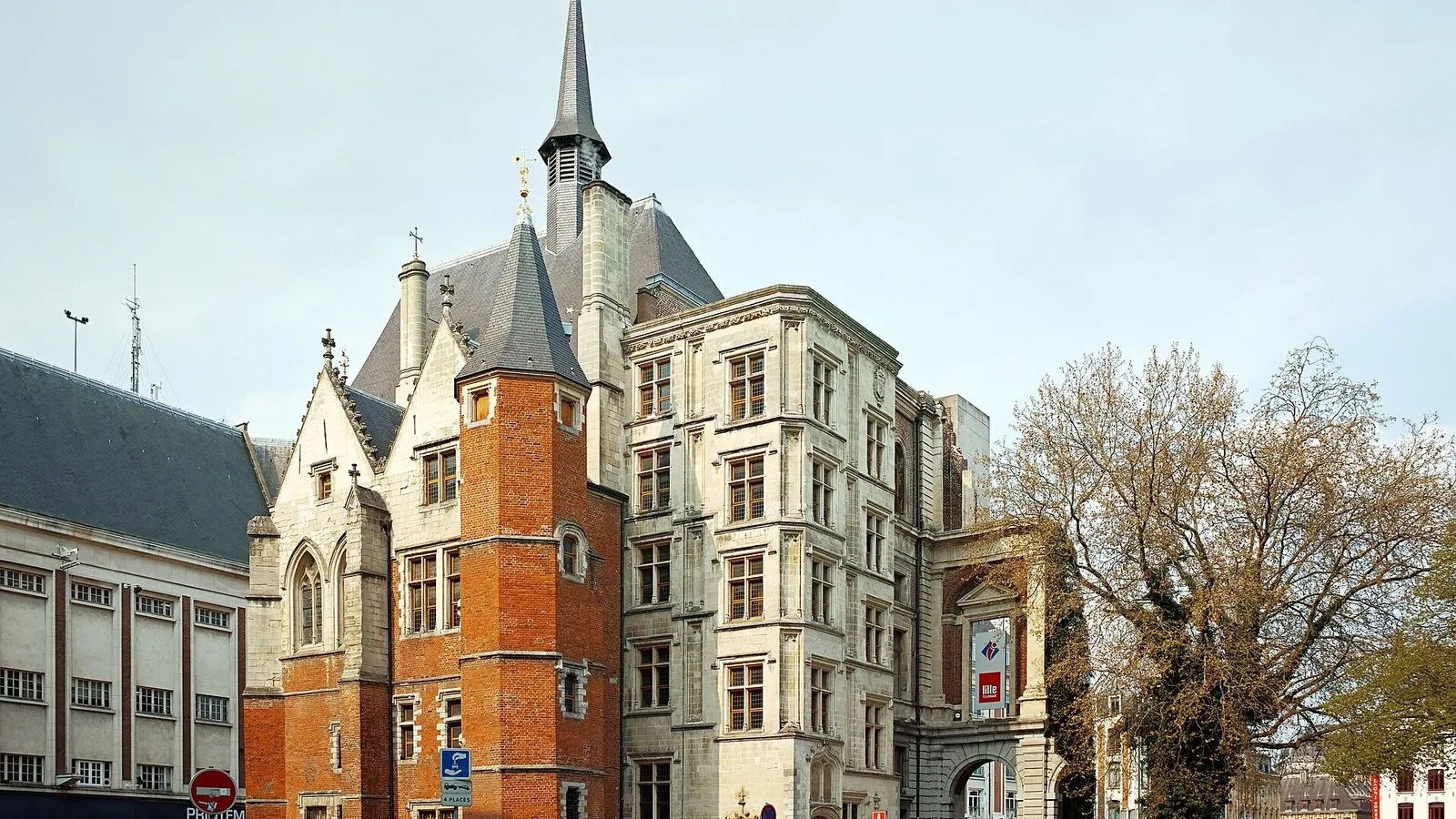
The last 15th-century fragments of a ducal palace, tucked behind a 19th-century rebuild.

You're at Place Rihour, in front of a building most people pass without a second look. The facade facing the square is not medieval. After two fires, the palace was pulled down in 1846 and rebuilt over the following eleven years in a neo-Renaissance style by the architect Charles Benvignat. The real survivors sit behind it.

Philip the Good, Duke of Burgundy, began this palace in 1453, and it was finished in 1473. The only original Flamboyant Gothic fabric left is the chapel, now called the salle du Conclave, and the spiral staircase. Both came through the fire of 23 April 1916 that destroyed the town hall around them. The chapel had served as the city magistrates' meeting room since 1684; today the tourist office occupies the old guard room.

The chapel opens on weekdays, morning and afternoon, and stays shut at weekends, so if this is a weekday, step inside and look up at the ribbed vault. Head north from here to the Grand'Place, one short block away.

≈3 min walk to the next stop
Place du Général-de-GaulleMust see

Photo by Martin Robac on Unsplash

Place du Général-de-Gaulle

0:00

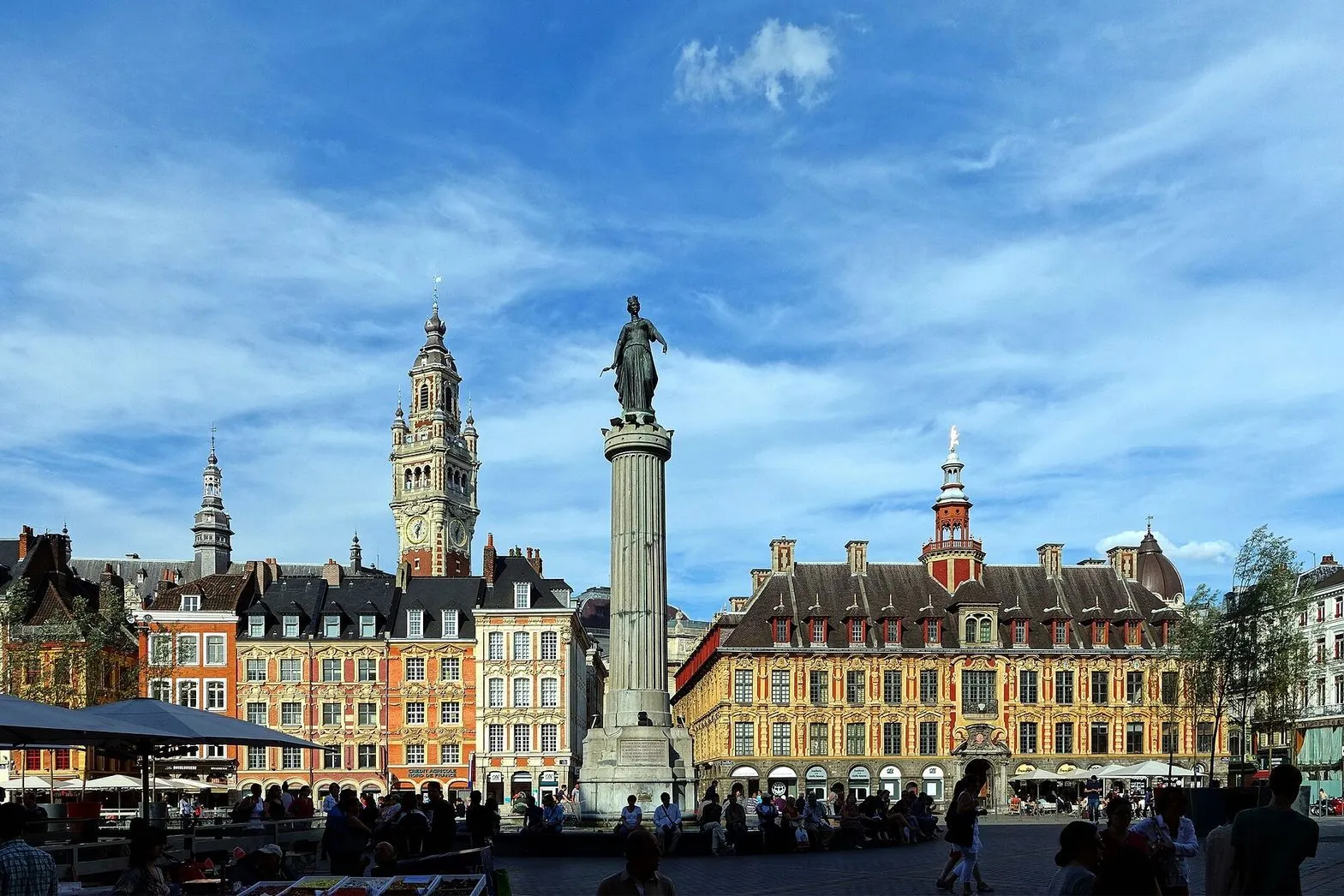
Lille's pedestrian Grand'Place and the Vieille Bourse, whose courtyard fills with secondhand books most afternoons.

This is the Grand'Place, the city's main square, officially the Place du Général-de-Gaulle. Since January 2026 the whole square has been permanently pedestrian, so you can cross it without watching for cars, though bicycles still come through at walking pace. The Vieille Bourse sits on the north side. It was built between 1652 and 1653 by Julien Destrée, when Lille belonged to the Spanish Netherlands.

The city's merchants had asked King Philip IV of Spain for the right to build a trading exchange on the Grand'Place, and the result was a quadrangle of 24 private houses around a public courtyard. Step through the archway into that courtyard. On most afternoons from Tuesday to Sunday, secondhand book dealers set up under the arcades with old novels, comics, posters, and postcards. The market is closed on Mondays.

Look up as you walk the gallery: each facade carries its own carved figures. Leave the square on its north side, toward the opera house.

≈2 min walk to the next stop
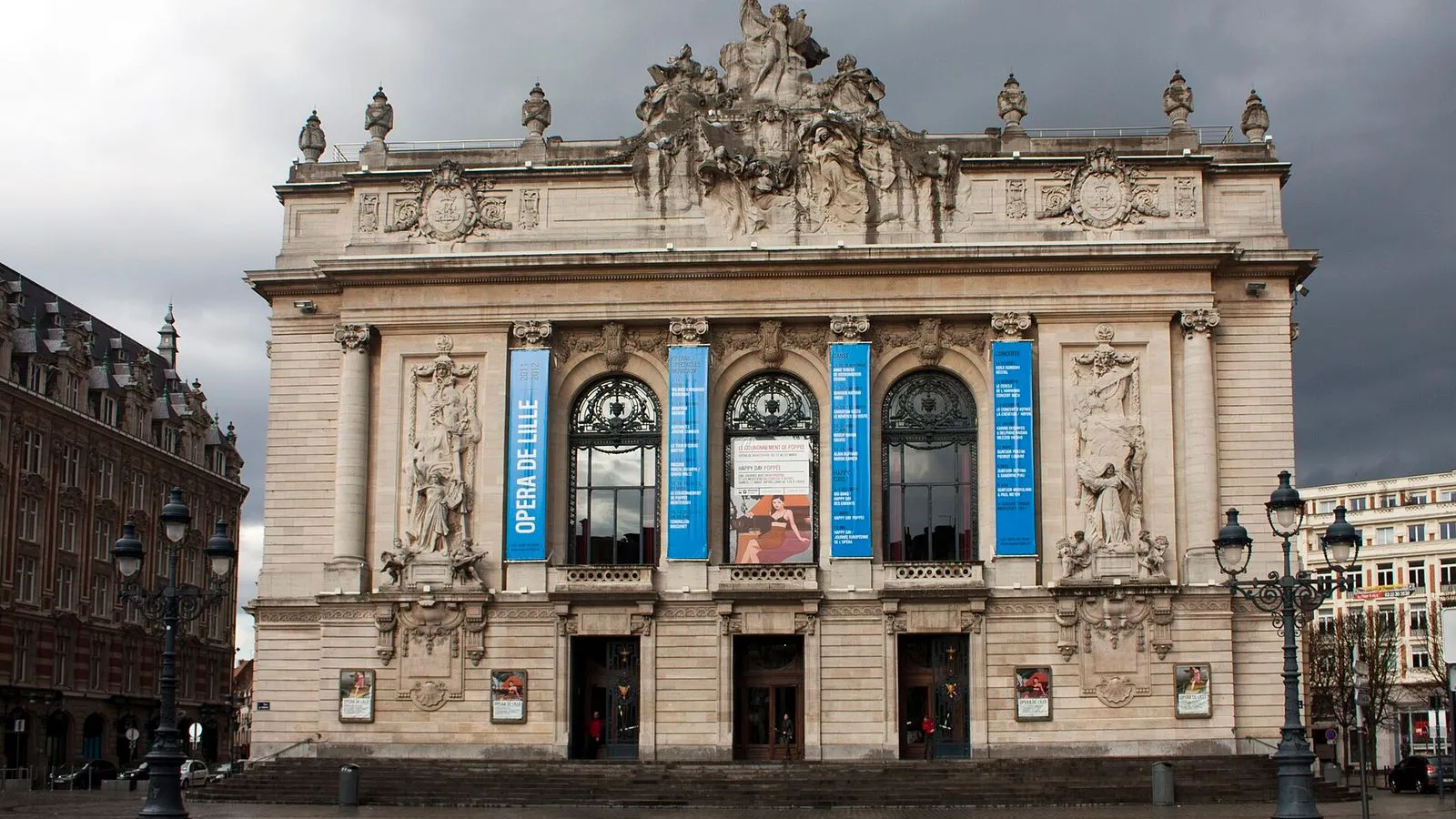
Opéra de LilleMust see

Photo by Daniel VILLAFRUELA on Wikimedia Commons

Opéra de Lille

0:00

A neo-classical opera house from 1913, best admired from Place du Théâtre.

You're on Place du Théâtre, facing the Opera de Lille. The building went up between 1907 and 1913 to a plan by Louis Marie Cordonnier, but the First World War intervened and the first French season opened only in 1923, which makes it young by this quarter's standards. The style is neo-classical, with classical proportions and sculpture set into the facade. This is an outside visit.

The opera house runs its full season of performances, but guided tours of the interior take place only on the second Saturday of each month, so unless today is that day, take in the building from the square. After a long renovation, the opera reopened in December 2003 and now covers a range from baroque to contemporary work. Cross back over the Grand'Place, which is just behind you to the south, and leave it by its northwest corner onto Rue Esquermoise.

≈4 min walk to the next stop
Free preview ends here · stops 4 to 8 continue in the app

Maison Méert

A confectioner open since 1761, famous for the vanilla-filled gaufre.

in app

Cathédrale Notre-Dame-de-la-Treille

A neo-Gothic church begun in 1854, finished with a translucent marble front in 1999.

in app

Rue de la Monnaie

A Vieux Lille street of brick and stone frontages, with small boutiques set behind them.

in app

Musée de l'Hospice Comtesse

A hospital founded in 1237, now a museum closed on Tuesdays.

in app

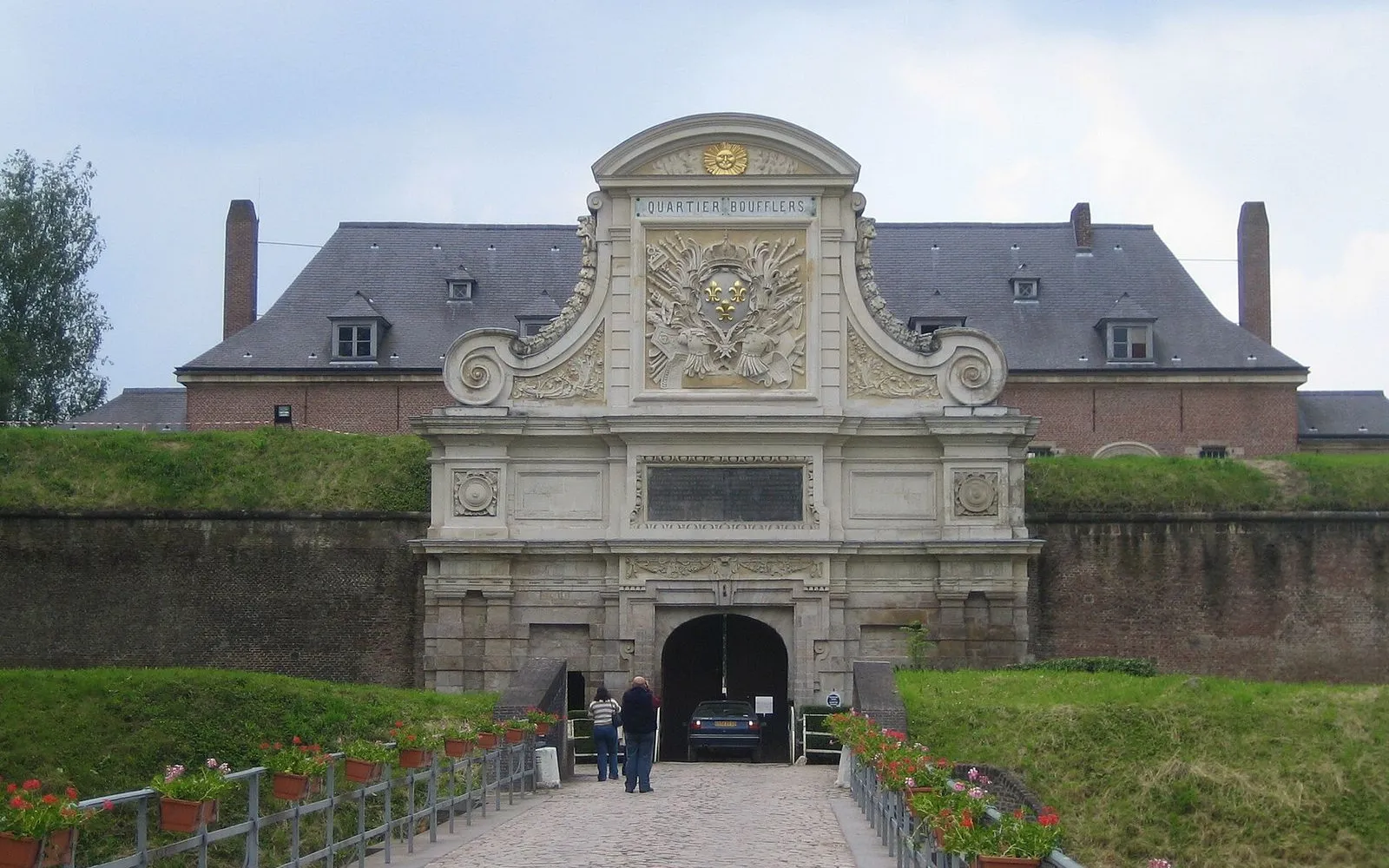
Porte de Gand

The 1625 gate at the top of Rue de Gand, ringed by estaminets.

in app
Good to know

Before you go

Is the Vieux Lille and the Grand'Place walk free?

Your first tour is free, no account needed. After that you can buy tours one at a time, or subscribe for access to every city. Cancel whenever you want.

How far is it, and how long does it take?

The route runs 1.9 km across 8 stops and takes 30+ min at an easy pace. That covers the walking and the audio. How long you linger at each stop is up to you.

When should I start?

Any time of day works. You can pause at any stop and pick the route back up later, so there is no need to finish it in one go.

Does the audio work offline?

Yes. Download the walk over Wi-Fi before you set out and the audio, map, and directions all run offline. Handy for skipping roaming charges abroad.

Provenance · last verified August 26, 2026

Built from the Wayside route itself: the stops, their order, and the walk between them.

Photo by Velvet on Wikimedia Commons · CC BY-SA 3.0

Photo by Velvet on Wikimedia Commons · CC BY-SA 4.0

Photo by Martin Robac on Unsplash

Photo by Daniel VILLAFRUELA on Wikimedia Commons · CC BY-SA 3.0

Photo by Alexander Baranov from Montpellier, France on Wikimedia Commons · CC BY 2.0

Photo by Jiel Beaumadier on Wikimedia Commons · CC BY-SA 3.0

Coming soon

Wayside isn't in the app stores yet, but it's in the works. Check back soon.