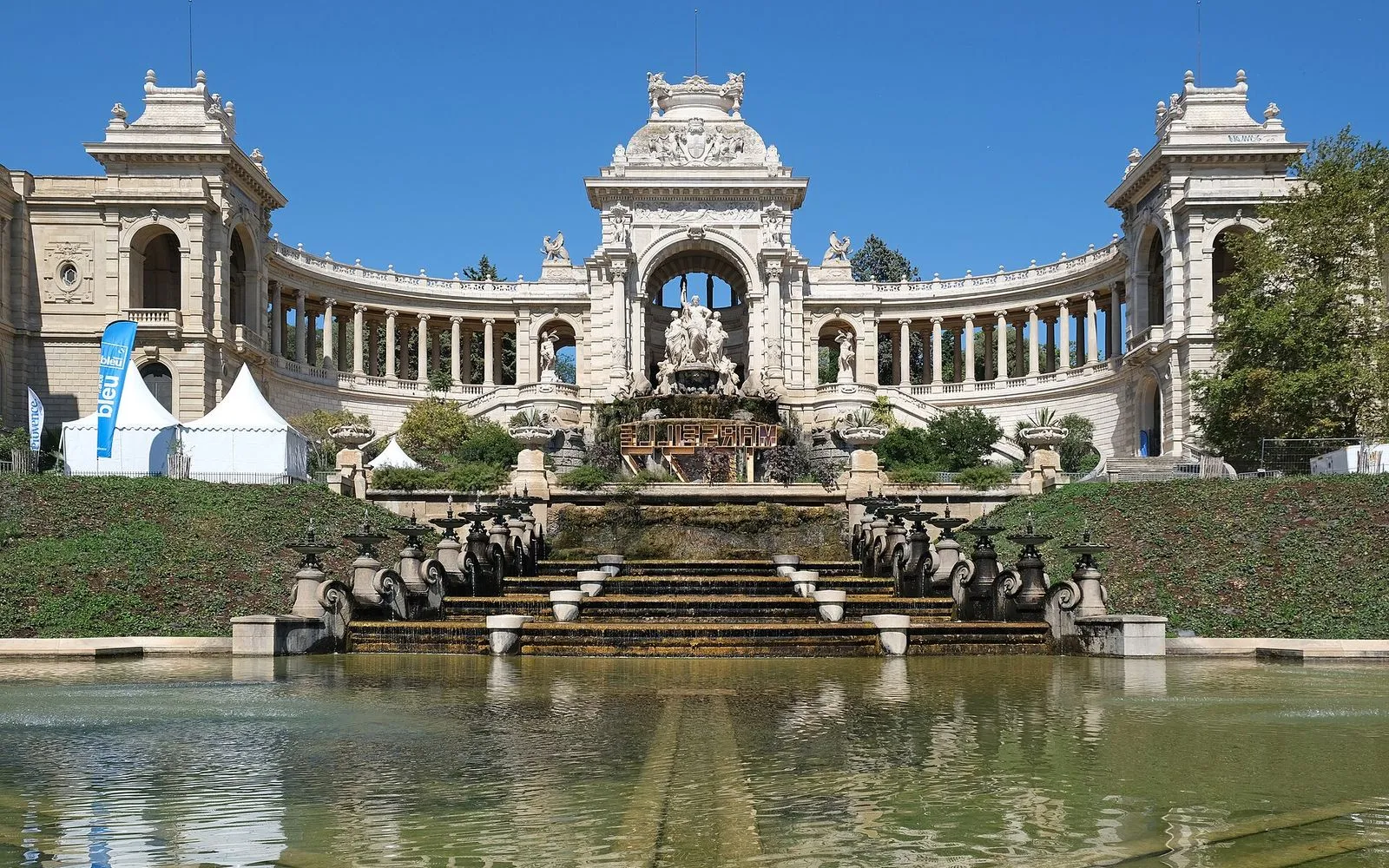
Marseille · Self-guided audio walk

The Corniche and the Vallon des Auffes

Marseille's sea road, walked flat along the water, from the city beach to a working fishing cove and the sunset rocks of Malmousque.

  • 5Stops
  • 1.6 kmDistance
  • 25+ minTime
The Corniche and the Vallon des Auffes

Photo by Irma2403 on Wikimedia Commons

This flat walk follows the Corniche, Marseille's sea wall, south from the Plage des Catalans. You pass the 1927 war memorial on the cliff, settle for a while on the long sea bench, then drop into the Vallon des Auffes, a working fishing cove of pointu boats and cabanons under a three-arched bridge. The last stretch climbs onto the Malmousque headland, where fishermen's cabins and villas share the rocks and the sun sets behind the Frioul islands.

The route is about two kilometres and stays on the coast road south of the Pharo. The Corniche is exposed, with little shade, so carry water and a hat in summer, and walk it in the cool hours. Everything is flat, and the sea is beside you the whole way. Give it an hour if you pause at the cove and stay for the sunset.

Hear it on the street

Get the turn-by-turn audio guide in the app. The narration plays itself as you reach each stop, hands-free and offline.

Stop by stop

The route

Interactive map of the route. The full stop list below works without it.

Plage des CatalansMust see

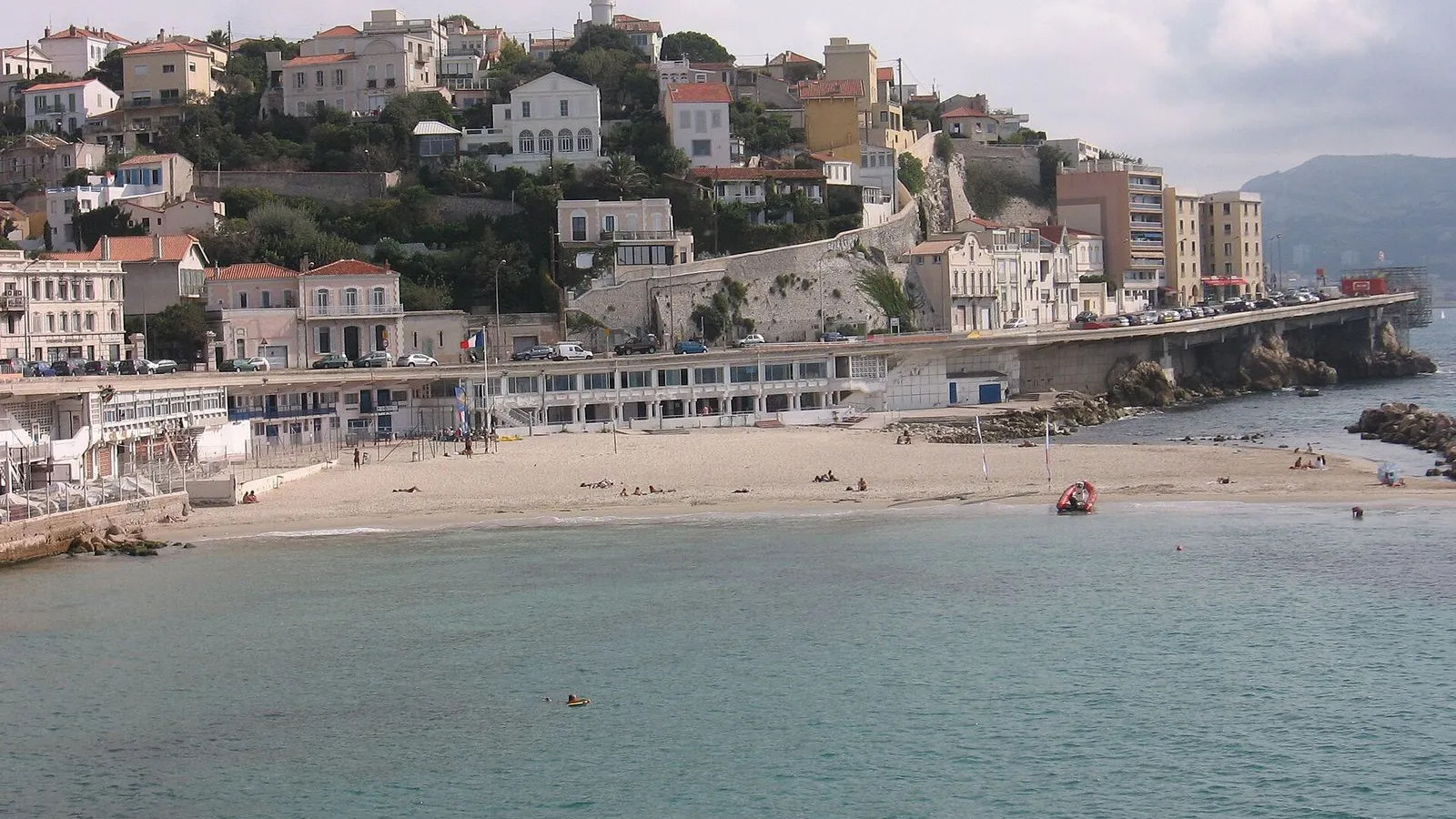
Photo by Irma2403 on Wikimedia Commons

Plage des Catalans

0:00

The city's closest beach, set below the Pharo gardens where Catalan fishermen gave the cove its name.

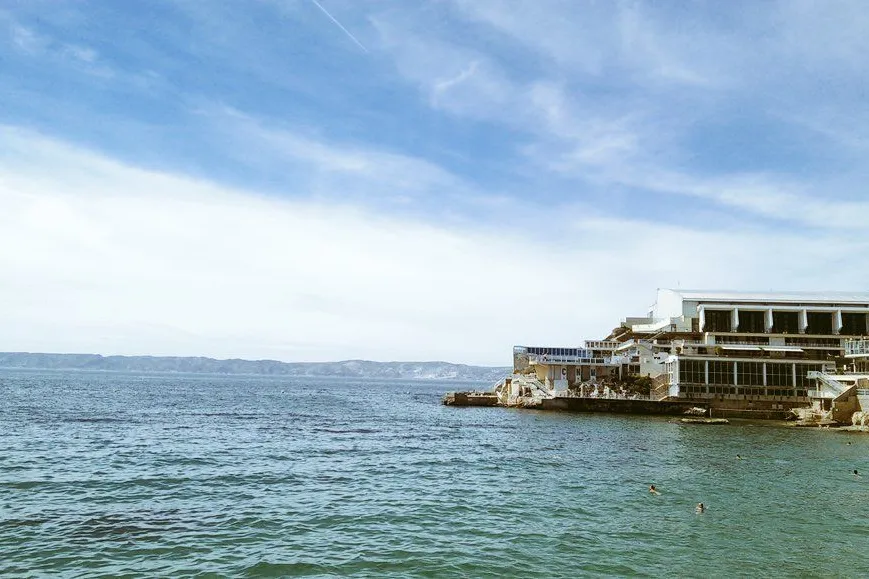
You're standing on the Plage des Catalans, the nearest beach to the centre of Marseille, just below the Pharo gardens. The name is not a tourist invention. After the plague of 1720 emptied this part of the coast, Catalan fishermen moved into the small cove of Saint-Lambert and built a working village here. By 1790 their community counted around 75 boats and 400 fishermen, and their nightly longline fishing put fresh fish on the city's market tables.

Alexandre Dumas knew the place well enough to set the opening of The Count of Monte-Cristo here: Mercédès, Edmond Dantès's fiancée, comes from the Catalan village. The 16th-century square watchtower still standing on the beach is a leftover from the old quarantine station that once guarded this shore. In the 1850s the cove was turned into a fashionable bathing beach, and the last Catalan families moved west along the coast to a smaller cove you reach later today: the Vallon des Auffes. The water in front of you faces the Château d'If and the Frioul islands.

When you're ready, leave the beach at its southern end and join the Corniche, the sea road, with the water on your left.
≈11 min walk to the next stop
Monument aux morts de l'Armée d'Orient et des terres lointainesMust see

Photo by Robert Valette on Wikimedia Commons

Monument aux morts de l'Armée d'Orient et des terres lointaines

0:00

A granite arch and a bronze Victory raised in 1927 for the soldiers who died far from France.

You're standing before the Monument aux morts de l'Armée d'Orient et des terres lointaines, the war memorial Marseille raised for the soldiers of the East and of distant lands. The bronze Victory at its centre has her arms flung toward the sky, and she stands inside a granite arch that the Marseille architect Gaston Castel designed as an open portico, a gateway turned to the sea. Marseille was the door to the Orient, and the men remembered here died far from French soil, at the Dardanelles and across the Balkan fronts in the First World War. The sculptor was Antoine Sartorio, the granite came by boat from Corsica, and the memorial was inaugurated on 24 April 1927 by the president of the republic, Gaston Doumergue.

The names and dates of the great campaigns are cut into the flanks of the arch. Look through the arch and you see the Mediterranean and the Frioul islands, the same sea those soldiers crossed. Benches sit at the foot of the monument, and a few steps away the Corniche runs above a small cove. That cove is where the walk goes next.

≈1 min walk to the next stop
Corniche Président John Fitzgerald KennedyLocal pick

Photo by Michiel1972 on Wikimedia Commons

Corniche Président John Fitzgerald Kennedy

0:00

The sea road and its long concrete bench, open to the sun and to the Frioul islands.

This is the Corniche du Président John Fitzgerald Kennedy, the sea road that carries the coast south from the Plage des Catalans to the Prado beaches, about 3.7 kilometres in all. The road began as a plain coastal track, built in stages from the 1840s to the 1860s, and it was widened under mayor Gaston Defferre in the 1950s and 1960s. It has carried the name of the American president since 1963, the year he was killed. The long bench you are sitting on, or walking beside, runs for about three kilometres above the rocks, one of the longest sea benches on the Mediterranean.

Let me be plain about the conditions: the Corniche is exposed, with almost no shade, so carry water and a hat, and if it is a hot afternoon, take it slowly. Look for the small stone house set low against the sea wall on your right as you came along the road. That is the Marseille tide gauge, installed in 1884, and the point from which every altitude in France is measured. In front of you the water opens toward the Frioul islands.

Just below the bench, under a bridge, is the cove you are about to walk down into.

≈2 min walk to the next stop
Free preview ends here · stops 4 to 5 continue in the app

Vallon des Auffes

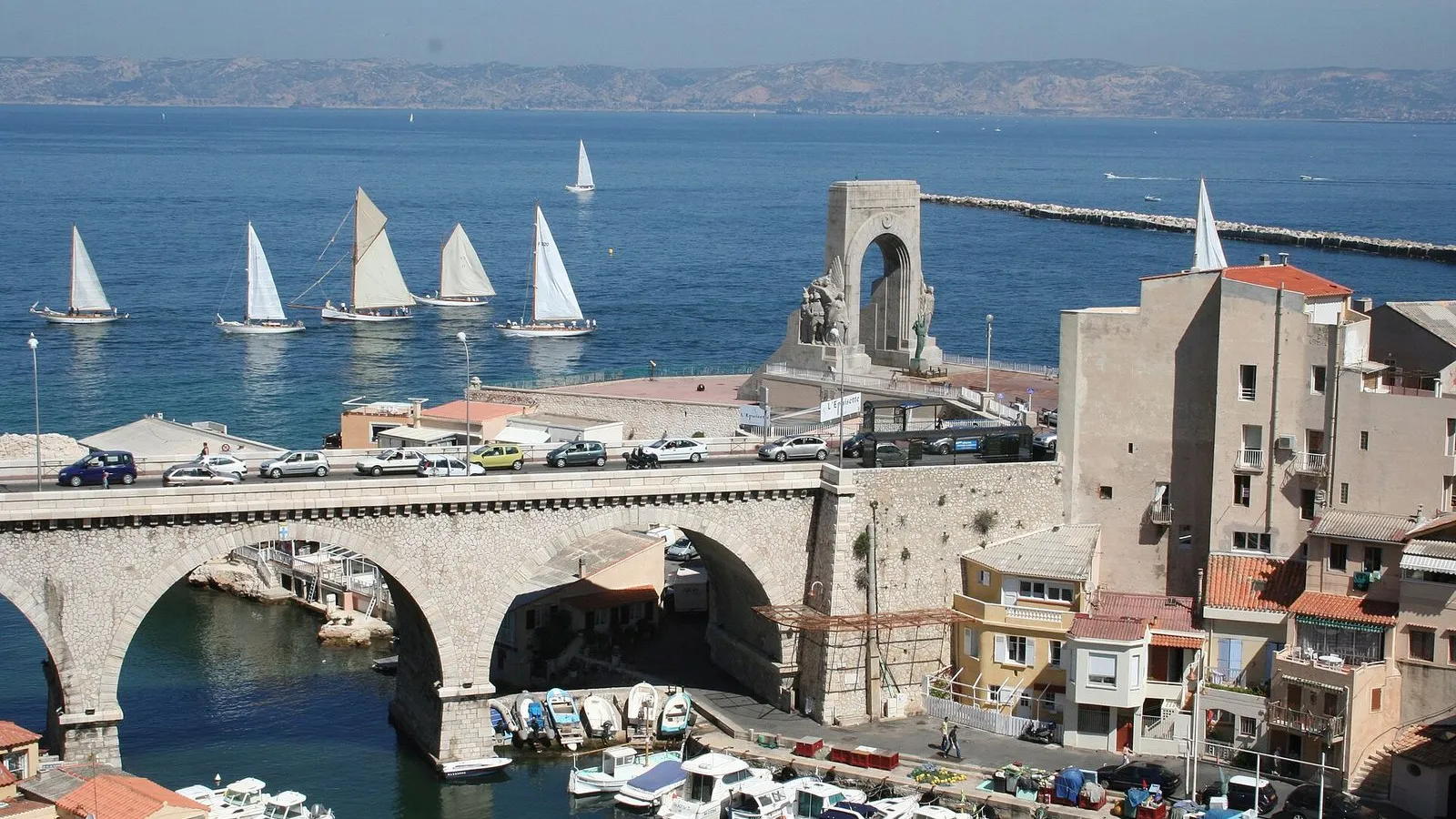
A working fishing cove of pointu boats and cabanons under the Corniche's three-arched bridge.

in app

Anse de Malmousque

A little port where fishermen's cabins and villas share the rocks, facing the sunset over the Frioul islands.

in app
Good to know

Before you go

Can I swim on the Corniche walk?

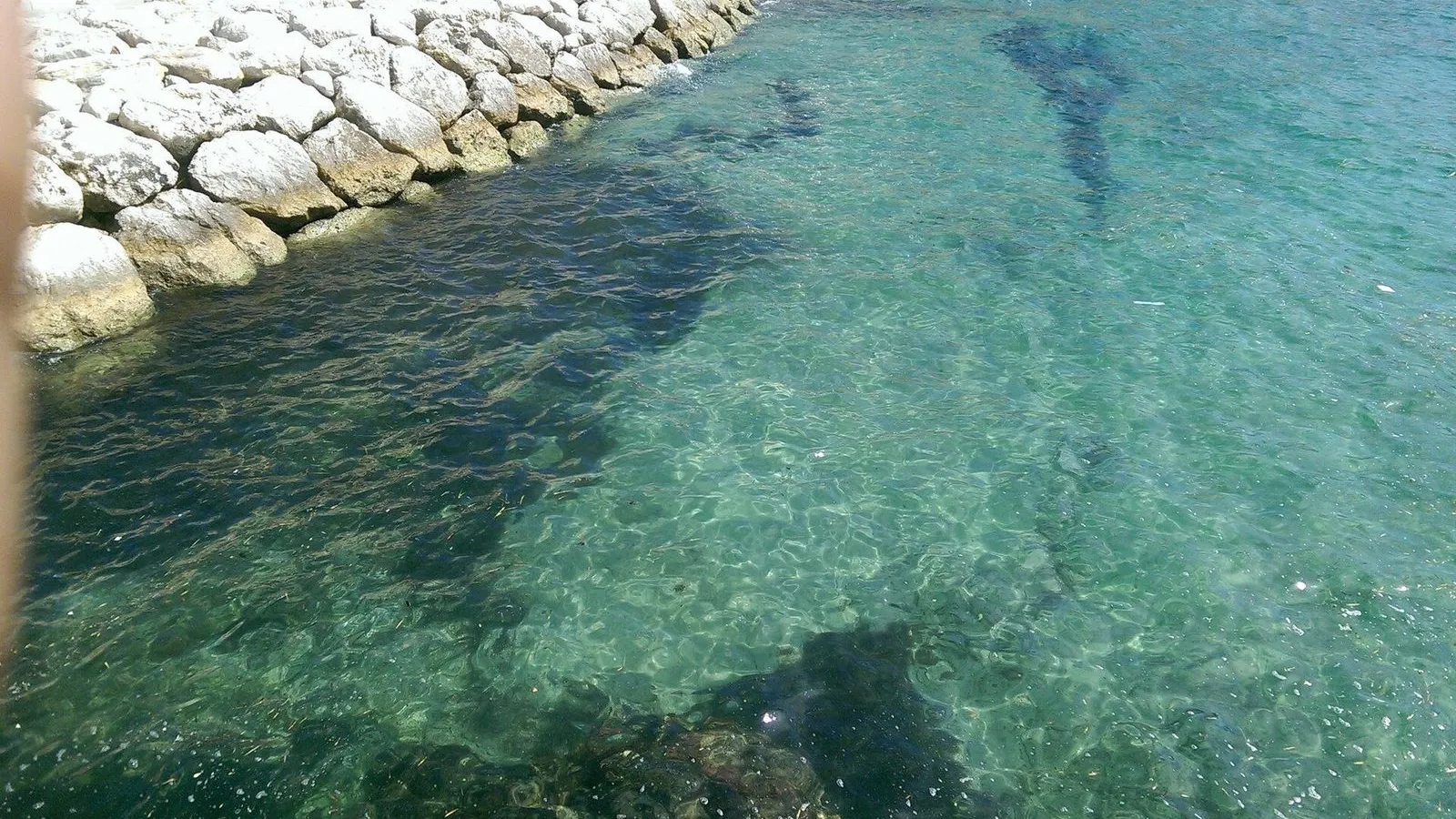
The Plage des Catalans at the start of the Corniche walk is the closest city beach and is fine for a swim. The Vallon des Auffes is a working fishing cove, so leave the swimming to the beach and the cove to the boats.

Provenance · last verified August 22, 2026

Built from the Wayside route itself: the stops, their order, and the walk between them.

Photo by Irma2403 on Wikimedia Commons · CC BY-SA 4.0

Photo by Irma2403 on Wikimedia Commons · CC BY-SA 4.0

Photo by Robert Valette on Wikimedia Commons · CC BY-SA 3.0

Photo by Michiel1972 on Wikimedia Commons · CC BY-SA 3.0

Photo by Chabe01 on Wikimedia Commons · CC BY-SA 4.0

Photo by Mike is Michi on Wikimedia Commons · CC BY-SA 4.0

Photo by Jorge Lascar on Openverse · CC BY 2.0

Photo by Olena Ilnytska on Wikimedia Commons · CC BY-SA 4.0

Photo by Kaja Sariwating on Unsplash

Photo by kallerna on Wikimedia Commons · CC BY-SA 4.0

Coming soon

Wayside isn't in the app stores yet, but it's in the works. Check back soon.