Marseille · Self-guided audio walk

Le Panier: The Oldest Quarter

Climb from the mirrored canopy on the Old Port into the lanes where Marseille began.

  • 6Stops
  • 1.6 kmDistance
  • 25+ minTime
Le Panier: The Oldest Quarter

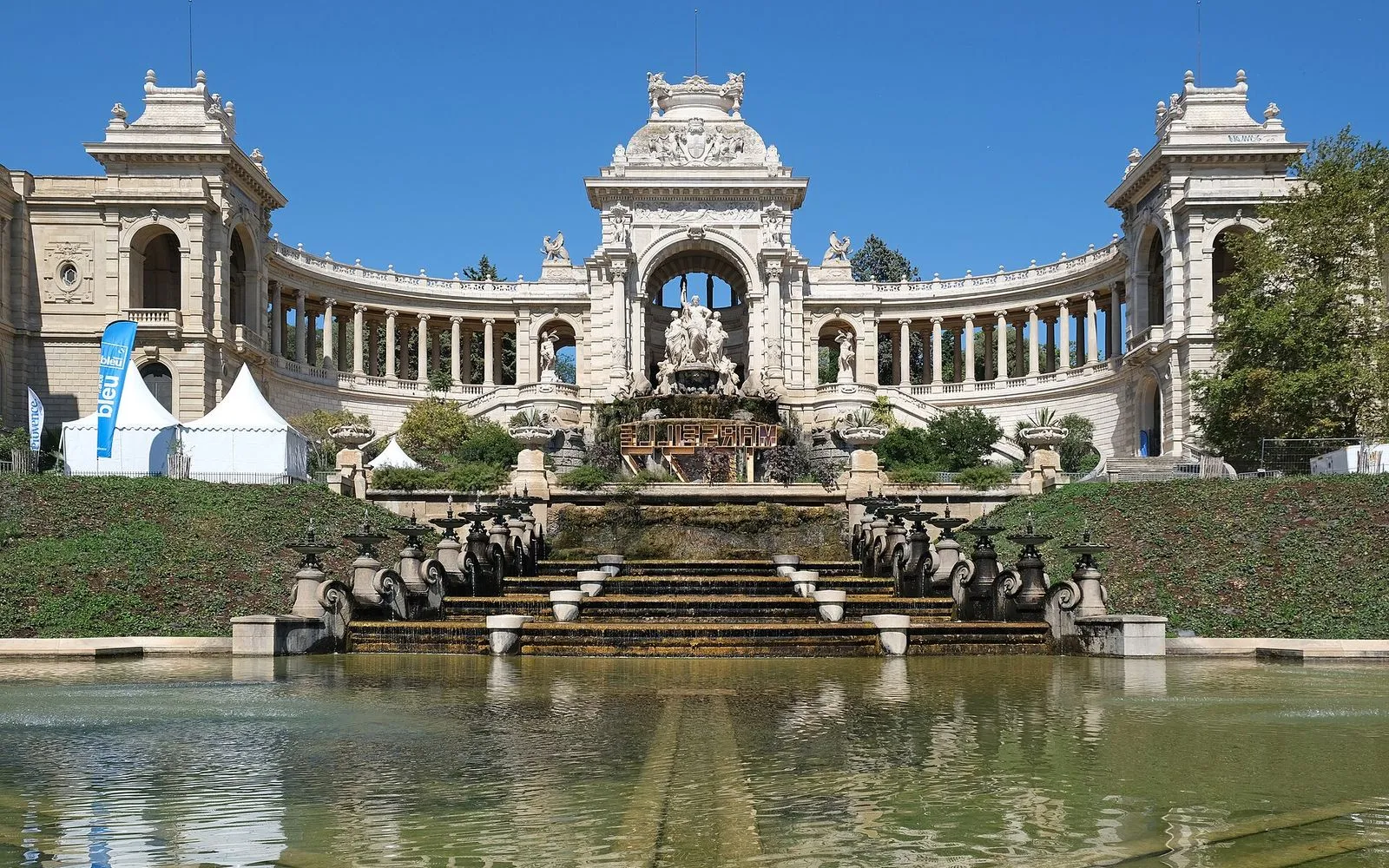
Photo by Jorge Lascar on Openverse

Le Panier is the hill where Marseille began. This walk starts under the mirrored canopy on the quay, passes the 17th-century town hall, climbs the steps of the Montée des Accoules, and finishes in the stone courtyard of the Vieille Charité, the 17th-century almshouse with Pierre Puget's domed chapel.

The route stays between the harbour and the top of the hill, a little over a kilometre of walking. The permanent collections at the Vieille Charité are free to enter.

Hear it on the street

Get the turn-by-turn audio guide in the app. The narration plays itself as you reach each stop, hands-free and offline.

Stop by stop

The route

Interactive map of the route. The full stop list below works without it.

Ombrière du Vieux-PortMust see

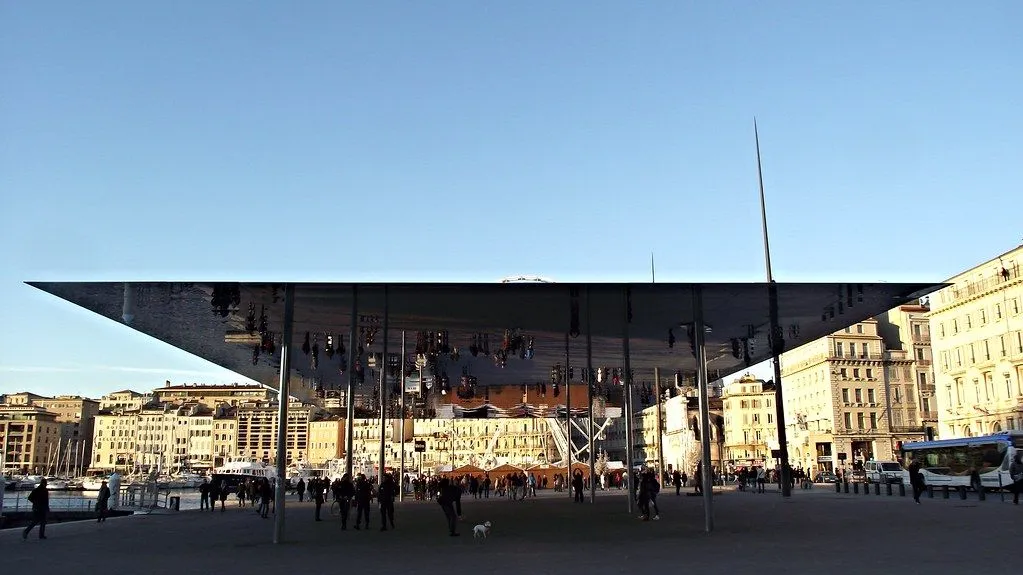
Photo by corno.fulgur75 on Openverse

Ombrière du Vieux-Port

0:00

Norman Foster's mirrored canopy on the quay, 22 by 48 metres of polished steel reflecting the port.

You are standing under the Ombrière, the mirrored canopy Norman Foster designed for 2013, the year Marseille was European Capital of Culture. Look straight up. The ceiling is polished stainless steel, 22 by 48 metres, held 6 metres above the quay on eight slender posts, and it turns the whole port upside down: boats, masts, seagulls, and your own tilted face. The roof is about 120 steel panels, polished to a mirror on the underside, and on a clear day the reflection reads like a second harbour with the water hanging overhead.

The canopy does a practical job too. It shades the fish market that sets up here each morning and the queue for the boat to the Frioul islands. It opened in March 2013 and took locals a while to warm to; today it is the usual meeting point on the quay. When you are ready, turn your back to the water and walk toward the town hall ahead.
≈6 min walk to the next stop
Hôtel de VilleMust see

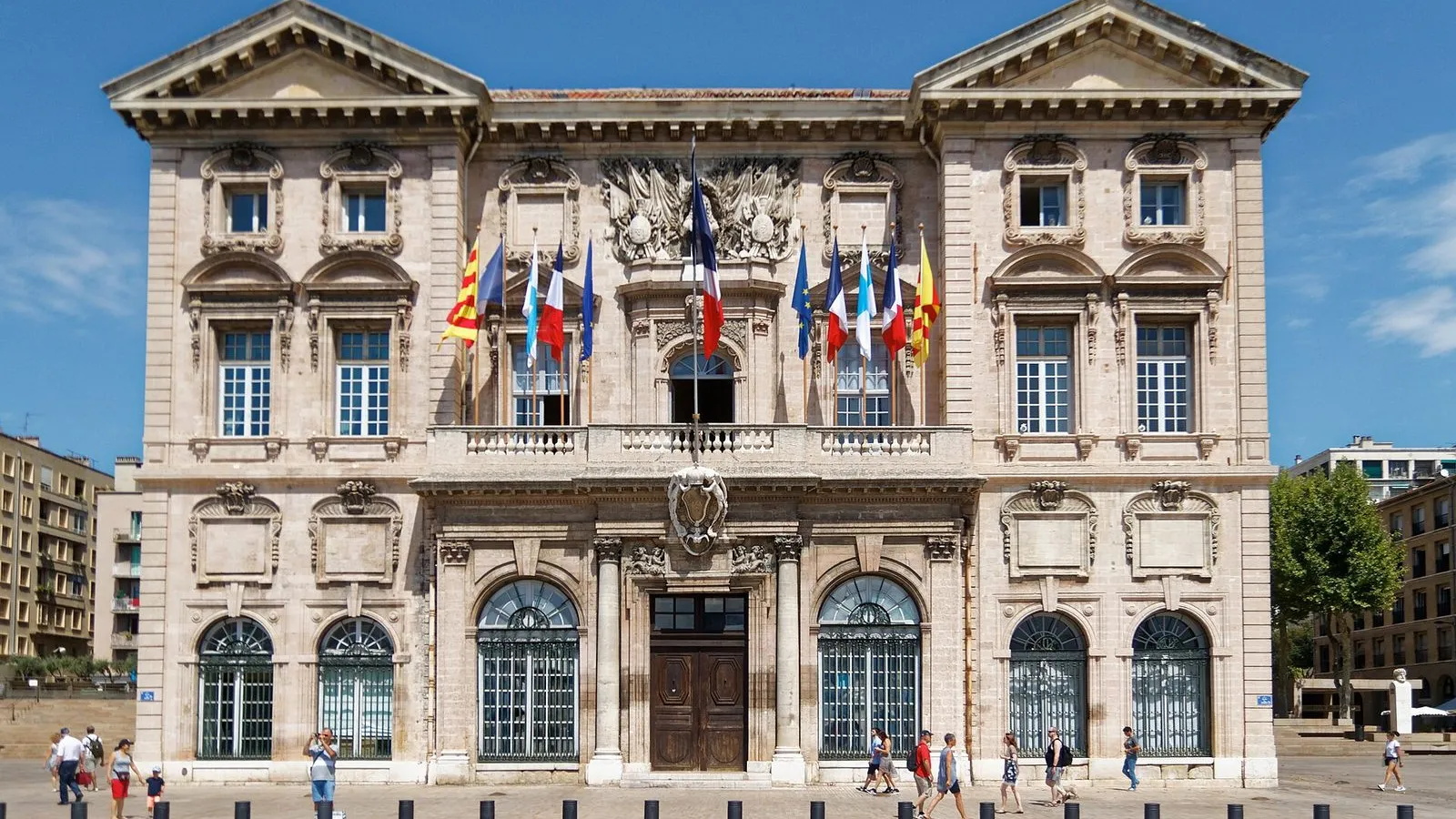
Photo by Bjs on Wikimedia Commons

Hôtel de Ville

0:00

The 17th-century town hall on the quay, Marseille's first baroque building, still called la Loge by locals.

The Hôtel de Ville stands right on the quay, its stone façade turned toward the water. Work began in 1653 and the building was occupied in 1673. The architect Gaspard Puget, brother of the sculptor Pierre Puget, drew it up with Mathieu Portal, and the design owes a lot to the palaces of Genoa. Marseille traded heavily with that city, and the style arrived with the cargo.

Pierre Puget himself carved just one thing here: the escutcheon of the arms of France above the main door. The original now hangs in the Musée des Beaux-Arts, and a copy by Stanislas Clastrier sits on the façade. There is no grand staircase inside; the ground floor belonged to the merchants' lodge, the first floor to the consuls, and a stone gallery at the back links the two. This is one of the few old buildings that survived the dynamiting of the quarter in 1943.

Now turn inland toward the hill and find the steps of the Montée des Accoules.

≈3 min walk to the next stop
Montée des AccoulesLocal pick

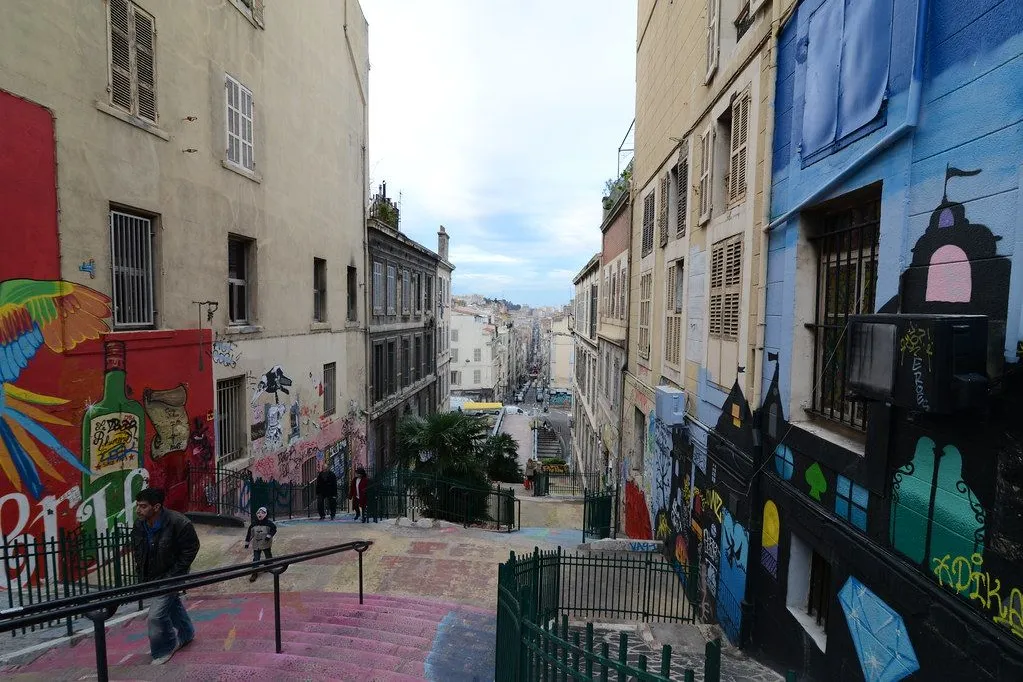
Photo by Michiel1972 on Wikimedia Commons

Montée des Accoules

0:00

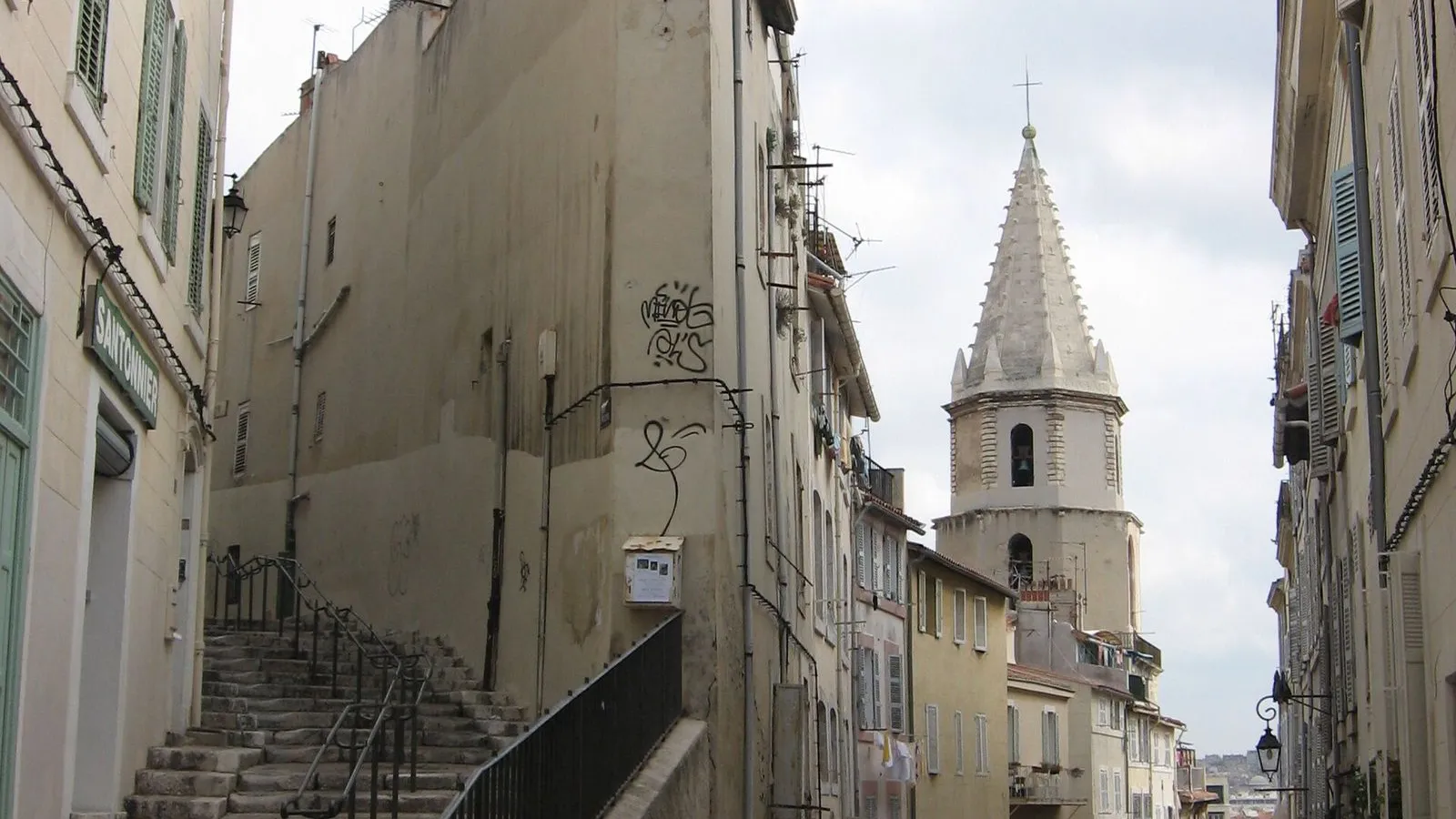
The old stepped lane that climbs from Place de Lenche into the Panier, framed by the octagonal bell tower of the Accoules.

The Montée des Accoules begins here, at the edge of a small square, and climbs in a long flight of shallow steps. For centuries this was the main road up into the old city. Look up and you will see the octagonal bell tower of the church of the Accoules, founded in the 11th century and rebuilt in the 13th. The Revolution almost destroyed it in 1794; only the tower was spared, and it stands on an even older watchtower that once raised the alarm and summoned the city council.

The lane was long known as the montée de l'observatoire. The Jesuits had a house at the top, and in 1702 they installed an observatory there, run first by the père Laval and later by the père Esprit Pezenas. Today the lane is strung with small galleries and craft shops. Before you climb, look back: the port is already dropping below you.

The square at your feet is Place de Lenche.

≈4 min walk to the next stop
Free preview ends here · stops 4 to 6 continue in the app

Place de Lenche

A small square on the site of the ancient Greek agora and the Roman forum, now market stalls and café tables.

in app

Place des Moulins

The old high point of the Panier, named for the windmills that once crowned the hill; two towers remain.

in app

Vieille Charité

The 17th-century almshouse around a stone courtyard, with Pierre Puget's domed chapel, now home to the archaeology and African, Oceanian and Amerindian museums.

in app
Good to know

Before you go

Is the Vieille Charité free to visit?

The Vieille Charité's permanent collections are free. That covers the Mediterranean archaeology museum and the museum of the arts of Africa, Oceania and the Americas. The site is open Tuesday to Sunday from 9 am to 6 pm and closes on Monday.

SourceMusées de Marseille

Provenance · last verified August 22, 2026

Built from the Wayside route itself: the stops, their order, and the walk between them.

Photo by Jorge Lascar on Openverse · CC BY 2.0

Photo by corno.fulgur75 on Openverse · CC BY 2.0

Photo by Bjs on Wikimedia Commons · CC BY-SA 4.0

Photo by Michiel1972 on Wikimedia Commons · CC BY-SA 3.0

Photo by Chabe01 on Wikimedia Commons · CC BY-SA 4.0

Photo by Mike is Michi on Wikimedia Commons · CC BY-SA 4.0

Photo by Olena Ilnytska on Wikimedia Commons · CC BY-SA 4.0

Photo by Irma2403 on Wikimedia Commons · CC BY-SA 4.0

Photo by Kaja Sariwating on Unsplash

Photo by kallerna on Wikimedia Commons · CC BY-SA 4.0

Coming soon

Wayside isn't in the app stores yet, but it's in the works. Check back soon.