Seattle · Self-guided audio walk

Chinatown, Japantown, Little Saigon

Three communities, one grid: a walk through Seattle's pan-Asian heart, from grocery aisles to a 1910 bathhouse.

  • 5Stops
  • 1 kmDistance
  • 20+ minTime
Chinatown, Japantown, Little Saigon

Photo by Joe Mabel on Wikimedia Commons

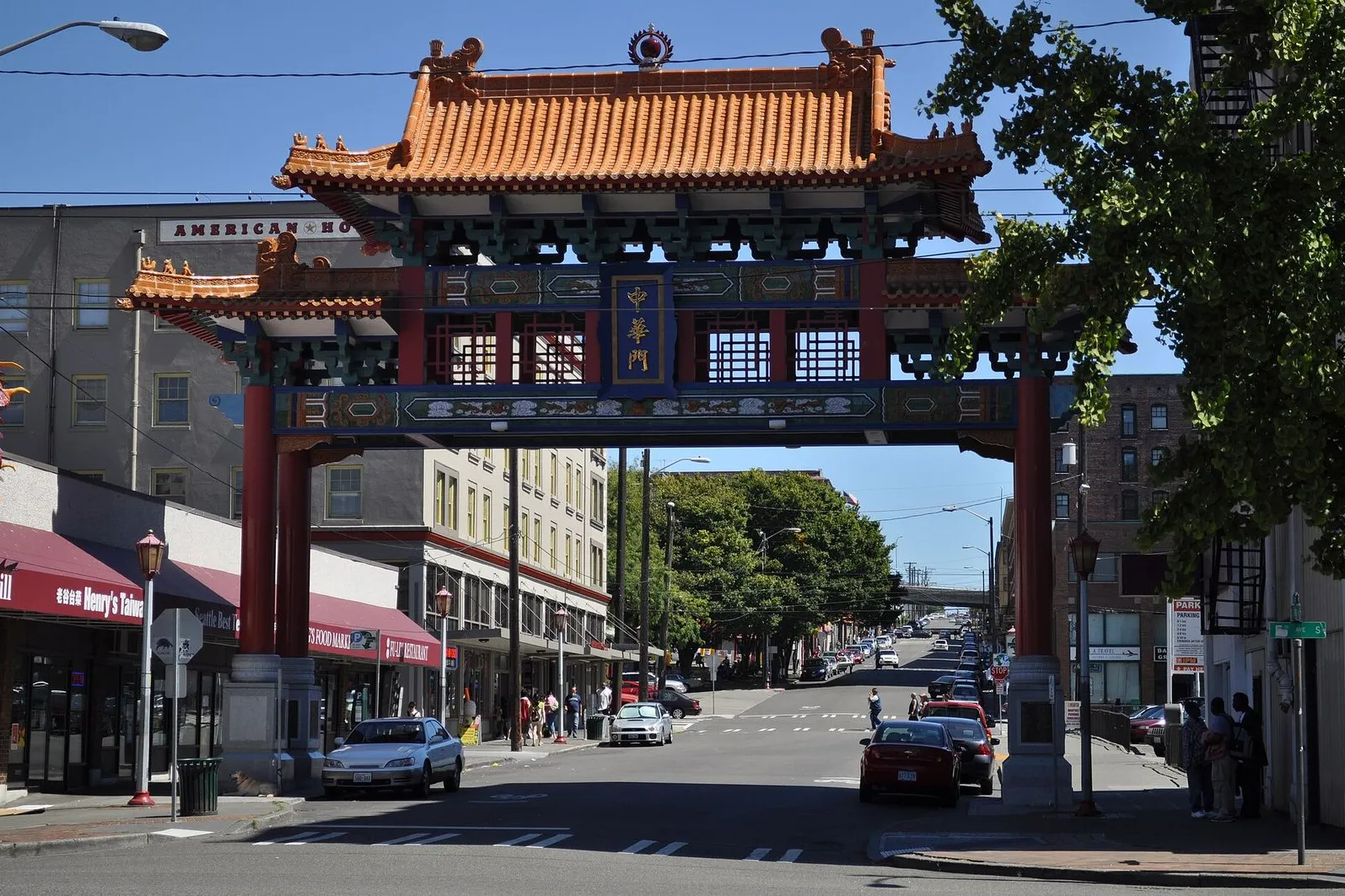
This part of Seattle packs three histories into a few square blocks. Chinese, Japanese, and Vietnamese communities raised their shops and hotels and planted gardens side by side, and a single walk crosses all of them.

Start at Uwajimaya, the grocery giant that grew from a truck selling fishcakes in 1928. Cross the red pavilion at Hing Hay Park, tour a century-old hotel turned museum at the Wing Luke, climb the cherry-tree paths of Kobe Terrace, and finish at the Panama Hotel, where a 1910 bathhouse and a basement full of unclaimed trunks still hold the story of wartime removal.

It is dense enough that you can stop often: browse, eat, and let each block explain itself.

Hear it on the street

Get the turn-by-turn audio guide in the app. The narration plays itself as you reach each stop, hands-free and offline.

Stop by stop

The route

Interactive map of the route. The full stop list below works without it.

UwajimayaMust see

Photo by Joe Mabel on Wikimedia Commons

Uwajimaya

0:00

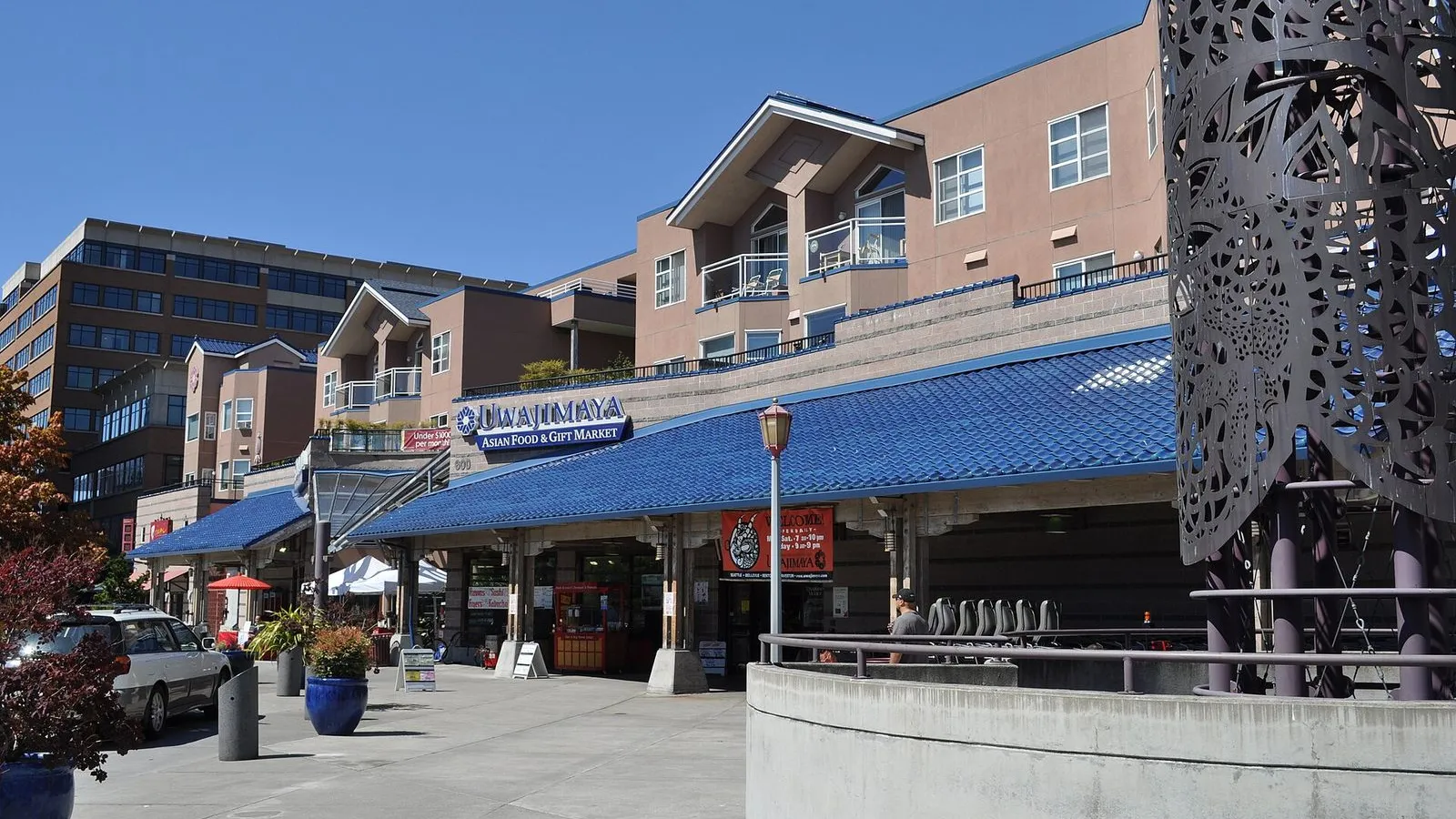
The flagship of a family grocery empire that started in 1928 with fishcakes sold from a truck, now a pan-Asian emporium in Uwajimaya Village.

You're standing in front of Uwajimaya, the flagship of a grocery empire that began in the back of a truck. In 1928, Fujimatsu Moriguchi drove around Tacoma selling homemade fishcakes to Japanese loggers, farmers, and fishermen. He named the business after Uwajima, the Japanese town where he learned food processing, and tacked on ya, the word for store. The war nearly ended it.

In 1942 the Moriguchi family was sent to Tule Lake in California, and when they came back they rebuilt here on South Main Street with money borrowed from friends and customers. The break came at the 1962 World's Fair, where a booth the size of a studio apartment introduced the store to customers outside Japantown. Fujimatsu died that same summer, and his four sons split the company rather than passing it only to the eldest. Step inside now and the shelves run far beyond Japanese staples.

Filipino, Chinese, Korean, Thai, and Vietnamese products share aisles with a food court, and the whole neighborhood does its shopping here.
≈4 min walk to the next stop
Hing Hay ParkMust see

Photo by Joe Mabel on Wikimedia Commons

Hing Hay Park

0:00

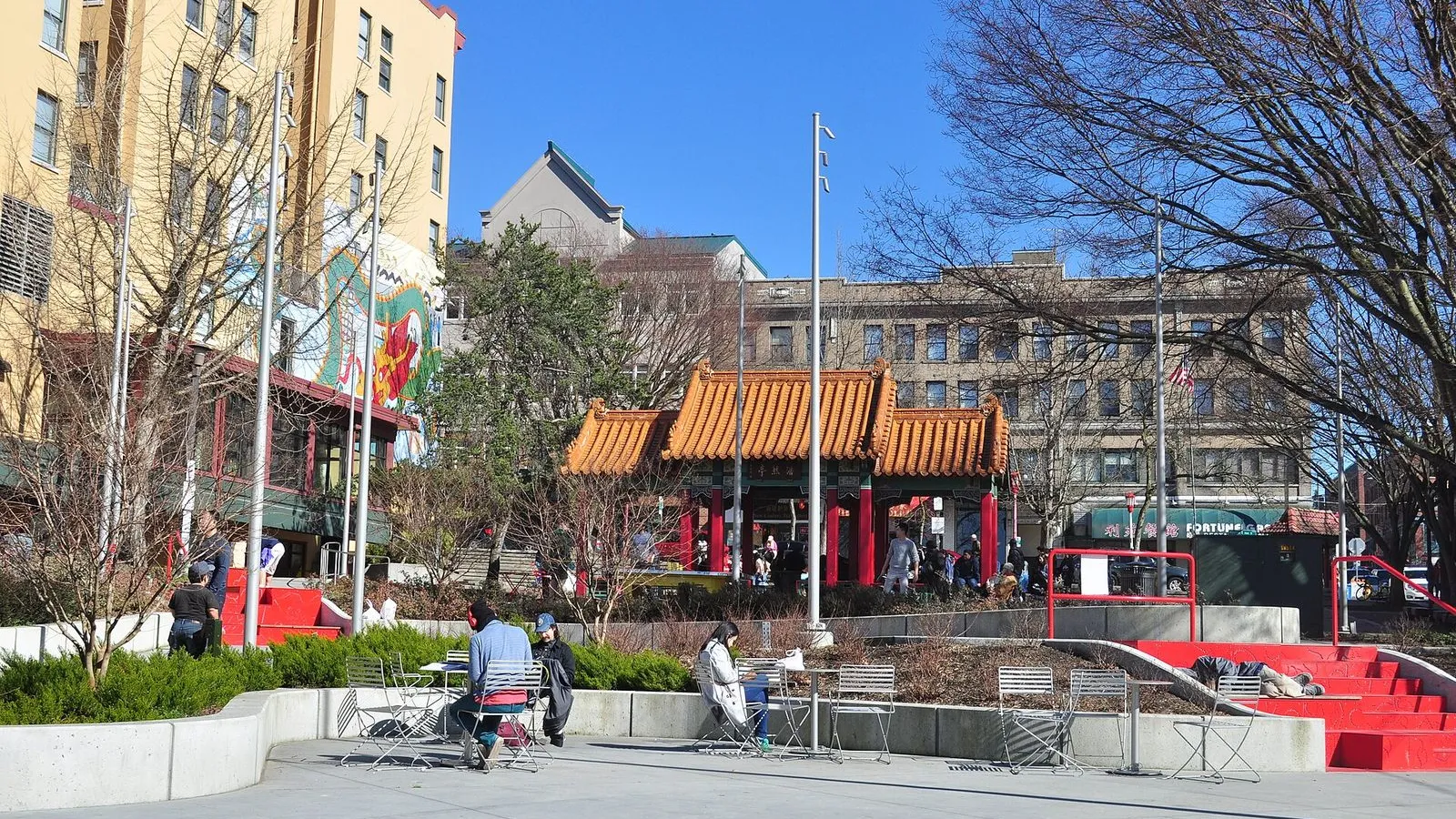
The district's red-pavilioned square, where tai chi and chess share the plaza and the name means 'park for pleasurable gatherings.'

Stand in the plaza and you'll see why this park carries its name. Hing Hay translates loosely to 'park for pleasurable gatherings,' and the scene explains the translation. Mornings bring people doing tai chi in slow arcs near the red pavilion, whose upturned roof and lacquered columns came from Taiwan. Chess players set up at the stone tables, and games run for hours while a leaning audience calls out moves.

The park opened in 1973 on a corner that had belonged to the Filipino community, anchored by Duke's Tavern and Eddie's Barbershop, and it grew in 2017 into a full neighborhood square. Circle the pavilion slowly and read the painted panels; each dragon and figure was made to be looked at, not passed by. The building just west of the park is the Bush Hotel, one of the residential hotels where Asian immigrants lived in rooms above storefront shops for decades. This corner is the district's living room.

≈3 min walk to the next stop
Wing Luke MuseumMust see

Photo by Joe Mabel on Wikimedia Commons

Wing Luke Museum

0:00

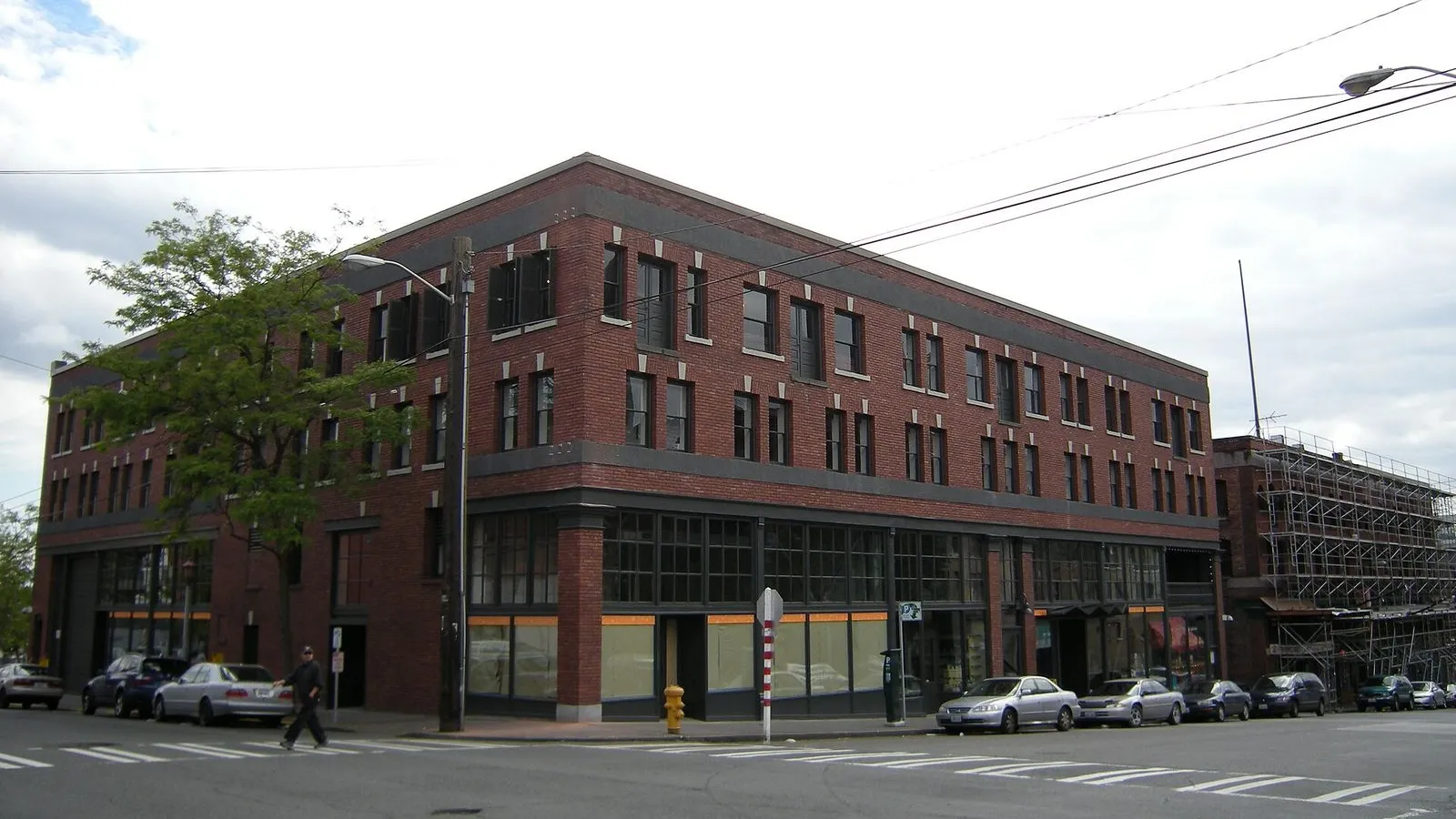
A 1910 hotel turned pan-Asian museum, named for the first Asian Pacific American elected to public office in the Pacific Northwest.

This brick building was a hotel before it was a museum, and that is the point. The Wing Luke Museum fills the East Kong Yick Building, raised in 1910 with money pooled by the Chinese American community. Its upper floors held single-room-occupancy rooms where new arrivals slept, its storefronts held shops, and its meeting rooms held family associations. The museum is named for Wing Luke, who won a Seattle City Council seat in 1962 and became the first Asian Pacific American elected to public office in the Pacific Northwest.

He led the city's first Human Rights Commission and fought for open housing until a plane crash killed him in 1965 at age forty. Inside, the historic hotel tour takes you through a preserved family association room, the Yick Fung general store, and the old hotel rooms, with walls left much as residents knew them. Exhibits branch from here into the wider Asian Pacific American story, so give yourself time to drift. Upstairs, the old floors and linoleum keep a particular smell, the smell of a building that was lived in.

≈4 min walk to the next stop
Free preview ends here · stops 4 to 5 continue in the app

Kobe Terrace

A terraced hillside of Mount Fuji cherry trees and a two-hundred-year-old stone lantern, with a view over the freeway to the skyline.

in app

Panama Hotel

A 1910 Japantown hotel with the last intact sento bathhouse in North America and a basement of trunks left during wartime removal.

in app
Good to know

Before you go

What is the Wing Luke Museum?

The Wing Luke Museum is a pan-Asian American museum inside a 1910 hotel, named for the first Asian Pacific American elected to public office in the Pacific Northwest. It runs tours of the historic building.

Can I see the Panama Hotel bathhouse?

The 1910 sento bathhouse is the last intact one in North America, and the basement still holds trunks left during the wartime removal of Japanese Americans. Ask at the front desk about seeing the bathhouse and basement.

Is the Chinatown-International District walkable?

Yes, all of the stops sit on a compact grid, and the district is full of places to eat, so you can stop often and let each block explain itself.

Provenance · last verified August 19, 2026

Built from the Wayside route itself: the stops, their order, and the walk between them.

Photo by Joe Mabel on Wikimedia Commons · CC BY-SA 3.0

Photo by Joe Mabel on Wikimedia Commons · CC BY-SA 3.0

Photo by Joe Mabel on Wikimedia Commons · CC BY-SA 4.0

Photo by Joe Mabel on Wikimedia Commons · CC BY-SA 3.0

Photo by Ntowle98 on Wikimedia Commons · CC BY-SA 4.0

Photo by Kingofthedead on Wikimedia Commons · CC BY-SA 4.0

Photo by Joe Mabel on Wikimedia Commons · CC BY-SA 3.0

Photo by Lalit Gupta on Unsplash

Photo by Joe Mabel on Wikimedia Commons · CC BY-SA 4.0

Photo by Jrozwado on Wikimedia Commons · CC BY-SA 4.0

Coming soon

Wayside isn't in the app stores yet, but it's in the works. Check back soon.