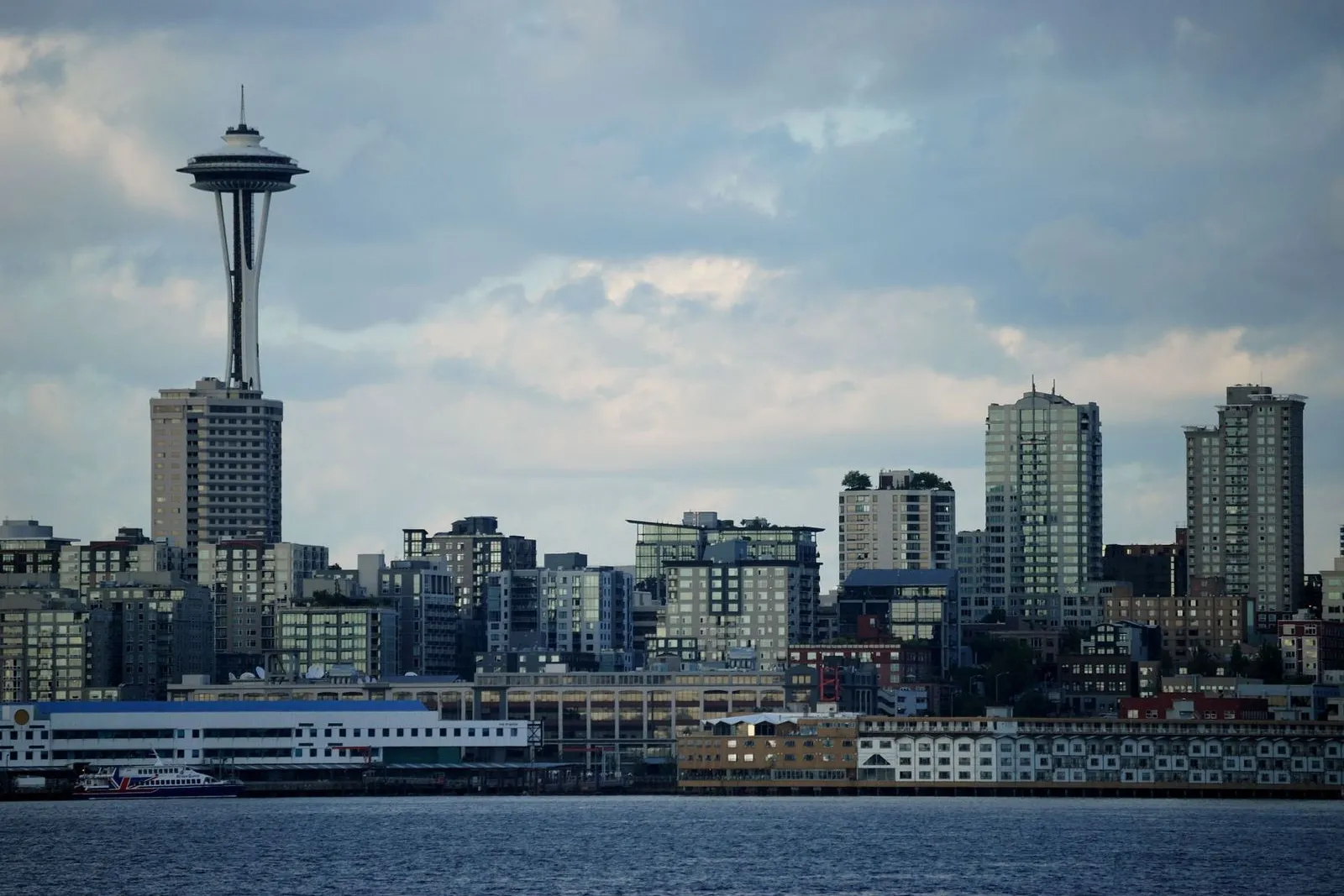
This is the pre-trip briefing for Seattle: how to get in from Sea-Tac, how the ORCA transit system works, what to book ahead, and when the rain actually falls. For visas, US currency, tipping, plugs, and inter-city trains or flights, see the United States country guide.
Seattle adds a sweetened beverage tax of $0.0175 per fluid ounce to sugary drinks, about 35 cents on a 20 ounce soda.SourceCity of Seattle: sweetened beverage tax
King County Metro adult bus fare is $3, and a $6 regional ORCA day pass covers unlimited rides on the region's buses, trains, and streetcars.SourceKing County Metro: prices
Seattle Art Museum is free on the first Thursday of every month from 10 am to 8 pm.SourceSeattle Art Museum: visit
A shoulder season with lighter crowds than summer, plus the University of Washington cherry blossoms in late March and early April and the Northwest Folklife Festival at Seattle Center over Memorial Day weekend.
Peak season. Cruise ships, festivals, and long daylight fill the waterfront and Seattle Center, so book key sights and ferries ahead. Seafair brings hydroplane races and the Blue Angels to Lake Washington in early August.
Crowds thin after Labor Day, and fall brings crisp air, changing leaves, and the first big storms. Bumbershoot, the Labor Day weekend music and arts festival, kicks off September at Seattle Center.
The quietest and cheapest months to visit, with short days and cool, damp weather rather than heavy snow. Holiday lights and Pike Place Market keep downtown lively in December.
A shoulder season with lighter crowds than summer, plus the University of Washington cherry blossoms in late March and early April and the Northwest Folklife Festival at Seattle Center over Memorial Day weekend.
Peak season. Cruise ships, festivals, and long daylight fill the waterfront and Seattle Center, so book key sights and ferries ahead. Seafair brings hydroplane races and the Blue Angels to Lake Washington in early August.
Crowds thin after Labor Day, and fall brings crisp air, changing leaves, and the first big storms. Bumbershoot, the Labor Day weekend music and arts festival, kicks off September at Seattle Center.
The quietest and cheapest months to visit, with short days and cool, damp weather rather than heavy snow. Holiday lights and Pike Place Market keep downtown lively in December.
The practical guide
Everything to sort before you go
Getting in from the airport
Sea-Tac Airport (SEA) is the main gateway, and the Link 1 Line light rail runs straight from the airport to downtown stations like Westlake and Pioneer Square. King Street Station, the Amtrak hub, sits in the International District a short walk or one Link stop from downtown, and cruise ships dock at Pier 66 near the waterfront and Pier 91 at Smith Cove. Pier 66, on the waterfront at Wall Street, is the Norwegian Cruise Line and Oceania Cruises terminal, and Pier 91 at Smith Cove serves Carnival, Celebrity, Holland America, Princess, Royal Caribbean, and others. Taxis and rideshares are available but take longer in traffic.
Link light rail from Sea-Tac Airport to downtown takes about 38 minutes and costs $3 for adults. SourceSound Transit: Link to the airport
Bell Street Cruise Terminal at Pier 66 serves Norwegian Cruise Line and Oceania Cruises, and sits within walking distance of Pike Place Market. SourcePort of Seattle: Pier 66
Smith Cove Cruise Terminal at Pier 91 serves Carnival, Celebrity, Holland America, MSC, Princess, Royal Caribbean, and Virgin Voyages. SourcePort of Seattle: Pier 91
Getting around
The Link 1 Line is the backbone, running north to south through downtown, Capitol Hill, the University District, and out to the airport and Lynnwood. King County Metro buses cover the neighborhoods, the Monorail links Westlake Center to Seattle Center, and two streetcar lines serve South Lake Union and First Hill. All of them take the ORCA card, and you can tap contactless credit cards directly on Link readers. The Monorail is a separate two-station shuttle and costs $4 one-way for adults. The King County Water Taxi runs from Pier 50 to West Seattle in about 10 to 15 minutes.
Adult Link light rail fare is a flat $3, and a day pass costs $6. SourceSound Transit: fares
King County Metro adult bus fare is $3, and a standard adult ORCA card costs $3. SourceKing County Metro: prices
Seattle Center Monorail adult one-way fare is $4.00, and youth ages 6 to 18 ride free with a Youth ORCA card. SourceSeattle Monorail: 2025 fare increase
Seattle Streetcar adult single ride fare is $3.00, seniors 65+ and riders with disabilities pay $1.00, and youth 18 and under ride free. SourceCity of Seattle: streetcar fares
The King County Water Taxi from Pier 50 to West Seattle costs $6.25 cash or $5.25 with an ORCA card for adults. SourceKing County Water Taxi: fare change
Money and payments
Seattle's most visible city level surcharge is the sweetened beverage tax, added to sugary drinks at the register. Beyond that, standard sales tax applies to most purchases, and the country guide covers currency, cards, and tipping. The best money saver is the free museum calendar: SAM is free on the first Thursday of each month, and several stops on our walks, like the Klondike Gold Rush museum and Olympic Sculpture Park, are free all the time.
Seattle Art Museum is free on the first Thursday of every month from 10 am to 8 pm. SourceSeattle Art Museum: visit
Safety and common scams
Downtown is busy and generally safe in daylight. Use normal big city care after dark, especially around some blocks of 3rd Avenue and the quieter edges of Pioneer Square, and keep your phone and wallet out of sight. Seattle sits on the Seattle Fault, so the local earthquake guidance is to drop, cover, and hold on if the ground shakes. Puget Sound stays cold year round, so treat the waterfront and any beach entry with respect. Property crime is the more common risk downtown, so leave nothing visible in a parked car.
The Seattle Fault Zone runs east to west through central Seattle, and the last major quake on it was about 1,100 years ago. Crustal earthquakes are the city's main seismic risk. SourceCity of Seattle: emergency management
Health and emergencies
Seattle's tap water is clean, disinfected, and fluoridated, so refill a bottle instead of buying plastic. In late summer, wildfire smoke can drift in from the east, so check the air quality forecast if you have asthma or another breathing condition.
Seattle Public Utilities chlorinates and tests the drinking water supply, running more than 20,000 water quality tests a year, and has fluoridated it since 1970. SourceSeattle Public Utilities: water quality
Staying connected
All major US carriers have solid coverage across Seattle and at the airport, and free Wi-Fi is common in cafes, libraries, and hotels. You can ride without a physical transit card, since Link fare readers accept contactless credit cards, debit cards, and phone wallets. Tap to Pay works on Metro buses and streetcars too, but an ORCA regional day pass still requires an ORCA card.
Link light rail fare readers accept contactless credit cards, debit cards, and phone wallets. SourceSound Transit: how to pay
Tap to Pay works on buses and streetcars, but riders using contactless payment cannot get an ORCA regional day pass. SourceCity of Seattle: streetcar fares
Etiquette and tipping
Seattle's 'freeze' is real but subtle: locals are polite and helpful, just slower to become fast friends, and a quiet queue or short conversation is normal, not a slight. Recycling and composting are taken seriously here, and food scraps go in the compost bin, not the trash. Tipping follows standard US norms, which the country guide covers.
Seattle requires recycling for all residents and businesses, with curbside recycling included in the garbage rate at no extra charge. SourceSeattle Public Utilities: recycling
Accessibility
Seattle's center is hilly, and a few blocks climb steeply, so plan routes if you use a wheelchair or have limited stamina. The transit system is built to be accessible: Metro buses are low floor with ramps, and Link stations have elevators and level boarding. The King County Water Taxi is wheelchair accessible, and its Pier 50 waiting area has an ADA assistance call button.
King County Water Taxi docks, waiting areas, and boats are accessible, with an ADA assistance call button in the Pier 50 waiting area. SourceKing County Water Taxi
What to book ahead
Book the Space Needle first. It uses timed entry, and sunset slots sell out in summer. Chihuly Garden and Glass and MoPOP sit right beside it and are often paired into combo tickets. A bundled Space Needle, Chihuly Garden and Glass, and IMAX ticket runs about $74, which is the simplest way to cover the Seattle Center trio in one booking. In Pioneer Square, Bill Speidel's Underground Tour runs timed departures and is worth reserving a day or two out.
Space Needle general admission is sold by timed entry and runs about $35 to $55 depending on the day and time. SourceSpace Needle: tickets
A Space Needle, Chihuly Garden and Glass, and IMAX combo is about $74, roughly 25 percent less than buying the three separately. SourceSpace Needle: tickets