Bath · Self-guided audio walk

Walcot Street and Camden Crescent

Bath built its elegant face inside the city walls. Outside them, Walcot Street kept making things by hand, and it still does. This walk follows the workshops, the Saturday market ground, and the hill that refused to hold still.

  • 8Stops
  • 1 kmDistance
  • 20+ minTime
Walcot Street and Camden Crescent

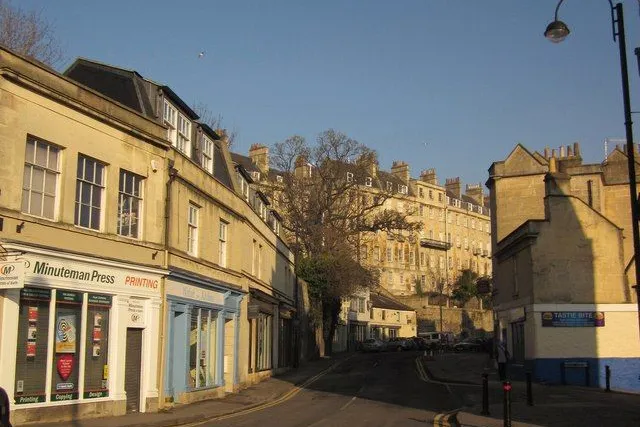
Photo by Derek Harper on Wikimedia Commons

Walcot Street runs north out of Bath along the line of the Roman road, and it has been a working street for close to two thousand years. Medieval weavers and Victorian printers worked here, and since the 1960s the street has carried the name Artisan Quarter.

Today a cheesemonger matures its stock behind a window on Green Street, a knitting shop holds shelves of hand-dyed yarn, and a pub is owned by the people who drink in it.

The route follows Walcot Street uphill: cheese, vintage rails, letterpress, wood-fired pizza, and a Saturday flea market that has run for more than 40 years. It finishes above the rooftops at Camden Crescent, built in 1788 and left unfinished when the hillside moved.

Allow around 75 minutes, and come on a Saturday between ten and five if you want the market and every door open.

Hear it on the street

Get the turn-by-turn audio guide in the app. The narration plays itself as you reach each stop, hands-free and offline.

Stop by stop

The route

Interactive map of the route. The full stop list below works without it.

Paxton and WhitfieldMust see

Photo by Ziyao Xiong on Unsplash

Paxton and Whitfield

0:00

A cheesemonger with a window into its maturing room.

You're standing on Green Street, outside the Bath shop of a London cheesemonger. Paxton and Whitfield moved to this address from John Street in 2024, and the new premises gave them something the old shop never had: a window straight into the maturing room. Look through it before you go in and you'll see the stock being kept, turned and aged.

Cheese is a slow trade, and most of what you'll pass on this walk is slow too. Bath's town wall ran a short walk from here, and the crafts that needed space, water or a bit of noise were kept outside it. The street you're heading for was one of them, and its name says as much. Walcot comes from the Saxon for the place of strangers, the settlement where newcomers and tradespeople lived beyond the gate.

For the next stretch you'll be walking the working city that has always sat beside the postcard one. The Bath of terraces and assembly rooms is a few minutes behind you, and you'll see it again from the top of the hill.
≈3 min walk to the next stop
The Fine Cheese Co.Local pick

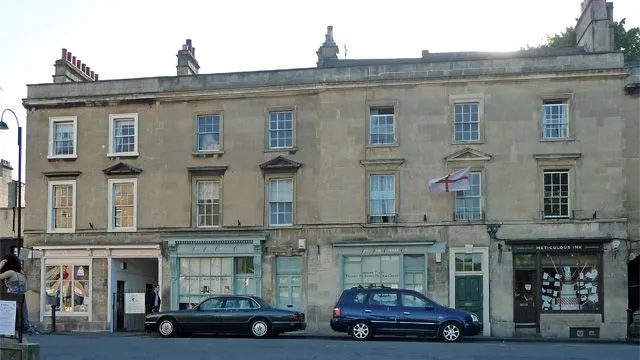
Photo by Stephen Richards on Wikimedia Commons

The Fine Cheese Co.

0:00

Cheese, and the market ground that has fed this street since 1809.

The Fine Cheese Co. began in Bath and still keeps its shop here at number 29, with a counter of cheeses the company selects itself, buying direct from makers in Britain and across Europe. About fifteen people look after the ripening rooms, washing, rubbing and turning the wheels until they're ready. The company supplies restaurants and delicatessens, more than 1,100 of them, and none of its cheese goes to supermarkets, so a shop like this one is the only place to buy most of it.

Then look at the ground outside. Bath's Corporation bought the land behind these houses in 1809 and paid 500 pounds for it, then built a cattle market on the spot. In 1855 the sheds on the north side were replaced by an arcaded Corn Market hall, and markets have kept coming back here ever since. On Saturdays an antique and flea market fills the car park beside the hotel, as it has for more than 40 years. Crockery, tools, paperbacks, and dealers who know exactly what they've got.

≈2 min walk to the next stop
The Yellow Shop and LandraceLocal pick

Photo by Ziyao Xiong on Unsplash

The Yellow Shop and Landrace

0:00

Vintage rails and wood-fired pizza, a few doors apart.

This stretch of shopfronts is worth a look at the brick and stone as much as the windows. The buildings are Georgian and Victorian, but the plots they stand on are medieval, narrow at the front and long at the back, the shape Bath gave its market gardens and workshops when the town grew up outside its walls. You can still read that old pattern in the way each shop squeezes into a frontage barely wide enough for a door and a window.

Two of those frontages are worth your time. The Yellow Shop fills its windows with secondhand clothing, jackets, coats, dresses, sorted and hung the way a vintage rail should be. A few doors along, Landrace bakes bread and does pizza in a room that still feels like a shop. The oven runs hot and the pizzas come out fast. You can't book for the pizzeria; you turn up and wait your turn.

≈3 min walk to the next stop
Free preview ends here · stops 4 to 8 continue in the app

The Bell Inn

A pub owned by its customers, with music in the back room.

in app

A Yarn Story

Hand-dyed yarns and the street's own yarn line.

in app

St Swithin's Church

Bath's last 18th-century parish church, its east end over the street.

in app

Hedgemead Park

A park planted on a hillside that had to be abandoned.

in app

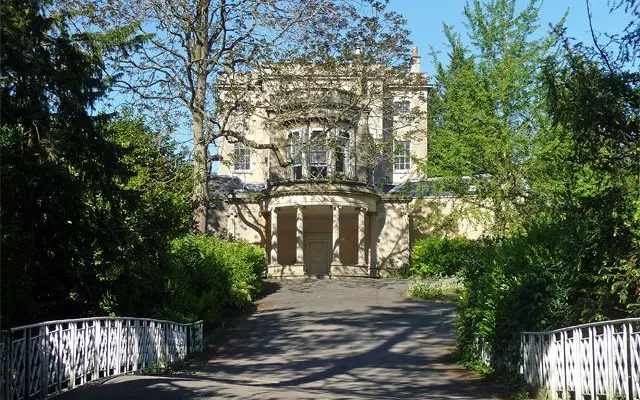
Camden Crescent

1788 crescent, left unfinished where the hill slipped.

in app
Good to know

Before you go

When is the best time to walk Walcot Street?

Walcot Street is at its best on a Saturday, 10am to 5pm, when the street's flea market runs and the cheesemongers, the vintage rails and the yarn shop are all open. On weekdays you get the working street without the market. In the evening the shops go quiet and the pubs and the pizza place take over.

Is there anywhere to eat or drink on Walcot Street?

Walcot Street has both: Landrace at the Yellow Shop stop does wood-fired pizza, and the Bell Inn, a pub owned by the people who drink in it, keeps music in the back room. Paxton and Whitfield and The Fine Cheese Co. are for buying cheese to take away, not for sitting down.

How steep is the climb to Camden Crescent?

The climb runs the whole length of Walcot Street, past St Swithin's Church and through Hedgemead Park to Camden Crescent at the top. The 1788 crescent was left unfinished when the hillside moved, and its raised pavement gives the walk its final look back across the city.

Provenance · last verified September 27, 2026

Built from the Wayside route itself: the stops, their order, and the walk between them.

Photo by Derek Harper on Wikimedia Commons · CC BY-SA 2.0

Photo by Ziyao Xiong on Unsplash

Photo by Stephen Richards on Wikimedia Commons · CC BY-SA 2.0

Photo by Stephen Richards on Wikimedia Commons · CC BY-SA 2.0

Photo by Hulki Okan Tabak on Unsplash

Photo by Bradley Pritchard Jones on Unsplash

Coming soon

Wayside isn't in the app stores yet, but it's in the works. Check back soon.