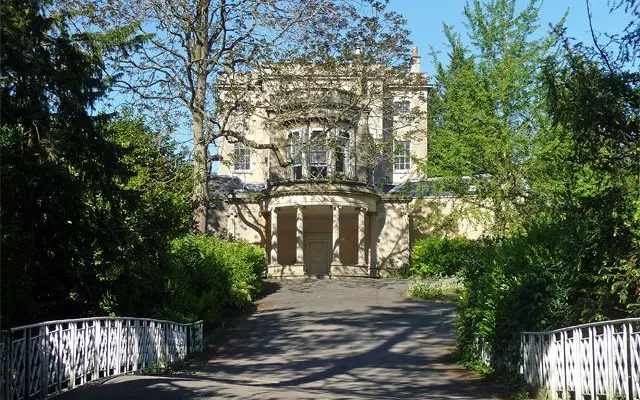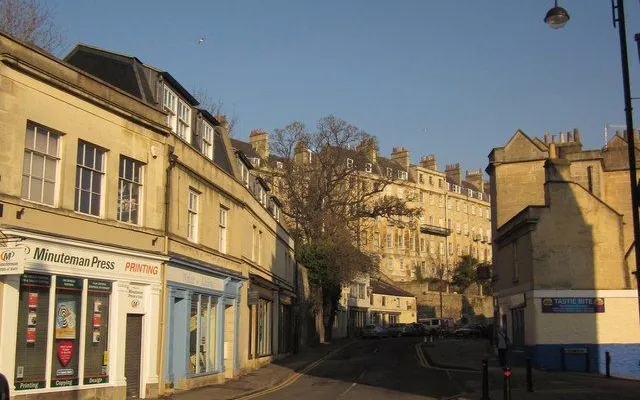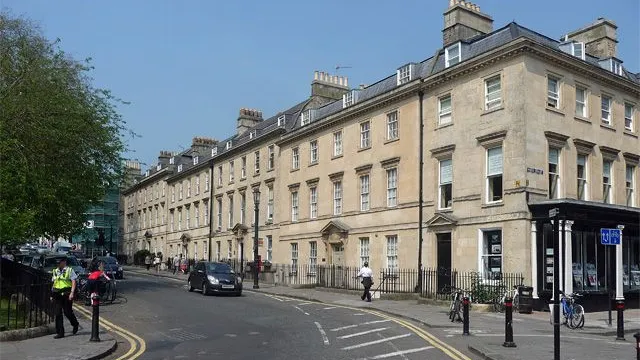
Bath · Self-guided audio walk

The Georgian Upper Town

Austen's Bath and John Wood's hillside in one climb: a square, a street, a circle, a corridor and the great curve above the park, ending where Persuasion's lovers settle everything.

  • 9Stops
  • 1.7 kmDistance
  • 30+ minTime

Bath's Georgian upper town climbs the hillside in one straight line: Queen Square, Gay Street, the Circus, Brock Street, the Royal Crescent. John Wood the Elder drew the fronts, other people built the houses behind them, and thirty separate homes sold as one aristocratic palace.

The walk follows that climb and picks up Jane Austen on the way: she lodged at 13 Queen Square in 1799, her family moved to 25 Gay Street after her father died, and the Jane Austen Centre at number 40 tells her Bath years with costumed guides and a tea room.

No. 1 Royal Crescent is the townhouse museum at the eastern end of the curve: £16 adults, £14.50 concessions, free under 18, open Tuesday to Sunday, from ten in the morning to half past five, until 3 January 2027. The Assembly Rooms on Bennett Street are closed for restoration until 2027, so they stay an exterior mention from the Circus.

Allow about 90 minutes with the museum. The route runs Tuesday to Sunday, from ten in the morning to half past four, ending on the Gravel Walk, where Anne Elliot and Captain Wentworth are reconciled in Persuasion.

Hear it on the street

Get the turn-by-turn audio guide in the app. The narration plays itself as you reach each stop, hands-free and offline.

Stop by stop

The route

Interactive map of the route. The full stop list below works without it.

Queen SquareMust see

Photo by Stephen Richards on Wikimedia Commons

Queen Square

0:00

John Wood's first composition, sold as one palace by many hands.

Queen Square is where Bath's Georgian adventure begins, and John Wood the Elder built it on a gamble. In the late 1720s he leased this field from Robert Gay, designed the fronts himself, then sub-let the plots to individual masons. They had two years to get the walls up and the roof on before the rent rose. The north side, twenty-three bays wide, reads as a single palace, and Nikolaus Pevsner called that range one of the finest Palladian compositions in England before 1730.

Wood took the central house on the south side so he could sit and look at his own work, with the obelisk on the axis in front of him. That shaft went up in 1738, paid for by Beau Nash, with an inscription drafted by Alexander Pope to flatter Frederick, Prince of Wales. It stood 70 feet tall until a gale in 1815 took the top off. Jane Austen lodged at number 13 in 1799.

Everything on this walk repeats Wood's trick: one architect's front, many builders behind it, on land outside the old walls and higher up the hill.
≈2 min walk to the next stop
Gay StreetLocal pick

Photo by NotFromUtrecht on Wikimedia Commons

Gay Street

0:00

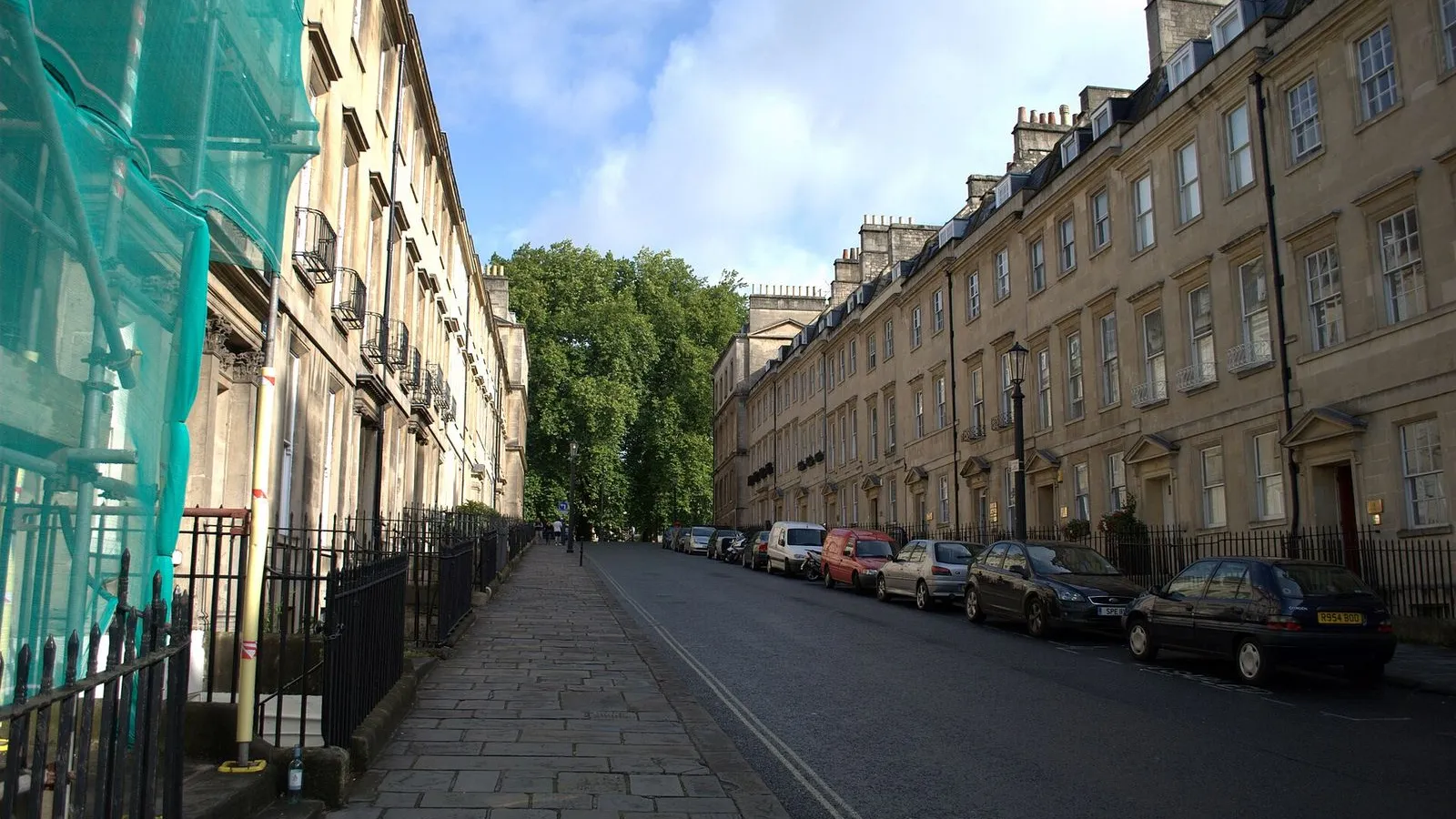
The straight climb where the Austen family lodged in 1805.

Gay Street climbs from the square to the Circus in one straight line, and John Wood the Elder designed it between 1735 and 1750. It carries the name of Robert Gay, who owned the fields Wood built on. Look up: three storeys under mansard roofs, doorways at regular intervals, window stacked over window the whole way, so each side reads as a single wall rather than thirty houses. That is the trick the entire upper town depends on.

Jane Austen's father died in 1805 and the family moved into number 25 on this street, a few doors from where you are walking. Six years earlier she had lodged at number 13 on Queen Square, and she disliked Bath, which did not stop her setting two novels here. Number 41, at the bottom corner behind you, was John Wood the Younger's own address. His father died before this street was finished, and it was the son who carried the circle at the top.

≈2 min walk to the next stop
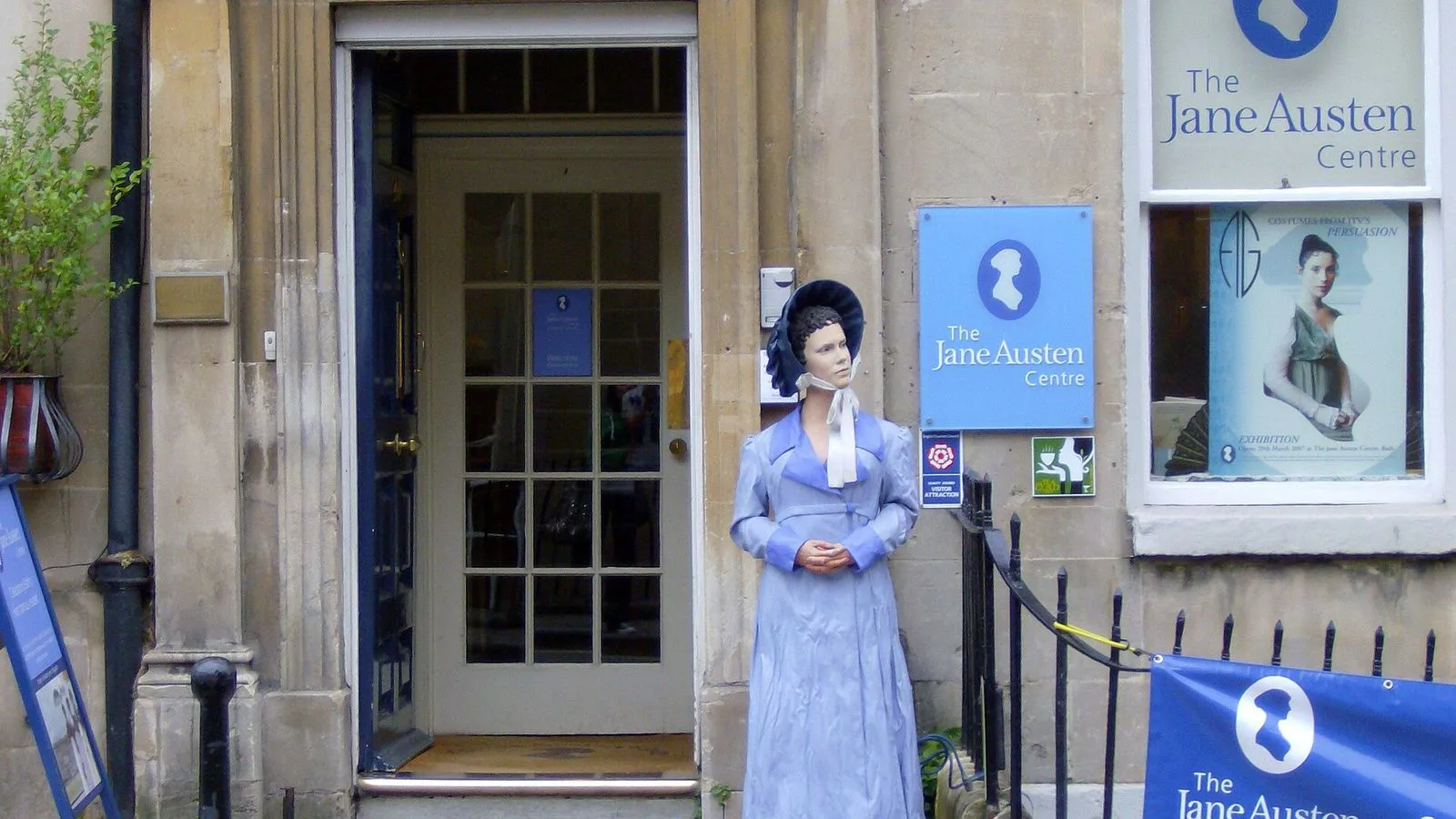
Jane Austen CentreMust see

Photo by Fahdshariff on Wikimedia Commons

Jane Austen Centre

0:00

Costumed guides, Regency dress to try on, and a tea room.

Number 40 Gay Street is a Georgian townhouse doing what Georgian houses do best, which is telling you how people lived. The Jane Austen Centre fills these rooms with her Bath years, and it does the job with people rather than labels: costumed character actors meet you at the door and stay in role while they walk you through the exhibition. You can dress in Regency clothes from their collection, write with a quill and ink, and have your photograph taken beside the waxwork of Austen herself. Upstairs, the Regency Tea Room holds a Tea Guild Award of Excellence and serves leaf tea, cakes, cream tea and light plates.

The exhibition takes in her time in the city, the society she moved through, and the two novels she set here. The Centre also runs the Jane Austen Festival, which fills the city with hundreds of people in Regency dress for a promenade that has set a Guinness World Record. Then step back out and look at the street she actually lived on.

≈4 min walk to the next stop
Free preview ends here · stops 4 to 9 continue in the app

The Circus

A circle of houses, three orders of columns, 525 carved emblems.

in app

Brock Street

Wood the Younger's quiet corridor between the circle and the curve.

in app

No. 1 Royal Crescent

The townhouse museum: ten dressed rooms at the crescent's eastern end.

in app

Royal Crescent

Thirty houses, 500 feet, 114 columns and a lawn borrowed from the countryside.

in app

Royal Victoria Park

Princess Victoria's park, opened in 1830 below the crescent.

in app

Gravel Walk

The path where Anne Elliot and Captain Wentworth settle everything.

in app
Good to know

Before you go

Are the Assembly Rooms open to visitors?

The Assembly Rooms are closed for renovation until 2027, and the Fashion Museum's former home inside them is closed as well. The walk treats the Assembly Rooms as an exterior mention from the Circus, so you lose nothing by saving the interior for a later trip.

Do I need to book No. 1 Royal Crescent?

Booking online is recommended at No. 1 Royal Crescent. It opens Tuesday to Sunday, 10am to 5:30pm with last entry at 4:30pm, and closes most Mondays outside school holidays and bank holidays. Adult admission is £16, concessions £14.50, under 18s go free, and your ticket can be reused by the named holder for a year.

SourceNo. 1 Royal Crescent, visit
What is there to see at the Jane Austen Centre?

The Jane Austen Centre at 40 Gay Street covers Austen's Bath years with costumed guides, Regency dress to try on and a Regency Tea Room serving leaf tea, homemade cake and light meals. Adult tickets are £18 online, concessions for students and over 60s are £16.30, and pre-booking is recommended.

SourceJane Austen Centre, Bath
Is this walk hilly?

The upper town walk climbs. Gay Street rises from Queen Square to the Circus, the route continues through Brock Street to the Royal Crescent, and the finish drops onto the Gravel Walk, which is loose gravel underfoot. Comfortable shoes matter more than speed here.

Provenance · last verified September 27, 2026

Built from the Wayside route itself: the stops, their order, and the walk between them.

Photo by Bradley Pritchard Jones on Unsplash

Photo by Stephen Richards on Wikimedia Commons · CC BY-SA 2.0

Photo by NotFromUtrecht on Wikimedia Commons · CC BY-SA 3.0

Photo by Fahdshariff on Wikimedia Commons · Public domain

Photo by Stephen Richards on Wikimedia Commons · CC BY-SA 2.0

Photo by Hulki Okan Tabak on Unsplash

Photo by Derek Harper on Wikimedia Commons · CC BY-SA 2.0

Coming soon

Wayside isn't in the app stores yet, but it's in the works. Check back soon.