Edinburgh · Self-guided audio walk

Portobello

Two miles of sand, a promenade finished in 1891 and a high street that works in February: Edinburgh's seaside, walked from the bookshop and its kilns to the rocks at Joppa.

  • 4Stops
  • 2.1 kmDistance
  • 30+ minTime
Portobello

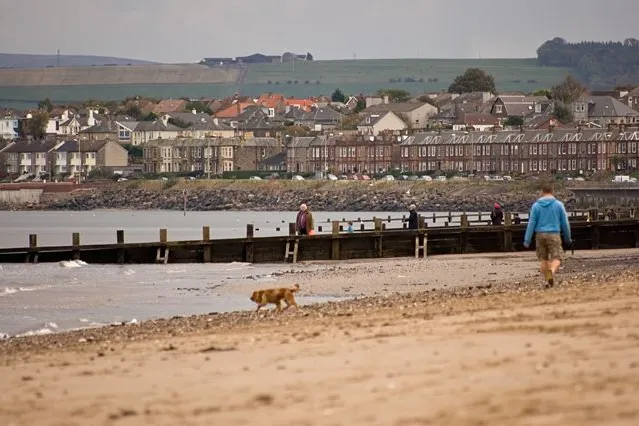
Photo by Paul Harrop on Wikimedia Commons

Portobello is Edinburgh's seaside, three miles east of the city centre, and on a warm day half the city takes the bus to get here. This walk runs from the bookshop on the High Street east along the promenade, and finishes on the rocks at Joppa.

The thread running through it is a long argument about access. The sand was nearly a private garden until a former Lord Advocate sued over it in the 1840s; the town council then built the promenade in stages, finishing in 1891; and in 1896 Portobello gave up its independence to Edinburgh and got public baths in return.

Along the way: two bottle kilns, the last standing in Scotland, two miles of level promenade, wide sand, Fife across the water, and the Carboniferous rock at Joppa.

The route is flat, and Lothian buses run from the city centre straight to Portobello High Street.

Hear it on the street

Get the turn-by-turn audio guide in the app. The narration plays itself as you reach each stop, hands-free and offline.

Stop by stop

The route

Interactive map of the route. The full stop list below works without it.

Portobello BookshopLocal pick

Photo by E Mens on Unsplash

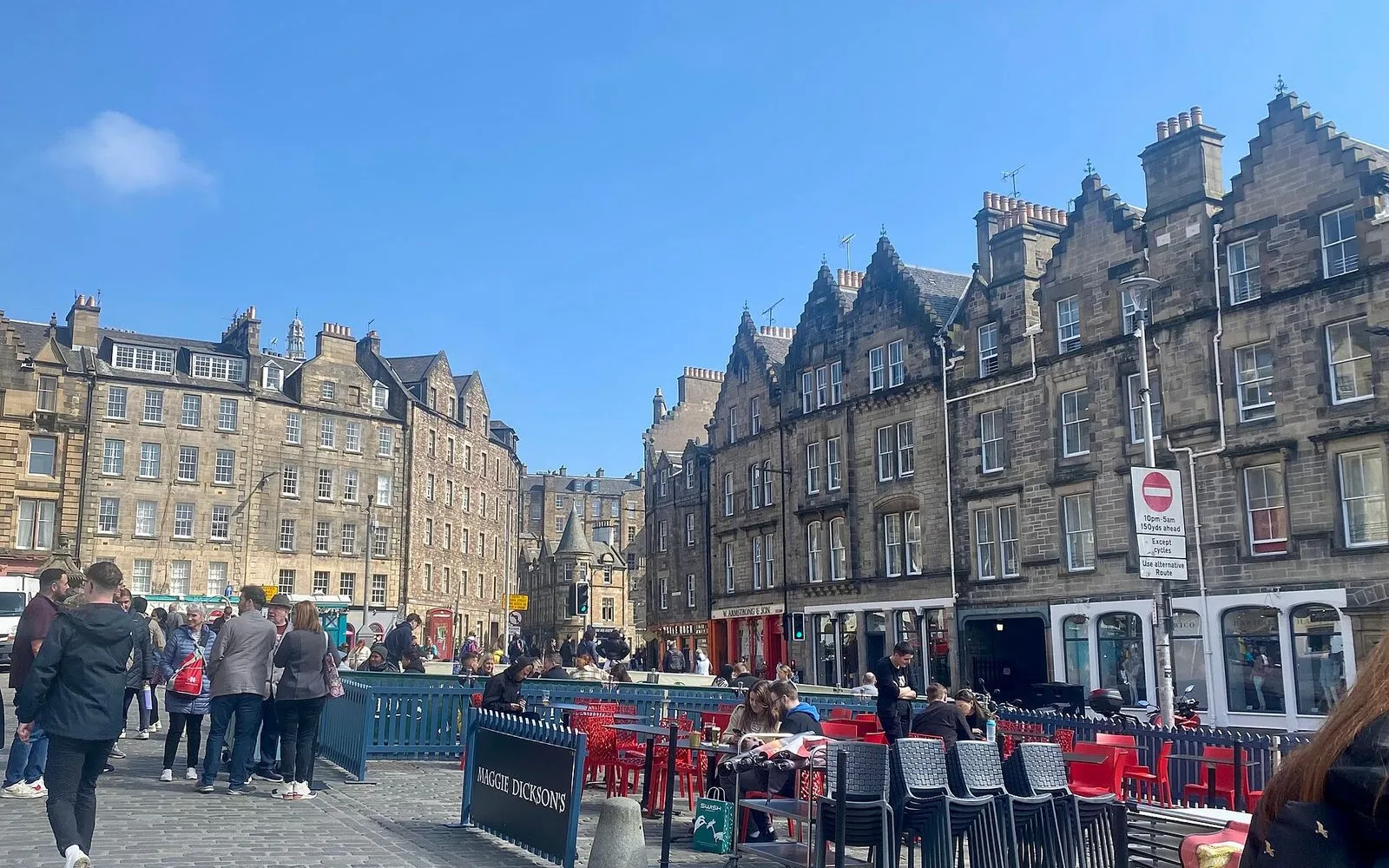
Portobello Bookshop

0:00

An independent bookshop of 2019, with Scotland's last bottle kilns fifty metres away.

The Portobello Bookshop opened in July 2019, at number 46 on the High Street, in a unit that had been a fishing tackle shop for thirty years and a co-operative before that. Jack, the owner, had worked in a bookshop in Stockbridge, looked across Scotland for the right site, and came back to Portobello, where he had spent most of his adult life. The team has grown from five booksellers at the opening to twelve.

Fifty metres away, at the shore end of Pipe Street, stand two brick cones: the only bottle kilns still standing in Scotland. Portobello made bricks, glass and pottery through the 1800s, and this is what's left of that. The 1906 kiln was partly taken down for safety, and it has stood behind hoarding ever since, waiting to be rebuilt.

Look along the pavement here: cafés, pubs and the small shops a district needs in January. You're one street back from the water, and the walk you're starting runs east along it.
≈7 min walk to the next stop
Portobello PromenadeMust see

Photo by Mat Fascione on Wikimedia Commons

Portobello Promenade

0:00

Level seafront promenade, built in stages and finished in 1891.

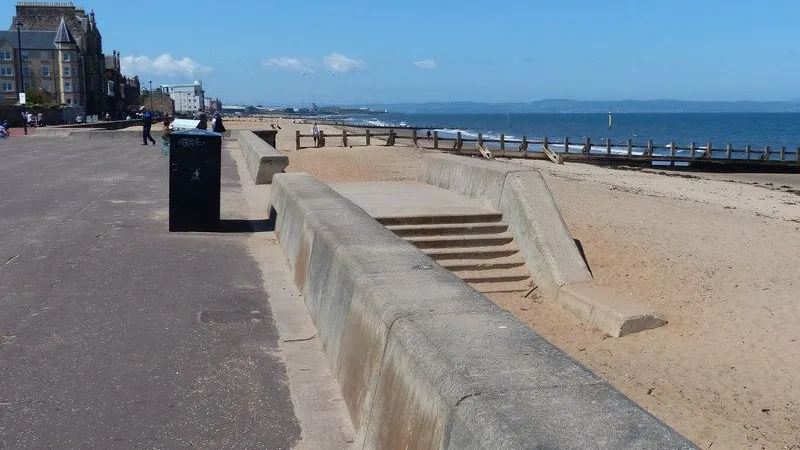
You're standing at the bottom of Bath Street, the way most people come down from the High Street to the sand. The promenade in front of you runs east and west for about two miles, the Firth of Forth on one side and the villas and terraces on the other.

The sand behind it was nearly private ground. In 1842 Sir William Rae, a former Lord Advocate, came down for his usual swim and found that a villa owner had carried a garden wall out across the beach. He argued it blocked his right of way, and after years of litigation and an appeal to the House of Lords the walls came down in July 1849. The town council then began building here: the first stretch in the 1850s, more of it in the 1860s, and the whole promenade finished in 1891.

Look along it now. There are gaps in the sea wall every few hundred metres, timber groynes dividing the sand, walkers and runners out in every weather, and the public baths finished in 1901 standing further east along the front.

≈2 min walk to the next stop
Portobello BeachMust see

Photo by Jim Barton on Wikimedia Commons

Portobello Beach

0:00

Wide sand, cold water, and the whole city on a sunny day.

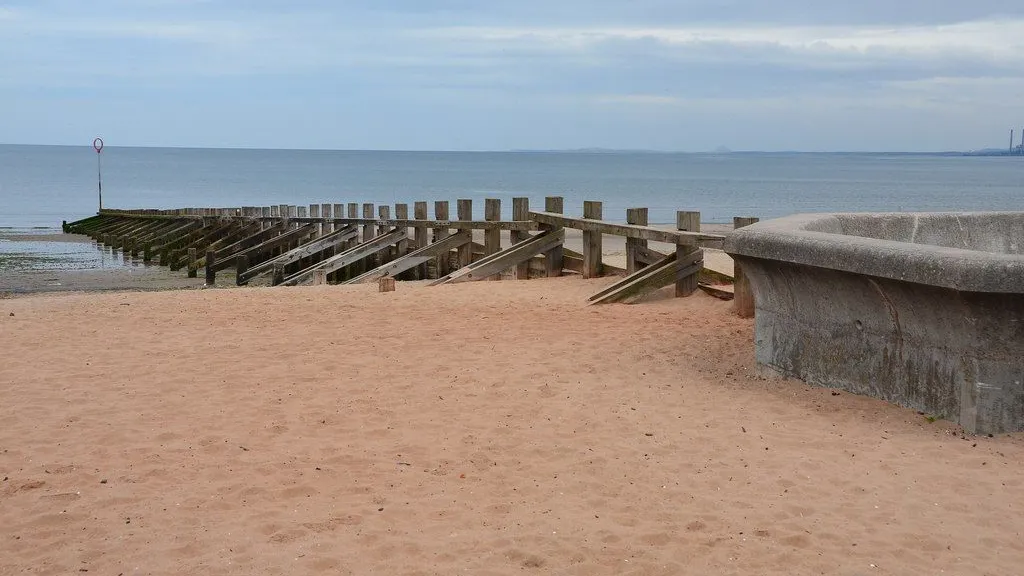
The sand in front of you is what people cross Edinburgh for, and there's more of it than the promenade suggests. At low tide the water pulls back a long way, and the slope is gentle enough that you can wade out a long way and still be in your depth. Portobello is a designated bathing water, tested through the summer bathing season, and the Forth stays cold in every month of the year.

It doesn't stop anyone. Winter swimmers go in right through the year, and on a July evening the beach fills up. Beach volleyball is played on courts by the promenade, and those courts have hosted Olympic qualifying events.

Now look out at the water. The coast of Fife runs along the far shore, the island of Inchkeith sits in the middle of the Firth, and oystercatchers work the wet sand at low tide, prising mussels off the groynes with red bills.

≈18 min walk to the next stop
Free preview ends here · stops 4 to 4 continue in the app

Joppa Rocks

Tilted beds of Carboniferous sandstone where the sand runs out.

in app
Good to know

Before you go

How do I get to Portobello?

Lothian buses run from the city centre straight to Portobello High Street, where the walk starts by the bookshop.

What's the story behind the beach?

Portobello's sand was nearly turned into a private garden until a former Lord Advocate sued over it in the 1840s. The council built the promenade in stages, finishing in 1891, and in 1896 Portobello gave up its independence to Edinburgh and got public baths in return.

Is the route flat?

The Portobello route is flat, along the promenade and the sand to the rocks at Joppa, with the High Street at the start.

Keep exploring

More walks in Edinburgh

The New TownThe hidden side

The New Town

A grid drawn in 1766 by a 26-year-old, then built street by street. Walk Edinburgh's New Town from Charlotte Square east to St Andrew Square, and finish among the monuments and gardens at its eastern edge.

8 stops2.8 km45+ min
The Royal MileThe local mix

The Royal Mile

From castle to palace on one ridge of rock, told through the closes that drop off it: a free writers' museum, a 17th-century-style garden, and a courtyard the London coaches left from.

8 stops2.2 km40+ min
Leith and the ShoreThe hidden side

Leith and the Shore

Leith ran its own affairs until 1920, and the harbour still behaves like a town of its own: a royal yacht, a nine-storey distillery, a swing bridge, and a waterfront of bars.

6 stops1.9 km30+ min
Holyrood Park and DuddingstonThe local mix

Holyrood Park and Duddingston

Skip the summit. This walk goes around Arthur's Seat instead, past two lochs and a ruined chapel, over the park's quiet side to a village with a twelfth-century kirk and one of Scotland's oldest pubs.

5 stops3.1 km45+ min
Calton HillThe hidden side

Calton Hill

A short climb from Waterloo Place through a graveyard, a free gallery in an old observatory and a Parthenon the city never finished, with the whole of Edinburgh laid out below.

4 stops0.8 km15+ min
Dean Village and the Water of LeithThe hidden side

Dean Village and the Water of Leith

A river walk from the gallery above the gorge, down past Telford's bridge of 1831 and a mill village's courtyard, to the Sunday market and the co-operative terraces of Stockbridge.

6 stops2.5 km40+ min
Grassmarket and GreyfriarsThe essentials

Grassmarket and Greyfriars

Below the castle, a market square that was also a gallows; above it, a town wall, a graveyard with a faithful dog, and a museum roof looking back over the Old Town.

6 stops1.1 km20+ min

Provenance · last verified September 26, 2026

Built from the Wayside route itself: the stops, their order, and the walk between them.

Photo by Paul Harrop on Wikimedia Commons · CC BY-SA 2.0

Photo by E Mens on Unsplash

Photo by Mat Fascione on Wikimedia Commons · CC BY-SA 2.0

Photo by Jim Barton on Wikimedia Commons · CC BY-SA 2.0

Photo by Çağlar Canbay on Unsplash

Photo by Wyatt Simpson on Unsplash

Photo by Stuart Hay on Unsplash

Photo by Adam Bouse on Unsplash

Photo by Connor Mollison on Unsplash

Photo by Daniel J. Schwarz on Unsplash

Photo by Kalisa66 on Wikimedia Commons · CC0

Coming soon

Wayside isn't in the app stores yet, but it's in the works. Check back soon.