Glasgow · Self-guided audio walk

Govan

Glasgow's south bank, from a widow's park to Viking gravestones and the shipyard that built the fastest liners on the Atlantic, ending on the 2024 footbridge to Partick. Free at every stop, though the two museums open April to October only.

  • 6Stops
  • 1.8 kmDistance
  • 30+ minTime
Govan

Photo by Wiki.cullin on Wikimedia Commons

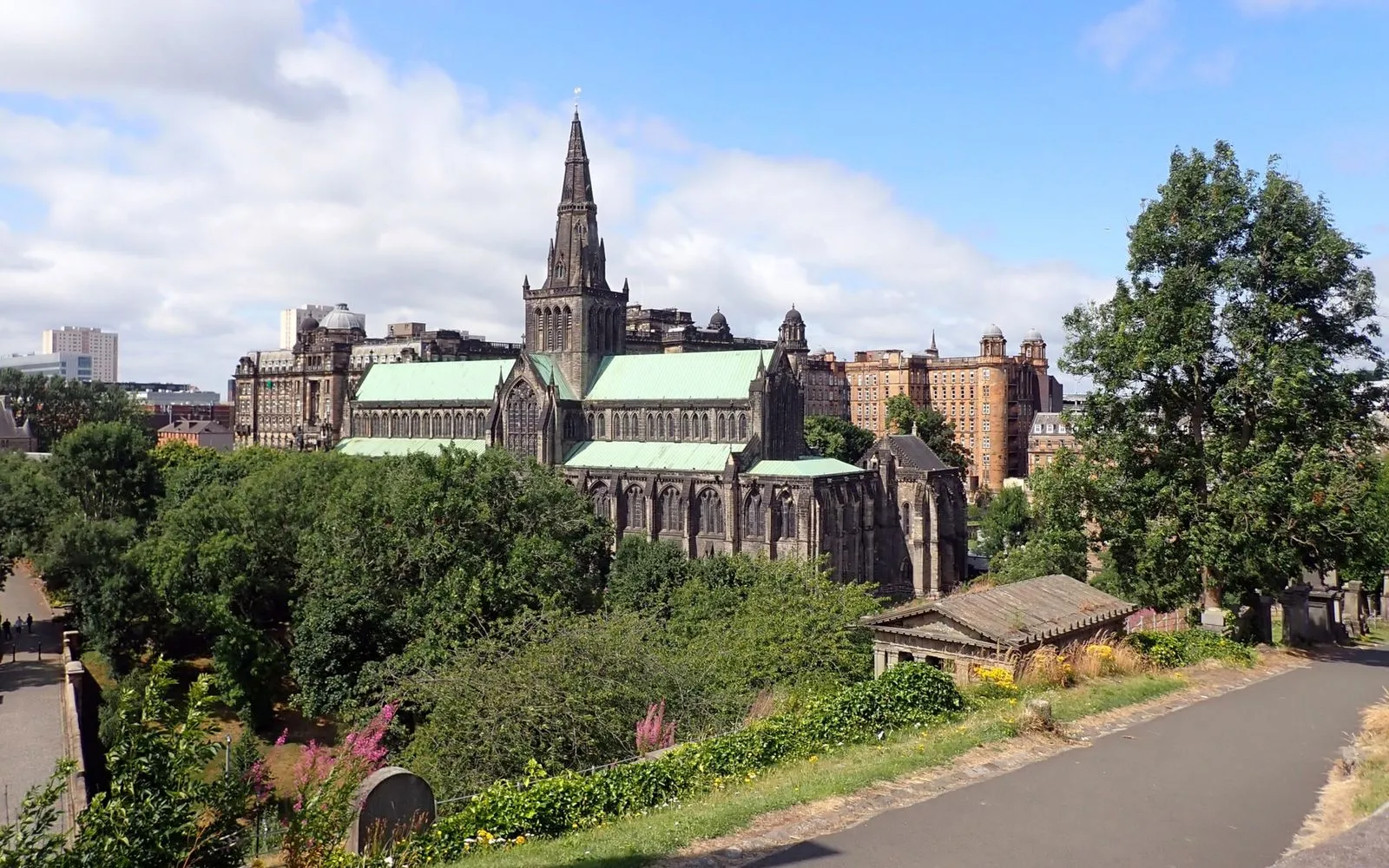
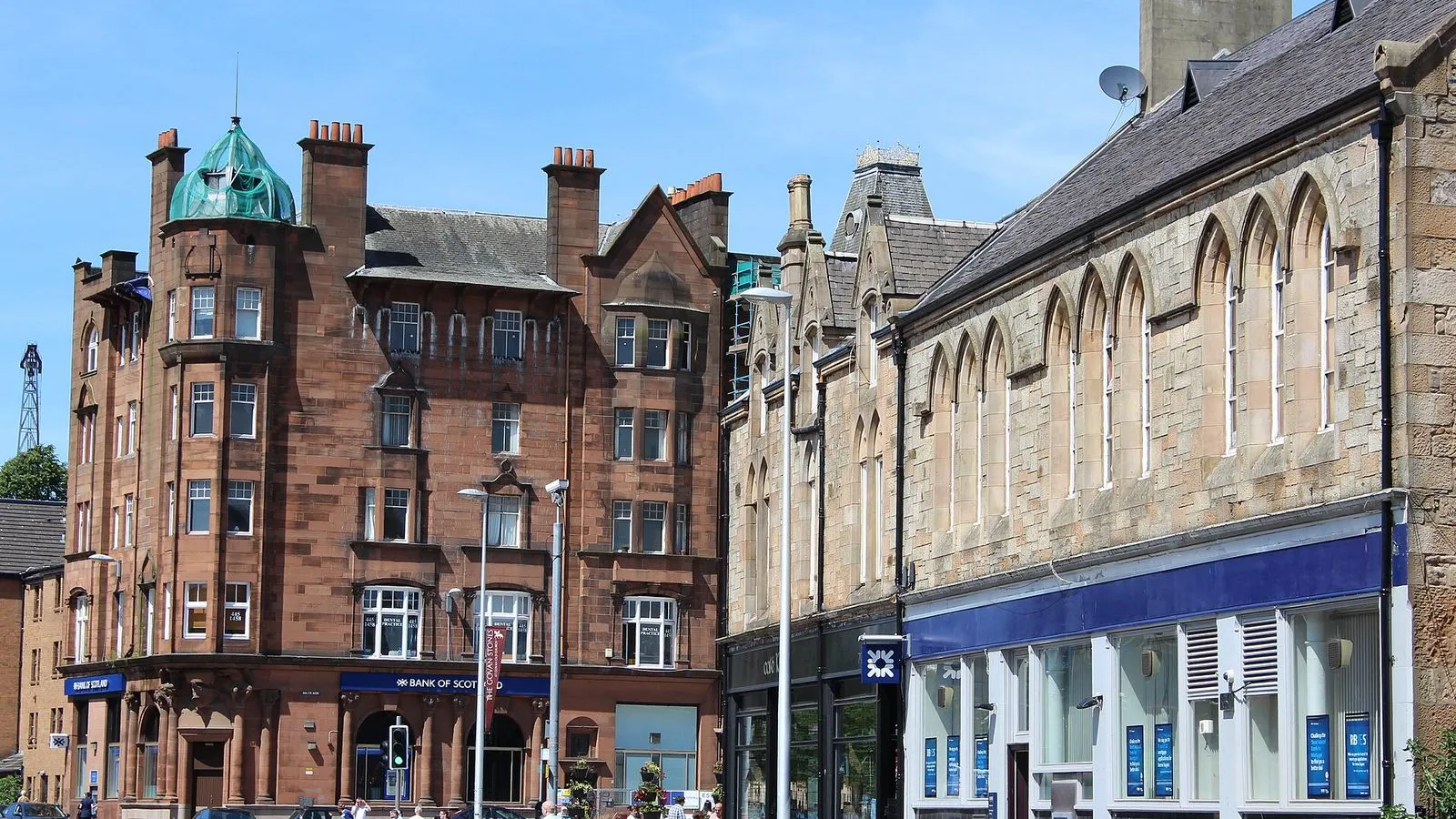
Govan is the Glasgow the tour buses skip, and it holds two stories in the same few hundred metres of street: the shipyard that built the fastest liners on the Atlantic, and a royal graveyard from the Viking age.

This walk starts in the park Isabella Elder gave to the burgh in 1885, crosses to the 1891 offices of Fairfield, now a free heritage centre, and carries on past the fountain known as the Govan Baby and the statue of Mary Barbour, who led the 1915 rent strike.

It ends at Govan Old, where 31 carved stones from the 9th to the 11th centuries are free to see, and on the bridge over the Clyde that opened in 2024.

Almost everything here is free and run by people who live in the district, though Fairfield and the Govan Stones keep April-to-October hours.

Hear it on the street

Get the turn-by-turn audio guide in the app. The narration plays itself as you reach each stop, hands-free and offline.

Stop by stop

The route

Interactive map of the route. The full stop list below works without it.

Elder ParkLocal pick

Photo by Thomas Nugent on Wikimedia Commons

Elder Park

0:00

Isabella Elder's 1885 gift to Govan: 37 acres, two statues, a library.

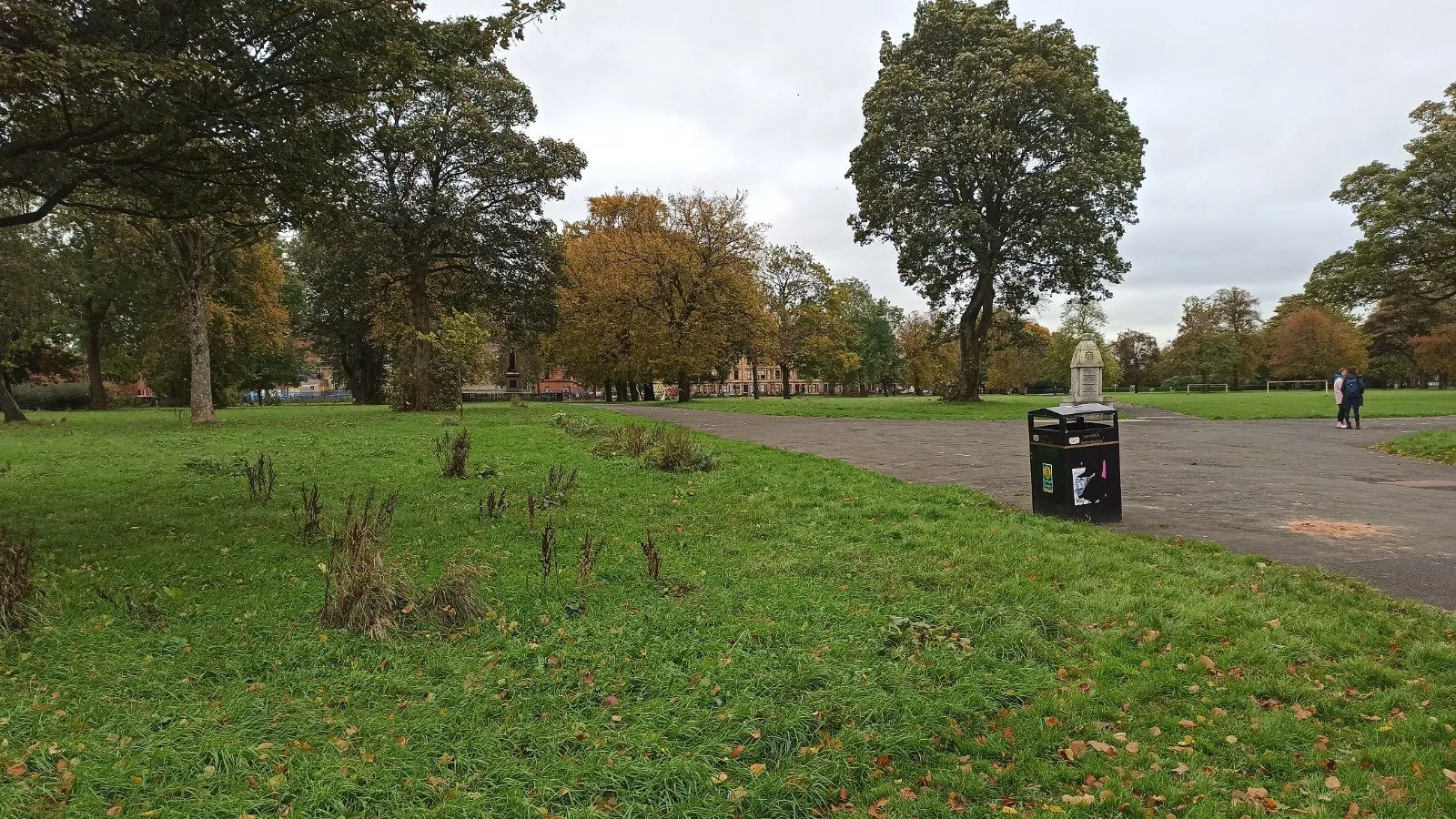
You're standing in 37 acres of park that a widow gave to the Burgh of Govan in 1885. Isabella Elder's husband John built the compound steam engine that let Clyde ships burn less coal and sail further, and when he died in 1869 she ran the firm herself for a time before partners took it on. She bought Fairfield farm for this ground and left the farmhouse standing. Her plan for it was simple: it was for what she called healthful recreation by music and amusement, and ball games were not allowed.

Find the two statues. Isabella's was unveiled in 1906 and shows her in the academic robes of the doctorate Glasgow University gave her in 1901. She also paid for the library at the far end, 10,000 pounds of her own money, on one condition: that it open on Sundays so working people could get in. Andrew Carnegie came to open it in 1903.

Nearby, two memorials remember Govan men killed in the SS Daphne disaster in 1883 and in the submarine HMS K13 in 1917.
≈6 min walk to the next stop
Fairfield Heritage CentreLocal pick

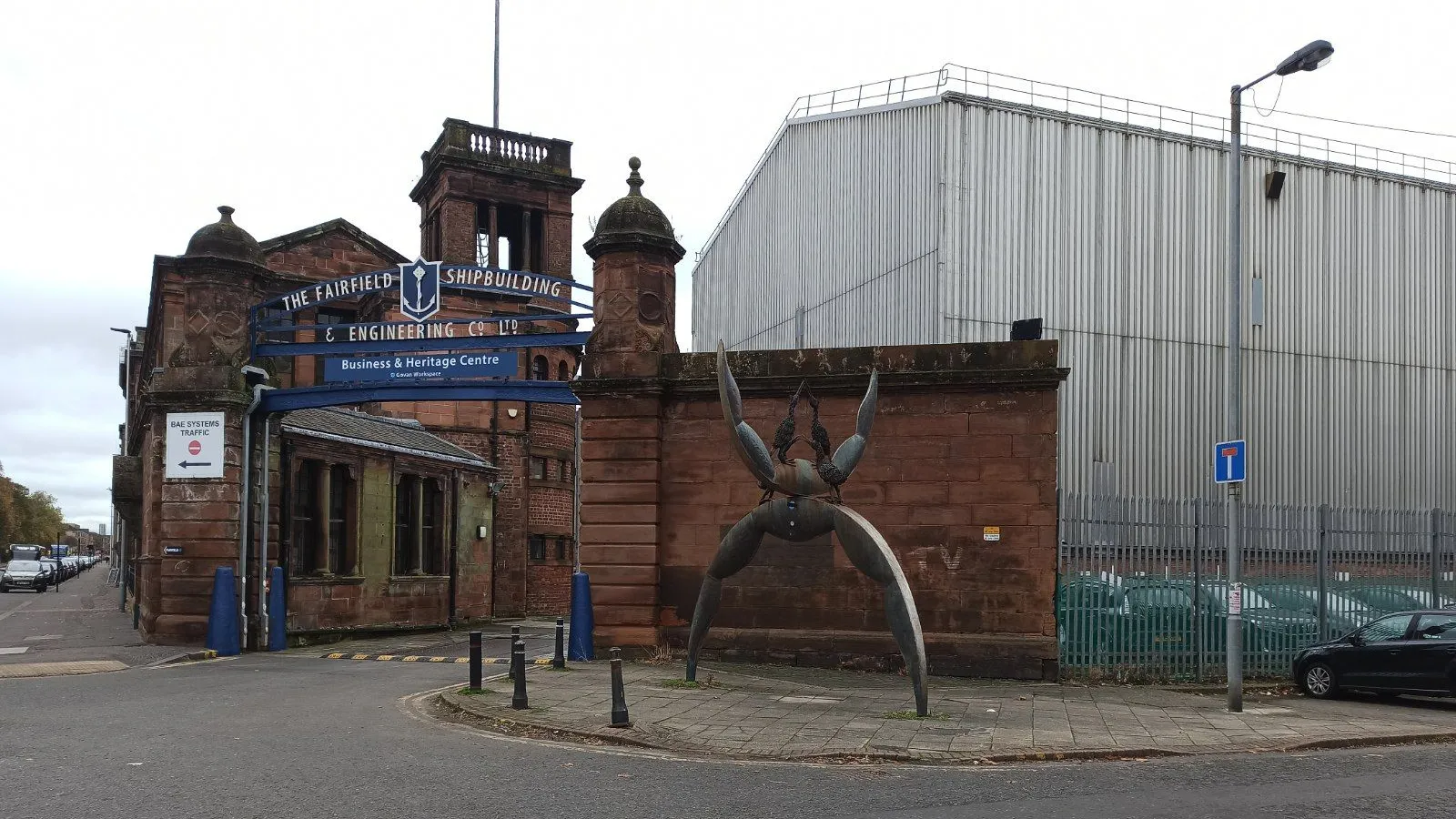
Photo by Thomas Nugent on Wikimedia Commons

Fairfield Heritage Centre

0:00

Free museum in the 1891 offices of a record-breaking shipyard.

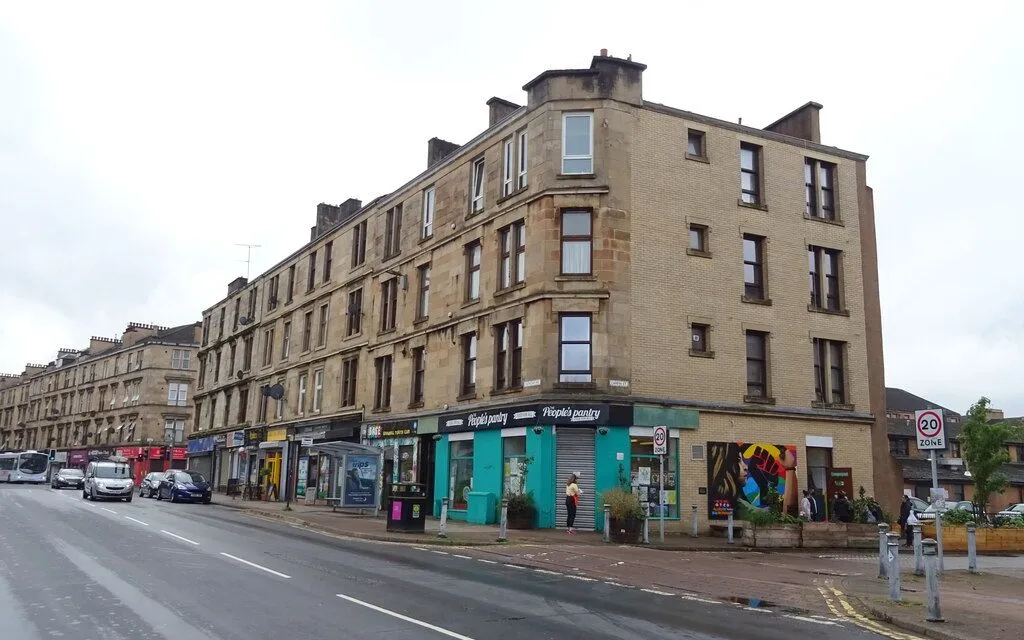
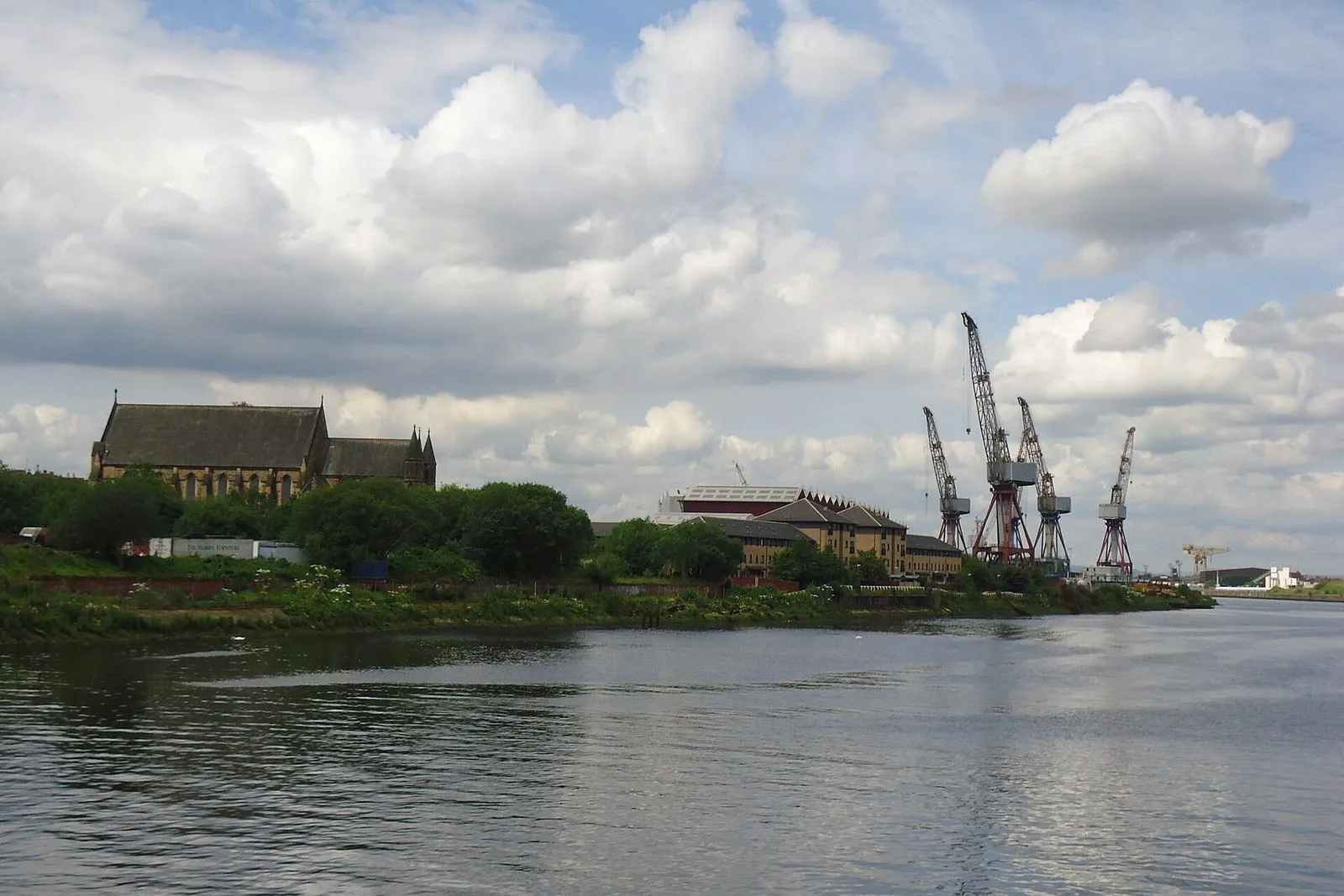
The building facing you, on the other side of Govan Road, is the head office of the Fairfield Shipbuilding and Engineering Company, finished in 1891. Upstairs, the boardroom and the ship models survive, which is rare: most yard offices went the way of the yards. Fairfield started in 1864 on the site of a farm of the same name. Under Sir William Pearce it built transatlantic liners fast enough to take the Blue Riband, the Campania and the Lucania among them in the 1890s.

Before World War I, 19 yards on the Clyde employed 70,000 people. The site went into Upper Clyde Shipbuilders in 1968, and survived the 1972 decision to keep two yards working, this one among them. Warships are still built here. The trust that runs the heritage centre describes Fairfield as the greatest and most successful shipyard in the world.

Entry is free, with a suggested donation of 3 pounds, and the doors are open every day from eleven in the morning to four in the afternoon, April to October.

≈9 min walk to the next stop
Govan CrossLocal pick

Photo by Leslie Barrie on Wikimedia Commons

Govan Cross

0:00

Mary Barbour's statue and the fountain called the Govan Baby.

Two monuments stand within a few steps of each other here, and both were paid for by people who lived around this corner. The bronze of Mary Barbour went up on 8 March 2018, International Women's Day, funded by 110,000 pounds raised in public subscription by the Remember Mary Barbour Association. She led the 1915 rent strike, when Govan women organised against landlords raising rents and evicting the families of men away at the war, and in 1924 she became the city's first female Bailie. Her figure leads a line of adults and children carrying placards that read We want justice and The will of the people is law.

A few steps away is the Aitken Memorial Fountain, cast iron, made in 1884 by Cruikshanks and Company at the Denny Iron Works, and the only one of that foundry's drinking fountains left anywhere. It honours Doctor John Aitken, Govan's first Medical Officer of Health, who was 44 when he died and was said to have worn himself out on the poor of the burgh. The small boy at the top gives the fountain its local name: the Govan Baby.

≈2 min walk to the next stop
Free preview ends here · stops 4 to 6 continue in the app

Pearce Institute

Lady Pearce's 1906 gift to Govan, still a working community building.

in app

Govan Old Parish Church

Thirty-one Viking-age carved stones, free to see inside the church.

in app

Govan-Partick Bridge

The 2024 swing bridge to Partick, closing the walk over the Clyde.

in app
Good to know

Before you go

Do you need to pay to see the Govan Stones?

No. The carved stones are free to see inside Govan Old Parish Church, and both Govan Old and the Fairfield Heritage Centre keep April to October opening, so check the season before you cross the river. The rest of the walk, through Elder Park and across Govan Cross, is free at any time.

SourceVisit Glasgow: Finnieston
How do you reach Govan?

Govan has its own station on the Subway circle, and the walk ends on the footbridge over the Clyde to Partick, which puts you back on the north bank for the West End. A Subway single is £1.80, capped at £3.40 for the day when you use the same contactless card.

SourceSPT: Subway tickets
Who was Mary Barbour?

Mary Barbour led the 1915 rent strike in Glasgow, when tens of thousands of tenants refused the increases landlords imposed during the war years. Her statue stands at Govan Cross, on this walk, and the fountain nearby is known locally as the Govan Baby.

SourceFriends of Glasgow Necropolis

Provenance · last verified September 26, 2026

Built from the Wayside route itself: the stops, their order, and the walk between them.

Photo by Wiki.cullin on Wikimedia Commons · CC0

Photo by Thomas Nugent on Wikimedia Commons · CC BY-SA 2.0

Photo by Thomas Nugent on Wikimedia Commons · CC BY-SA 2.0

Photo by Leslie Barrie on Wikimedia Commons · CC BY-SA 2.0

Photo by Vishnu Prasad on Unsplash

Photo by Euan Cameron on Unsplash

Photo by Phil Reid on Unsplash

Photo by habiloid on Wikimedia Commons · CC BY-SA 2.0

Photo by JThomas on Wikimedia Commons · CC BY-SA 2.0

Coming soon

Wayside isn't in the app stores yet, but it's in the works. Check back soon.