Glasgow · Self-guided audio walk

The Cathedral Precinct and the Necropolis

A short climb up Glasgow's founding slope: the oldest house in the city, the medieval cathedral that came through the Reformation, and the Victorian cemetery above it, with every stop free to enter.

  • 5Stops
  • 0.7 kmDistance
  • 15+ minTime
The Cathedral Precinct and the Necropolis

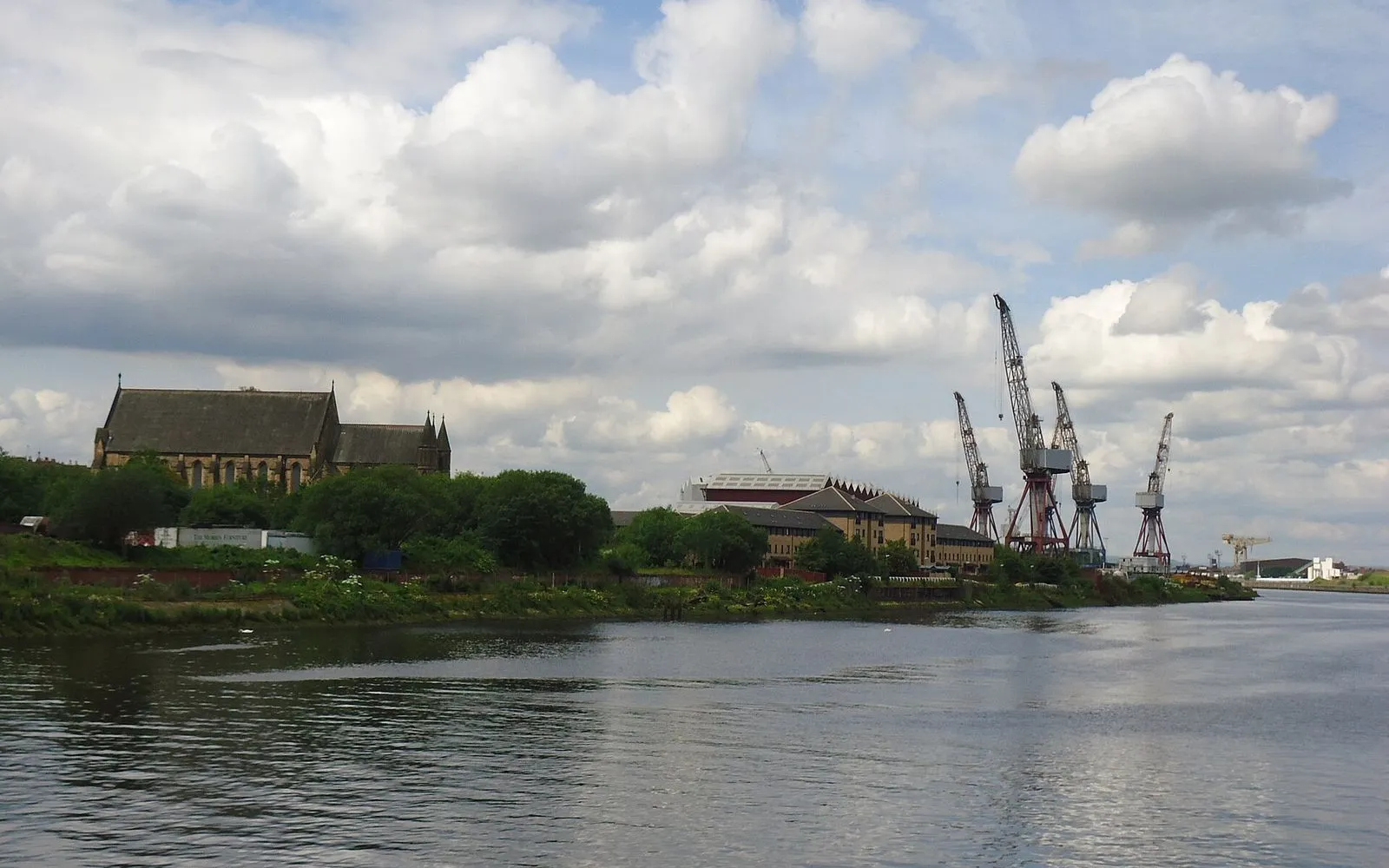
Photo by habiloid on Wikimedia Commons

Glasgow began on this slope, and the whole of that beginning is still walkable. Provand's Lordship, built in 1471, is the oldest house in the city and the last survivor of the cathedral's walled precinct; the Saint Mungo Museum faces it from the site of the medieval Bishops' Castle.

Next door, Glasgow Cathedral is the most complete medieval cathedral on the Scottish mainland, with Saint Mungo's shrine in its 13th-century lower church and one of Britain's best collections of modern stained glass. Entry is free, and the spire is under conservation until 2029, so expect scaffolding.

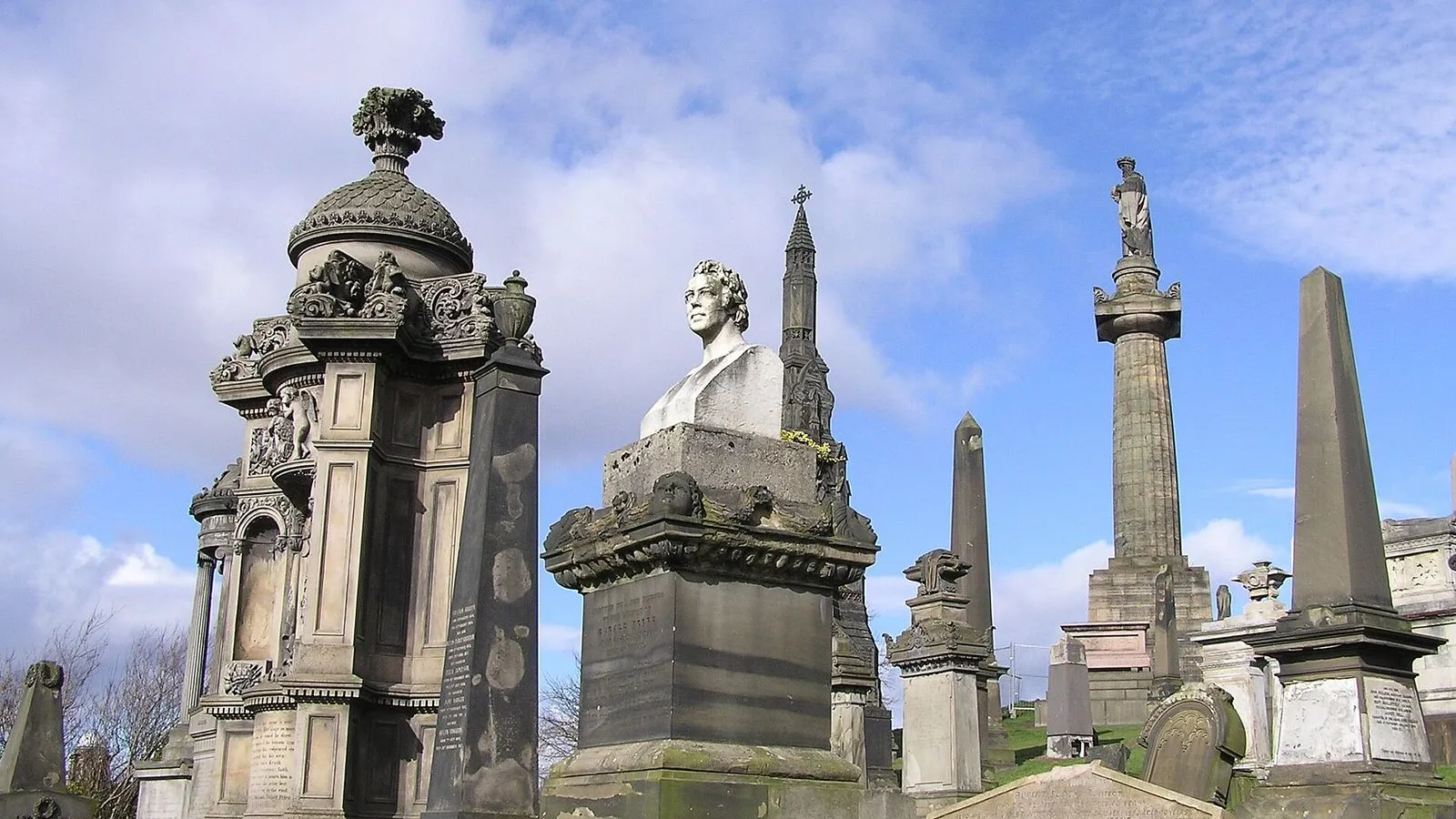
The Bridge of Sighs then carries you into the Necropolis, opened in 1833, where about 3,500 monuments climb the hill past the Monteath mausoleum to the John Knox column and the best view of the cathedral in the city. Every stop on this walk is free.

Hear it on the street

Get the turn-by-turn audio guide in the app. The narration plays itself as you reach each stop, hands-free and offline.

Stop by stop

The route

Interactive map of the route. The full stop list below works without it.

Provand's LordshipLocal pick

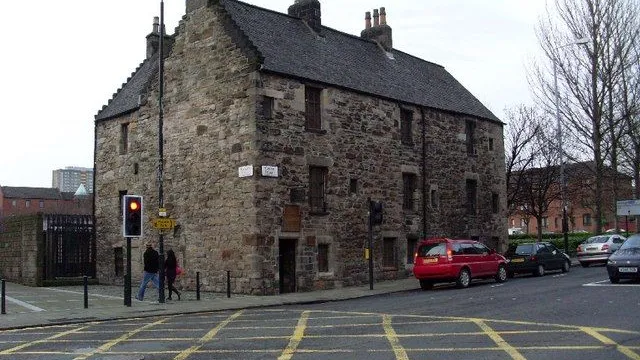
Photo by Stephen Sweeney on Wikimedia Commons

Provand's Lordship

0:00

Glasgow's oldest house, built in 1471, with a sculpture garden behind it

You're looking at the oldest house in Glasgow. Provand's Lordship was built in 1471 as part of Saint Nicholas's Hospital, founded by Bishop Andrew Muirhead, and it's one of only four medieval buildings still standing in the city. Entry is free.

It's also the last piece of the cathedral's chanonry, the walled precinct where the canons lived and where the bishop kept his castle. After the Reformation in 1560 the rest of it was cleared away. Only this manse survived, kept for a canon whose title came from the district of Provan. Sir William Burrell later paid for the house to be bought and furnished with 17th-century Scottish furniture.

The Saint Mungo Museum across Castle Street stands on the site of the Bishops' Castle. It opened in 1993, in the castle's style, with stained glass from closed Glasgow churches in its windows and a length of the old castle wall preserved inside. Behind the house, in the Saint Nicholas Garden, the carved Tontine Heads look down from the wall.

≈3 min walk to the next stop
Glasgow CathedralMust see

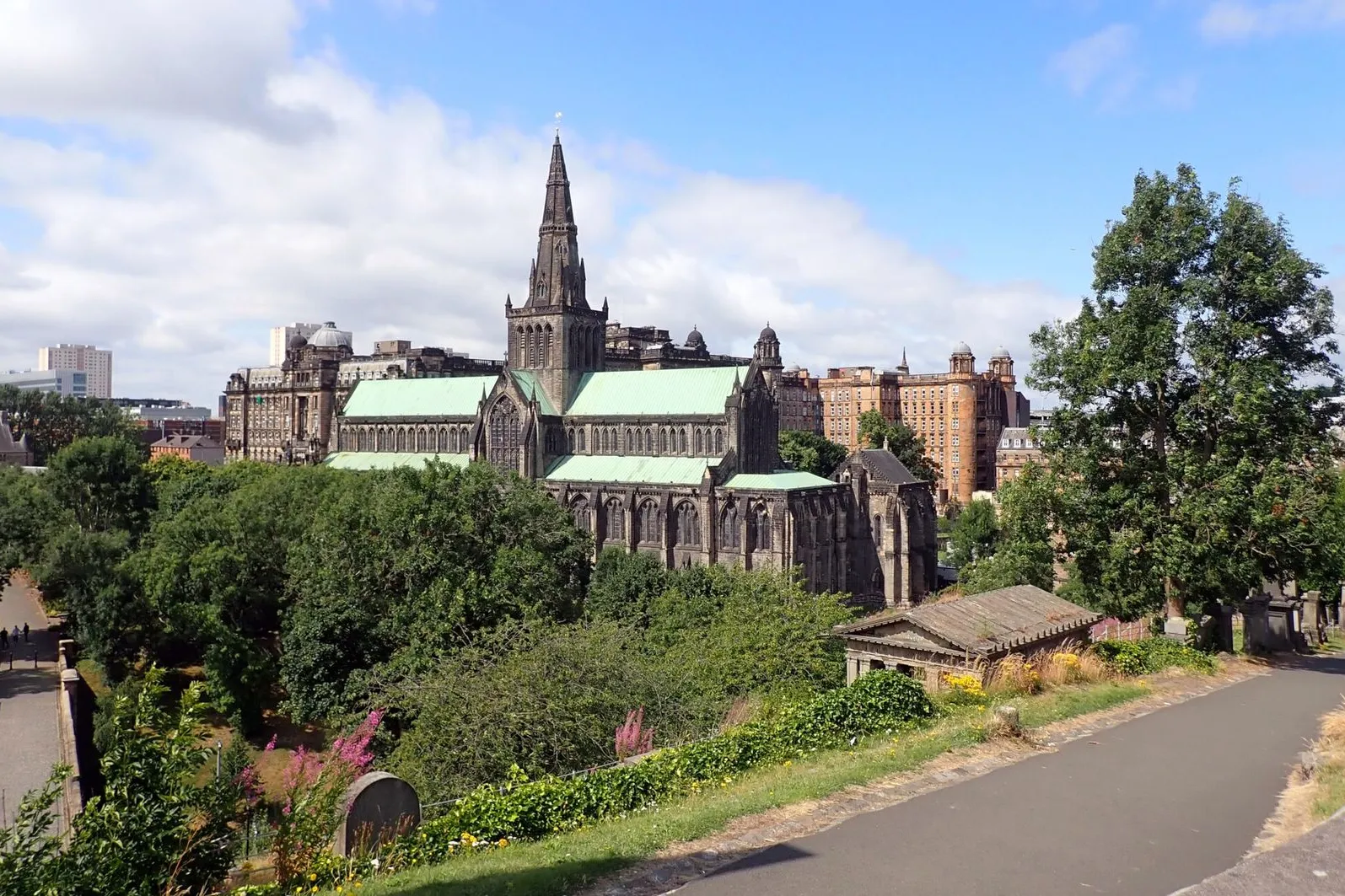
Photo by Craig McKay on Unsplash

Glasgow Cathedral

0:00

Scotland's best-preserved medieval cathedral, with Saint Mungo's tomb in the crypt

Glasgow Cathedral is the most complete medieval cathedral left on the Scottish mainland, and it's free to visit, with donations welcome. Its roof survived the Reformation in 1560 because the townspeople paid for the repairs themselves.

A conservation project on the spire began in September 2026, and scaffolding should stay up around the tower until 2029. The cathedral stays open.

Go down into the lower church, the 13th-century crypt built to hold the shrine of Saint Mungo, the city's founder, where pilgrims came from across Scotland. On your way past, look at the stone pulpitum, carved in the early 1400s, which still hides the choir from the nave.

The windows have their own history. In the 1860s the cathedral was glazed by a workshop near Munich, and most of that glass came out again in the middle of the 20th century; some of it is displayed in the crypt. What replaced it, window by window, is one of Britain's best collections of modern stained glass.

≈2 min walk to the next stop
NecropolisMust see

Photo by Finlay McWalter on Wikimedia Commons

Necropolis

0:00

Victorian garden cemetery of 1833, with 3,500 monuments on the hill

You cross into the cemetery over the Bridge of Sighs, built in 1836 to carry funeral processions. It spans Wishart Street now, but it was built over the Molendinar Burn, the stream where Saint Mungo is said to have fished for salmon in the 6th century. The burn runs in a culvert beneath the road, and the bridge keeps the name it earned from the mourners who walked it.

The gates are cast iron, black and gold, made in 1838 at the city's Phoenix Foundry to designs by David and James Hamilton. Above you is the Merchants' House ship, with the motto that translates as so often returning to the same place.

The Merchants' House ran the cemetery, which opened in 1833 with Père Lachaise in Paris in mind. In 1832 they hired George Milne as superintendent and head gardener on 60 pounds a year, and told him to lay out a garden. The paths wander across 15 hectares with no grid to them, and the monuments number around 3,500, with some 50,000 people buried on this hill.

≈2 min walk to the next stop
Free preview ends here · stops 4 to 5 continue in the app

Monteath Mausoleum

A round, tiered mausoleum of 1842, carved like a Norman chapel

in app

John Knox Monument

The 1825 column at the summit, and the best view of the cathedral

in app
Good to know

Before you go

Is the cathedral precinct and Necropolis walk free?

Every stop is free. Provand's Lordship, Glasgow Cathedral and the St Mungo Museum facing it all have free entry, and the cathedral welcomes donations rather than charging admission. There's no gate fee to walk through the Necropolis either.

SourceGlasgow Life: Provand's LordshipHistoric Environment Scotland: Glasgow Cathedral
What are the opening hours for Provand's Lordship and Glasgow Cathedral?

Provand's Lordship opens 10am to 5pm Monday to Thursday and Saturday and 11am to 5pm Friday and Sunday. Glasgow Cathedral opens 9:30am to 5pm Monday to Saturday from 1 April to 30 September and 10am to 4pm from 1 October to 31 March, with Sundays 1pm to 5pm all year and last entry 45 minutes before closing.

SourceGlasgow Life: Provand's LordshipHistoric Environment Scotland: Glasgow Cathedral
How hard is the climb into the Necropolis?

The Necropolis climbs a hill in stages, and the final pull to the John Knox column is the steepest part of the walk. The paths mix tarmac, gravel and grass, so wear shoes with grip after rain and take the ascent slowly. There's no charge to walk through.

SourceFriends of Glasgow Necropolis
Are there toilets or step-free options on this walk?

Toilets and a shop are at the free St Mungo Museum, which faces Provand's Lordship; the museum also lends wheelchairs and has a hearing loop. Provand's Lordship itself has ramp access to its ground floor, but the age of the house rules out a lift to the upper floors, and two displays downstairs cover the rooms above.

SourceGlasgow Life: St Mungo Museum of Religious Life and ArtGlasgow Life: Provand's Lordship floor plan

Provenance · last verified September 26, 2026

Built from the Wayside route itself: the stops, their order, and the walk between them.

Photo by habiloid on Wikimedia Commons · CC BY-SA 2.0

Photo by Stephen Sweeney on Wikimedia Commons · CC BY-SA 2.0

Photo by Craig McKay on Unsplash

Photo by Finlay McWalter on Wikimedia Commons · CC BY-SA 3.0

Photo by Vishnu Prasad on Unsplash

Photo by Wiki.cullin on Wikimedia Commons · CC0

Photo by Euan Cameron on Unsplash

Photo by Phil Reid on Unsplash

Photo by JThomas on Wikimedia Commons · CC BY-SA 2.0

Coming soon

Wayside isn't in the app stores yet, but it's in the works. Check back soon.