Braşov · Self-guided audio walk

From the Old Quarter to the Mountain

Out of Șchei, along the guild walls, and up Tâmpa by cable car.

  • 6Stops
  • 1.7 kmDistance
  • 30+ minTime
From the Old Quarter to the Mountain

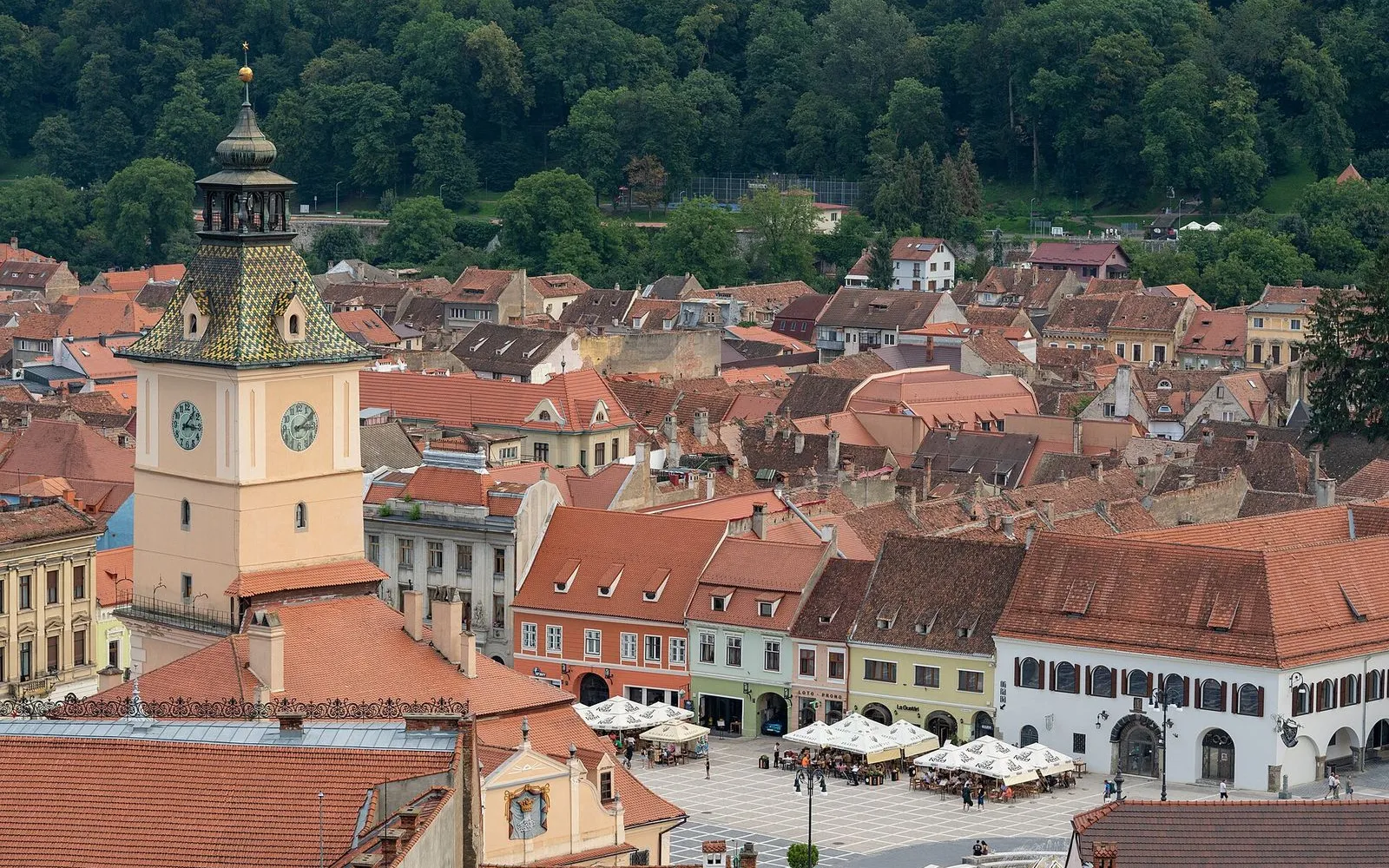
Photo by Whitepixels on Wikimedia Commons

Brașov's southern side is the story of two communities sharing one city. This walk begins deep in Șchei, the quarter where Romanians lived outside the Saxon walls for centuries, at the church and the school that kept their faith and their language alive.

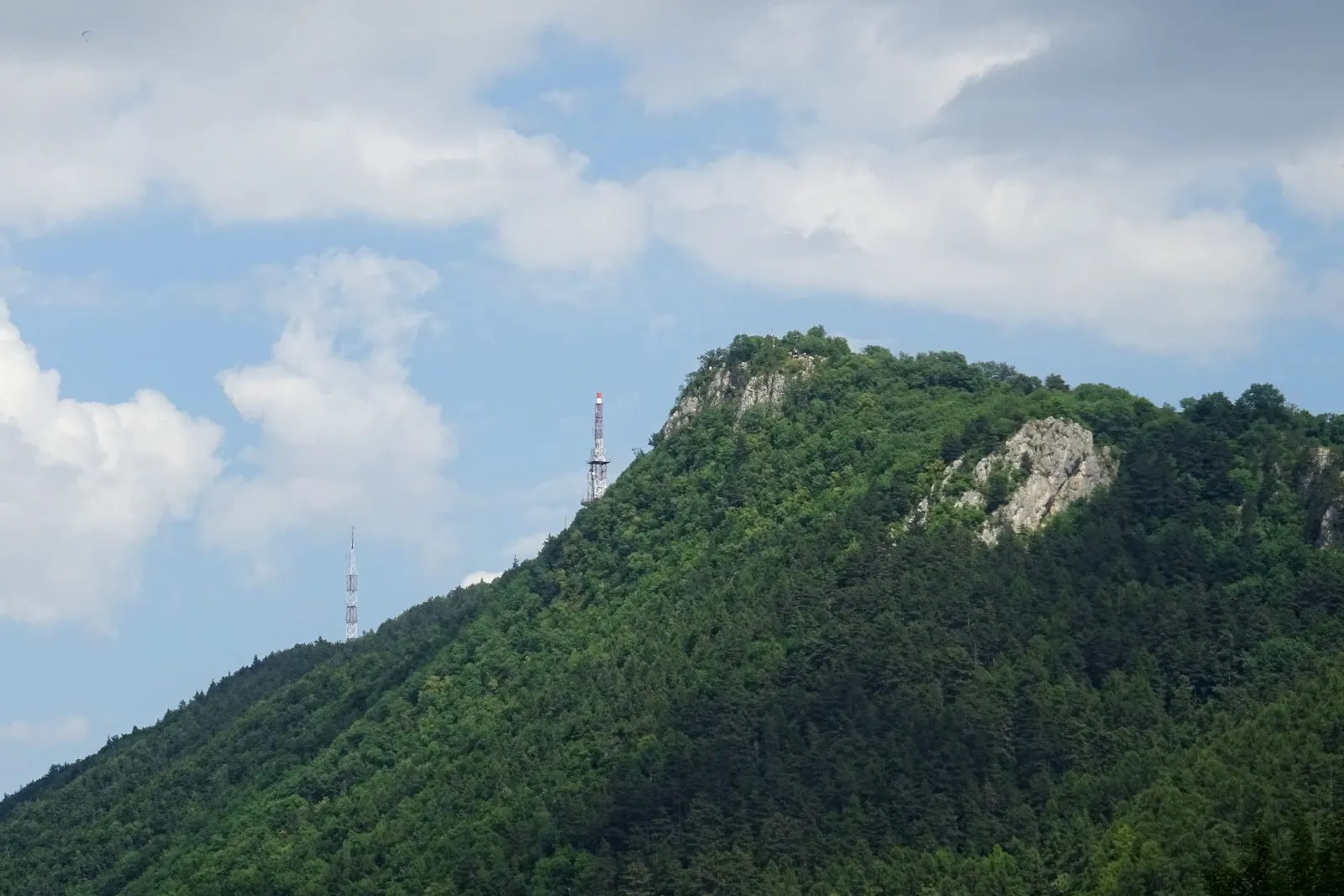
It then follows the old fortifications past the largest of the seven guild bastions and onto a tree-lined promenade at the foot of Tâmpa. The cable car, rebuilt and reopened in October 2025, makes the last climb: a two-minute ride to a view over the red rooftops you have just been walking beneath. Allow about two hours and twenty minutes, most of it on level ground, with the mountain doing the steep work at the end.

Hear it on the street

Get the turn-by-turn audio guide in the app. The narration plays itself as you reach each stop, hands-free and offline.

Stop by stop

The route

Interactive map of the route. The full stop list below works without it.

St Nicholas ChurchMust see

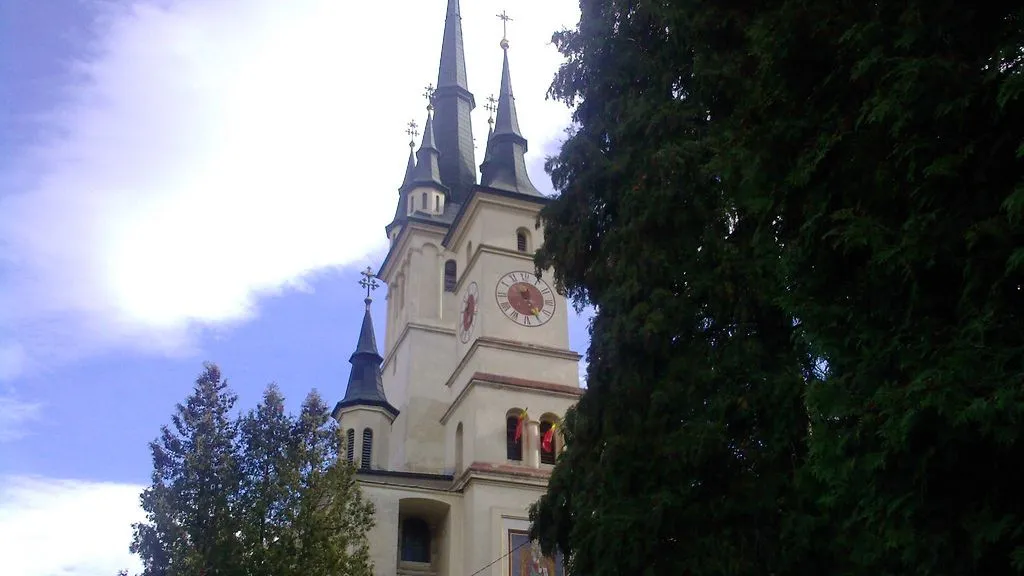
Photo by Nicu farcas on Wikimedia Commons

St Nicholas Church

0:00

A Romanian Orthodox church at the heart of Șchei, built in stone from 1495 and painted inside and out.

You're in the lower square of Șchei, the old Romanian quarter that sat outside the Saxon citadel for centuries. The church in front of you, St Nicholas, is one of the oldest Orthodox churches in the country, but its story begins before the stone you see. A wooden cross stood on this spot in 1292, and a wooden church was already here by 1399, when Pope Boniface the Ninth mentioned it in a bull. The stone church went up between 1495 and 1519, paid for by the locals with help from the Wallachian prince Vlad the Monk and, a little later, Neagoe Basarab.

That mix of local money and princely gifts tells you who built this place: the Romanians of Șchei, living outside the walls and keeping their own faith. Look at the walls. The exterior paintings date to 1739, and inside, the frescoes from 1849 are the work of Mișu Popp and Constantin Lecca. A twentieth-century mural shows Michael the Brave riding into Brașov in 1599.

The western tower went up in 1583, the same year the school next door began teaching in Romanian. That is not a coincidence.
≈1 min walk to the next stop
First Romanian SchoolLocal pick

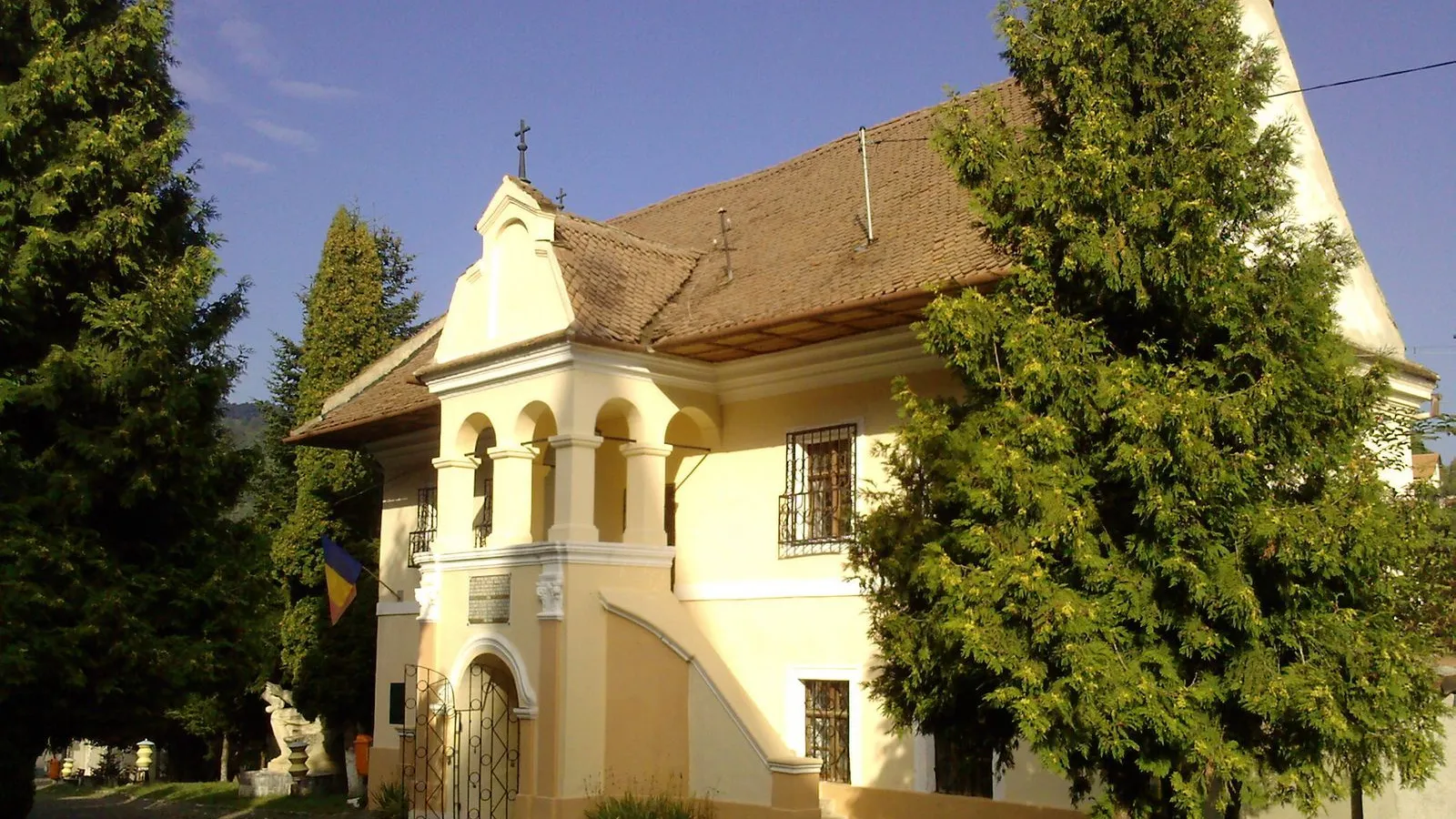
Photo by Nicu Farcaș on Wikimedia Commons

First Romanian School

0:00

The little school beside the church that began teaching in Romanian in 1583, now a museum of books and classrooms.

Walk a few steps across the courtyard and you're at the second half of this one site. The small building in front of you, the First Romanian School, went up in 1495, but its big date is 1583. Until that year, lessons were given in Church Slavonic, the language of the Orthodox service. In 1583 the school switched to teaching in Romanian, the first school on the territory of today's Romania to do so.

That change mattered because it made the classroom speak the language people actually used at home. The deacon Coresi worked here in the sixteenth century, printing some of the first books in Romanian, and a printing press bears his name in the museum. The building itself was rebuilt in stone between 1595 and 1597, paid for by Prince Aron of Moldavia. Inside, thirty rooms hold old Bibles, grammars, and the classroom named for the teacher Anton Pann.

The school kept teaching until 1850. Read the plaque above the door, which calls this the first Romanian school in all of Greater Romania and lists the men who rebuilt it. Two visits, one courtyard: the church kept the faith, and this school kept the language.

≈9 min walk to the next stop
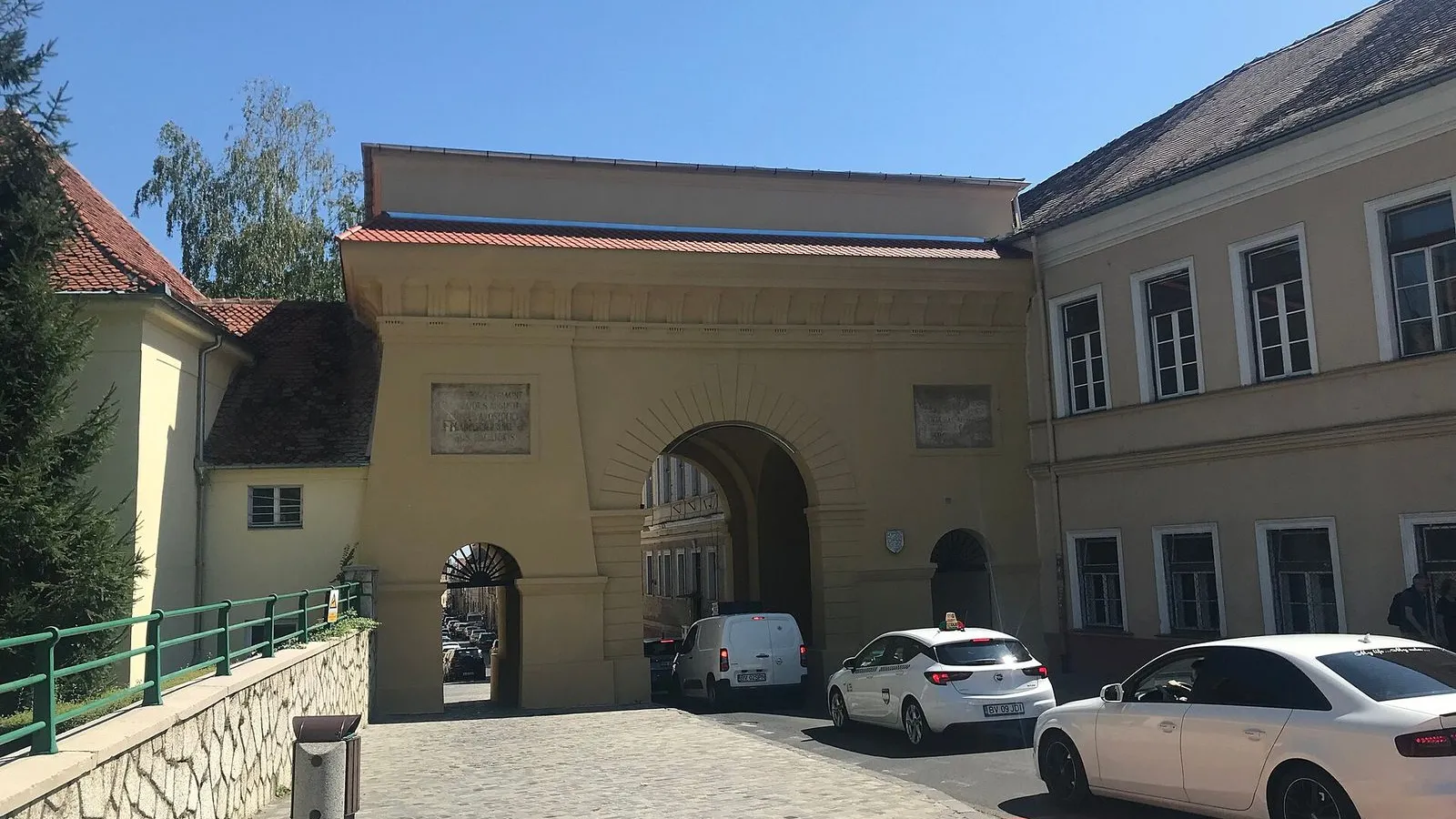
Șchei GateLocal pick

Photo by Antimuonium on Wikimedia Commons

Șchei Gate

0:00

The classical triumphal arch of 1827 that let the growing traffic of the Șchei quarter pass into the citadel.

You've walked back out of the quarter to the edge of the old citadel, and this is the gate the Romanians of Șchei finally got built. For nearly three centuries, everyone moving between the quarter and the Saxon town was funneled through a single, much smaller gate. By the 1820s the traffic had outgrown it, and the Romanian merchants of Șchei paid for something bigger. The gate in front of you went up in 1827 and 1828, designed by the master builder Joseph Jani as a classical triumphal arch.

Three openings: the wide middle one for carts and wagons, the two lower ones for people on foot. Look up at the Latin inscriptions above the side arches. They give the construction date and note that it was built after Emperor Francis the First of Austria visited Brașov in 1817. This is the only one of the old citadel gates to survive whole.

Stand under the big arch for a second. You are on the line where, for centuries, Romanians living outside the walls crossed in to trade, and Saxons looked out toward the mountain and the quarter beyond.

≈5 min walk to the next stop
Free preview ends here · stops 4 to 6 continue in the app

Weavers' Bastion

The biggest of the seven guild bastions on the old walls, a hexagonal fort kept by the linen weavers and now a museum.

in app

Aleea de sub Tâmpa

The tree-lined promenade that runs at the foot of Tâmpa, below the mountain's steep forested slope.

in app

Tâmpa Cable Car

The rebuilt cable car that climbs to the Tâmpa summit in about two minutes, reopened in October 2025.

in app
Good to know

Before you go

What does the Tâmpa cable car cost?

A round trip is 45 lei for adults and 30 lei for children aged 6 to 12. One way is 30 lei for adults and 20 lei for children.

SourceBrașov Installations
Can I walk up Tâmpa instead of taking the cable car?

Marked trails climb from Aleea de sub Tâmpa to the summit, and the cable car is the quick option when your day is short or your legs are done.

Does the cable car run every day?

The cable car runs daily, but the hours change by day and it can pause in high wind. Check the live status on the operator's page before you set out.

SourceBrașov Installations

Provenance · last verified August 19, 2026

Built from the Wayside route itself: the stops, their order, and the walk between them.

Photo by Whitepixels on Wikimedia Commons · CC0

Photo by Nicu farcas on Wikimedia Commons · Public domain

Photo by Nicu Farcaș on Wikimedia Commons · CC BY 3.0

Photo by Antimuonium on Wikimedia Commons · CC BY-SA 4.0

Photo by Paul Colin Hennig firstdorsal.eu on Wikimedia Commons · CC BY-SA 4.0

Coming soon

Wayside isn't in the app stores yet, but it's in the works. Check back soon.