Clermont-Ferrand · Self-guided audio walk

Royat's Valley of Water and Lava

A Belle Époque spa town, a lava cave and a fortified church, up the Tiretaine gorge.

  • 7Stops
  • 1.4 kmDistance
  • 25+ minTime
Royat's Valley of Water and Lava

Photo by SM63 on Wikimedia Commons

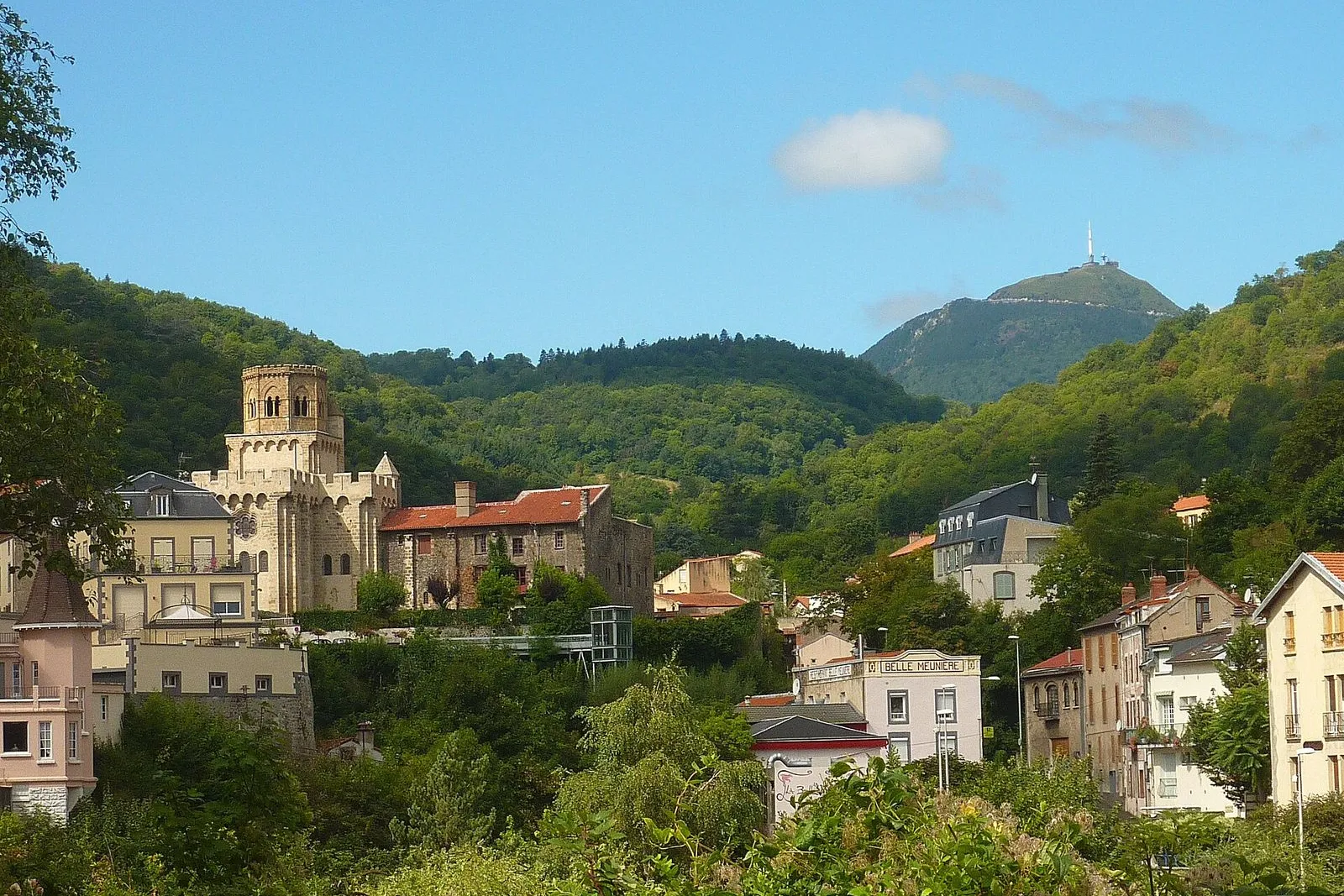
Royat is Clermont-Ferrand's green escape, a narrow gorge where the Tiretaine runs between basalt cliffs and Belle Époque pavilions. This walk follows the water uphill from the thermal park to the old fortified village of Royat in about an hour and thirty-five minutes.

Along the way you step into a steam bubble frozen in lava, where five springs still feed a village washhouse. You pass the thermal baths that brought Napoleon III and Empress Eugénie here for the cure in 1862, the art deco casino and the 1890s theatre where Sarah Bernhardt, Colette and Édith Piaf performed, and a Roman bathing complex uncovered in 1881. The tour ends at Saint-Léger, a church that became a small fortress. It is the cool, watery counterpoint to Clermont's dark volcanic stone, a short bus ride from the centre.

Hear it on the street

Get the turn-by-turn audio guide in the app. The narration plays itself as you reach each stop, hands-free and offline.

Stop by stop

The route

Interactive map of the route. The full stop list below works without it.

Grotte du ChienMust see

Photo by User:JYB Devot on Wikimedia Commons

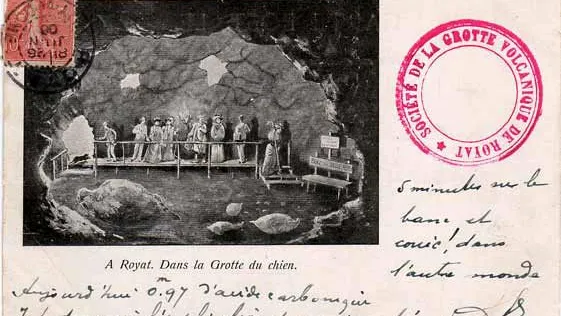
Grotte du Chien

0:00

A lava cave where carbon dioxide pools at floor level, once shown to spa visitors with a candle and a dog.

You're standing at the mouth of a cave that built this valley's early fame, and its name comes from an experiment that sounds like a stage trick. The cave opens in basalt, and volcanic gas still seeps from cracks in its floor. That gas is carbon dioxide, heavier than air, so it settles in a low layer along the ground. A person walking in upright breathed clear air and felt nothing; a dog at ankle height took in the gas and collapsed.

Spa visitors were shown exactly that, carefully, alongside two gentler proofs. A candle held near the floor went out at once, and soap bubbles floated on the invisible gas as if on water. The same gas is what makes Royat's springs fizz. The cave ran as a paying attraction until 1986, had one more short spell of visits in the 1990s and early 2000s, and now opens only on rare heritage days, so today you read it from outside.

The dark doorway is still here, at the eastern end of the thermal park, the first stop in a gorge that leads you west.
≈3 min walk to the next stop
Casino de RoyatLocal pick

Photo by Volcadiva.festial on Wikimedia Commons

Casino de Royat

0:00

The art deco casino, rebuilt in 1920 after the first one burned down in 1919.

Royat's first casino opened in 1873 as a red-brick, half-timbered chalet in the neo-Norman style, part of the spa routine: cure in the morning, cards and concerts at night. That building burned down in 1919, and the casino you see now was rebuilt the following year by Guillaume Tronchet, an architect who also worked on the Petit Palais in Paris. The style is art deco: a monumental colonnade, an arc of semicircular windows, clean modern lines dressed with antique motifs. Step back to read the two façades.

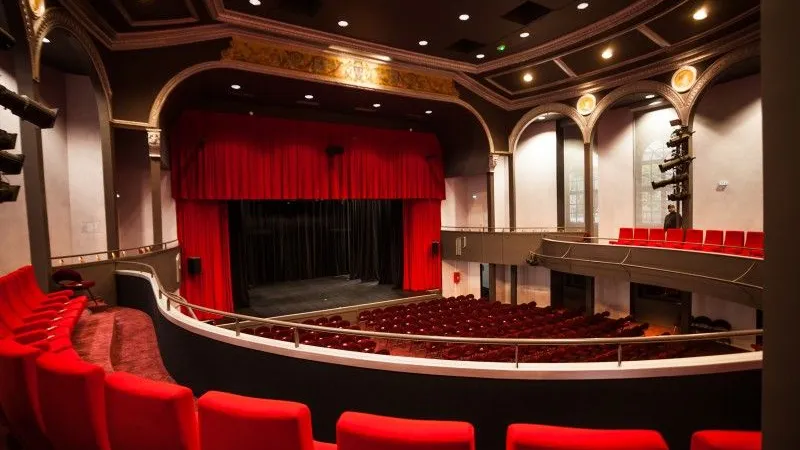
A spa town in the 1920s needed a casino the way it needed its springs; the gaming rooms paid for the orchestra, the theatre and the upkeep of the park. To enter the gaming rooms today you show identification. The building attached on the garden side is the theatre, older than the casino beside it. Théodore Charpentier built it in 1891 and 1892 in brick, stone and iron.

Sarah Bernhardt performed there, and Colette, and in the 1940s a young Édith Piaf sang in that room.

≈1 min walk to the next stop
Thermes romains de RoyatMust see

Photo by Rilba on Wikimedia Commons

Thermes romains de Royat

0:00

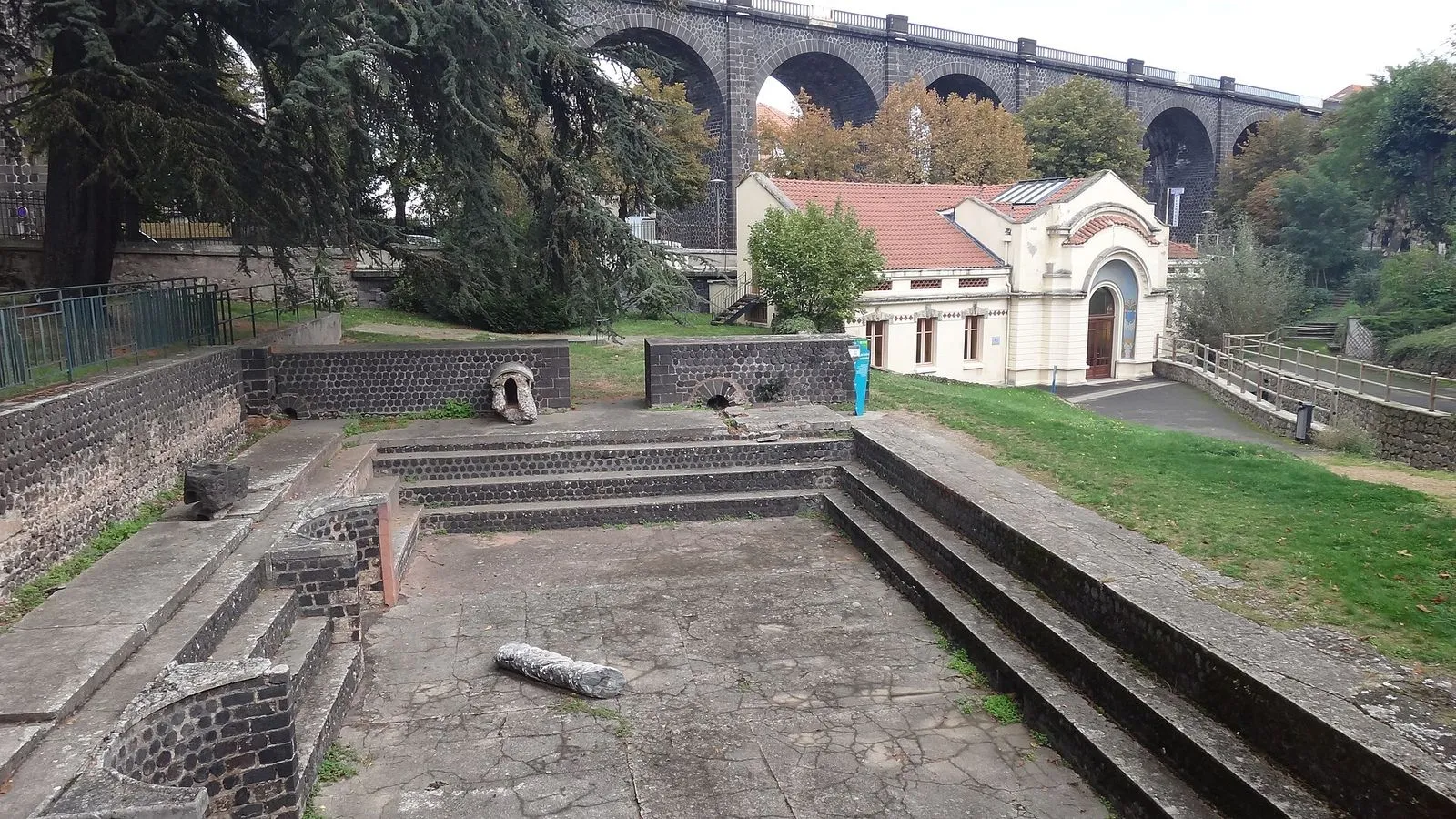
Roman baths uncovered in 1881 during work on the railway viaduct, with three pools in a line, hypocaust-heated rooms, and one pool with steps and hemicycle seating still visible.

Look for the low walls and the single pool that still holds its shape; you are on the edge of a Roman bathing complex far larger than what remains. The baths came to light in 1881, while workers were building the railway viaduct that crosses the valley beside you. What they uncovered covered about 2,800 square metres. Three large pools sat in a line on one axis, and four rooms were heated through the floor by a hypocaust, the Roman system of hot air moving beneath a raised floor.

The rooms were finished with coloured marbles, mosaics and statues of bronze or marble. Later building work destroyed most of the site, but one pool survives with its steps and hemicycle seating, and it is still visible in front of you now. The remains have been a listed historic monument since 1889. The real story here is continuity: the Romans came to this narrow valley for the same warm mineral water that later filled the Belle Époque baths a few steps away.

≈1 min walk to the next stop
Free preview ends here · stops 4 to 7 continue in the app

Établissement thermal de Royat

The 1850s thermal baths built around the Grande Source, found in 1844 and visited by Napoleon III and Eugénie in 1862.

in app

Parc Thermal de Royat

A four-hectare English park along the Tiretaine, with Gallo-Roman baths and the blue-mosaic Buvette Eugénie.

in app

Grotte des Laveuses

A lava cave shaped by a trapped steam bubble, where five springs feed a rustic washhouse.

in app

Église Saint-Léger

The fortified church of the old village, crenellated between 1169 and 1212 and free to enter.

in app
Good to know

Before you go

How do I get to Royat?

Take bus line B to Royat Pl. Allard from the centre. The same line continues to the airport at the other end.

SourceT2C
What is the Grotte du Chien?

It is a lava cave where carbon dioxide pools at floor level, once demonstrated to spa visitors with a candle and a dog.

What is there to see in Royat?

Royat holds the thermal park along the Tiretaine, Roman baths uncovered in 1881, the Belle Époque thermal baths where Napoleon III and Empress Eugénie took the cure in 1862, and the fortified church of Saint-Léger.

Provenance · last verified August 21, 2026

Built from the Wayside route itself: the stops, their order, and the walk between them.

Photo by SM63 on Wikimedia Commons · CC BY-SA 3.0

Photo by User:JYB Devot on Wikimedia Commons · CC0

Photo by Volcadiva.festial on Wikimedia Commons · CC BY-SA 3.0

Photo by Rilba on Wikimedia Commons · CC BY-SA 3.0

Photo by Thibdx on Wikimedia Commons · CC BY 4.0

Photo by Aavitus on Wikimedia Commons · CC BY-SA 4.0

Coming soon

Wayside isn't in the app stores yet, but it's in the works. Check back soon.