Nice · Self-guided audio walk

When Nice Was Nissa

Walk the ochre alleys of Vieux Nice and discover the markets, baroque churches, and palazzi of a city that spoke Italian until 1860.

  • 7Stops
  • 0.7 kmDistance
  • 20+ minTime
When Nice Was Nissa

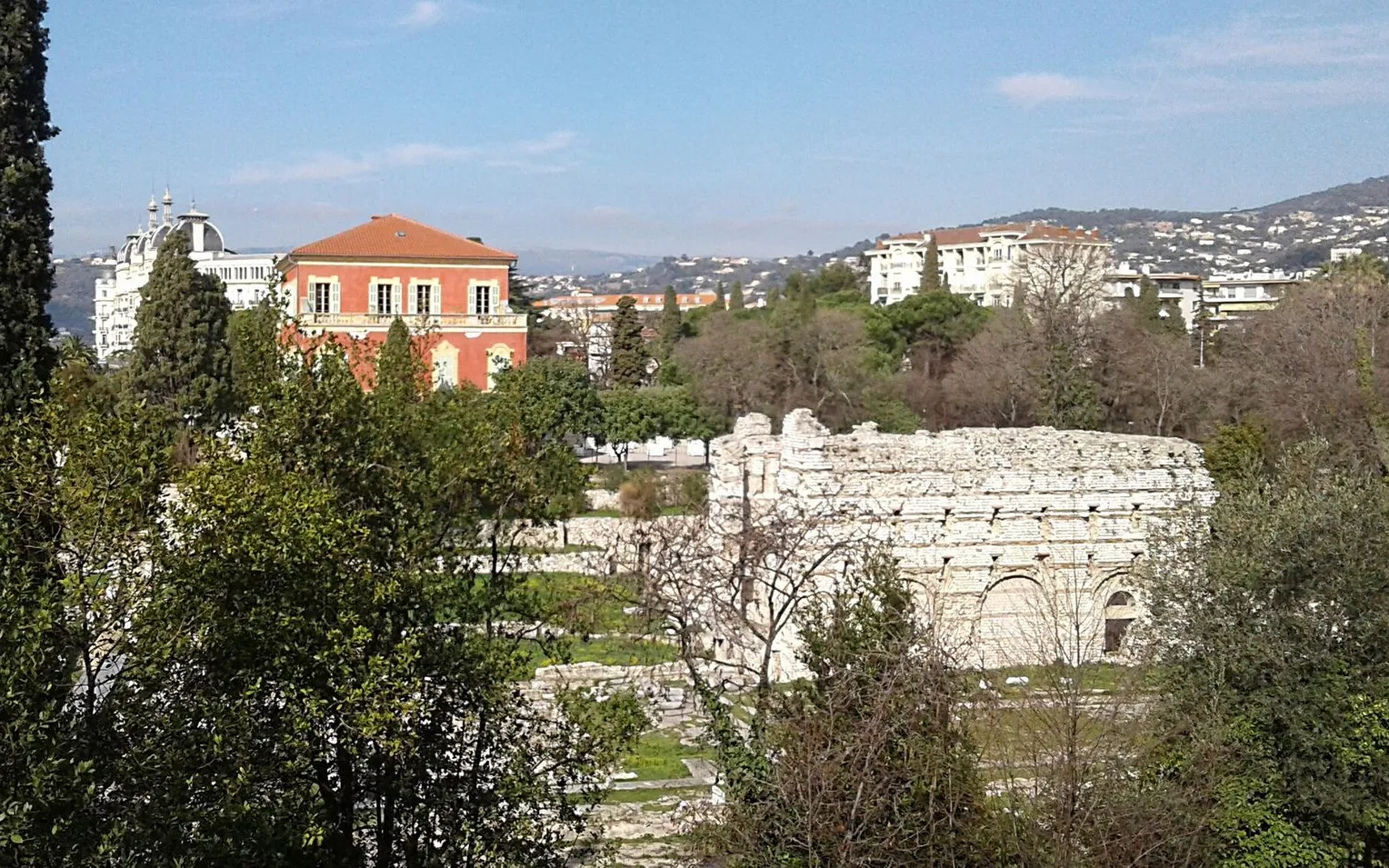
Photo by Leicester Holyday on Wikimedia Commons

For most of its history, Nice was not French. It belonged to the County of Nice, ruled by the House of Savoy from Turin, and its streets echoed with Niçois, a language closer to Italian than to French. That changed in 1860, when a treaty and a deeply flawed plebiscite handed the city to France.

This walk threads through the old town's narrow lanes, from the flower market on Cours Saleya to the Baroque cathedral, the aristocratic Palais Lascaris, and the fish market on Place Saint-François. You will see the tall painted houses, the Genoese-colored tiles, and the bilingual street signs that still carry the city's first language. It is a walk through the oldest quarter of Nice, and through the layers of a place that became French later than almost anywhere else on the Mediterranean coast.

Hear it on the street

Get the turn-by-turn audio guide in the app. The narration plays itself as you reach each stop, hands-free and offline.

Stop by stop

The route

Interactive map of the route. The full stop list below works without it.

Cours SaleyaMust see

Photo by Dennis G. Jarvis on Wikimedia Commons

Cours Saleya

0:00

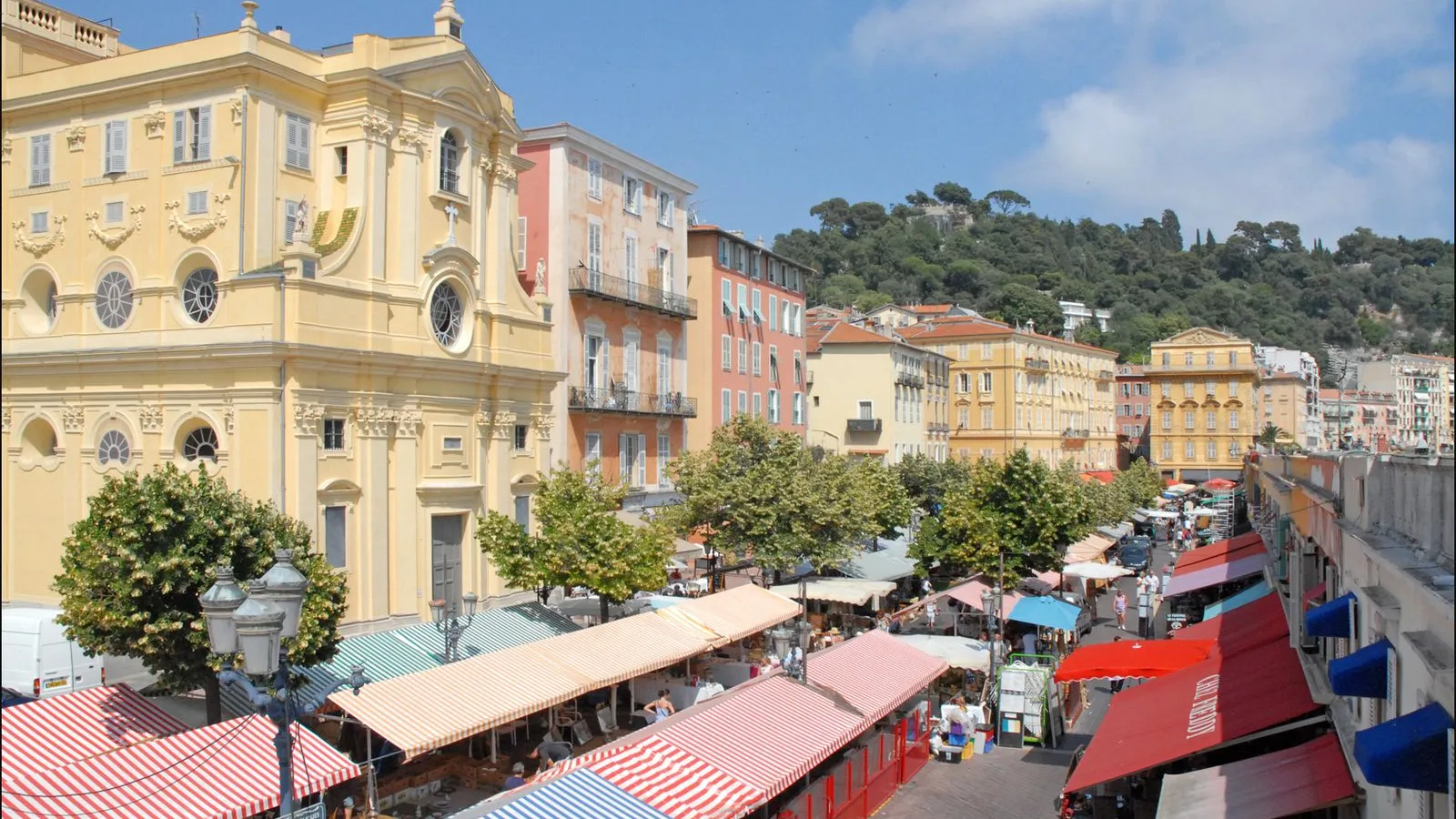
The old town's market square, lined with ochre buildings and filled with flower and produce stalls every morning except Monday.

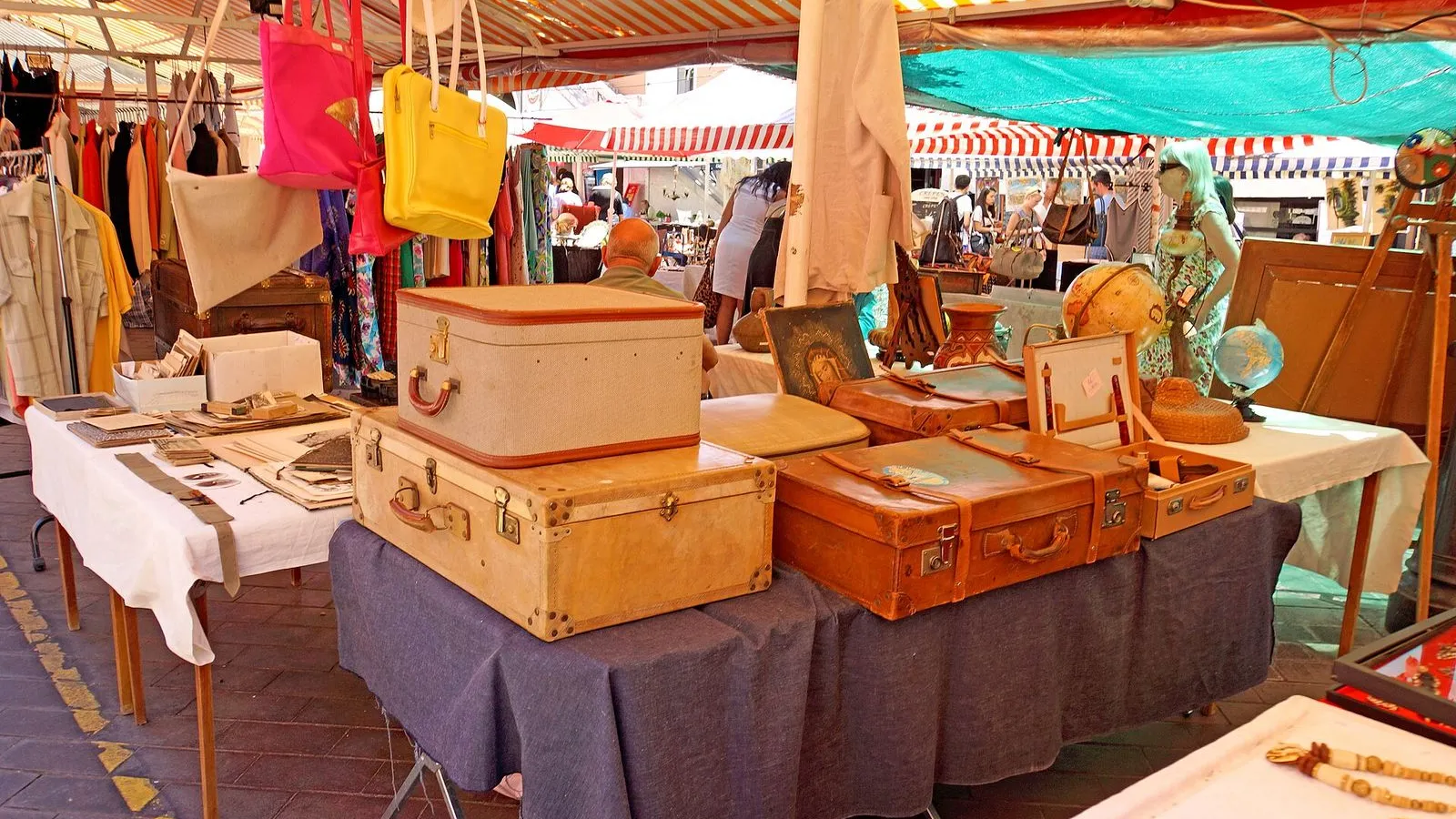
You are standing on Cours Saleya, the living room of Vieux Nice. This long rectangle of a square runs parallel to the sea, just one block back from the water. Every morning except Monday, it fills with flower sellers, fruit stalls, and vendors hawking olives, socca, and lavender honey. On Mondays, the flowers give way to an antiques market.

The square takes its name from the Salier family, who owned land here in the 16th century, back when Nice answered to Turin, not Paris. In the late 1800s, the Carnival floats paraded down this very stretch before the route moved to Place Masséna.

Look up at the buildings. Those colors are the palette of Liguria and Piedmont, not northern France: ochre, burnt sienna, faded gold. The tall, narrow houses with green shutters follow a Genoese model. Even the rhythm of the market, the way the vendors call out and the way people stop to talk, owes more to Italy than to the Île-de-France.

At the eastern end of the square, the Chapelle de la Miséricorde hides behind a sober façade. That is your next stop. When you are ready, walk toward it.
≈1 min walk to the next stop
Chapelle de la MiséricordeMust see

Photo by dalbera on Wikimedia Commons

Chapelle de la Miséricorde

0:00

An 18th-century Baroque chapel built by a Turin architect for the Theatine order, now home to the Black Penitents brotherhood.

You are looking at the Chapelle de la Miséricorde, one of the finest pieces of Baroque architecture in Nice, and one of the least obviously French. It was built between 1747 and 1770 to designs by Bernardo Antonio Vittone, an architect from Turin. At the time, Nice was part of the Kingdom of Sardinia, ruled by the House of Savoy, and its architects, its stucco workers, and its money came from across the Alps, not from Provence.

Step inside if the door is open. The interior is built on an elliptical plan, which was Vittone's signature. Gilded stucco covers nearly every surface. A trompe-l'oeil fresco on the ceiling opens the dome to a painted sky. The light pours in from high windows you cannot see directly, a Baroque trick that makes the source of illumination feel divine.

Originally this was the church of Saint Gaëtan, built for the Theatine order on top of old royal salt warehouses. After the French Revolution, the archconfraternity of the Black Penitents bought it and gave it the name it carries now. The Black Penitents date back to the 14th century; they accompanied the condemned to execution and buried the dead. They still meet here.

When you leave, turn right and follow Rue Saint-Gaëtan as it curves into the old town. It will lead you to Place Rossetti.

≈3 min walk to the next stop
Place RossettiMust see

Photo by Fred Romero from Paris, France on Wikimedia Commons

Place Rossetti

0:00

A lively square named for the Rossetti family of Niçois nobility, with café terraces and the famous Fenocchio ice-cream shop.

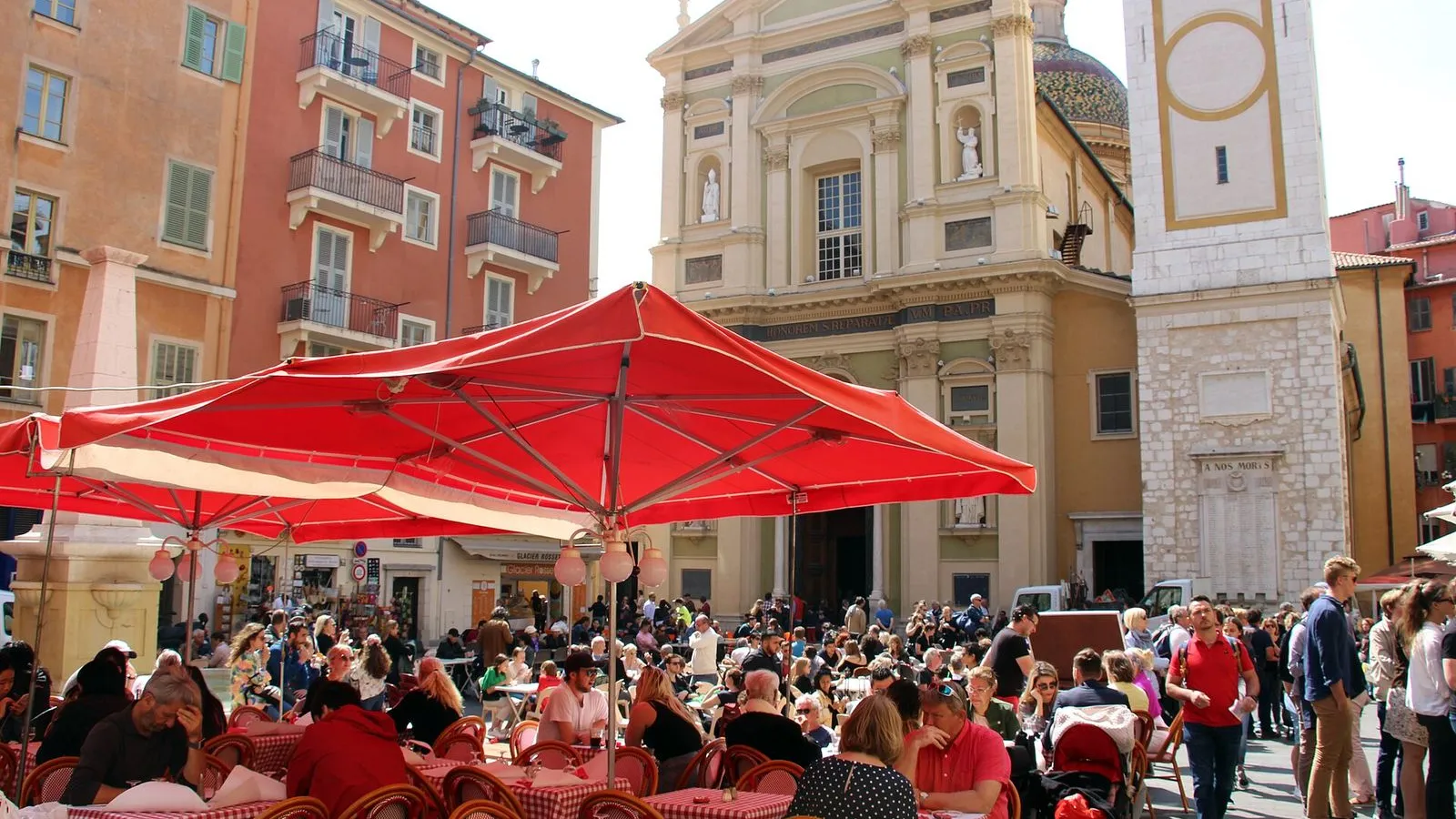
Place Rossetti is the social heart of the old town. On a warm evening, every table at every café is taken, and the square hums with the sound of conversation and espresso machines. It is named for the Rossetti family, who were among the leading Niçois nobility under the House of Savoy. Ignace Rossetti, a prefect and senator, was the grandfather of Antoine Gautier, the violin collector whose instruments you will see later at the Palais Lascaris.

The cathedral fills the south side of the square. Its façade, a confection of grey and cream stone added in the 1820s and repainted in recent decades in Ligurian rococo polychromy, looks more like a church in Genoa or Turin than anything you would find in Arles or Avignon. The dome, covered in colored glazed tiles laid in a geometric pattern, is pure Genoese style.

Before you go in, walk around the square. Fenocchio, the ice-cream shop on the corner, has been here since 1966 and serves flavors like rosemary, olive oil, and tomato-basil alongside the classics. It is a reminder that this city's palate, like its architecture, was shaped east of the frontier. When you are ready, step inside the cathedral.

≈1 min walk to the next stop
Free preview ends here · stops 4 to 7 continue in the app

Cathédrale Sainte-Réparate

A Baroque cathedral built 1650 to 1699, with a Genoese-tiled dome and ten chapels once maintained by Nice's trade guilds.

in app

Rue Droite

The old town's main thoroughfare, lined with tall painted houses, baroque churches, and street signs in both French and Niçois.

in app

Palais Lascaris

A 17th-century aristocratic palace with a frescoed staircase, mythological ceilings, and France's second-largest collection of historical musical instruments.

in app

Place Saint-François

A quieter square, once the fish market, with a medieval clock tower and the atmosphere of the old port quarter.

in app
Good to know

Before you go

How long does the Vieux Nice walk take?

The walk itself takes about an hour and a half if you keep moving. With stops at the market, the cathedral, Palais Lascaris, and a coffee on Place Rossetti, plan two to three hours. The route is compact: the old town's lanes tangle within a few hundred metres, so you are never far from the next stop.

Is the Cours Saleya market open every day?

The fruit, vegetable, and flower market runs Tuesday to Sunday from early morning until early afternoon. On Monday the square hosts an antiques and brocante market instead, from 07:00 to 18:00. The flower-only market stays open until 17:30 Tuesday to Saturday and is one of the most photogenic morning stops in the old town.

SourceVille de Nice: Règlement général des marchés
Do I need to pay to enter the churches on this walk?

No. The Cathédrale Sainte-Réparate and the Chapelle de la Miséricorde are working churches and free to enter. The Palais Lascaris, the baroque palace on Rue Droite, charges €5 for entry. A guided tour of the palace costs an extra €7 and is best reserved ahead.

SourceVille de Nice: Palais Lascaris

Provenance · last verified August 10, 2026

Built from the Wayside route itself: the stops, their order, and the walk between them.

Photo by Leicester Holyday on Wikimedia Commons · CC BY 3.0

Photo by Dennis G. Jarvis on Wikimedia Commons · CC BY-SA 2.0

Photo by dalbera on Wikimedia Commons · CC BY 2.0

Photo by Fred Romero from Paris, France on Wikimedia Commons · CC BY 2.0

Photo by Broenberr on Wikimedia Commons · CC BY-SA 4.0

Photo by Patrice Semeria on Wikimedia Commons · Public domain

Photo by Steffen Rehfuß on Unsplash

Photo by cricketsblog on Openverse · CC BY 2.0

Coming soon

Wayside isn't in the app stores yet, but it's in the works. Check back soon.