Nice · Self-guided audio walk

The Promenade the English Built

Walk the Riviera's defining balcony, from its two-metre origins in 1822 to the palaces that made it famous.

  • 6Stops
  • 2.8 kmDistance
  • 45+ minTime

The Promenade des Anglais began as a two-metre dirt path in 1822, funded by English winter visitors who wanted a place to stroll. This self-guided walk traces its evolution from a philanthropic footpath to the most famous seafront in Europe.

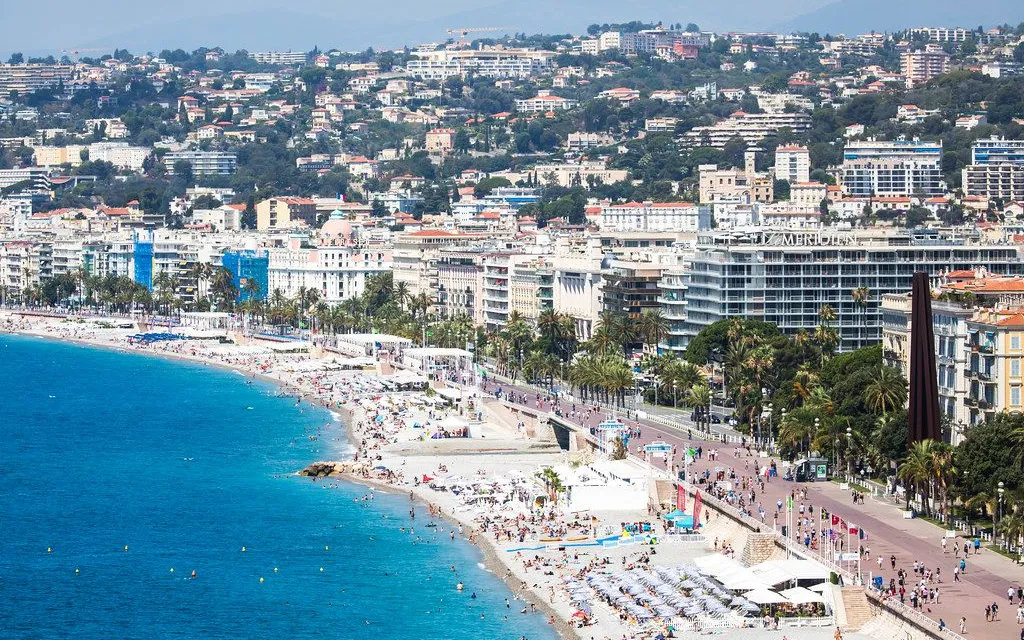
You will start in the Jardin Albert 1er, the city's oldest garden, then move west past the Art Deco Palais de la Méditerranée, the Belle Époque Hôtel Negresco, and the neoclassical Villa Masséna. Each stop tells part of the story: who paid, who built, and why the Baie des Anges drew them all here.

The walk takes about two hours at a relaxed pace and ends at a bench facing the bay that started it all.

Hear it on the street

Get the turn-by-turn audio guide in the app. The narration plays itself as you reach each stop, hands-free and offline.

Stop by stop

The route

Interactive map of the route. The full stop list below works without it.

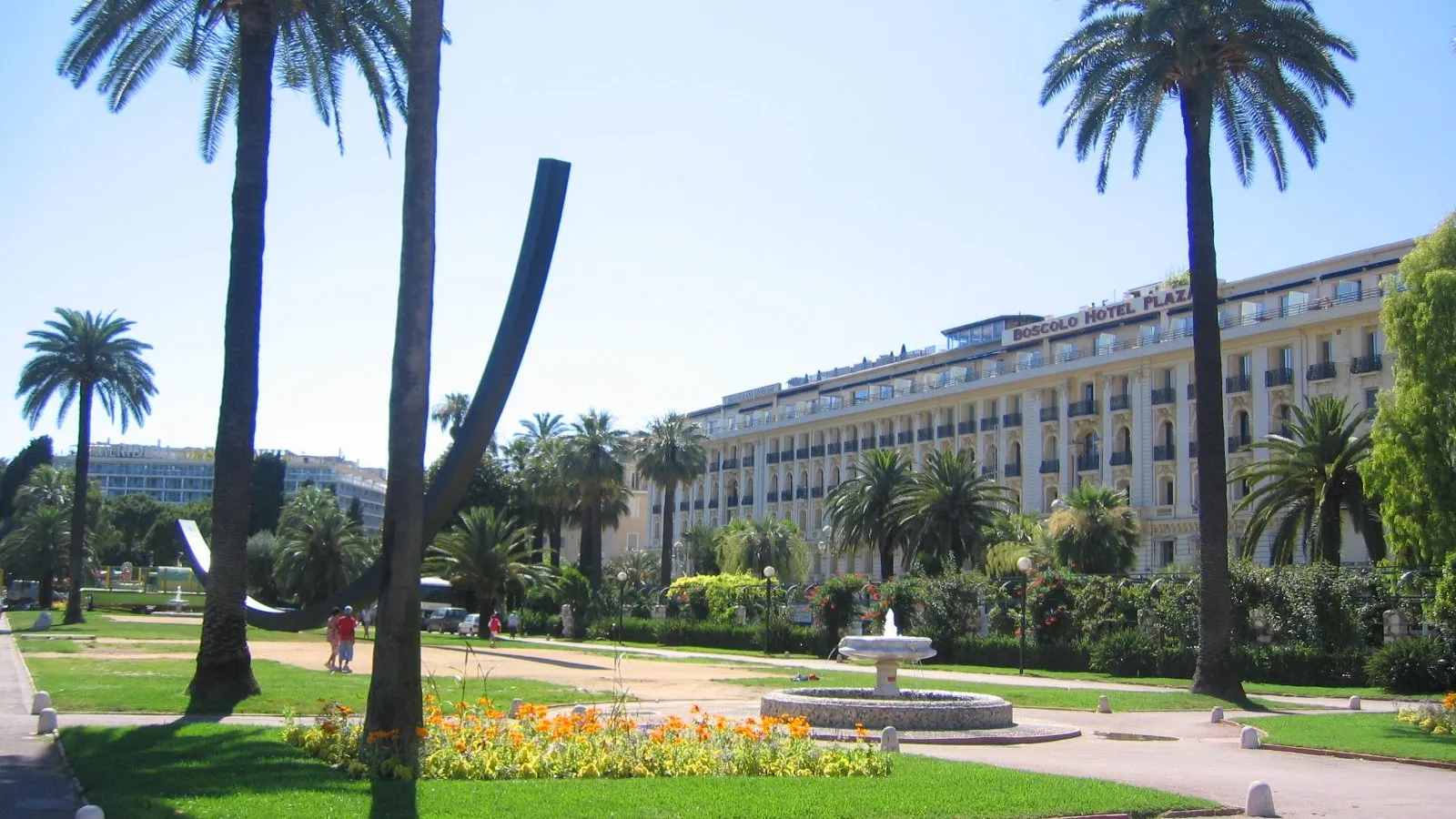
Jardin Albert 1erMust see

Photo by Omar Ansari on Wikimedia Commons

Jardin Albert 1er

0:00

The city's oldest public garden, carved from the mouth of the Paillon River in 1852 and renamed in 1914 for a Belgian king.

You are standing in the Jardin Albert 1er, the oldest public garden in Nice. This ground was once the mouth of the Paillon River, a stony torrent that emptied into the bay. In 1852 the city levelled it into an Italianate garden with palm trees, stone benches, and a music kiosk. The river was gradually covered, and by 1890 a slab sealed it entirely, letting the garden spread toward the sea.

The garden got its name in 1914, when Nice chose to honour King Albert I of Belgium. He had refused to let German troops cross his country at the outbreak of the First World War, a decision that earned him the title Roi Chevalier, the Knight King. The garden became a gesture of solidarity from one small nation to another.

Look around you. The Théâtre de Verdure, the open-air theatre tucked into the garden's eastern edge, has hosted summer concerts since 1946. The palms and subtropical plants are not decoration. They are the signature of a city learning to sell its climate. This garden was the first stage set of the Riviera. From here, the Promenade begins.
≈2 min walk to the next stop
Quai des États-UnisMust see

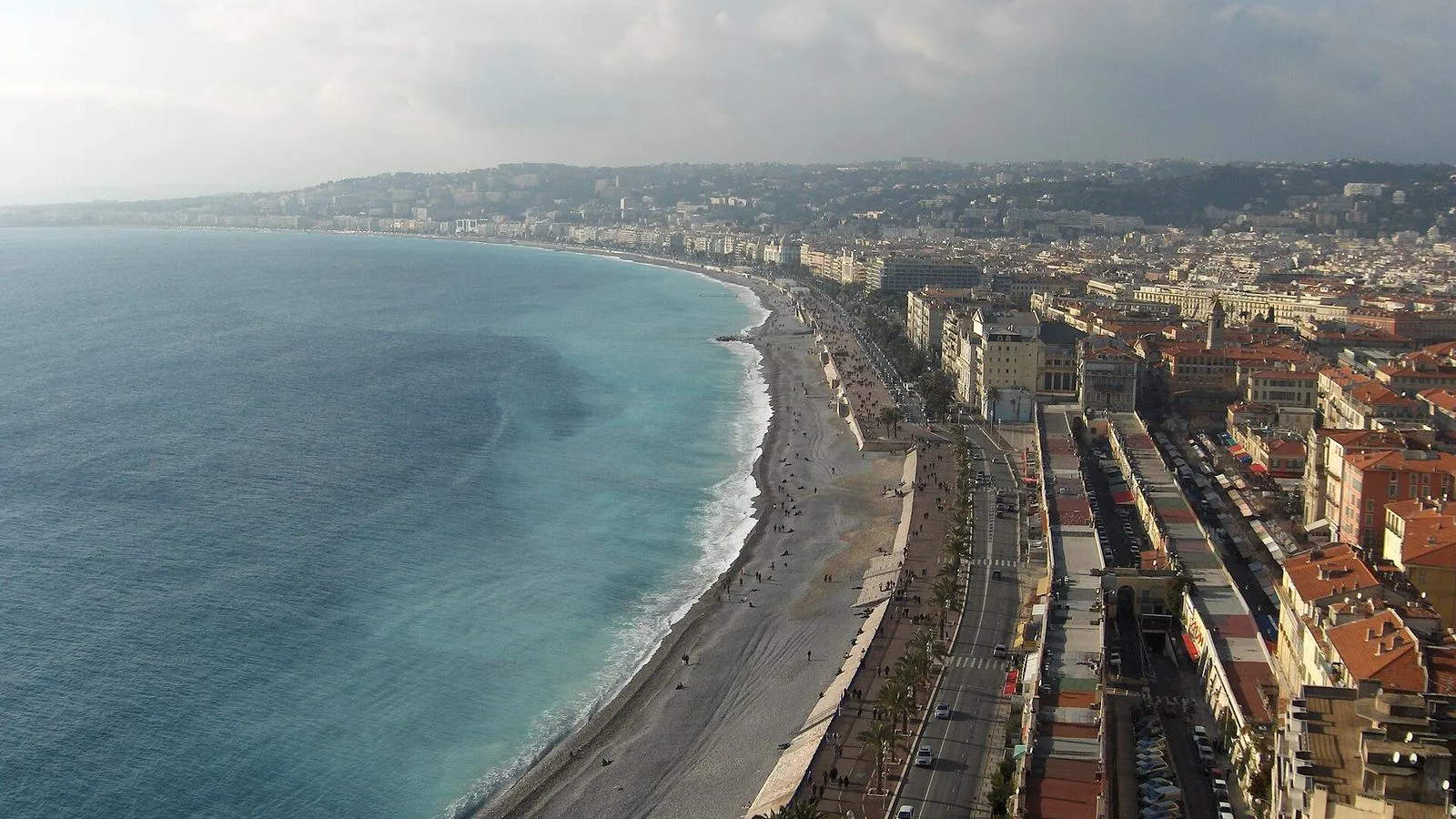
Photo by Lspigon on Wikimedia Commons

Quai des États-Unis

0:00

The eastern anchor of the Promenade, named for America in 1917 and whipped by the hat-stealing Rauba-Capeù wind.

You are at the Quai des États-Unis, the eastern bookend of the Promenade des Anglais. This quay got its name in 1917, when the city renamed it to honour the United States' entry into the First World War. Before that, it was the Quai du Midi, a workaday name for a stretch of coast that had become anything but ordinary.

The real character of this spot is the wind. The Niçois call this curve of the coast Rauba-Capeù, which means steals hats in the old dialect. The wind funnels down from the hills and gusts across the quay with enough force to snatch a hat clean off your head. It has been doing this for centuries, long before the Promenade existed.

Behind you, the old town climbs the hill toward the Château. In front of you, the bay opens westward. When the Reverend Lewis Way and his fellow English winterers funded the first two-metre dirt path in 1822, it began right about here, at the Paillon's mouth. A hundred metres of gravel for invalid strolls. That modest start is now seven kilometres of seafront. Turn and face west. You are about to walk its full Belle Époque stretch.

≈8 min walk to the next stop
Palais de la MéditerranéeMust see

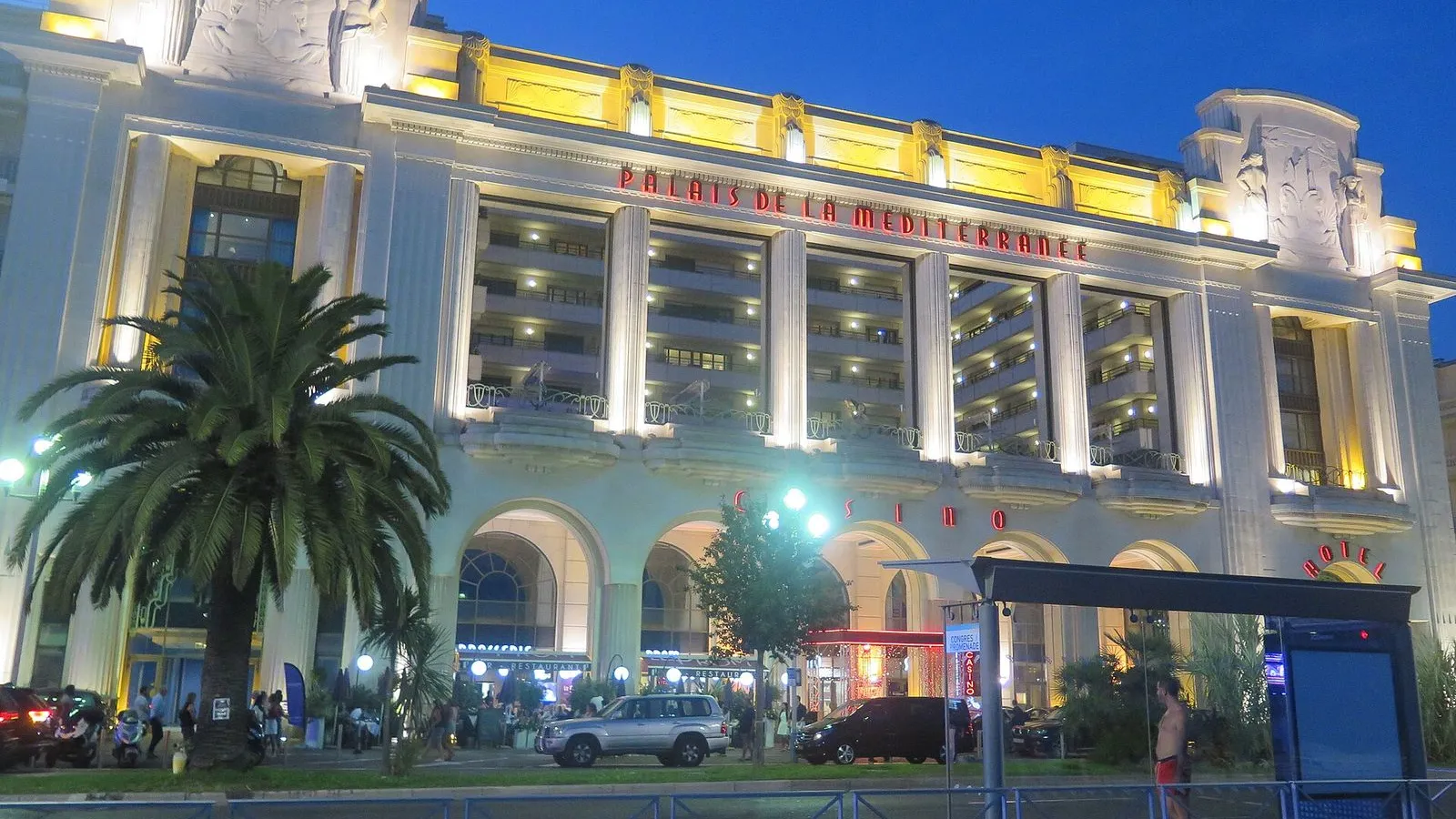
Photo by Juliofsanguino on Wikimedia Commons

Palais de la Méditerranée

0:00

A 1929 Art Deco casino palace, built by American millionaire Frank Jay Gould, that marked the Riviera's pivot from winter to summer.

The Palais de la Méditerranée opened on the 10th of January 1929, and it was unlike anything the Promenade had seen. American financier Frank Jay Gould, heir to a railway fortune, hired the Niçois architects Charles and Marcel Dalmas to build him a pleasure palace. They delivered an Art Deco monument of reinforced concrete, its façade covered in bas-reliefs of horses and female figures by the sculptor Antoine Sartorio.

Inside, the original building held an 800-seat theatre, a casino, restaurants, and a dance hall. It was the most sumptuous casino in the world, according to the writer Jules Romains, who ranked it alongside the ocean liner Normandie as a French masterpiece of the era. The Palais embodied a deliberate shift: the old Riviera of winter invalids was giving way to a summer Riviera of jazz, gambling, and beach culture.

The building closed in 1978 and was largely demolished in 1990. Only the two main Art Deco façades were saved, classified as historical monuments the year before. It reopened in 2004 as a Hyatt Regency hotel and a Partouche casino. The arcades and the pale marble lobby still carry the streamlined confidence of 1929.

≈7 min walk to the next stop
Free preview ends here · stops 4 to 6 continue in the app

Hôtel Negresco

Henri Negresco's 1913 palace hotel, with its pink dome and Baccarat chandelier, still watches over the Baie des Anges.

in app

Villa Masséna

Built in 1901 for Victor Masséna, Napoleon's great-nephew, this Belle Époque villa is now a museum set in a listed garden.

in app

Baie des Anges

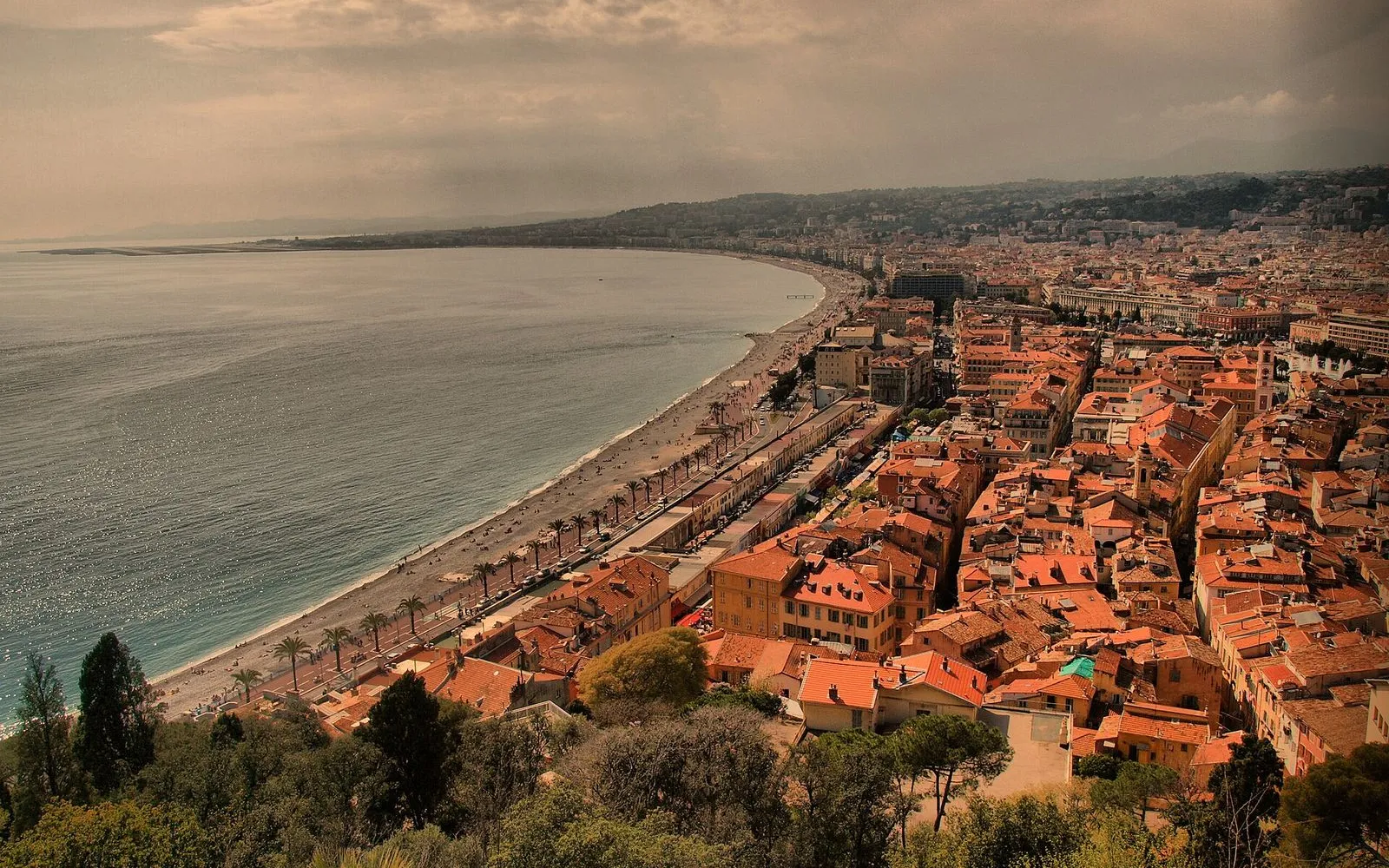
The Bay of Angels, named for the angel sharks fishermen once hauled from these waters, stretches to the Estérel mountains.

in app
Good to know

Before you go

How long is the Promenade des Anglais walk?

The full walk from the Jardin Albert 1er to the far end of the Promenade takes about two hours at a relaxed pace, with stops. You can shorten it by turning back after the Negresco or by taking the tram one way. The Promenade is flat and wide, with dedicated lanes for walking, cycling, and rollerblading.

Is the Promenade des Anglais worth doing in winter?

On a clear winter day, yes. The light is lower and sharper, the mountains behind the bay are often snow-capped, and the crowds are gone. The blue chairs are still out, and the cafés are heated. The Promenade was built by winter visitors, and it still works best in the cool, clear months they came for.

Provenance · last verified August 10, 2026

Built from the Wayside route itself: the stops, their order, and the walk between them.

Photo by Steffen Rehfuß on Unsplash

Photo by Omar Ansari on Wikimedia Commons · CC BY-SA 2.0

Photo by Lspigon on Wikimedia Commons · Public domain

Photo by Juliofsanguino on Wikimedia Commons · CC BY-SA 4.0

Photo by Broenberr on Wikimedia Commons · CC BY-SA 4.0

Photo by Patrice Semeria on Wikimedia Commons · Public domain

Photo by cricketsblog on Openverse · CC BY 2.0

Photo by Leicester Holyday on Wikimedia Commons · CC BY 3.0

Coming soon

Wayside isn't in the app stores yet, but it's in the works. Check back soon.