Miami · Self-guided audio walk

Coconut Grove: The Village Before the City

A walk through Miami's oldest neighborhood, from a coral-rock church to the old Pan Am seaplane terminal on the bay.

  • 8Stops
  • 3.5 kmDistance
  • 55+ minTime

Coconut Grove was a community before Miami was a city. Bahamian pioneers and northern industrialists built homes under the tropical hammock, and the Peacock Inn served turtle soup to the people who would shape South Florida.

This walk stays inside the village itself. It begins at Plymouth Congregational Church, the 1917 coral-rock sanctuary cut by hand, follows Charles Avenue through the old Bahamian settlement, and ends on the bay at Miami City Hall, the 1934 Pan American Airways seaplane terminal. Along the way you pass the playhouse that staged the American premiere of Waiting for Godot, Ralph Munroe's oldest surviving house, the open-air center that revived the village core, and the waterfront park where Flagler and Tuttle met to plan the railroad that would reach Miami. Mostly flat and shaded.

Hear it on the street

Get the turn-by-turn audio guide in the app. The narration plays itself as you reach each stop, hands-free and offline.

Stop by stop

The route

Interactive map of the route. The full stop list below works without it.

Plymouth Congregational ChurchMust see

Photo by Marc Averette on Wikimedia Commons

Plymouth Congregational Church

0:00

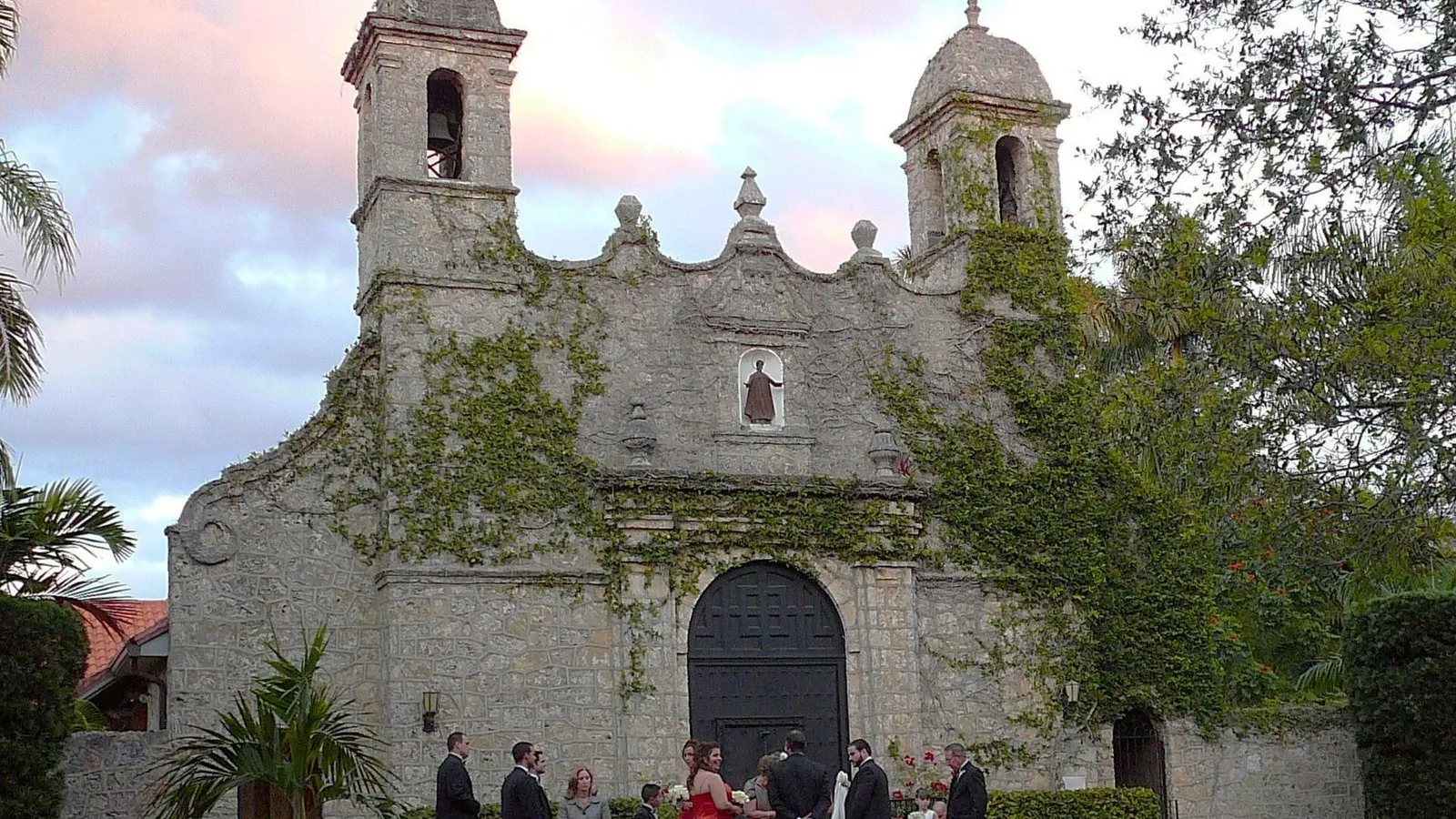
The 1917 coral-rock sanctuary on Devon Road, its stones hand-cut by Spanish stonemason Felix Rebom, home of the first church founded in Coconut Grove.

You're standing before Plymouth Congregational Church, the oldest congregation in Coconut Grove. It was founded in 1897 as Union Chapel, in a small chapel on McFarlane Road built on land donated by Commodore Ralph Munroe. Six men and two women gathered for the first service by the light of oil lamps.

The stone sanctuary in front of you came two decades later. New York architect Clinton MacKenzie designed it in the Spanish Mission style, modeled on a mission church in Mexico. A Spanish stonemason named Felix Rebom cut each block of native oolitic limestone by hand, using only a hatchet, a trowel, a plumb line, and a T-square. The work took eighteen months. The sanctuary opened for its first Sunday service in December 1917, and the building and organ together cost 17,000 dollars.

Look at the main door. It is hand-carved walnut backed with Spanish oak, and it is said to have come from a Spanish mission in Mexico. In the walled garden on the east side there is an outdoor pulpit cut from the same coral rock, where weddings are still held.

The church's early pastor was Solomon Merrick, father of George Merrick, who went on to plan Coral Gables. George Merrick later chaired this church's board and helped buy the land the sanctuary stands on. The campus also holds the first schoolhouse of Coconut Grove, dating to 1887.

When you are ready, continue to Charles Avenue, the street the Bahamian settlers built. It runs west from Main Highway.
≈6 min walk to the next stop
Charles AvenueMust see

Photo by Phillip Pessar on Openverse

Charles Avenue

0:00

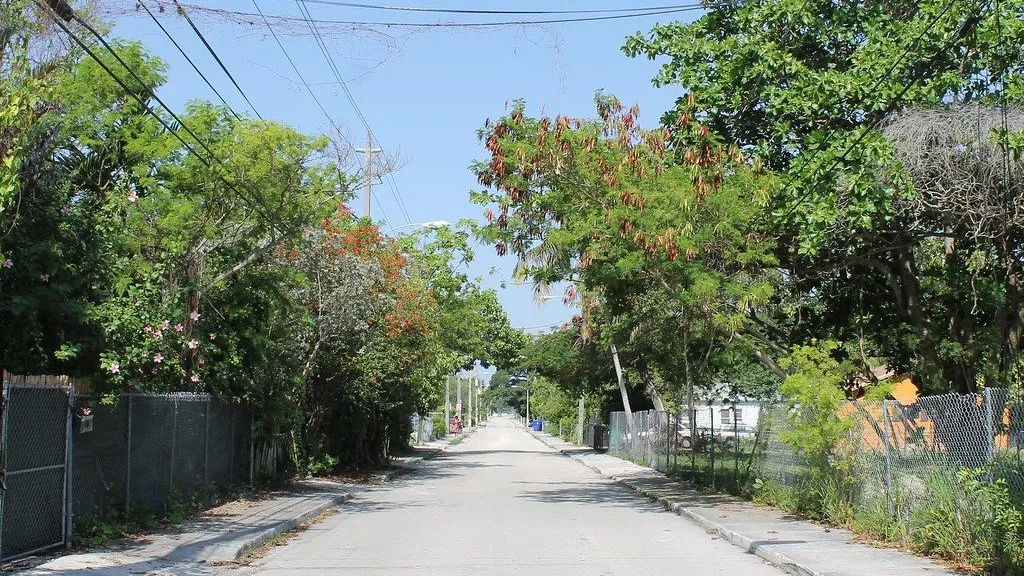
The street Bahamian settlers built by hand, lined with the Mariah Brown House of 1890 and E.W.F. Stirrup's 1897 home, the backbone of the old West Grove.

You're on Charles Avenue, the street that Bahamian settlers built and the heart of what locals call the West Grove. In the late 1800s, African-Bahamian families came here from Eleuthera, most of them descended from people who had been enslaved on West Indian plantations. They arrived as free people, skilled in fishing, boat building, and working the coral rock and climate they knew from home.

The street was first called Evangelist Street, for the churches that lined it, among them Macedonia Baptist, St. Agnes Baptist, and St. Paul's Methodist. When the new residents asked the town to put in a road and the town refused, the community built it themselves out of oolitic limestone. In the early 1900s the name changed to Charles Avenue, after Charles Frow, the son of the landowner who sold lots to many of the first Bahamian settlers.

Two houses anchor the street. At 3298 stands the Mariah Brown House, built around 1890. Mariah Brown was born in Eleuthera in 1851, worked as a laundress in Key West, and came here to work at the Peacock Inn. She bought this plot from Joseph Frow for 50 dollars and built a one-and-a-half-story frame house of Dade County slash pine, in the Bahamian style now called a Conch house. It was one of the first homes here owned by a Black woman.

A few doors west at 3242 is the E.W.F. Stirrup House, built in 1897. Ebenezer Woodbury Franklin Stirrup arrived from the Bahamas in 1888, worked as a carpenter, and eventually built more than a hundred homes for Black families in the Grove, renting many to new arrivals until they could buy. He built his own two-story frame vernacular house with Dade County pine. Charles Avenue remains one of the oldest Black communities in the county.

When you are ready, walk east on Charles Avenue toward Main Highway. The Coconut Grove Playhouse stands at the corner.

≈7 min walk to the next stop
Coconut Grove PlayhouseMust see

Photo by Ebyabe on Wikimedia Commons

Coconut Grove Playhouse

0:00

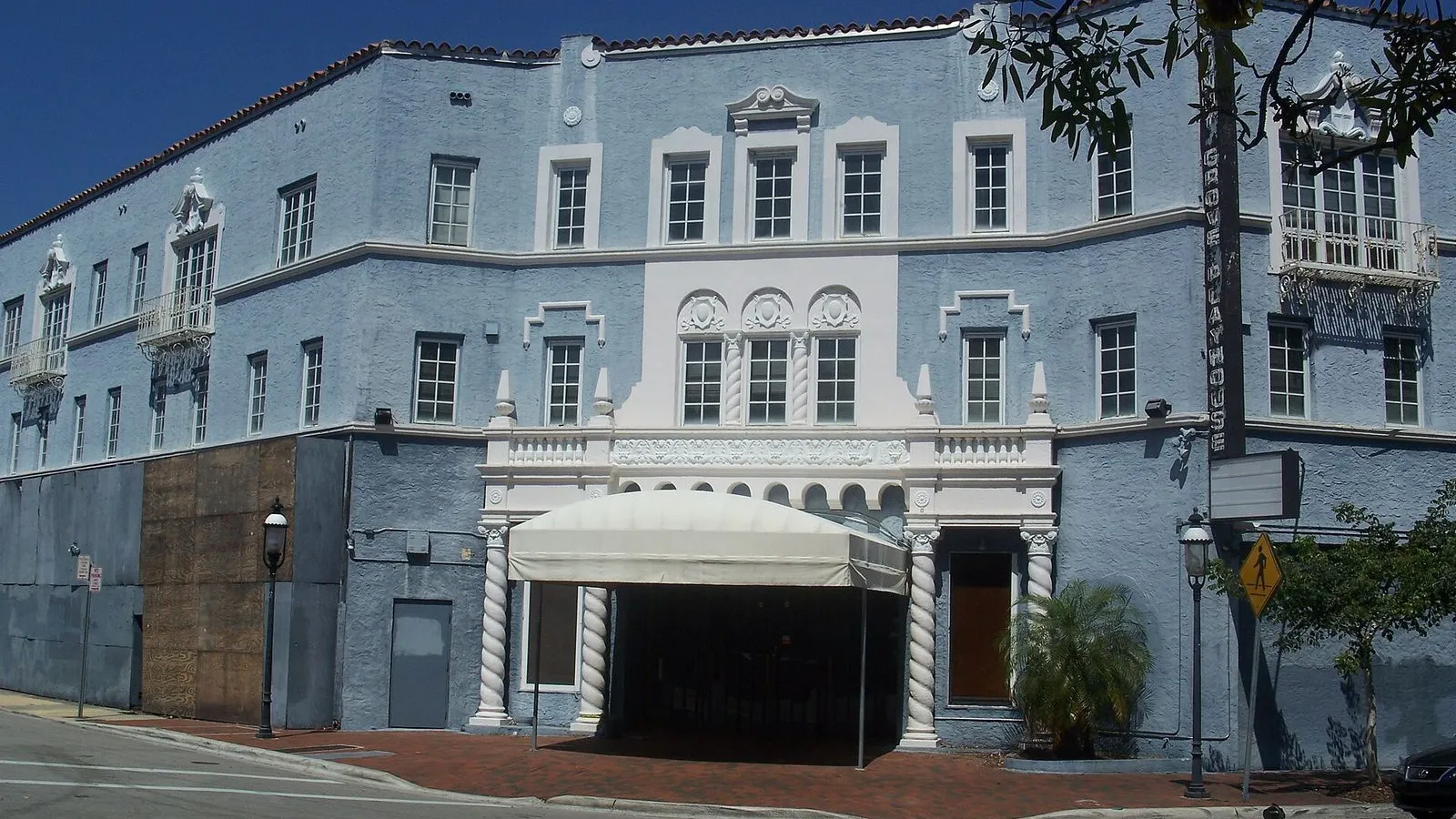
A 1927 Paramount movie palace turned regional theater, where Waiting for Godot had its American premiere in 1956.

This Mediterranean Revival building opened on New Year's Day 1927 as the Coconut Grove Theater, a Paramount movie palace designed by Richard Kiehnel. It had the largest seating capacity in Miami, 1,500 seats, and the biggest Wurlitzer organ in the country. The opening night feature was D.W. Griffith's The Sorrows of Satan, with a twelve-piece orchestra. The air conditioning was state of the art and so loud you could barely hear the film.

The theater closed during the Depression, served as a navigation school for the Army Air Corps during World War II, and sat shuttered until 1955. That year a Kentucky oilman named George Engle bought it for $200,000 and hired modernist architect Alfred Browning Parker to convert it into a live theater.

The renovated playhouse opened on January 3, 1956, with the American premiere of Samuel Beckett's Waiting for Godot. Bert Lahr and Tom Ewell starred. The play baffled Miami audiences. Beckett's existentialism landed differently here than it had in Paris. But the production put the Coconut Grove Playhouse on the map as a serious regional theater. For decades it premiered shows that went on to Broadway.

The theater is currently closed and undergoing restoration. But the façade, with its Spanish Rococo details and the ghost of the original marquee, still tells the story of boom and bust that defines so much of Miami.

The next stop is The Barnacle, Ralph Munroe's 1891 house. Walk south on Main Highway and watch for the green Florida State Park sign on your right.

≈4 min walk to the next stop
Free preview ends here · stops 4 to 8 continue in the app

The Barnacle Historic State Park

Ralph Munroe's 1891 home, the oldest house in Miami-Dade still standing on its original site, cooled by bay breezes under a hipped roof with a pyramidal vent.

in app

CocoWalk

An open-air shopping centre that opened in November 1990, bringing restaurants, a cinema, and foot traffic back to the village heart.

in app

Peacock Park

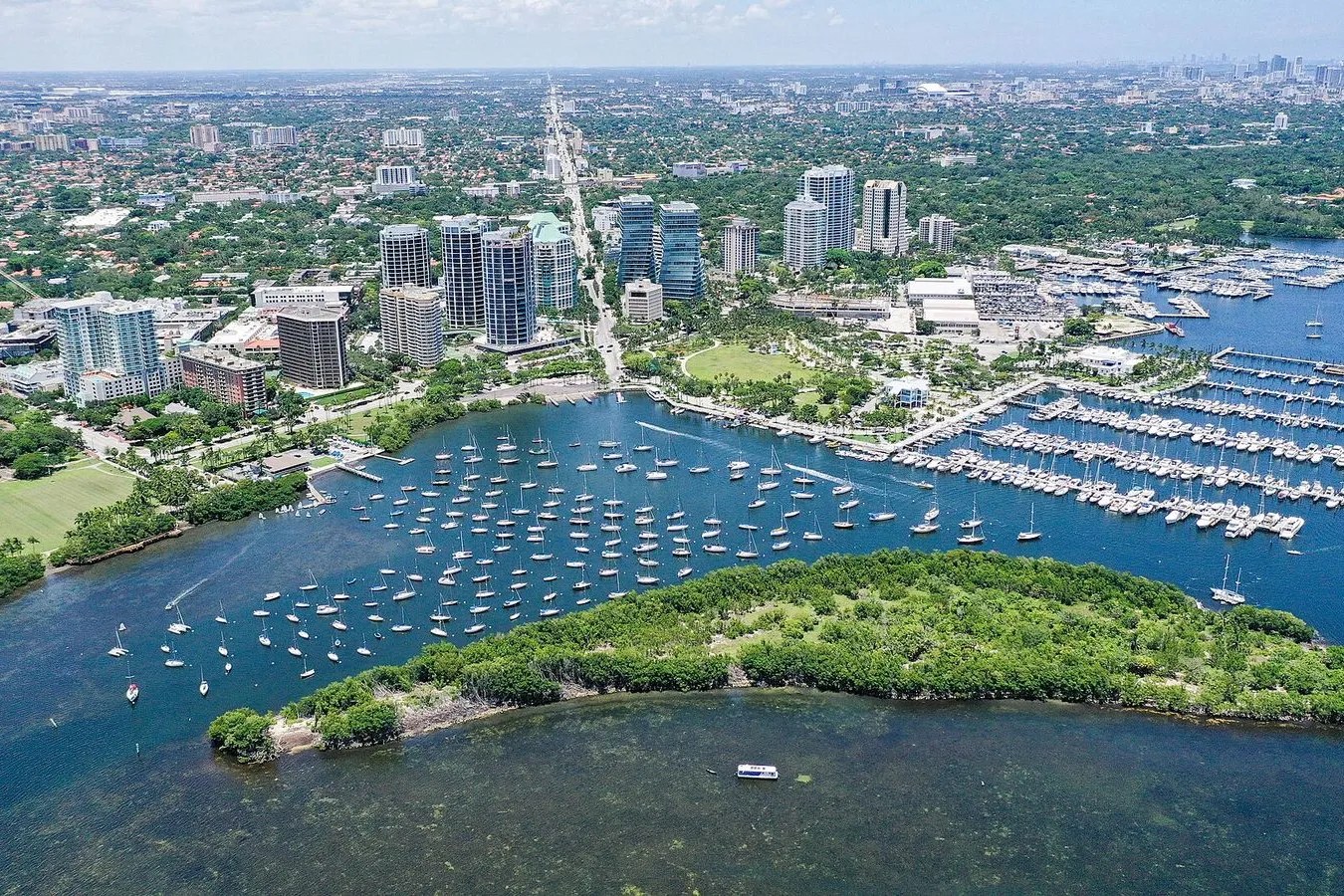
A waterfront park on the site of the Peacock Inn, where Flagler and Tuttle met over turtle soup in 1895 to plan the railroad that would create Miami.

in app

Regatta Park

A waterfront park on Biscayne Bay beside the old seaplane terminal, where Coconut Grove's sailing life meets the water.

in app

Miami City Hall

The 1934 Pan American Airways seaplane terminal at Dinner Key, the Air Gateway Between the Americas, now serving as Miami's City Hall.

in app
Good to know

Before you go

Is The Barnacle open to the public?

The Barnacle Historic State Park is open to the public during park hours, and the 1891 house is shown on ranger-led tours. Check the park's current hours before you go, since they change by season.

Provenance · last verified August 21, 2026

Built from the Wayside route itself: the stops, their order, and the walk between them.

Photo by Anthony Quintano from Mount Laurel, United States on Wikimedia Commons · CC BY 2.0

Photo by Marc Averette on Wikimedia Commons · CC BY 3.0

Photo by Phillip Pessar on Openverse · CC BY 2.0

Photo by Ebyabe on Wikimedia Commons · CC BY-SA 3.0

Photo by Hector Falcon on Unsplash

Photo by Infrogmation on Wikimedia Commons · CC BY-SA 4.0

Photo by Jairo Gonzalez on Unsplash

Photo by Marc Averette on Wikimedia Commons · CC BY 3.0

Photo by Hector Falcon on Unsplash

Photo by Nils Huenerfuerst on Unsplash

Coming soon

Wayside isn't in the app stores yet, but it's in the works. Check back soon.