Miami · Self-guided audio walk

Where Miami Began

From Tequesta ground to the towers of exile and ambition, a walk along the mouth of the Miami River.

  • 6Stops
  • 2.6 kmDistance
  • 40+ minTime
Where Miami Began

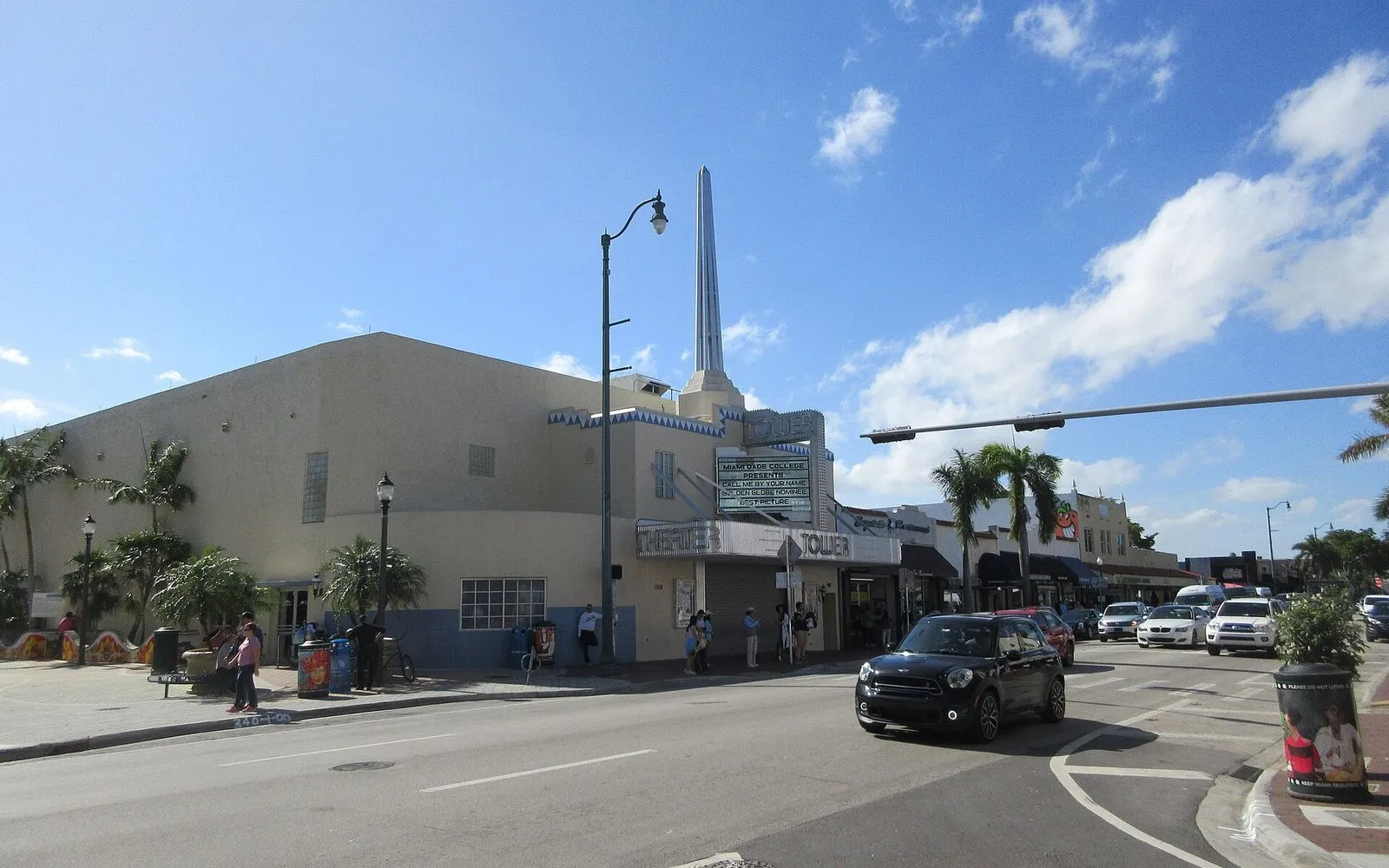
Photo by Marc Averette on Wikimedia Commons

The mouth of the Miami River is where the city started, and this walk traces its layers in chronological order. You begin at the Freedom Tower, built in 1925 and later the processing center for hundreds of thousands of Cuban exiles. Then you cross into Bayfront Park, the city's front porch, redesigned by Isamu Noguchi in the 1980s. At the park's south end you find the Challenger Memorial before crossing the river to the Miami Circle, a two-thousand-year-old Tequesta ceremonial site carved into the limestone bedrock. The walk ends at Brickell City Centre, where the Climate Ribbon harnesses trade winds to cool a billion-dollar open-air shopping district, and the free Metromover carries you back to the start.

The route is flat, paved, and about a mile and a half long. Most of it runs along the bay or the river with little shade. Bring water and a hat. Allow roughly two hours.

Hear it on the street

Get the turn-by-turn audio guide in the app. The narration plays itself as you reach each stop, hands-free and offline.

Stop by stop

The route

Interactive map of the route. The full stop list below works without it.

Freedom TowerMust see

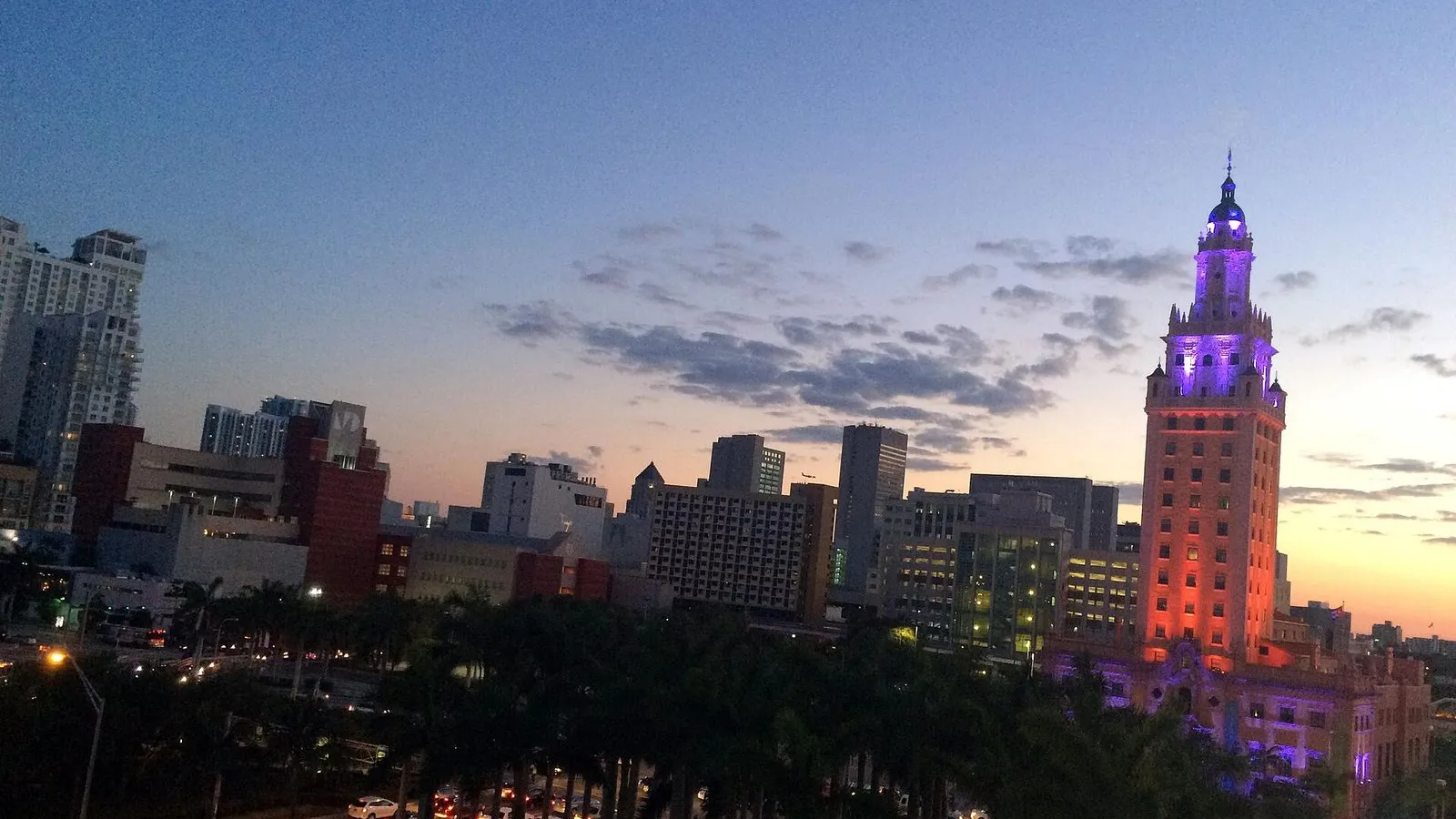
Photo by betty del rio on Wikimedia Commons

Freedom Tower

0:00

Built in 1925 as the Miami Daily News headquarters and modeled on Seville's Giralda tower, the Freedom Tower served as the Cuban Refugee Center from 1962 to 1974, processing hundreds of thousands of exiles who would reshape Miami.

You are standing in front of the Freedom Tower, 255 feet of Mediterranean Revival style that opened in 1925 as the Miami Daily News headquarters. The architects, Schultze and Weaver, modeled its tower on the Giralda bell tower of the cathedral in Seville, Spain. For a brief moment it was the tallest building in the South, so tall that ships used it to navigate into Biscayne Bay.

The newspaper moved out in 1957, and the building sat mostly empty for five years. Then, in 1962, the federal government leased it and opened the Cuban Assistance Center here. For the next twelve years, this was El Refugio. Hundreds of thousands of Cubans fleeing Castro's regime passed through these doors. They got medical exams, food, financial help, and connections to relatives already in the United States. Many of the people working the desks were Cuban themselves. They understood exactly what the new arrivals had left behind.

The building was designated a National Historic Landmark in 2008. Miami Dade College owns it now and runs it as a museum and exhibition space. The second-floor gallery is free and open to the public. Walk inside if you like.

When you are ready, look for the crosswalk at Biscayne Boulevard. That is your next move.
≈11 min walk to the next stop
Bayfront ParkMust see

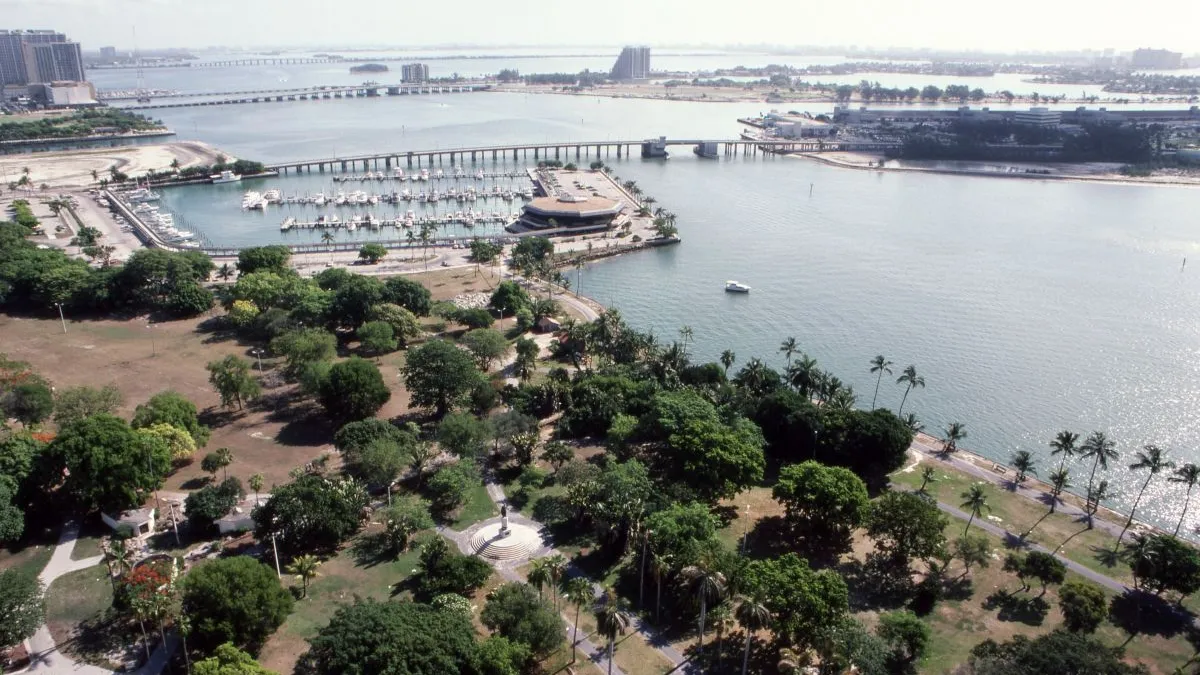
Photo by Florida Department of Commerce: Florida Film Bureau on Wikimedia Commons

Bayfront Park

0:00

Miami's front porch since 1925, Bayfront Park was redesigned by sculptor Isamu Noguchi in the 1980s with a promenade, fountains, and an amphitheater, all facing Biscayne Bay.

You are standing in Miami's oldest public gathering space, the city's front porch since 1925. The original design came from Warren Henry Manning, a landscape architect who had worked for Frederick Law Olmsted. His plan called for meandering paths through royal palms and hibiscus hedges, with a wide pedestrian promenade running from Flagler Street straight to the bay.

A hurricane shredded the first planting in 1926, and the Navy commandeered the park during the Second World War, leaving it battered. By the late 1970s a public library blocked the view to the water, and the park had lost its charm.

In 1980 the city brought in Isamu Noguchi, the Japanese American sculptor, to reimagine the whole thing. Noguchi convinced them to tear down the library and reopen the sightline to the bay. He added the amphitheater, the laser tower, and the big fountain at the end of the promenade. That fountain, dedicated to Claude and Mildred Pepper, now fires over 800 jets and 500 color-changing lights after a recent renovation. Noguchi died during construction, but his collaborator Shoji Sadao saw the plan through. The park you see today is his vision: a village green wedged between the towers and the water.

Walk south along the bay. Keep the water on your left. The next stop is a sculpture at the park's far end.

≈4 min walk to the next stop
Challenger MemorialLocal pick

Photo by Oskar Kadaksoo on Unsplash

Challenger Memorial

0:00

Isamu Noguchi's spiraling white memorial to the Challenger astronauts and his playful marble Slide Mantra sculpture at the edge of Biscayne Bay.

This is the Challenger Memorial, dedicated to the seven astronauts who died when the space shuttle Challenger broke apart on January 28, 1986. Noguchi designed it as part of his park overhaul, and the form says as much as any plaque. A twisting spiral of white metal rises from the ground, resolving into a tetrahedron, the shape of flight itself. It catches the light off the bay and looks different from every angle.

Nearby, look for the white marble Slide Mantra, a sculpture Noguchi first showed at the 1986 Venice Biennale. It is a big curved slab you can actually slide down. Kids use it constantly. Noguchi wanted his work to be touched, not just looked at, and this one delivers.

When you are ready, head toward the Brickell Avenue Bridge at the south end of the park. Cross it to reach the next stop.

≈8 min walk to the next stop
Free preview ends here · stops 4 to 6 continue in the app

Miami Circle

A 38-foot ring of 24 holes carved into limestone bedrock two millennia ago, the foundation of a Tequesta ceremonial structure, discovered in 1998 and saved from development by public outcry.

in app

Brickell City Centre

A $1 billion mixed-use megaproject knitted together by the Climate Ribbon, a sculptural steel-and-fabric canopy that passively cools the open-air shopping corridors with Miami's own trade winds.

in app

Brickell City Centre station

Miami's free, driverless elevated train system, running since 1986, loops through downtown and Brickell with panoramic views of the skyline and the bay.

in app
Good to know

Before you go

Is the Metromover really free?

Yes. The Metromover is free and loops through downtown and Brickell, so it is the simplest way to get back to your starting point after the walk.

Can I go inside the Freedom Tower?

Yes. It houses Miami Dade College's Museum of Art and Design, open Wednesday through Sunday 10am to 6pm. General admission is $18, students pay $12, and seniors pay $14.

SourceMiami Dade CollegeMOAD Miami Dade College

Provenance · last verified August 9, 2026

Built from the Wayside route itself: the stops, their order, and the walk between them.

Photo by Marc Averette on Wikimedia Commons · CC BY 3.0

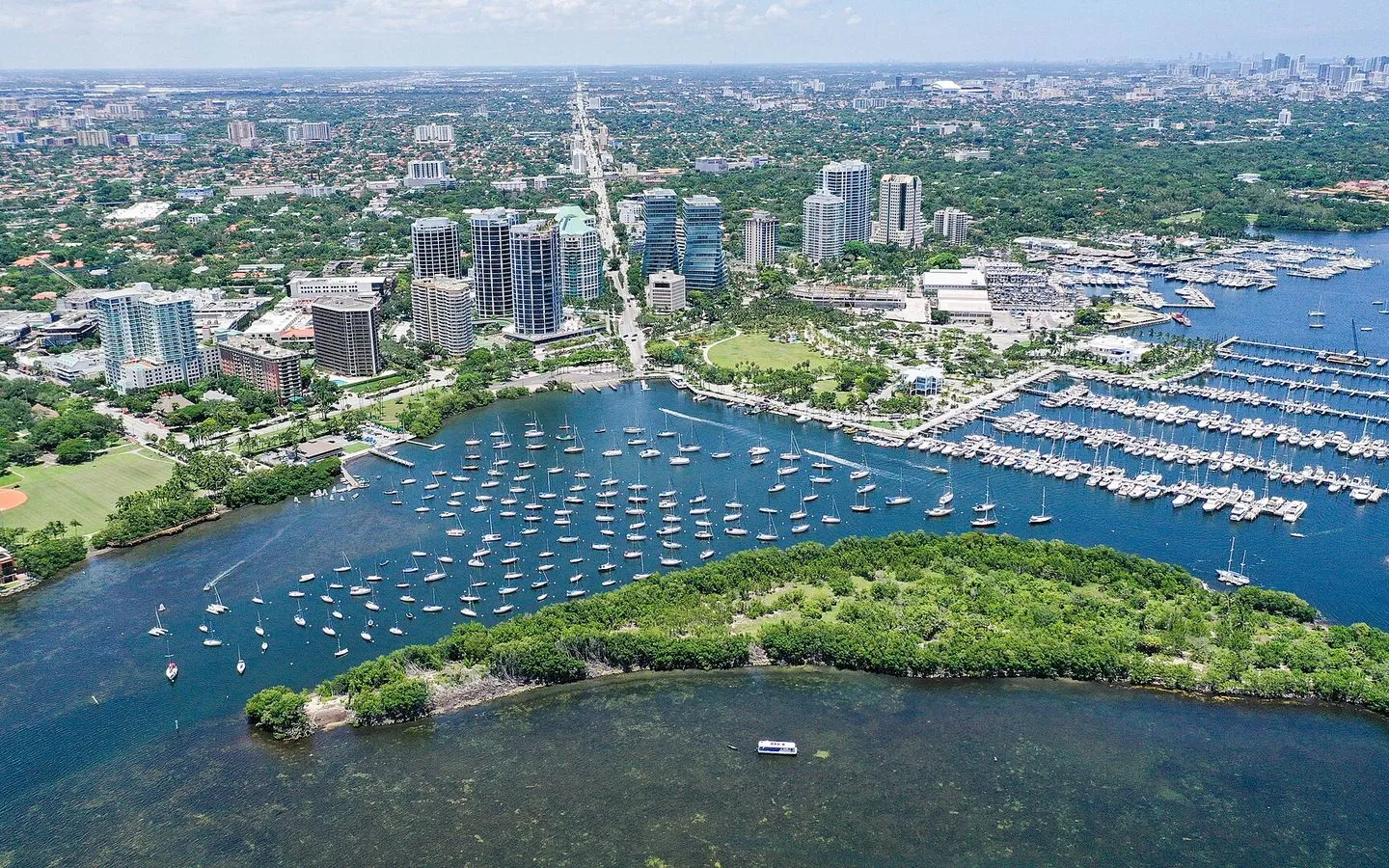
Photo by betty del rio on Wikimedia Commons · CC BY-SA 4.0

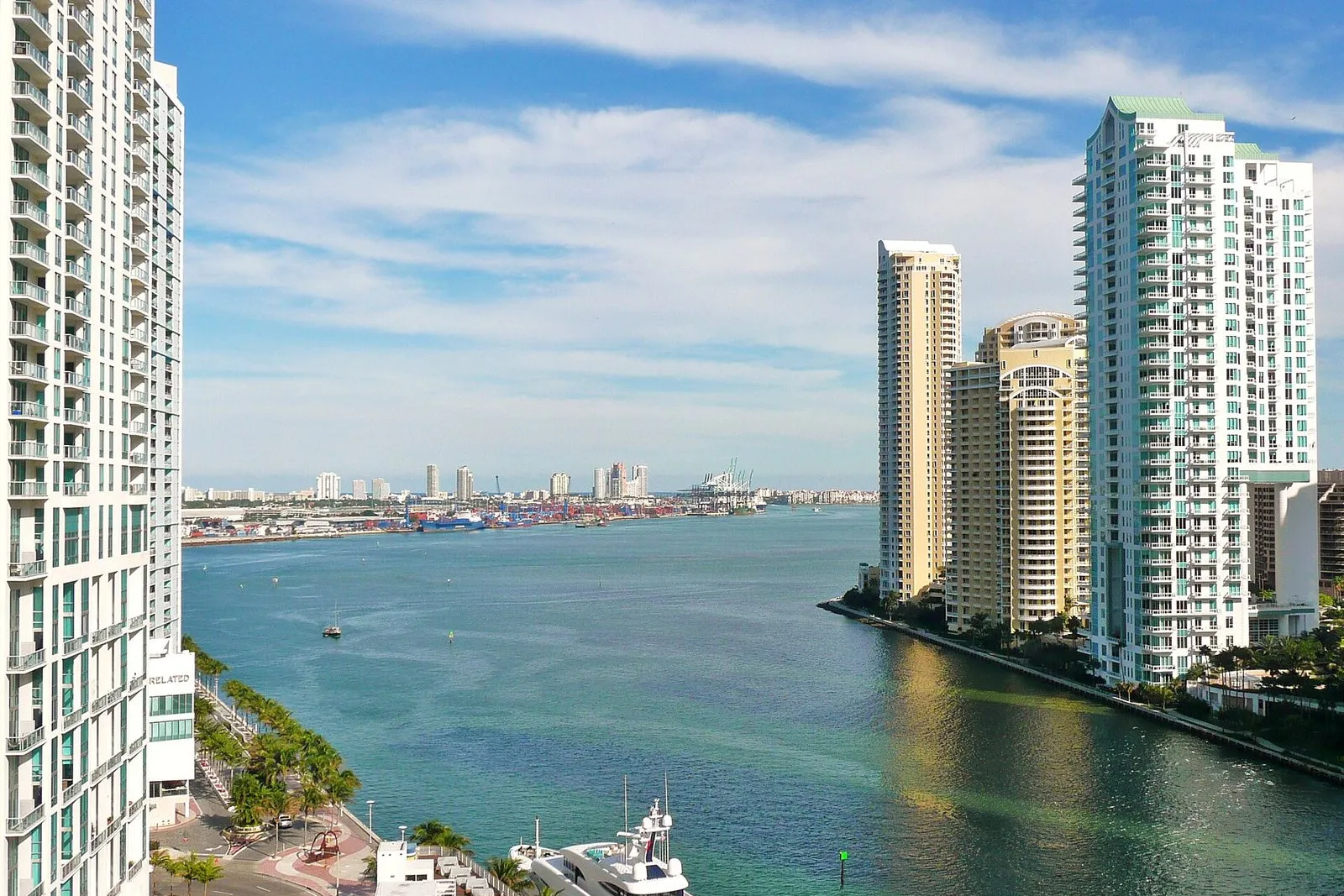
Photo by Florida Department of Commerce: Florida Film Bureau on Wikimedia Commons · CC0

Photo by Oskar Kadaksoo on Unsplash

Photo by Hector Falcon on Unsplash

Photo by Infrogmation on Wikimedia Commons · CC BY-SA 4.0

Photo by Anthony Quintano from Mount Laurel, United States on Wikimedia Commons · CC BY 2.0

Photo by Jairo Gonzalez on Unsplash

Photo by Hector Falcon on Unsplash

Photo by Nils Huenerfuerst on Unsplash

Coming soon

Wayside isn't in the app stores yet, but it's in the works. Check back soon.