Bordeaux · Self-guided audio walk

The Jardin Public, Saint-Seurin and the Palais Gallien

Quiet streets, an early Christian crypt, a Roman ruin and Bordeaux's English garden.

  • 5Stops
  • 1.6 kmDistance
  • 25+ minTime
The Jardin Public, Saint-Seurin and the Palais Gallien

Photo by Pline on Wikimedia Commons

This quiet residential walk links Bordeaux's oldest layers to its greenest pause. It begins at the basilica of Saint-Seurin, where a crypt holds the city's first Christian burials, and climbs past the ruined Roman amphitheatre of the Palais Gallien, free to enter in daylight hours.

From there it follows rue Fondaudège, the old road to the Médoc, and ends in the Jardin Public at the natural history museum. Allow about 50 minutes, with shade and calm between the busier centre and the Chartrons.

Hear it on the street

Get the turn-by-turn audio guide in the app. The narration plays itself as you reach each stop, hands-free and offline.

Stop by stop

The route

Interactive map of the route. The full stop list below works without it.

Basilique Saint-SeurinLocal pick

Photo by Zairon on Wikimedia Commons

Basilique Saint-Seurin

0:00

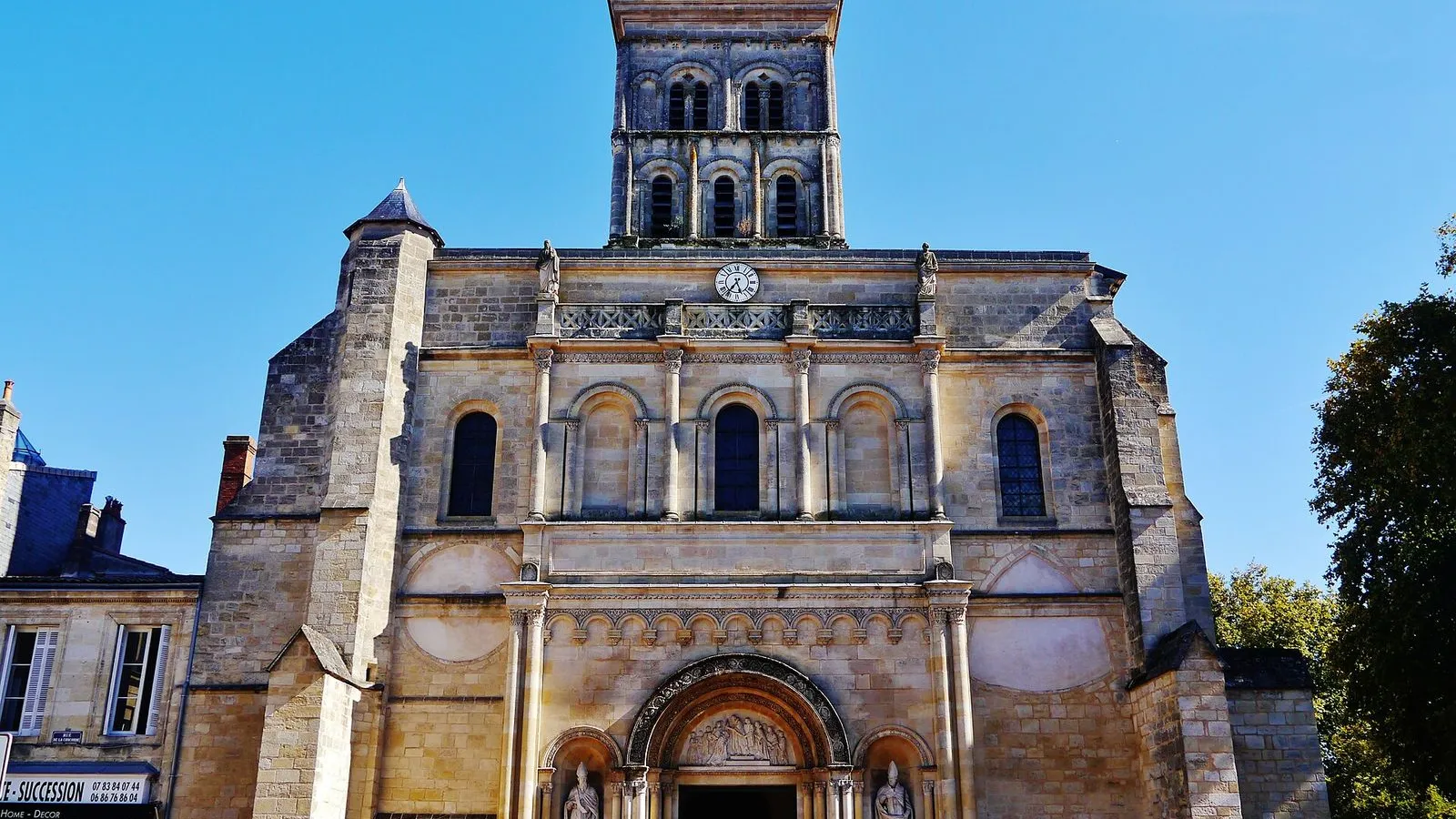
The basilica sits on Bordeaux's oldest Christian burial ground, with a crypt holding more than 70 stone sarcophagi from the 4th century onward.

You're standing in front of the basilica that sits on the oldest Christian burial ground in Bordeaux. The church was begun in the 11th century, but people were buried here long before that, from the 4th century onward. The crypt beneath the nave holds more than 70 stone sarcophagi, some carved with the chrism or the fish, and a few of those burials have been carbon dated to the 4th century. The building is free to enter, but the crypt runs on guided visits and does not open on demand, so check the schedule at the welcome point or book ahead if you want to see it.

One local legend says Charlemagne left Roland's horn on the altar here on his way back from Spain, and that the hearts of his twelve peers were buried in the necropolis. The site is one of the Bordeaux stops on the Camino de Santiago routes, listed as a UNESCO World Heritage Site in 1998. The west porch dates from the 11th century, while the façade you see was rebuilt in the 19th.
≈9 min walk to the next stop
Palais GallienMust see

Photo by MJJR on Wikimedia Commons

Palais Gallien

0:00

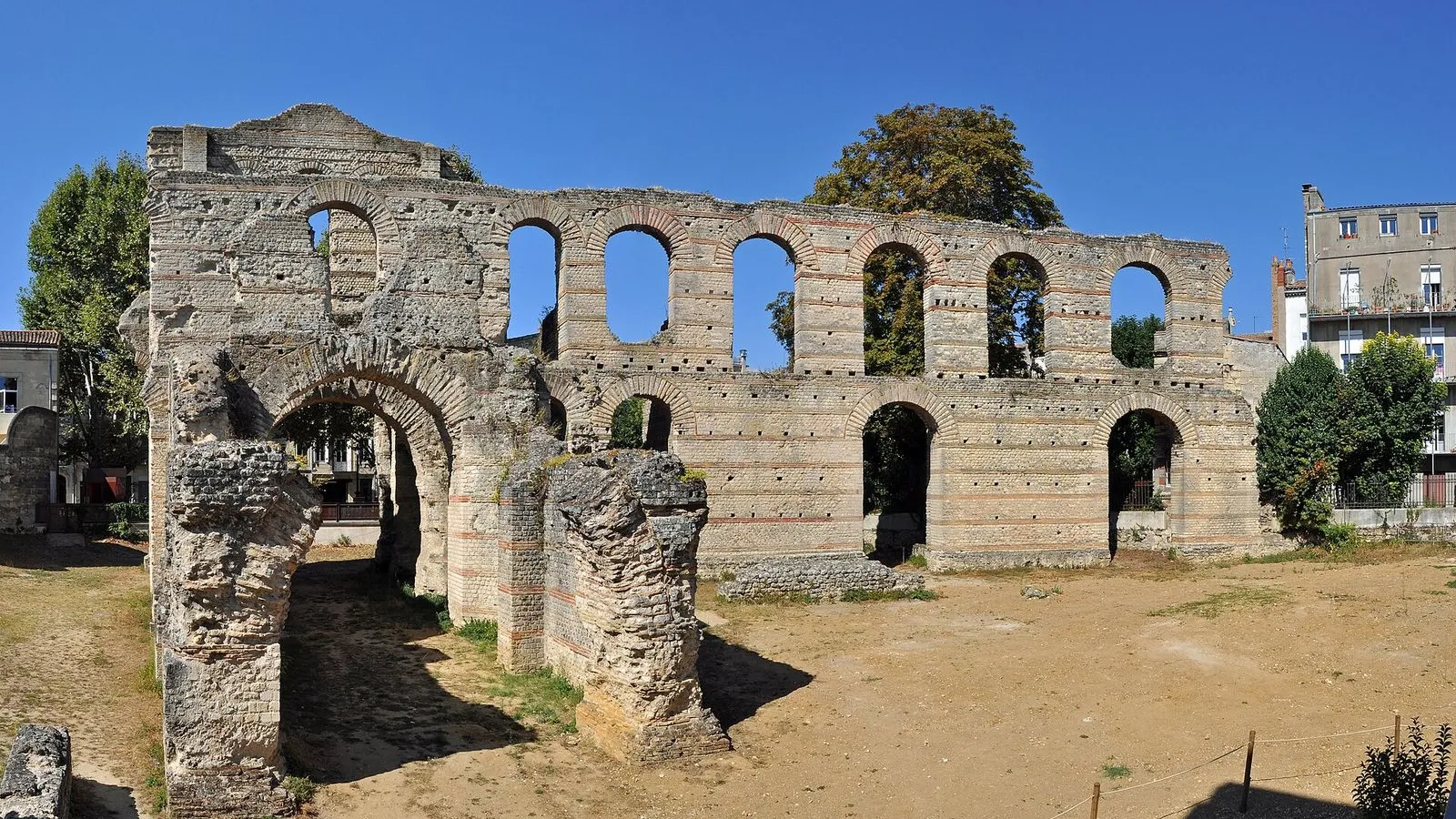
The ruined amphitheatre of Roman Burdigala, the oldest visible piece of the city, free and open in daylight hours.

This is the oldest visible piece of Roman Bordeaux, what remains of the amphitheatre of Burdigala. In its day it held around 20,000 spectators on wooden stands, twice the town's population at the time. What survives now is a stretch of the outer wall and a few arcades, the rest absorbed into the gardens, houses and cellars of the surrounding streets. The name Palais Gallien comes from a later legend that Charlemagne built a palace here for his wife.

It was never a palace, and it has nothing to do with the emperor Gallien. In the 17th century the ruins sheltered vagabonds and prostitutes, and the rumor grew that witches met here. During the Revolution a mayor turned the site into a public quarry, and its stone walked off into the neighborhood walls. The ruin is free and open in daylight hours, so you can walk right in among the arcades.

≈4 min walk to the next stop
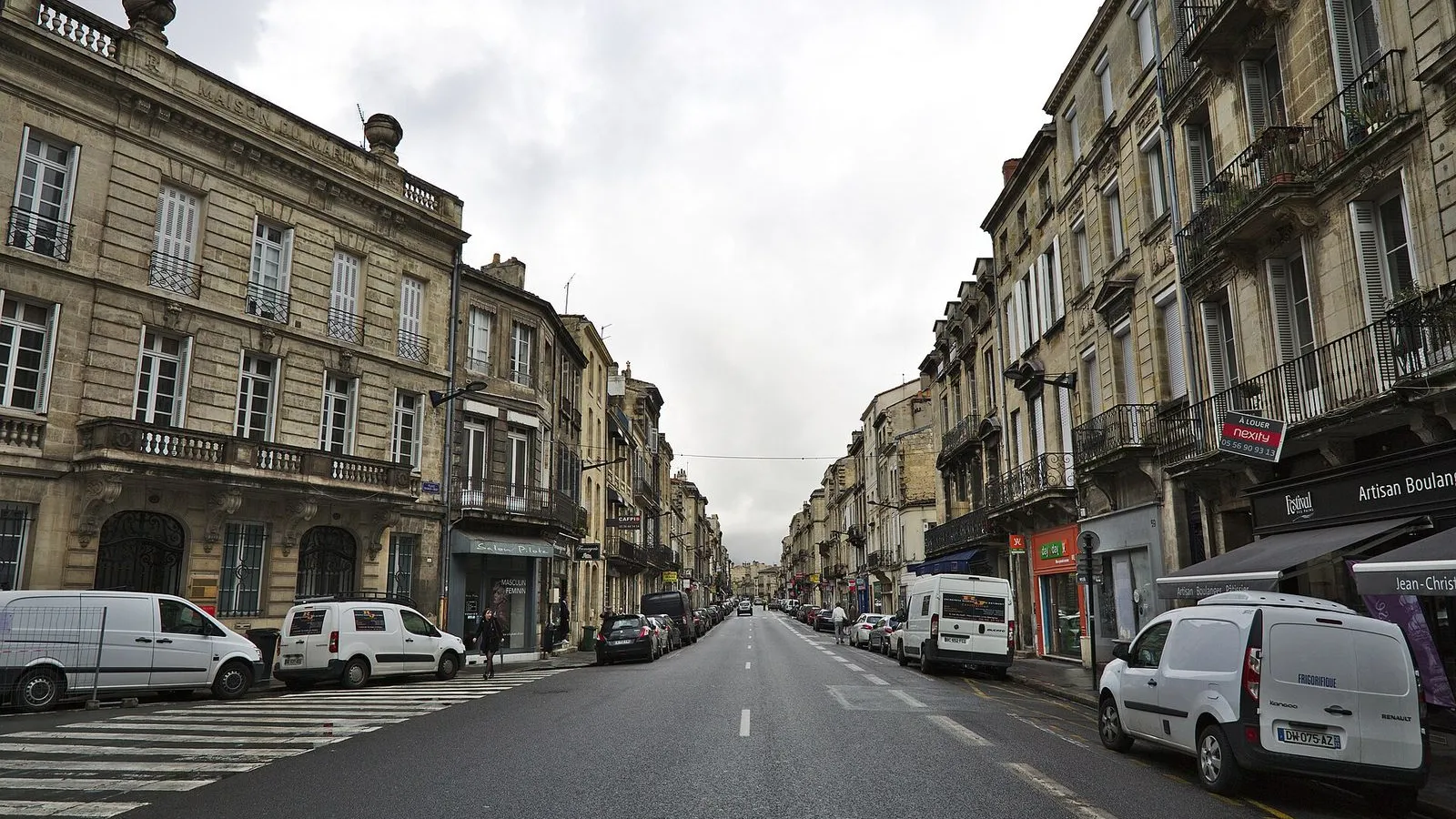
Rue FondaudègeLocal pick

Photo by A1AA1A on Wikimedia Commons

Rue Fondaudège

0:00

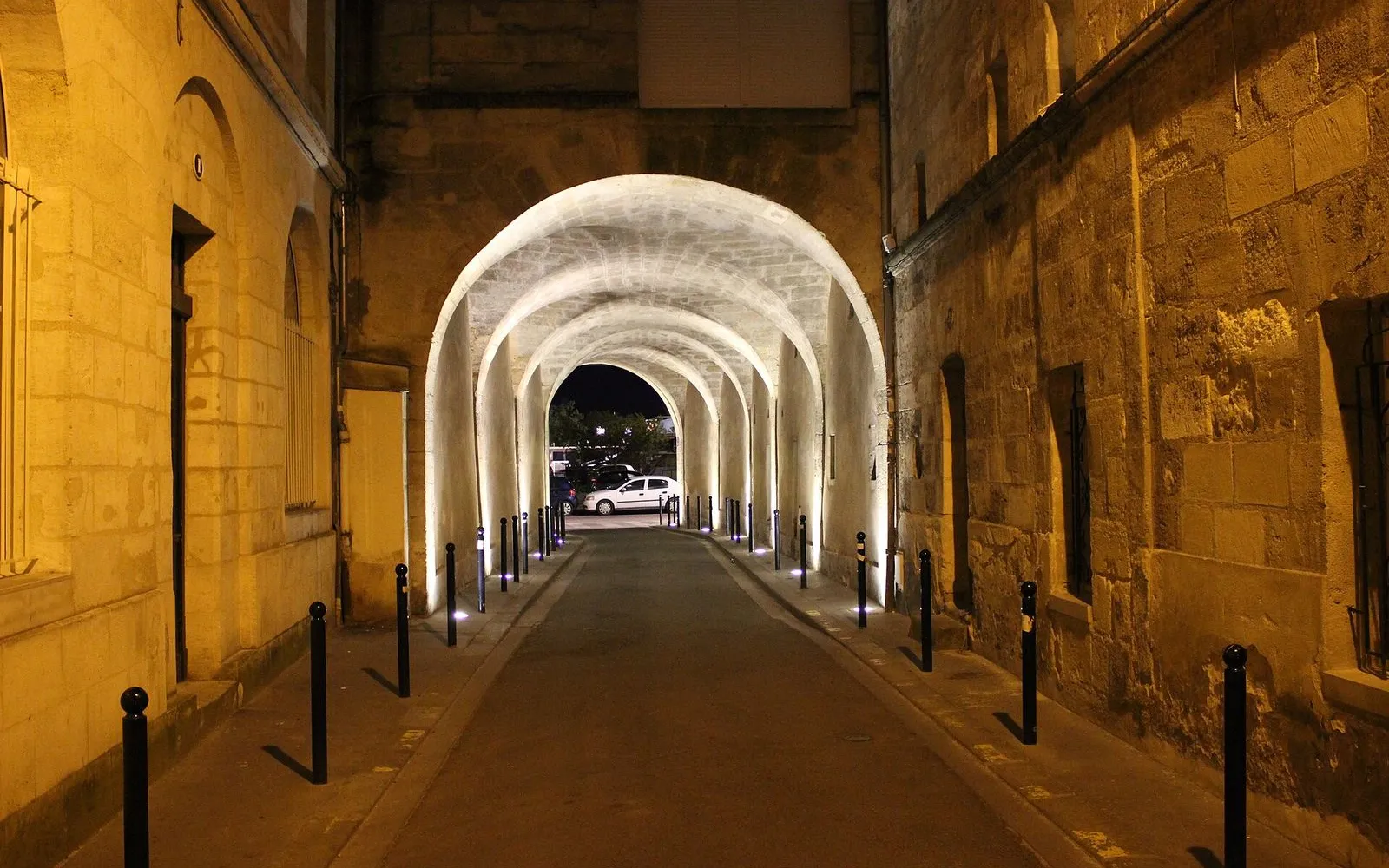
The old road to the Médoc, named for a small spring, still a working street of shops.

You're on rue Fondaudège, and you are walking one of Bordeaux's oldest roads. The Romans laid this route as the via medulica, the road north into the Médoc, and for centuries it was simply called rue des Arènes because it passed the amphitheatre you just left. The name Fondaudège comes from a small spring, the fountain of Odeia, that once fed a tributary of the Garonne. In Gascon it was the Houn d'Audeya, which softened over the centuries into Font d'Audège and then Fondaudège.

Today about 138 shops line its single kilometre, and for years the liqueur maker Marie Brizard kept its headquarters here. Tram line D now runs along the old road, so check before you cross. Keep walking north-east and turn toward the gates of the Jardin Public.

≈5 min walk to the next stop
Free preview ends here · stops 4 to 5 continue in the app

Jardin Public

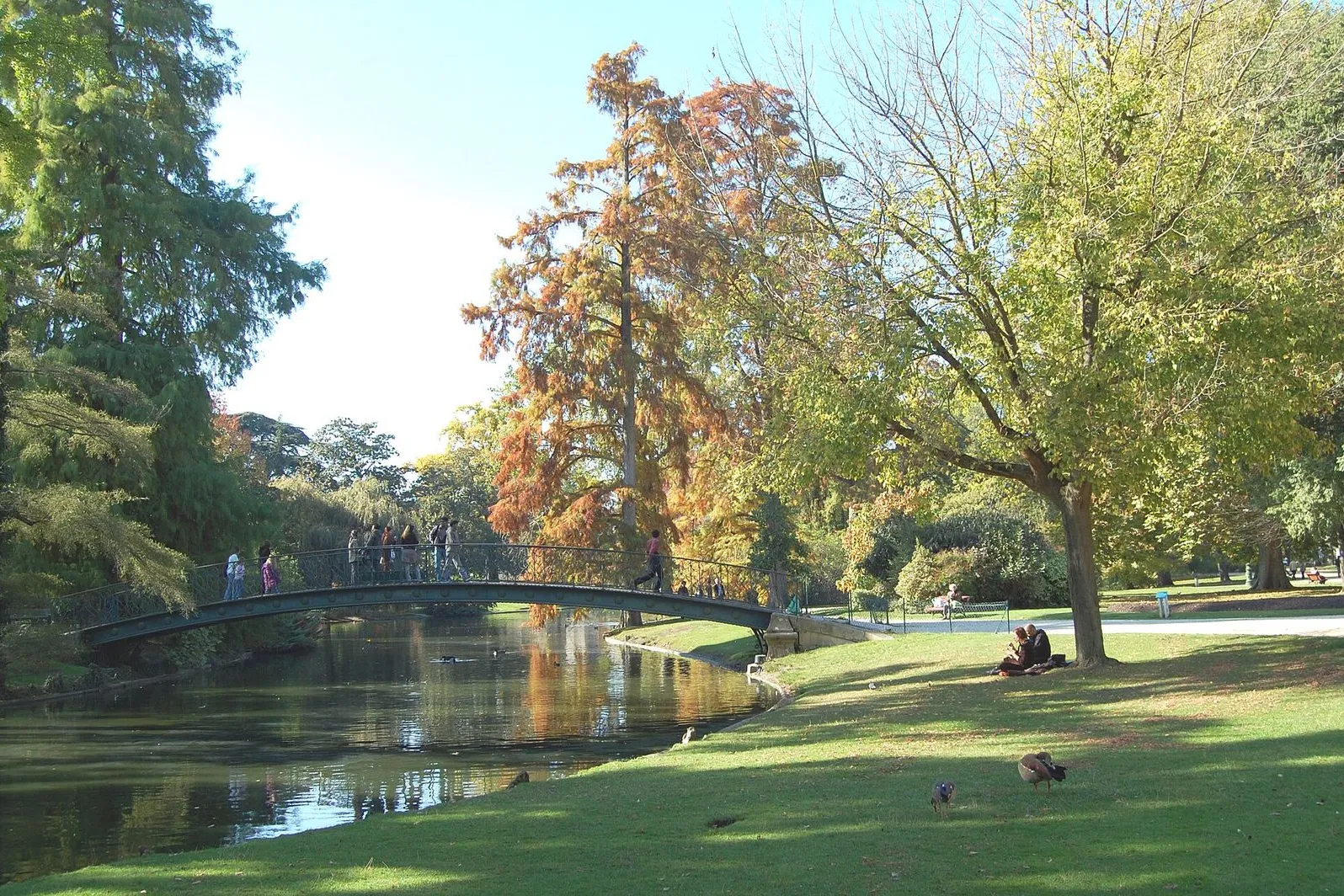
Bordeaux's English garden, open to the public since 1746, with winding paths and a serpentine pond.

in app

Muséum de Bordeaux - sciences et nature

The natural history museum, housed since 1862 in the Hôtel de Lisleferme, with over a million specimens.

in app
Good to know

Before you go

Is the Palais Gallien free?

Yes, the ruined Roman amphitheatre is free to enter in daylight hours, and it is the oldest visible piece of the city.

Is this walk good on a hot day?

Yes. It is the quietest and greenest of the routes, ending in the Jardin Public's shade, and it runs through residential streets away from the main crowds.

What is under the basilica of Saint-Seurin?

A crypt with more than 70 stone sarcophagi from the 4th century onward, the city's earliest Christian burials.

Provenance · last verified August 22, 2026

Built from the Wayside route itself: the stops, their order, and the walk between them.

Photo by Pline on Wikimedia Commons · CC BY-SA 3.0

Photo by Zairon on Wikimedia Commons · CC BY-SA 4.0

Photo by MJJR on Wikimedia Commons · CC BY-SA 3.0

Photo by A1AA1A on Wikimedia Commons · CC BY-SA 4.0

Photo by Remi Jouan on Wikimedia Commons · CC BY 3.0

Photo by Matthias v.d. Elbe on Wikimedia Commons · CC BY 4.0

Photo by Grand Parc - Bordeaux, France from France on Wikimedia Commons · CC BY 2.0

Photo by Coyau on Wikimedia Commons · CC BY-SA 3.0

Photo by Ardfern on Wikimedia Commons · CC BY-SA 3.0

Photo by Matthew Perosi on Wikimedia Commons · CC BY-SA 3.0

Coming soon

Wayside isn't in the app stores yet, but it's in the works. Check back soon.