Montpellier · Self-guided audio walk

The Écusson

Montpellier's medieval heart in thirty-five minutes, from the café oval to the old town's quietest square, with art, market lunch and the lanes between.

  • 8Stops
  • 2 kmDistance
  • 35+ minTime
The Écusson

Photo by GFreihalter on Wikimedia Commons

The Écusson is Montpellier's medieval core, a shield-shaped tangle of lanes where nearly every block has a door to open or a counter to sit at. This walk starts on Place de la Comédie, the oval the whole town uses as its living room, then crosses the Esplanade to two of the city's best art stops: the free Pavillon Populaire photography hall and the Musée Fabre.

From there it turns into the lanes. Rue de l'Ancien Courrier strings together independent shops and galleries, Halles Castellane is the covered market for lunch, and the unfinished neo-Gothic church of Saint-Roch holds a quieter story about the city's patron.

The walk ends on Place de la Canourgue, where a restored seventeenth-century mansion meets café terraces and the loop closes. It runs about thirty-five minutes, mostly flat and pedestrian, with the market as its natural halfway point.

Hear it on the street

Get the turn-by-turn audio guide in the app. The narration plays itself as you reach each stop, hands-free and offline.

Stop by stop

The route

Interactive map of the route. The full stop list below works without it.

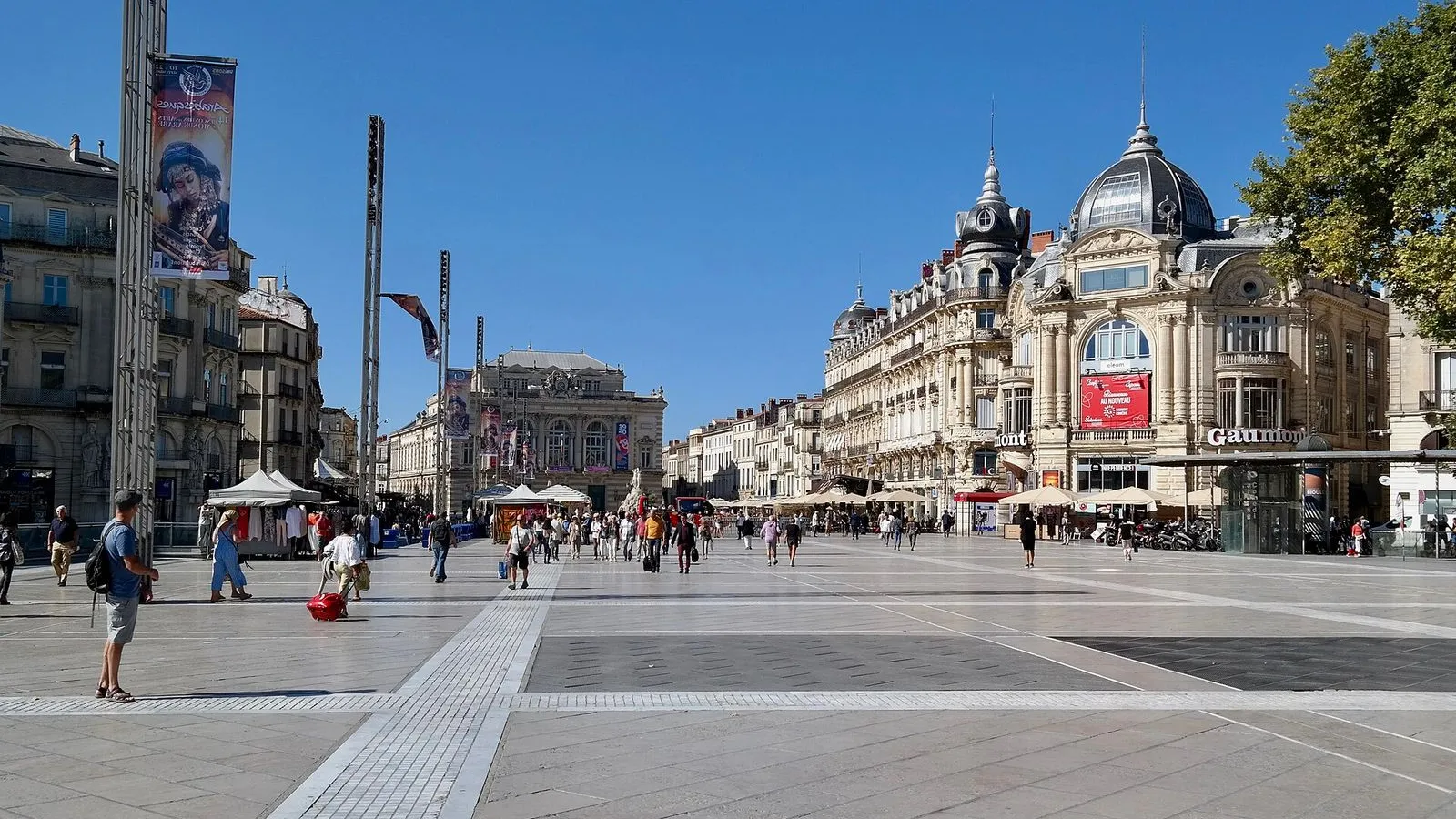
Place de la ComédieMust see

Photo by Choinowski on Wikimedia Commons

Place de la Comédie

0:00

The oval square that is Montpellier's front door.

You're standing on the egg. Place de la Comédie is oval, and people in Montpellier call it Place de l'Œuf, the Egg. The square was laid out in 1755 on ground where the old city wall ran, next to the Porte de Lattes. The opera house in front of you was inaugurated in 1888, an Italian-style theatre whose facade set the line for the whole square.

In the middle sits the Three Graces, three marble figures carved by Étienne Dantoine in 1776. They were first commissioned for Place de la Canourgue, where this walk ends, but they were installed here in the 1790s and have been the city's meeting point ever since. The marble original now waits inside the opera's entrance hall; the figure you see outside is a cast. Every day the whole town funnels through this oval, and the fountain stays the place where people agree to meet.
≈4 min walk to the next stop
Pavillon PopulaireLocal pick

Photo by Dinkley on Wikimedia Commons

Pavillon Populaire

0:00

A free photography hall in an 1891 pavilion.

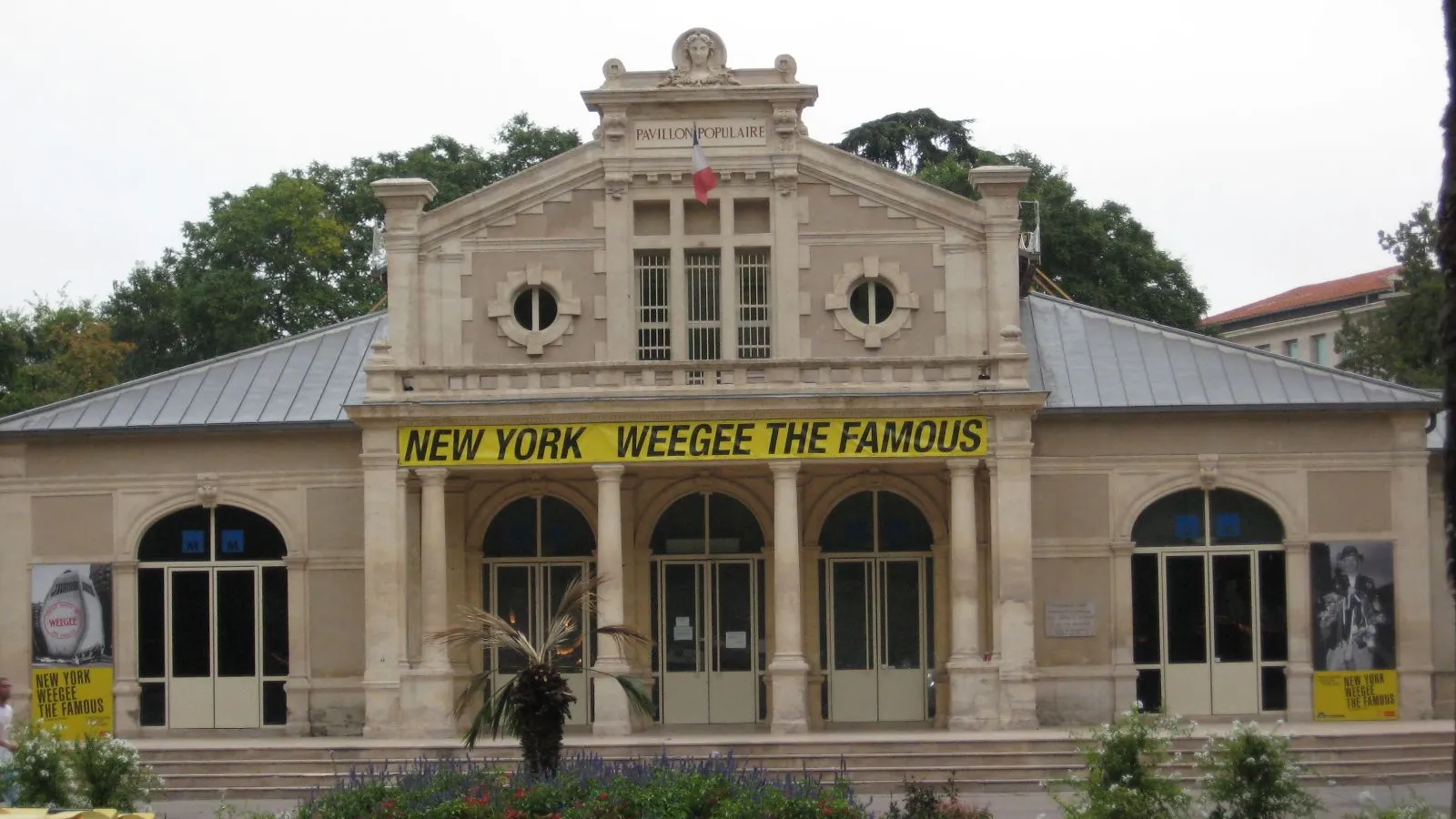
The little neo-Renaissance pavilion in front of you began life as a student club. It was built in 1891 by the city architect Léopold Carlier for the students' association, and its stone portico and carvings were made to give students a grand front door. By 1905 the club was broke and the city took the building over. It became the Pavillon Populaire, the people's pavilion, the hall where the town gathered: the Front populaire victory was celebrated here in 1936, and the building was occupied more than once by angry winegrowers.

Since 2001 it has been the city's free photography gallery, three shows a year, and its walls have held work by Robert Doisneau, Brassaï and Raymond Depardon. It is free to everyone and opens Tuesday to Sunday, closed Monday. Even if you do not go in, step up to the portico and look back across the Esplanade; this was where Montpellier put its public celebrations.

≈4 min walk to the next stop
Musée FabreMust see

Photo by Fred Romero from Paris, France on Wikimedia Commons

Musée Fabre

0:00

The city's main art museum, built on one gift.

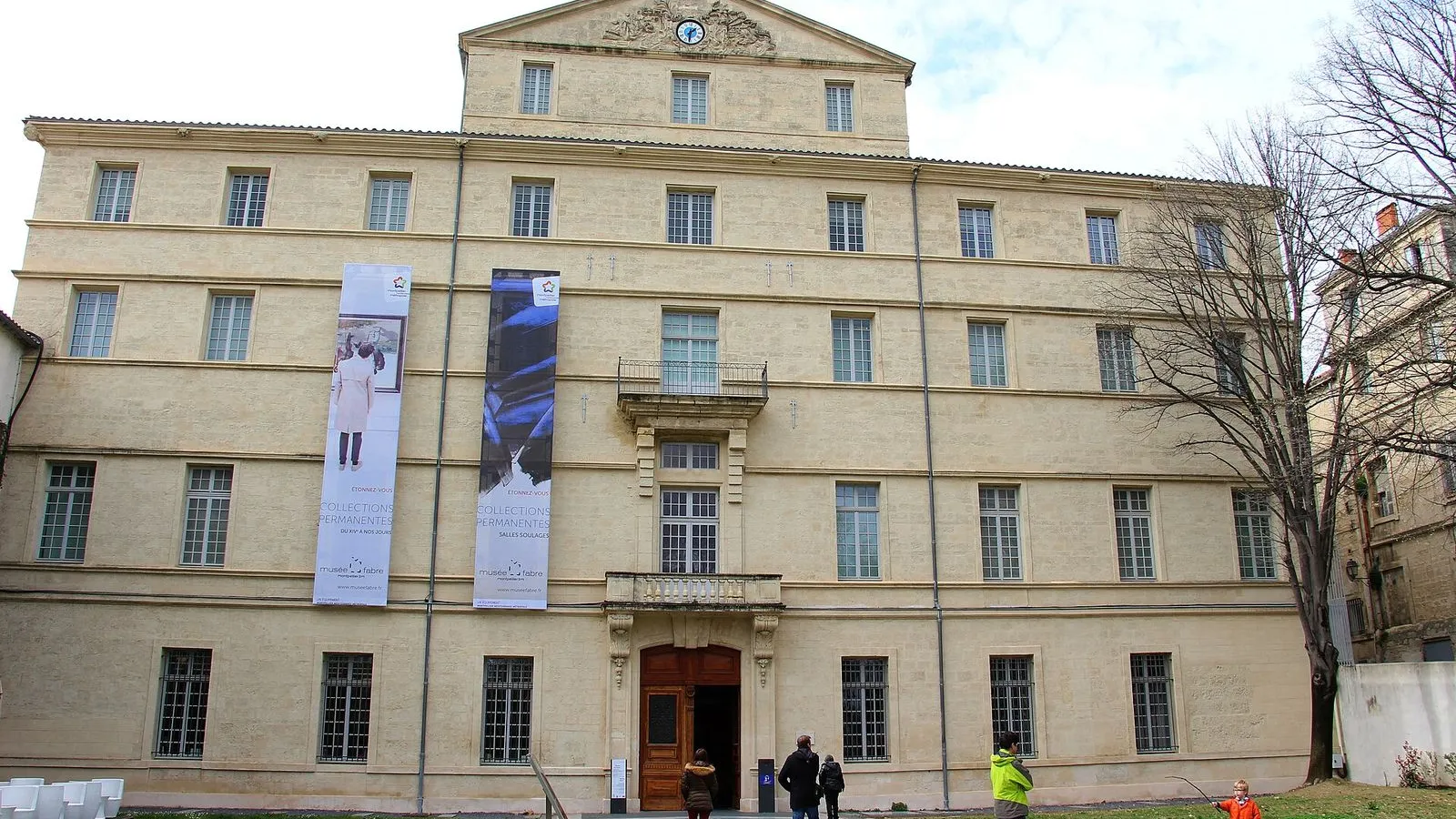
Musée Fabre is Montpellier's main art museum, and it exists because one painter insisted on it. François-Xavier Fabre, born in the city in 1766, offered his collection in 1824 on one condition: the town had to build a proper museum to house it. The museum opened in December 1828. What began as one man's collection is now enormous, with more than two thousand paintings, three hundred sculptures and four thousand drawings, strong in Italian Renaissance and Baroque canvases and in French painting through the nineteenth century.

The permanent collection costs nine euros, six reduced, and is free on the first Sunday of each month. It opens Tuesday to Sunday from eleven in the morning to six in the evening, and closes Monday. You can take in the building without a ticket, though: its long facade runs along the edge of the medieval quarter, where the old wall once stood. If the doors are open, step into the entrance court and look up.

≈5 min walk to the next stop
Free preview ends here · stops 4 to 8 continue in the app

Place Jean Jaurès

The small square where the grand axis bends.

in app

Rue de l'Ancien Courrier

A narrow medieval street of shops and galleries.

in app

Halles Castellane

The covered market where the quarter eats lunch.

in app

Église Saint-Roch

An unfinished neo-Gothic church for the city's saint.

in app

Place de la Canourgue

The old town's quiet square and café terraces.

in app
Good to know

Before you go

Is the Écusson walk flat and easy?

Mostly flat and pedestrian, with a few narrow, cobbled lanes. Take the pace gently and it suits most walkers.

Where should I eat on the Écusson route?

Halles Castellane is the natural lunch stop. It is open Monday to Saturday until 8 p.m., and on Sundays and public holidays it closes at 1:30 p.m.

SourceVille de Montpellier markets guide
Which stops on the Écusson walk are free?

The Pavillon Populaire and the squares are free. The Musée Fabre permanent collection is €9, and it is free on the first Sunday of each month.

SourceMusée Fabre

Provenance · last verified August 28, 2026

Built from the Wayside route itself: the stops, their order, and the walk between them.

Photo by GFreihalter on Wikimedia Commons · CC BY-SA 4.0

Photo by Choinowski on Wikimedia Commons · CC BY-SA 4.0

Photo by Dinkley on Wikimedia Commons · CC BY-SA 3.0

Photo by Fred Romero from Paris, France on Wikimedia Commons · CC BY 2.0

Photo by Gerd Eichmann on Wikimedia Commons · CC BY-SA 4.0

Photo by Zairon on Wikimedia Commons · CC BY-SA 4.0

Coming soon

Wayside isn't in the app stores yet, but it's in the works. Check back soon.