Nantes · Self-guided audio walk

The Island the Trade Built

A short walk through Nantes' shipowners' island, where 18th-century houses still wear the faces of Atlantic trade, and down to the Loire quay where that trade's human cost is written in glass.

  • 6Stops
  • 1.3 kmDistance
  • 25+ minTime
The Island the Trade Built

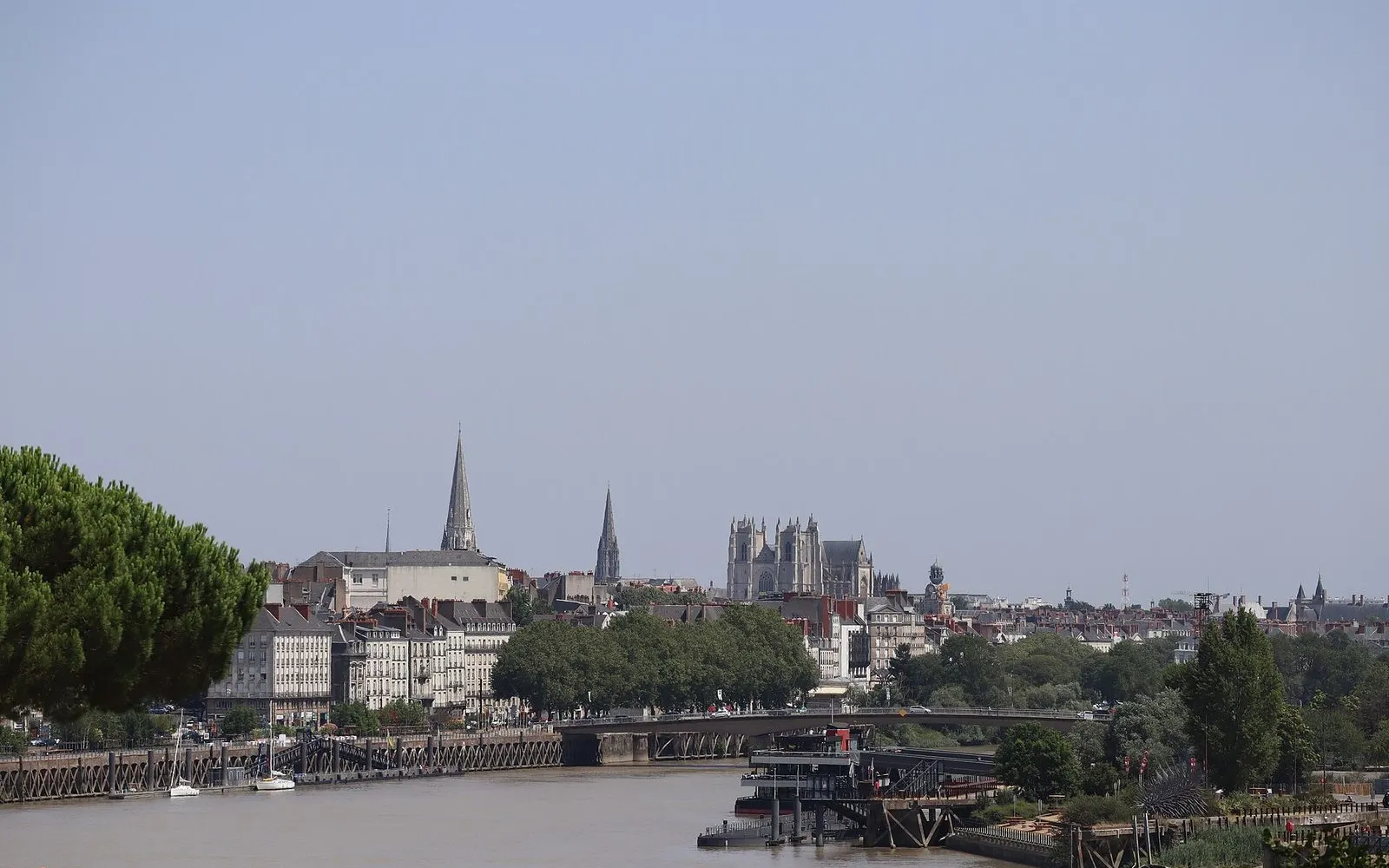
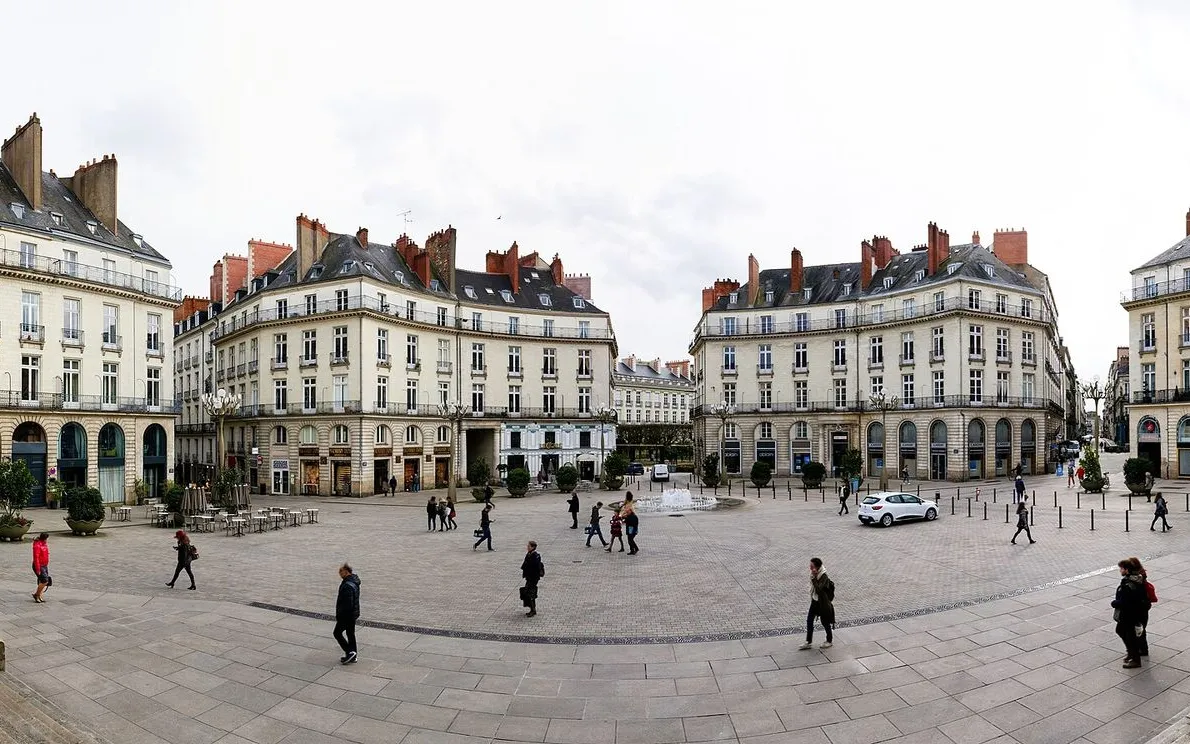
Photo by Clément Beckert on Wikimedia Commons

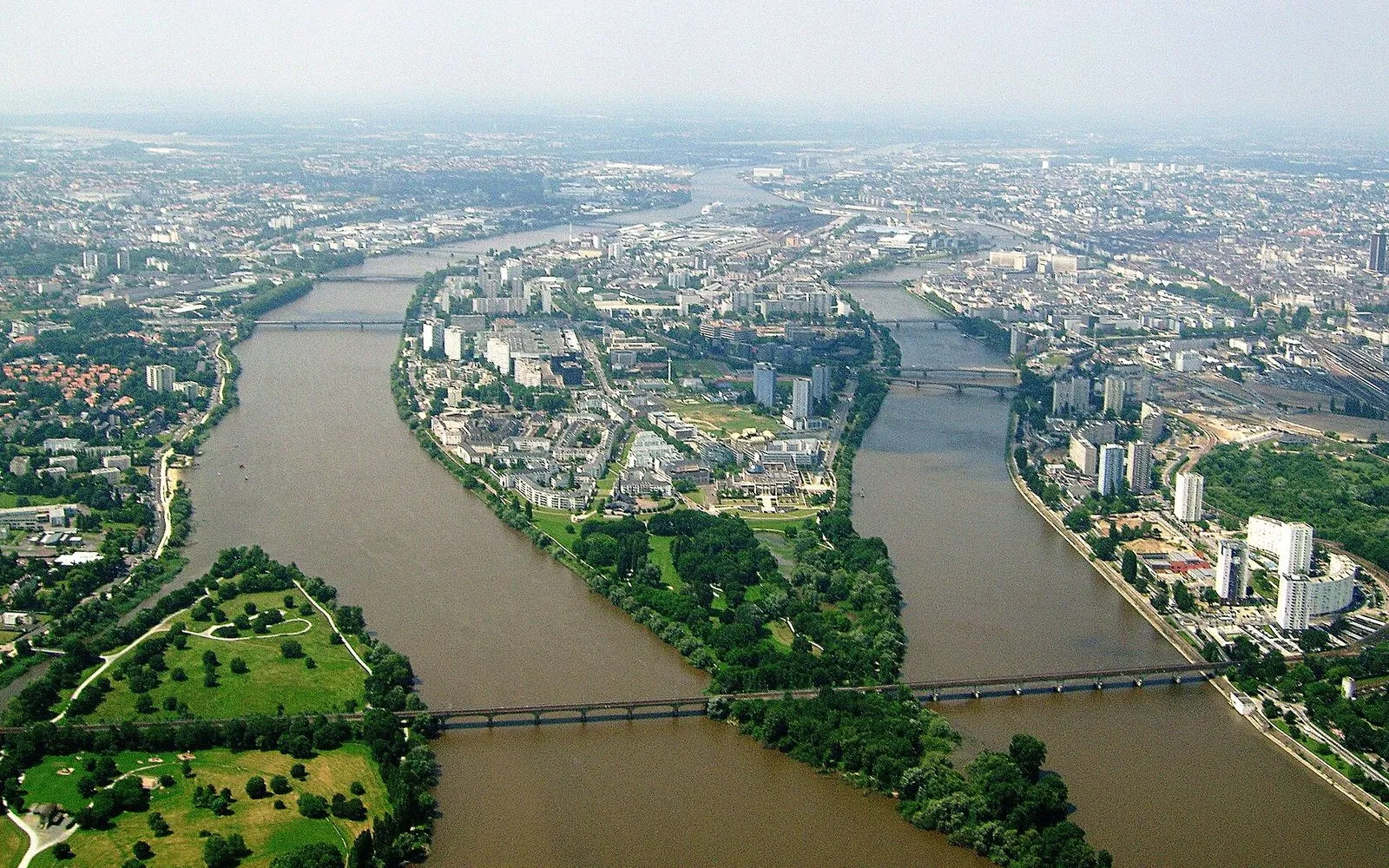
This walk crosses an island that is no longer an island. Between 1926 and 1938, Nantes filled in the two arms of the Loire that had wrapped around the île Feydeau, and the quays that once met water became the pedestrian allées you walk today. What remains is a street of tall 18th-century houses built on the money of Atlantic trade.

You pass the Temple du Goût, the 1753 house of the slave-trading shipowner Guillaume Grou, and the hôtel de la Villestreux, the island's largest residence, before stepping onto the quai de la Fosse, the city's true port front.

The walk ends at the Mémorial de l'abolition de l'esclavage, where 2,000 glass plaques underfoot name the slave ships that sailed from this river, alongside the African trading posts and the Caribbean, American and Indian Ocean ports of sale. It is free, and it makes the cost of those façades plain.

Hear it on the street

Get the turn-by-turn audio guide in the app. The narration plays itself as you reach each stop, hands-free and offline.

Stop by stop

The route

Interactive map of the route. The full stop list below works without it.

Allée Duguay-TrouinLocal pick

Photo by Thanh Ly on Unsplash

Allée Duguay-Trouin

0:00

A former river quay that lost its water in the 1930s.

You're standing on what was once the northern edge of a real island. Until the 1930s, the Loire split around this strip of land, and the water of the bras de la Bourse came right up to these stones. The quay you're on got its concession in 1721, and the wall began to rise in the summer of 1723, work that took nine years. It was laid out as part of the île Feydeau, a brand-new quarter for the city's shipowners and merchants, and the tall houses behind you were their showpieces, every one of them paid for by Atlantic trade.

Jules Verne was born on this island too, at 4 rue Olivier-de-Clisson, where a plaque marks the house. Then the city filled the river arm in, between 1926 and 1938, and when the sand settled the island was land. The quay became an allée, a road with no water to meet. Much of it still carries cars; only the stretch between cours Olivier-de-Clisson and rue Léon-Maître was given over to pedestrians and bikes, its paved quay remade beside a green ditch.

Look at the line of the pavement and the low strip of grass beside it. That is the ghost of the river.
≈2 min walk to the next stop
Temple du GoûtLocal pick

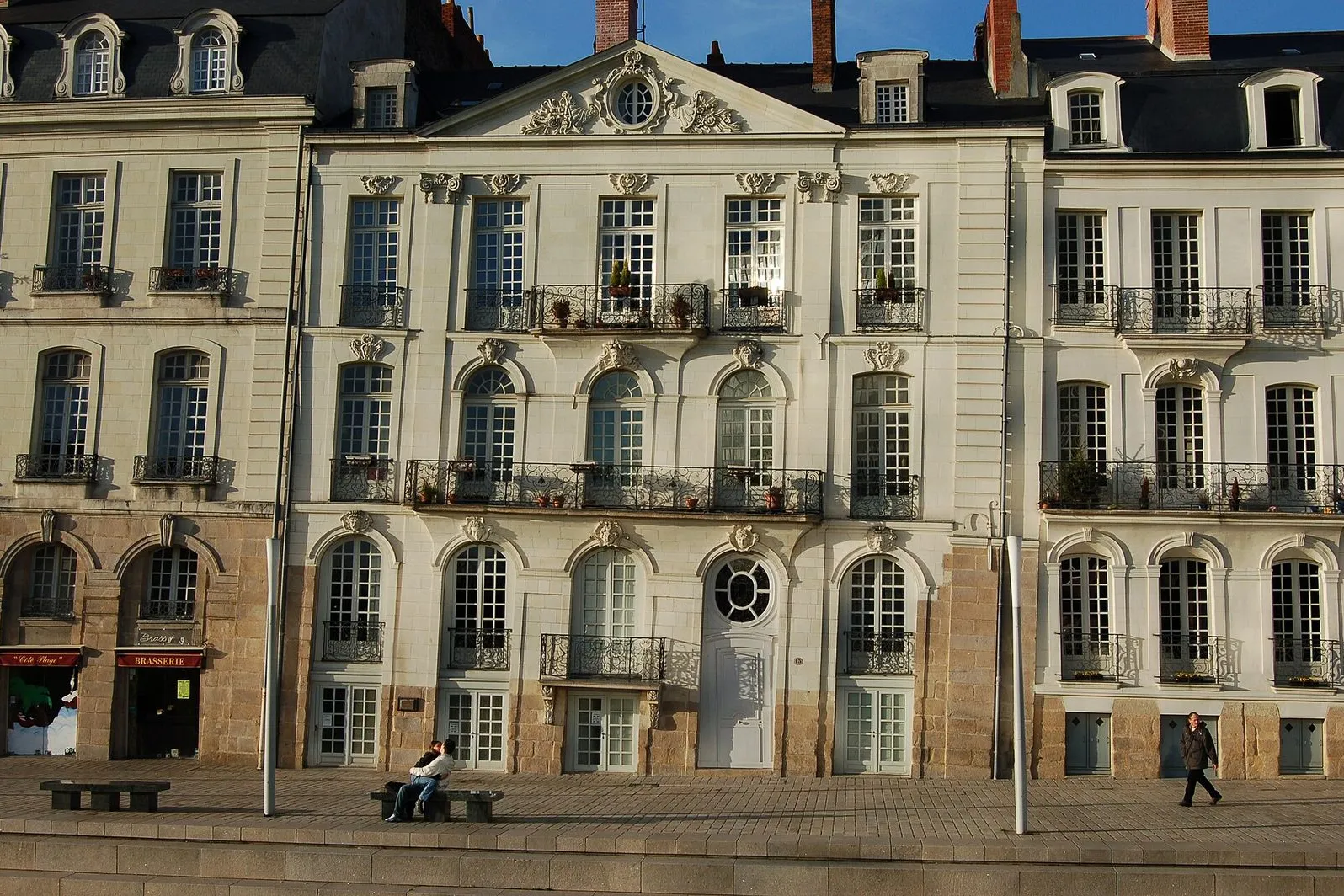
Photo by Selbymay on Wikimedia Commons

Temple du Goût

0:00

The island's flashiest house, built for a slave-trading shipowner.

This is the most theatrical house on the island, and its name is a joke that stuck. The Temple du Goût, the temple of taste, was built in 1753 by the architect Pierre Rousseau for Guillaume Grou, one of the richest shipowners in Nantes and a man who made much of his fortune in the slave trade. Rousseau gave it the most spectacular façade on the île Feydeau and liked his own work enough to keep an apartment here from 1755. The nickname is said to be the city's, or maybe Rousseau's own.

Look up at the first floor. Above the central windows sit carved faces, the mascarons. One is a woman with garlands of flowers and grapes in her hair; another is a bearded man in a turban, posed like a traveler. These were a merchant's calling card, a nod to the trade that paid for the stone.

The woman with the flower garlands and the turbaned man still watch the allée from the first floor.

≈1 min walk to the next stop
Rue KervéganLocal pick

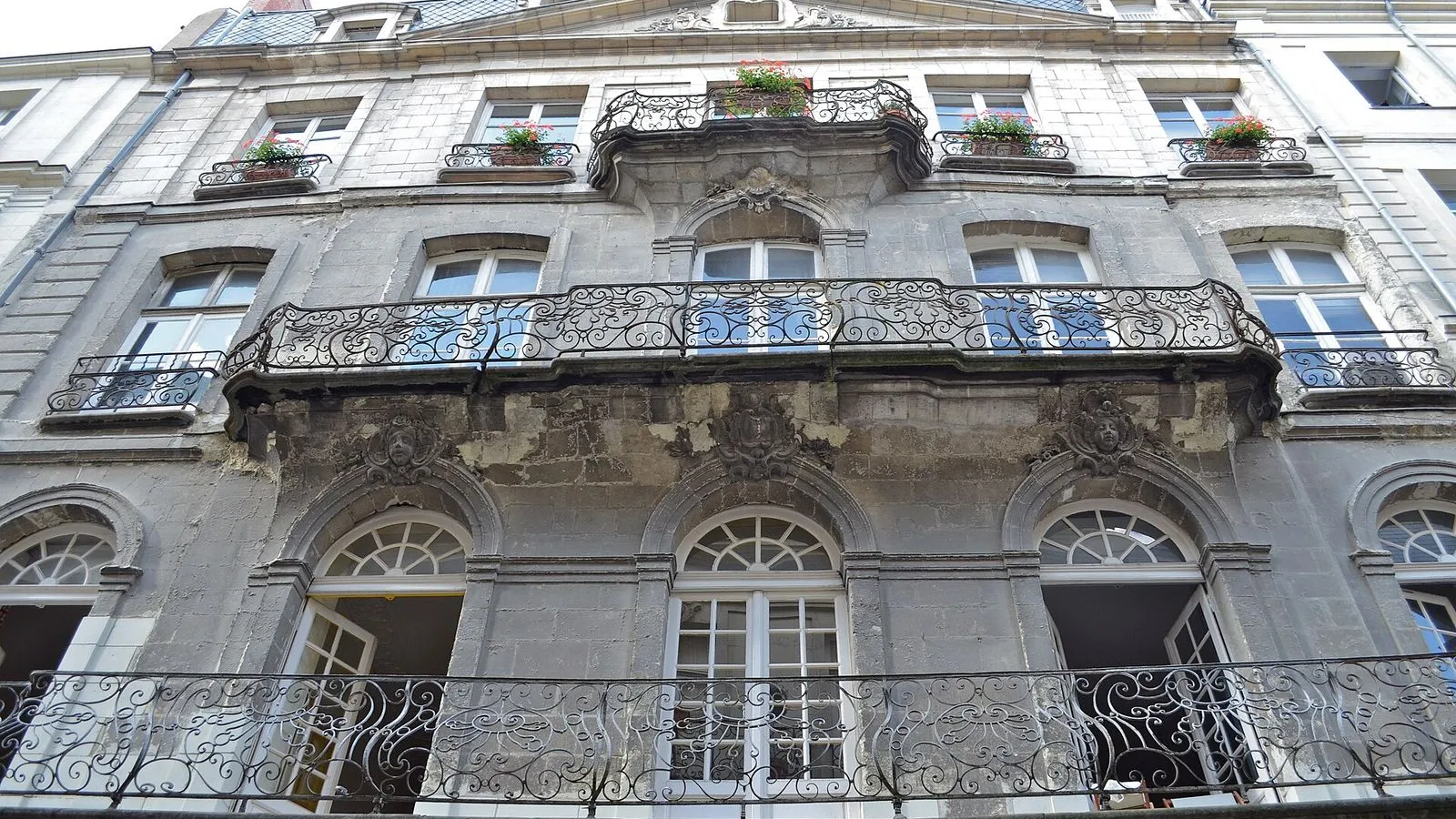
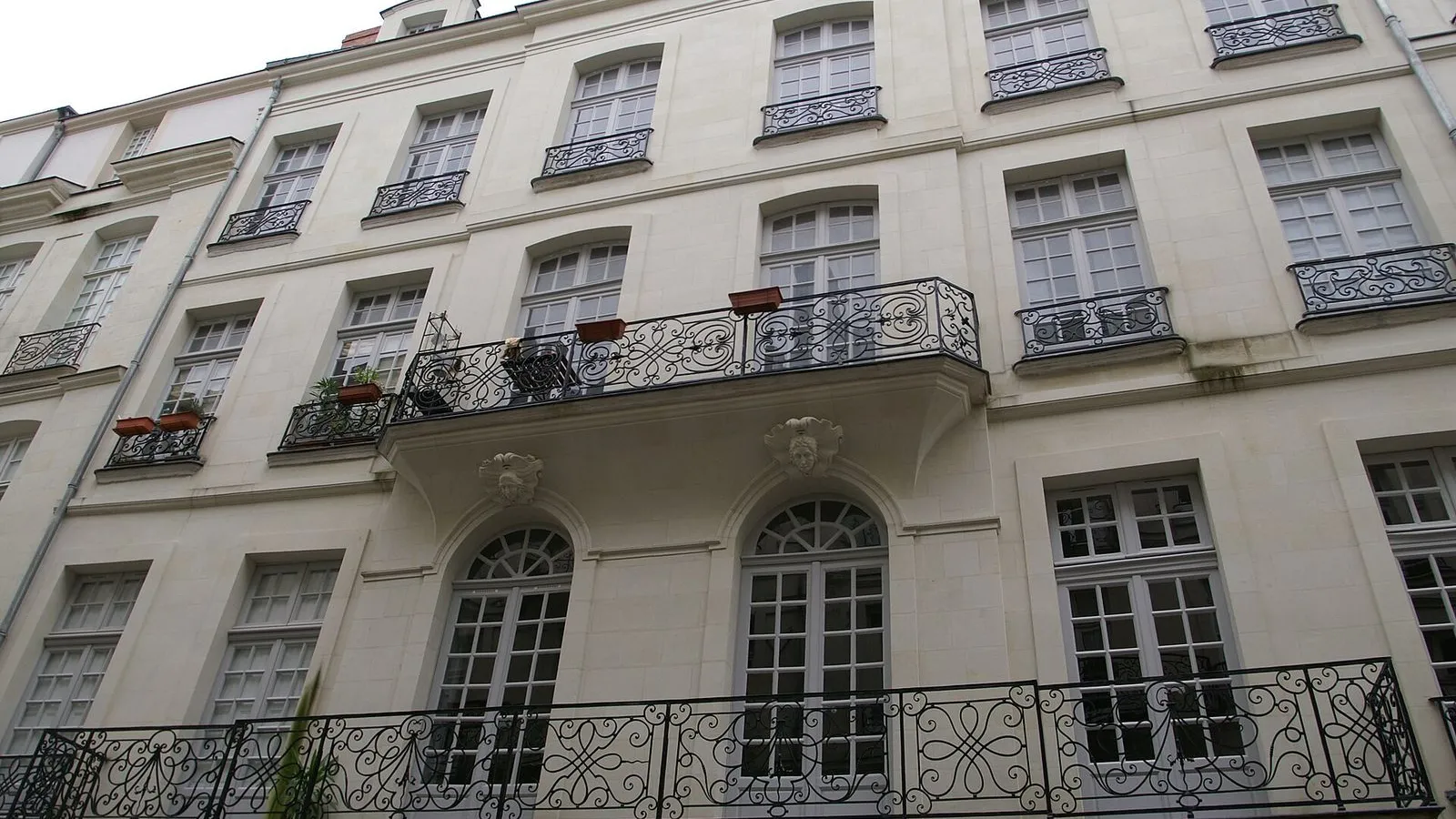
Photo by Pymouss on Wikimedia Commons

Rue Kervégan

0:00

The island's main street, where mascarons tell the trade's story.

You're in the spine of the island now. Rue Kervégan runs the whole length of the île Feydeau, and its name is a small piece of the story. It was renamed in 1817 for Danyel de Kervégan, a merchant, a slave-trading shipowner and a former mayor, who lived and died on this street. The houses were ambitious from the first day, and the ground nearly defeated them.

Raised on sand, several began to settle as soon as the scaffolding came down. It took Pierre Rousseau, the same architect who built the Temple du Goût, to steady the district: around 1755 he introduced timber raft foundations in the Dutch manner, and you can still see the tilt in a few façades. And the street today is as much about dinner as architecture. It is one of the city's restaurant and bar streets: Le Cèdre for Lebanese food, Cascabel and A Cantina for evening crowds, and Royal Indien at number 13.

Look up above the doorways. The carved faces are the mascarons, and here they do the district's talking. Above Royal Indien is one of the rarest: a face with Black features, carved for the wood merchant Joseph Raimbaud. At number 9, and across on allée Turenne at 9, the stone faces carry the same message.

≈2 min walk to the next stop
Free preview ends here · stops 4 to 6 continue in the app

Hôtel de la Villestreux

The island's largest residence, at its western tip.

in app

Quai de la Fosse

Nantes' true port front, where the ships tied up.

in app

Mémorial de l'abolition de l'esclavage

A riverside memorial counting the ships and the cost in glass.

in app
Good to know

Before you go

Is the The Island the Trade Built walk free?

Your first tour is free, no account needed. After that you can buy tours one at a time, or subscribe for access to every city. Cancel whenever you want.

How far is it, and how long does it take?

The route runs 1.3 km across 6 stops and takes 25+ min at an easy pace. That covers the walking and the audio. How long you linger at each stop is up to you.

When should I start?

Any time of day works. You can pause at any stop and pick the route back up later, so there is no need to finish it in one go.

Does the audio work offline?

Yes. Download the walk over Wi-Fi before you set out and the audio, map, and directions all run offline. Handy for skipping roaming charges abroad.

Keep exploring

More walks in Nantes

Gardens, Biscuits and Back LanesThe essentials

Gardens, Biscuits and Back Lanes

One east-side walk through Nantes: a grand art museum, a 19th-century botanical garden, a biscuit factory reborn as an arts centre, and the street-art lanes beyond.

4 stops1.7 km25+ min
Stone and Timber: Old NantesThe local mix

Stone and Timber: Old Nantes

A one-hour walk through old Nantes, from the free ramparts of the ducal castle to the old lanes where the city once traded and drank.

7 stops1.3 km25+ min
From Cliff Top to Quarry FloorThe hidden side

From Cliff Top to Quarry Floor

Start above the Loire beside Jules Verne, step out over the cliff on a wooden walkway, then follow a workers' stair down into a tropical garden with a 25-metre waterfall and finish with a pint at the bottom.

7 stops2.5 km40+ min
From Ships to MachinesThe local mix

From Ships to Machines

A walk along the western arm of Nantes's river island, where a closed shipyard now launches a 12-meter elephant, a three-story sea carrousel and rings of steel along the Loire.

5 stops1.4 km25+ min
A Nantes Morning on the ErdreThe hidden side

A Nantes Morning on the Erdre

Start the day where Nantais actually shop: a Saturday flea market square, an 89-year-old covered market, then a quiet quay and a free Japanese garden before the lunch crowd arrives.

5 stops1.7 km25+ min
Trentemoult by WaterThe hidden side

Trentemoult by Water

An eight-minute river crossing from Nantes lands you in a former fishing village of narrow lanes, painted houses and quayside terraces that all face the Loire.

5 stops1.2 km20+ min
One Century, One QuarterThe local mix

One Century, One Quarter

Walk the Graslin quarter the way its 1780s planners laid it out, then trace the shopping layers the next century added: a glass arcade, a fountain to the port, and an Art Nouveau brasserie.

5 stops0.8 km15+ min

Provenance · last verified August 27, 2026

Built from the Wayside route itself: the stops, their order, and the walk between them.

Photo by Clément Beckert on Wikimedia Commons · CC BY-SA 3.0

Photo by Thanh Ly on Unsplash

Photo by Selbymay on Wikimedia Commons · CC BY-SA 3.0

Photo by Pymouss on Wikimedia Commons · CC BY-SA 3.0

Photo by Fab5669 on Wikimedia Commons · CC BY-SA 4.0

Photo by Pascal Bernardon on Unsplash

Photo by GO69 on Wikimedia Commons · CC BY-SA 4.0

Photo by Jibi44 on Wikimedia Commons · CC BY-SA 3.0

Photo by Eusebius on Wikimedia Commons · CC BY 3.0

Photo by Pascal Bernardon on Unsplash

Photo by François de Dijon on Wikimedia Commons · CC BY-SA 4.0

Coming soon

Wayside isn't in the app stores yet, but it's in the works. Check back soon.