Nantes · Self-guided audio walk

Gardens, Biscuits and Back Lanes

One east-side walk through Nantes: a grand art museum, a 19th-century botanical garden, a biscuit factory reborn as an arts centre, and the street-art lanes beyond.

  • 4Stops
  • 1.7 kmDistance
  • 25+ minTime
Gardens, Biscuits and Back Lanes

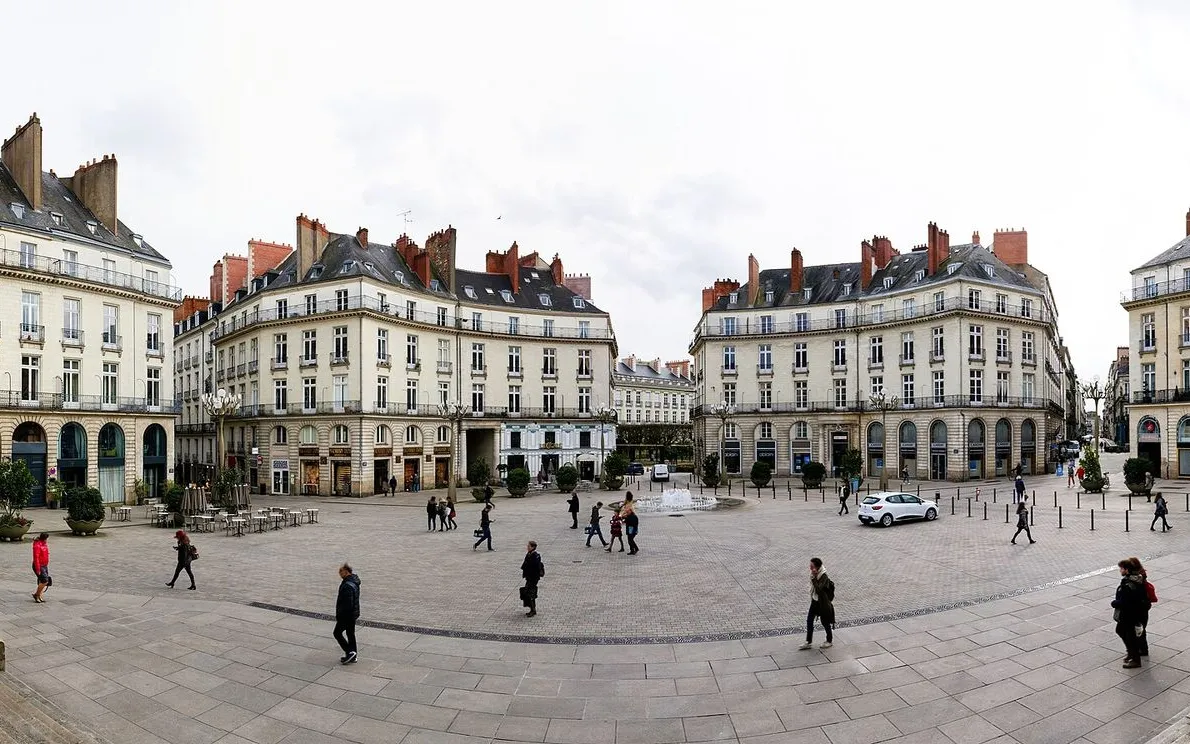
Photo by Fab5669 on Wikimedia Commons

This walk follows the green and industrial turn of Nantes' east side. It starts at the Musée d'arts, whose 1900 palace now opens onto a contemporary glass-and-marble Cube, then crosses to the Jardin des Plantes, one of France's four great botanical gardens, seven free hectares open daily from half past eight in the morning; in winter the gates close between half past five and half past six in the evening.

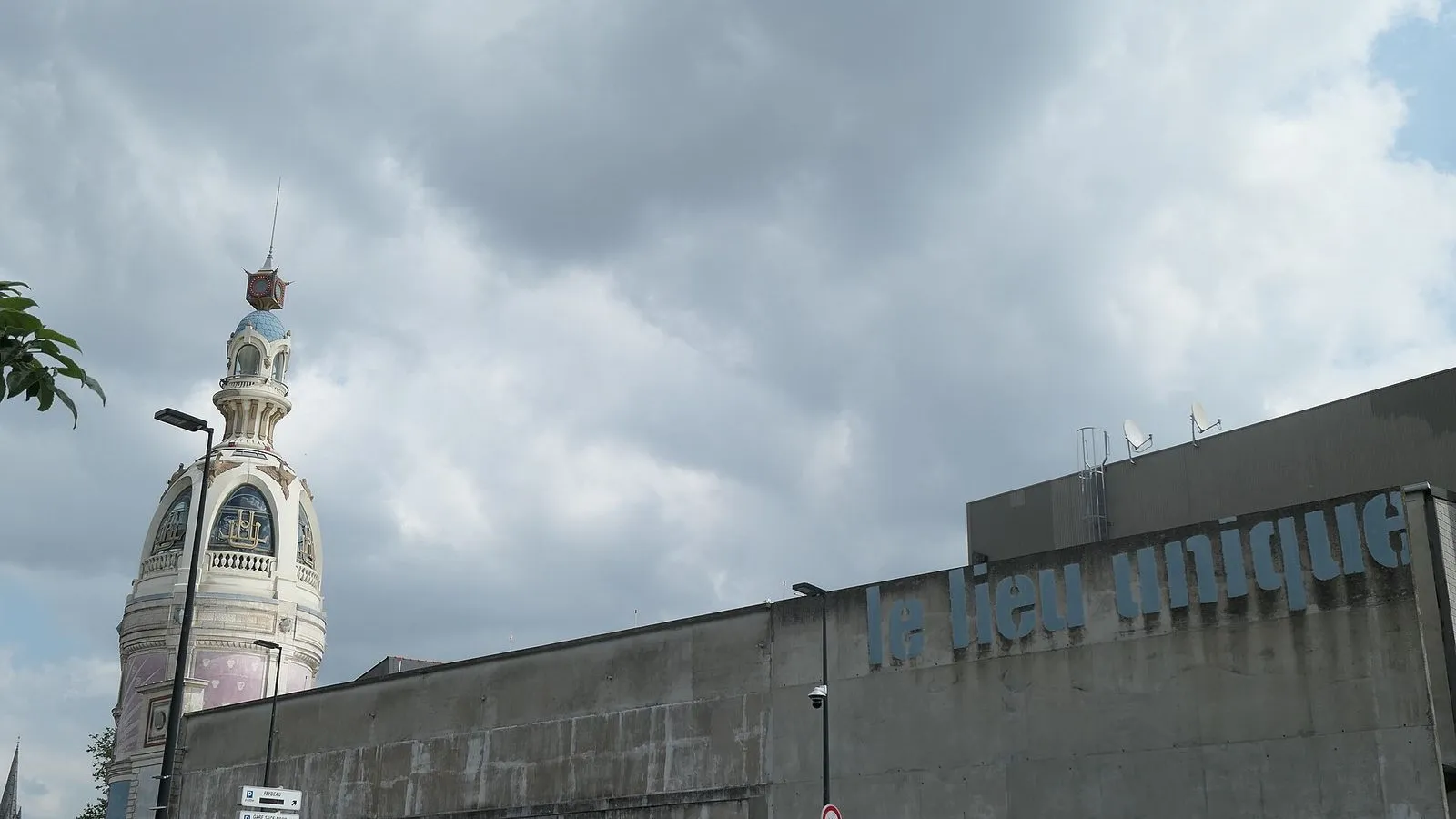
From the garden's southern gate you thread past the train station and the Champ de Mars to the canal Saint-Félix. There, on the quai Ferdinand-Favre, the old LU biscuit factory now houses the Lieu Unique, an arts centre with exhibitions, a reading salon, a bar, a restaurant and weekend visits up the Tour LU.

The last stretch heads south into the Olivettes, a quarter of former workshops and courtyards where galleries, creative trades and murals now fill the passages off rue des Olivettes.

Hear it on the street

Get the turn-by-turn audio guide in the app. The narration plays itself as you reach each stop, hands-free and offline.

Stop by stop

The route

Interactive map of the route. The full stop list below works without it.

Musée d'arts de NantesMust see

Photo by Chatsam on Wikimedia Commons

Musée d'arts de Nantes

0:00

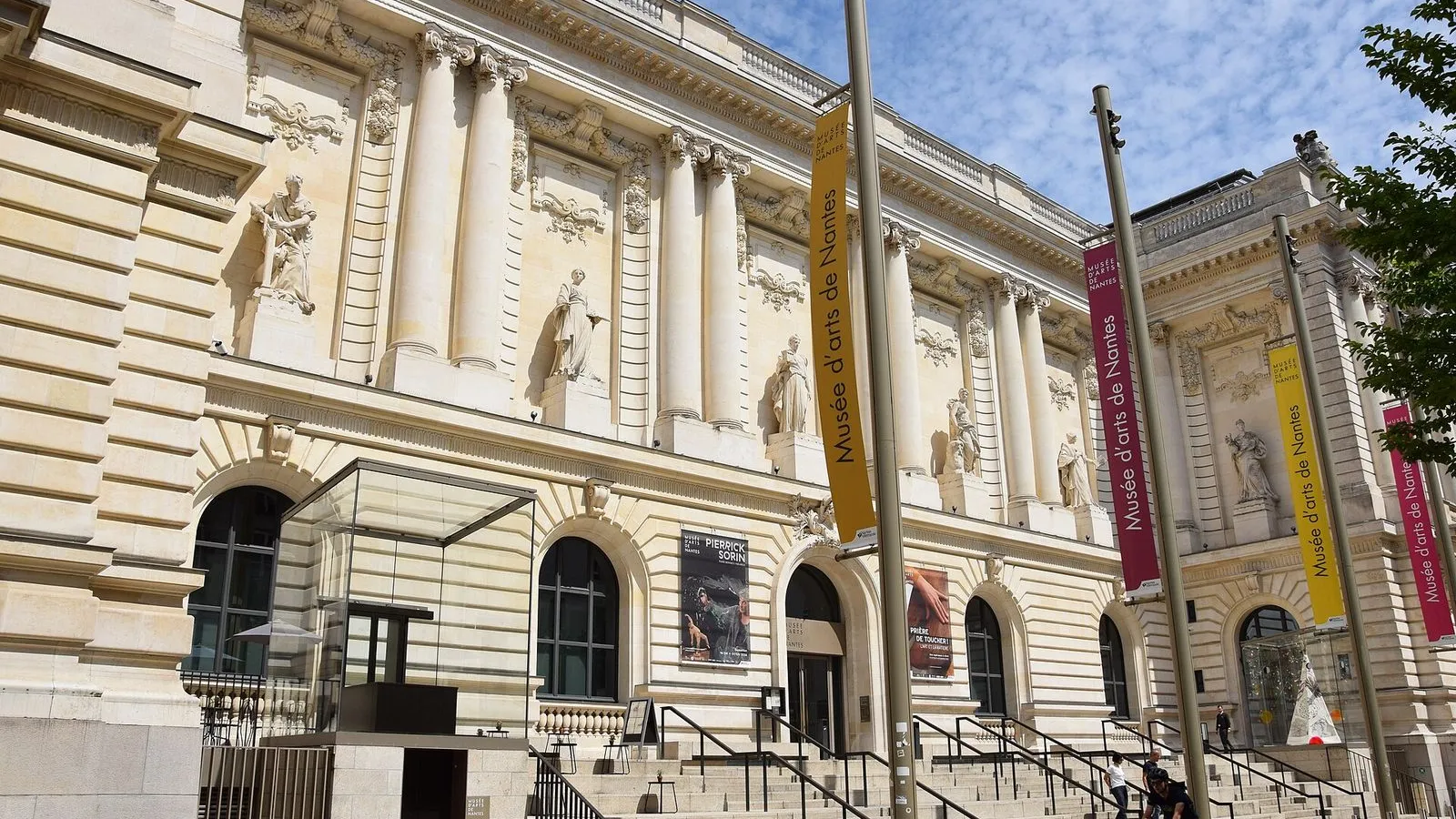
A 1900 palace opened up by a contemporary Cube.

This museum begins with the arrêté Chaptal, signed on 14 fructidor an IX, 1 September 1801, by the interior minister Chaptal, while Bonaparte was still First Consul under the Consulate. In 1810 the city made one enormous purchase: 1,155 paintings, 64 sculptures and 10,000 prints from the collection of the Nantes diplomat François Cacault. The stone palace in front of you opened in 1900, and for more than a century it was the city's Musée des Beaux-Arts. The change came with the renovation finished in 2017, when the British architects Stanton Williams opened the old building up.

They added the Cube, four levels of contemporary art with a south face of translucent marble and laminated glass, and they linked the palace to a 17th-century chapel that now shows installations. Inside, the collection runs from the 13th century to today, and more than half of it dates from after 1900. The museum closes on Tuesdays and is free on Thursday evenings from seven to nine, and on the first Sunday of the month from September to June.
≈6 min walk to the next stop
Jardin des PlantesMust see

Photo by dalbera on Openverse

Jardin des Plantes

0:00

Seven free hectares of one of France's great botanical gardens.

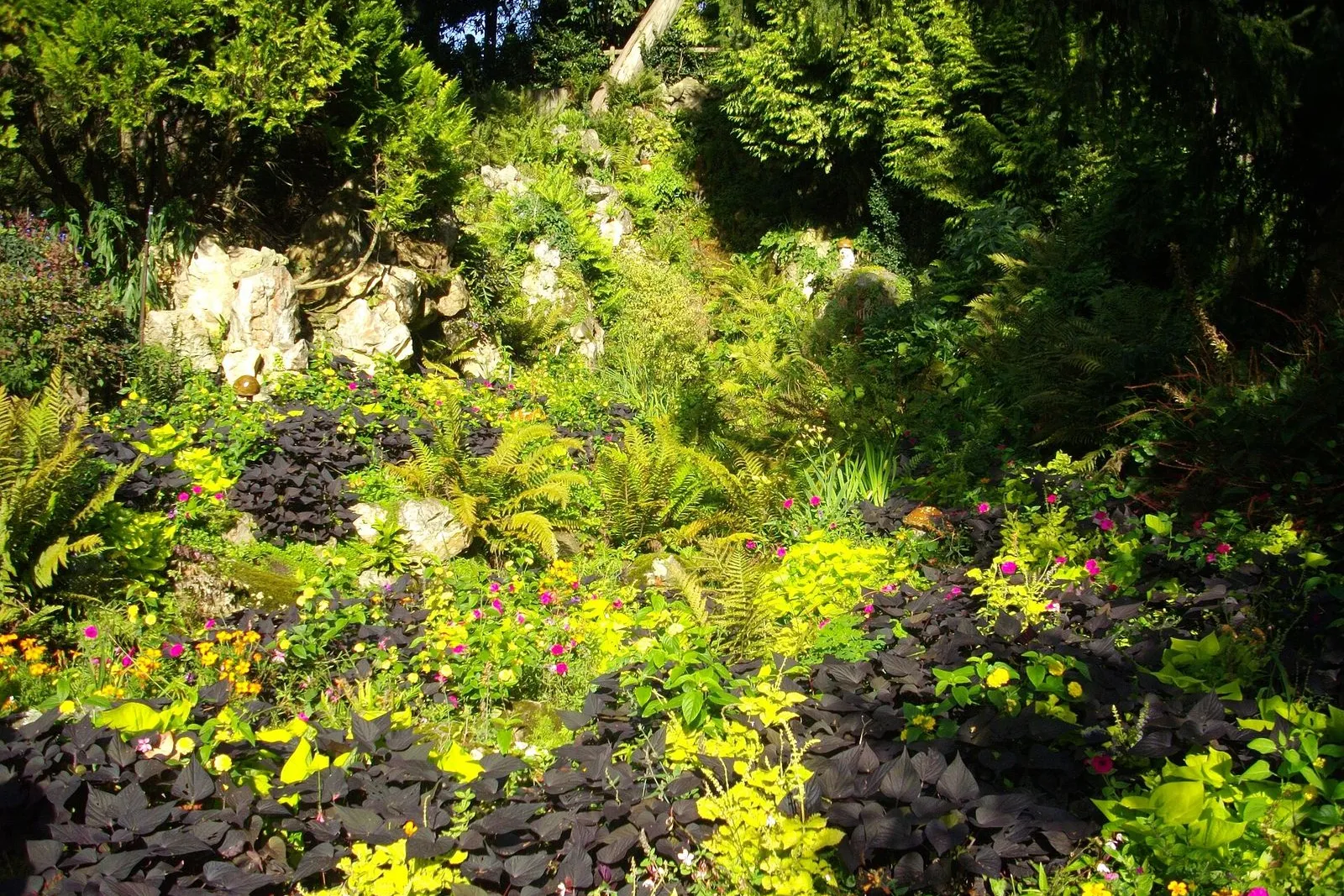
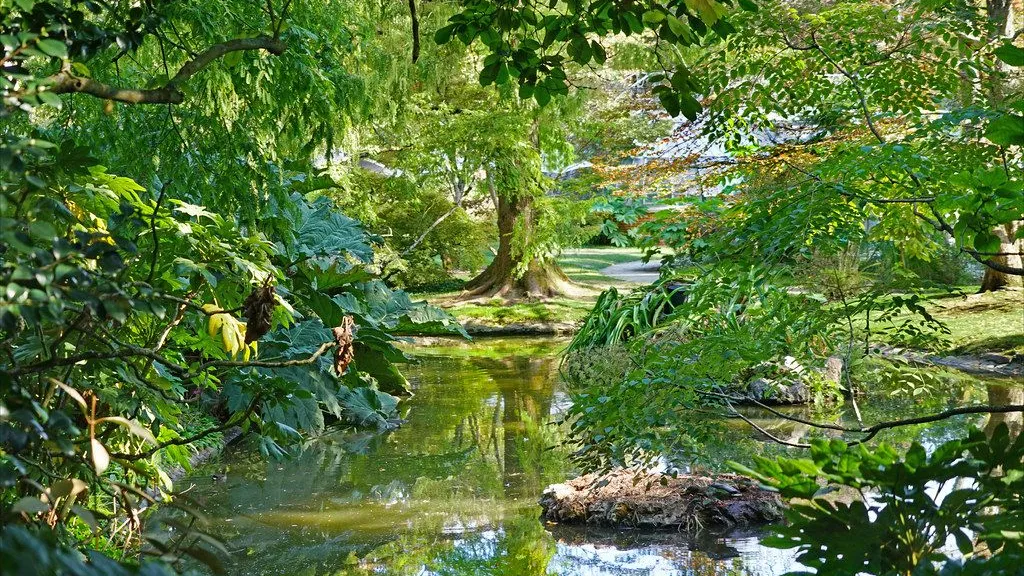
You're inside a garden that grew in stages. It began in 1806, passed to the city in 1820 and opened in 1829. On 7 October 1860 the upper garden was inaugurated before 10,000 people; the whole garden opened on 9 April 1865. Its look is Jean-Marie Écorchard's work; he took over as director in 1840 and refused the rigid French style.

He raised a hill in 1848 with 500 workers from the national workshops, added a cascade in 1856 and a basin in 1859, and won the city over to English-style paths. Today it spreads across seven free hectares. Its stars are the camellias, around 600 varieties, the flower that became Nantes' emblem. Mayor Ferdinand Favre helped make them fashionable by filling the evening train to Paris with cut flowers, so women could wear one the next morning.

Near the path stands the Magnolia d'Hectot. The tree planted here in 1807 is accepted to have died; the winter of 1880 killed the garden's young trees, and this one dates from the 1880s, about 140 years old.

≈9 min walk to the next stop
Lieu UniqueMust see

Photo by Fab5669 on Wikimedia Commons

Lieu Unique

0:00

A biscuit factory reborn as a contemporary arts centre.

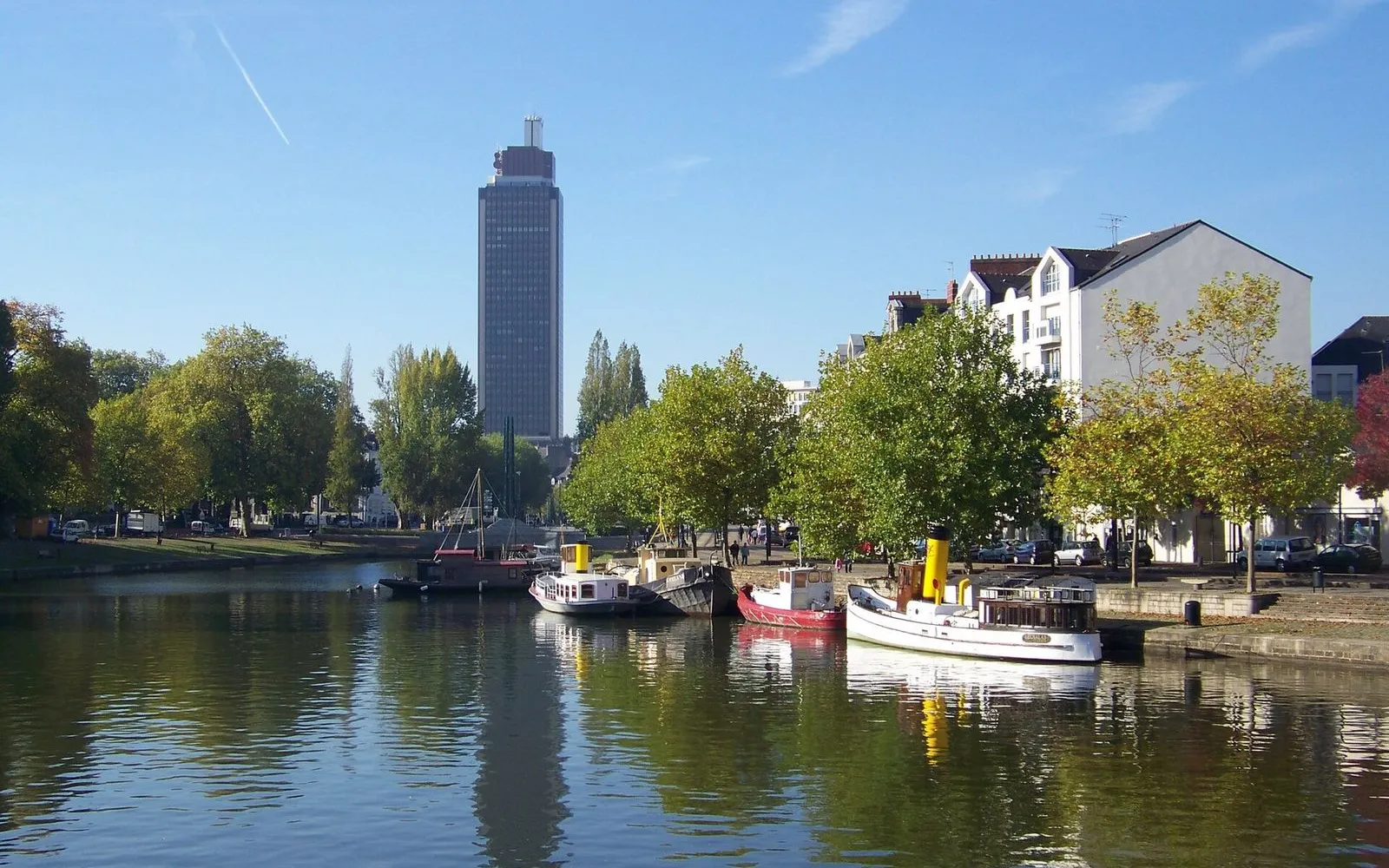
This is the annexe of the LU biscuit factory. When the rest of the site was demolished, this annexe and its corner tower survived. LU stood for Lefèvre-Utile, the Nantes family famous for the Petit Beurre, and in 1895 they built this factory on the quai Ferdinand-Favre in concrete and metal, an innovation for its time. By 1913 the site covered about 40,000 square metres and employed around 1,200 people, turning out more than 20 tonnes of biscuits a day.

Production left for La Haie-Fouassière in 1986, and the old buildings came down one after another. The city bought this annexe in 1995, protected it, and the architect Patrick Bouchain rebuilt it for a new life, keeping the industrial bones. The Lieu Unique opened as an arts centre on 30 December 1999. Inside now are exhibitions, a reading salon, a bar, a restaurant and weekend visits up the Tour LU.

The corner tower still marks the quay, but its top is a 1998 reconstruction by Jean-Marie Lépinay after the 1943 bombing. Tucked into a wall is the Grenier du Siècle, a time capsule of objects from 11,855 residents, sealed until the year 2100.

≈7 min walk to the next stop
Free preview ends here · stops 4 to 4 continue in the app

Olivettes

A former workshop quarter now full of galleries, murals and courtyards.

in app
Good to know

Before you go

Is the Gardens, Biscuits and Back Lanes walk free?

Your first tour is free, no account needed. After that you can buy tours one at a time, or subscribe for access to every city. Cancel whenever you want.

How far is it, and how long does it take?

The route runs 1.7 km across 4 stops and takes 25+ min at an easy pace. That covers the walking and the audio. How long you linger at each stop is up to you.

When should I start?

Any time of day works. You can pause at any stop and pick the route back up later, so there is no need to finish it in one go.

Does the audio work offline?

Yes. Download the walk over Wi-Fi before you set out and the audio, map, and directions all run offline. Handy for skipping roaming charges abroad.

Keep exploring

More walks in Nantes

Stone and Timber: Old NantesThe local mix

Stone and Timber: Old Nantes

A one-hour walk through old Nantes, from the free ramparts of the ducal castle to the old lanes where the city once traded and drank.

7 stops1.3 km25+ min
The Island the Trade BuiltThe hidden side

The Island the Trade Built

A short walk through Nantes' shipowners' island, where 18th-century houses still wear the faces of Atlantic trade, and down to the Loire quay where that trade's human cost is written in glass.

6 stops1.3 km25+ min
From Cliff Top to Quarry FloorThe hidden side

From Cliff Top to Quarry Floor

Start above the Loire beside Jules Verne, step out over the cliff on a wooden walkway, then follow a workers' stair down into a tropical garden with a 25-metre waterfall and finish with a pint at the bottom.

7 stops2.5 km40+ min
From Ships to MachinesThe local mix

From Ships to Machines

A walk along the western arm of Nantes's river island, where a closed shipyard now launches a 12-meter elephant, a three-story sea carrousel and rings of steel along the Loire.

5 stops1.4 km25+ min
A Nantes Morning on the ErdreThe hidden side

A Nantes Morning on the Erdre

Start the day where Nantais actually shop: a Saturday flea market square, an 89-year-old covered market, then a quiet quay and a free Japanese garden before the lunch crowd arrives.

5 stops1.7 km25+ min
Trentemoult by WaterThe hidden side

Trentemoult by Water

An eight-minute river crossing from Nantes lands you in a former fishing village of narrow lanes, painted houses and quayside terraces that all face the Loire.

5 stops1.2 km20+ min
One Century, One QuarterThe local mix

One Century, One Quarter

Walk the Graslin quarter the way its 1780s planners laid it out, then trace the shopping layers the next century added: a glass arcade, a fountain to the port, and an Art Nouveau brasserie.

5 stops0.8 km15+ min

Provenance · last verified August 27, 2026

Built from the Wayside route itself: the stops, their order, and the walk between them.

Photo by Fab5669 on Wikimedia Commons · CC BY-SA 4.0

Photo by Chatsam on Wikimedia Commons · CC BY-SA 4.0

Photo by dalbera on Openverse · CC BY 2.0

Photo by Fab5669 on Wikimedia Commons · CC BY-SA 4.0

Photo by Pascal Bernardon on Unsplash

Photo by Clément Beckert on Wikimedia Commons · CC BY-SA 3.0

Photo by GO69 on Wikimedia Commons · CC BY-SA 4.0

Photo by Jibi44 on Wikimedia Commons · CC BY-SA 3.0

Photo by Eusebius on Wikimedia Commons · CC BY 3.0

Photo by Pascal Bernardon on Unsplash

Photo by François de Dijon on Wikimedia Commons · CC BY-SA 4.0

Coming soon

Wayside isn't in the app stores yet, but it's in the works. Check back soon.