
Reims · Self-guided audio walk

The Chalk Hill

Climb Reims's champagne hill from a royal abbey and a Romanesque basilica to the great houses built over 57 kilometres of chalk cellars, with a park at the top.

  • 8Stops
  • 2.3 kmDistance
  • 35+ minTime
The Chalk Hill

Photo by Edison McCullen on Wikimedia Commons

This walk climbs the Butte Saint-Nicaise, the chalk hill that made Reims a champagne city. It begins at the foot of the slope, where the former royal abbey and basilica of Saint-Remi hold the tomb of the bishop who baptized Clovis. Then it rises through a garden laid over the last stretch of the city's medieval walls, past an Art Nouveau villa, and to the gates of Taittinger, Pommery, and Ruinart.

The houses chose this hill for what lies underneath: Roman and medieval chalk quarries, now linked by 57 kilometres of galleries where millions of bottles age in the cool dark. UNESCO inscribed the hillside in 2015, together with the vineyards and cellars of Champagne.

The route ends in Parc de Champagne, a free garden laid out for the house of Pommery. From April to October its paths are open for a last look over the hill you have crossed.

Hear it on the street

Get the turn-by-turn audio guide in the app. The narration plays itself as you reach each stop, hands-free and offline.

Stop by stop

The route

Interactive map of the route. The full stop list below works without it.

Musée Saint-RemiLocal pick

Photo by Vassil on Wikimedia Commons

Musée Saint-Remi

0:00

Former Benedictine abbey now holding the tapestries of Saint Remi's life.

You're at the foot of the chalk hill, in the former Benedictine abbey of Saint-Remi. The monks settled here because of a burial: the bishop Remi, who baptized Clovis, king of the Franks, asked in 533 to be laid to rest on this slope. Pilgrims came for his relics, and an abbey grew up to guard them. The building you see now, much of it from the eighteenth century, became the city's archaeology and history museum.

Inside, ten restored tapestries of the life of Saint Remi returned to permanent display in February 2026, their colors brought back after a long restoration. They tell the story the hill is built on: a bishop, a king, and a city learning to see itself as Christian. The museum is open every day except Monday, and entry starts at five euros fifty. Before you leave, notice the chalk blocks in the courtyard walls.

That stone is the hill itself, and the houses higher up cut their cellars straight into it.
≈1 min walk to the next stop
Basilique Saint-RemiMust see

Photo by Mathieu Kappler on Wikimedia Commons

Basilique Saint-Remi

0:00

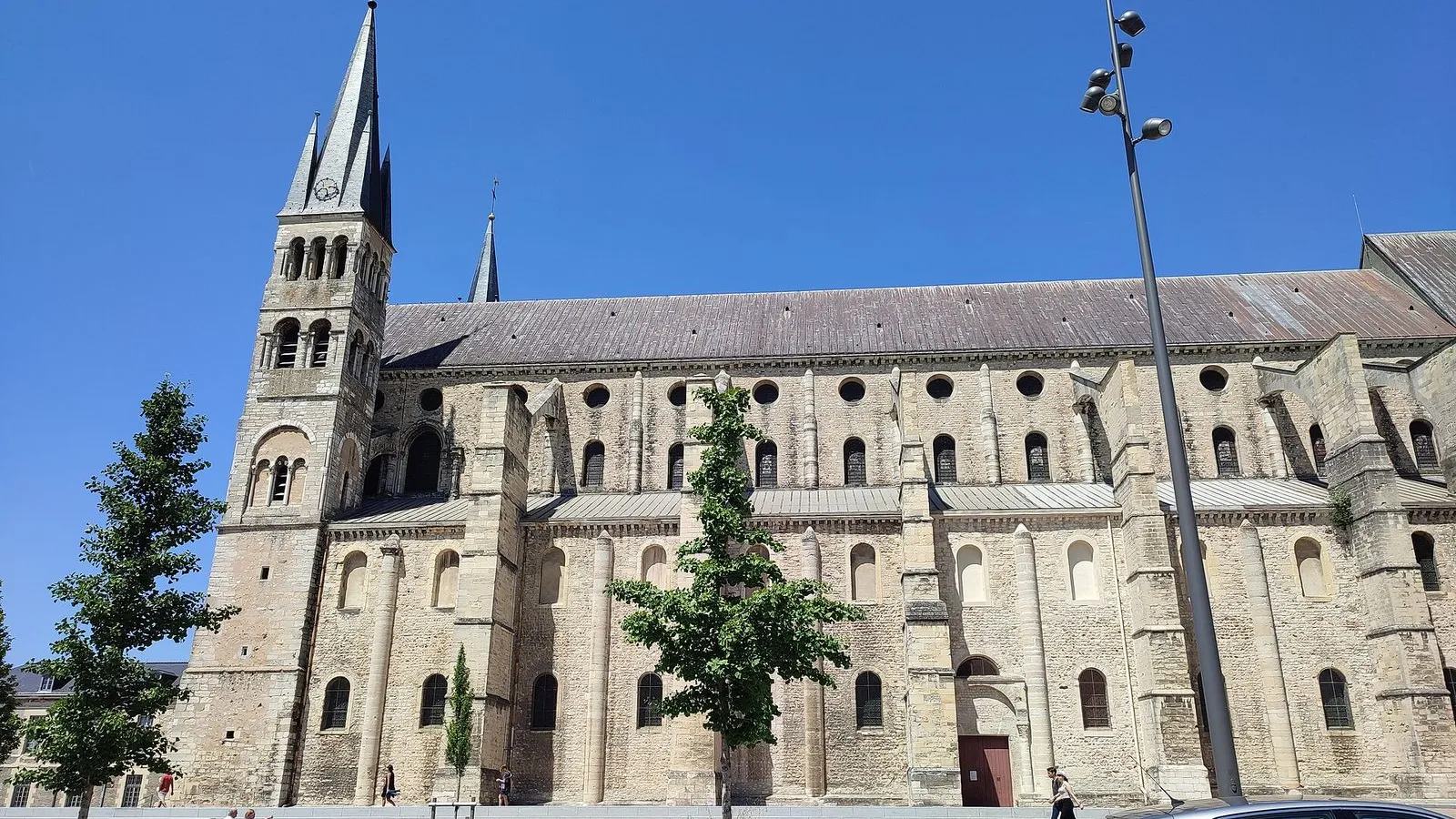
A church 126 metres long, built around Saint Remi's tomb.

Step inside the basilica, a working church built around the tomb of Saint Remi. It is 126 metres long, and its two halves tell its age: a Romanesque nave from the eleventh century and a Gothic choir added later, once the abbey grew rich on pilgrims. At the crossing hangs a crown of light with ninety-six candles, one for each year of the bishop's long life. The tomb itself, near the choir, is a nineteenth-century reconstruction.

Revolutionaries smashed the original in 1793, along with the Sainte Ampoule, the vial of oil said to have been brought by a dove for Clovis's baptism and later used to anoint the kings of France. Kings came here as much as pilgrims did. Louis IV and his son Lothaire are buried under the floor near you. The stained glass in the apse is among the oldest in the building, twelfth-century panels that survived everything since.

The church still holds services, so the light and the silence are not museum props. They are the reason the hill was sacred long before it was commercial.

≈5 min walk to the next stop
TaittingerMust see

Photo by Nan Palmero from San Antonio, TX, USA on Wikimedia Commons

Taittinger

0:00

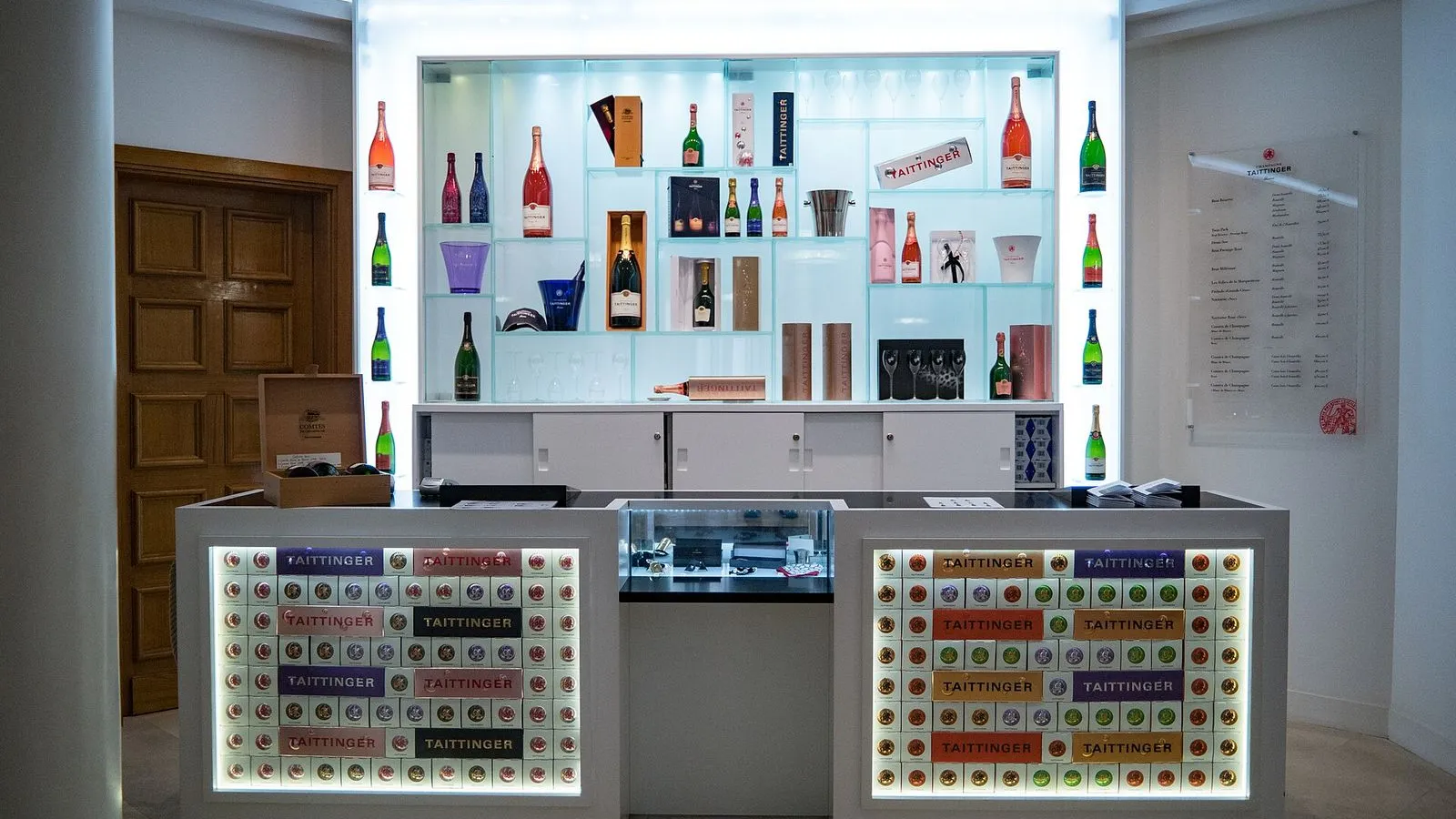
Champagne cellars in Gallo-Roman quarries where an abbey once stood.

You are standing on place Saint-Nicaise, where a great church stood and where almost nothing of it remains. A Benedictine abbey guarded the relics of Saint Nicaise, a martyred bishop of the city, and from 1231 it raised a Gothic church here, one of the finest in northern France. During the Revolution the abbey was sold as national property, and the church was pulled down stone by stone over nearly twenty years, used as a quarry. The last stone was taken in January 1819.

Today only a small gatehouse survives above ground. Under your feet, though, the abbey's cellars are intact. Taittinger has made its home here since 1935, and its champagne rests in the old Gallo-Roman chalk quarries and the abbey's medieval caves. About twenty crayères, the great chalk pits, are linked by 4 kilometres of vaulted passages, holding some two million bottles at a steady 18 metres down.

The house you see is the surface of a much older building below.

≈3 min walk to the next stop
Free preview ends here · stops 4 to 8 continue in the app

Jardin des buttes Saint-Nicaise

A garden on the old ramparts, with Reims's last medieval wall.

in app

Villa Demoiselle

An Art Nouveau villa restored by Vranken-Pommery, filled with Gallé and Majorelle.

in app

Pommery

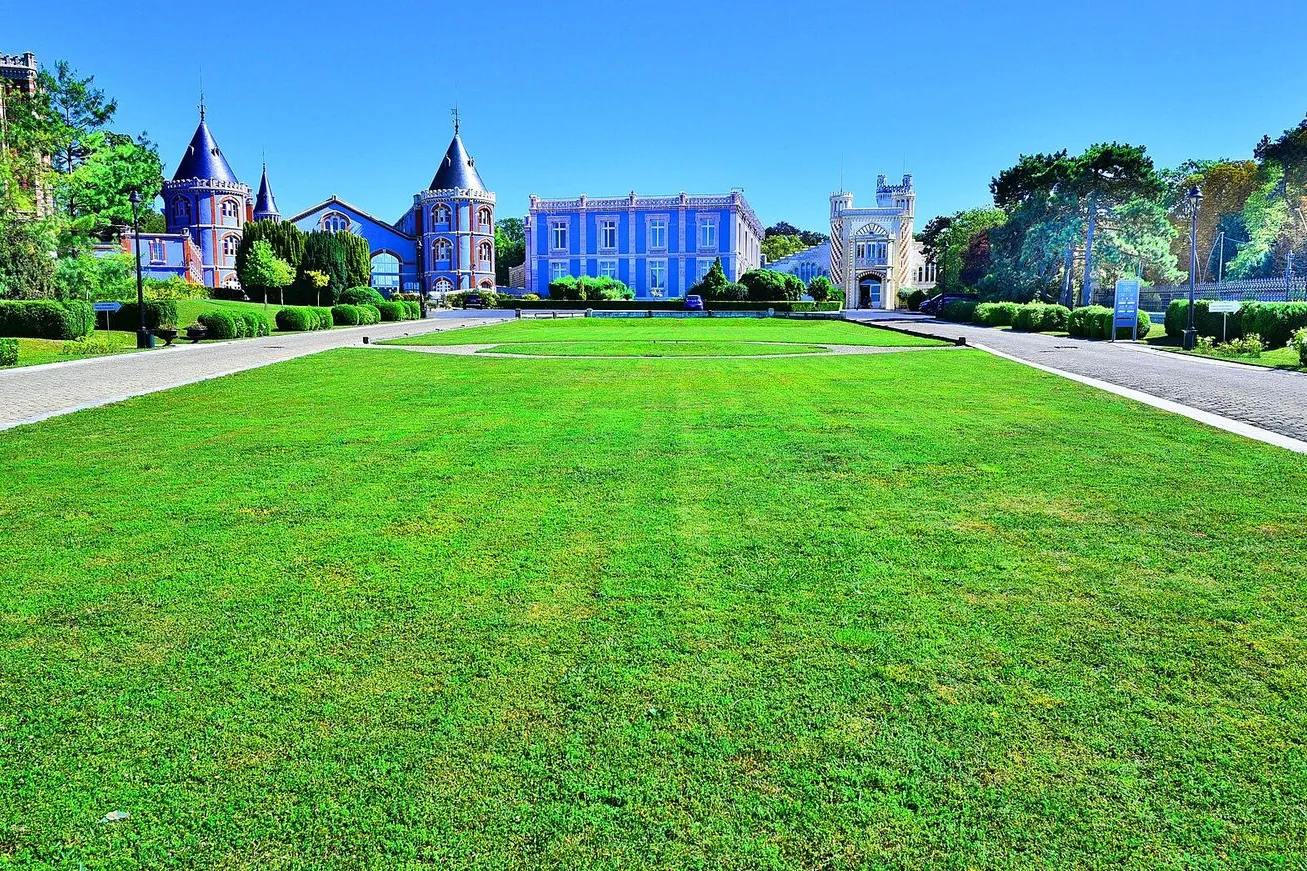
The Elizabethan-style estate with a self-guided walk through its chalk cellars.

in app

Ruinart

The oldest champagne house, with new gardens and a Sou Fujimoto pavilion.

in app

Parc de Champagne

A free landscaped park on the hill's southern side, open April to October.

in app
Good to know

Before you go

Do I need to book champagne house visits in advance?

Yes. Pommery's self-guided cellar tour costs 30 euros and the guided version 36 euros; book online before you go.

SourceMaison Pommery
Is the Chalk Hill walk steep?

The route climbs the Butte Saint-Nicaise, but the rise is gentle and the path ends at Parc de Champagne. Most of the climbing is inside the champagne cellars, which sit at a constant cool temperature.

Are the Ruinart gardens free?

Yes. The Ruinart gardens are free and need no reservation.

When is Parc de Champagne open?

Parc de Champagne is open from April to October.

Provenance · last verified August 28, 2026

Built from the Wayside route itself: the stops, their order, and the walk between them.

Photo by Edison McCullen on Wikimedia Commons · CC BY-SA 4.0

Photo by Vassil on Wikimedia Commons · Public domain

Photo by Mathieu Kappler on Wikimedia Commons · CC BY 4.0

Photo by Nan Palmero from San Antonio, TX, USA on Wikimedia Commons · CC BY 2.0

Photo by Philippe Alès on Wikimedia Commons · CC BY-SA 4.0

Coming soon

Wayside isn't in the app stores yet, but it's in the works. Check back soon.