Rouen · Self-guided audio walk

Saint-Maclou and the Eau-de-Robec

Seven stops through the quarter where Rouen's half-timbered streets earn their keep: a flame-shaped church, working antiques dealers, a plague cemetery turned craft gallery, a real market, the dyers' stream, a weavers' hall church, and the city's oldest fountain.

  • 7Stops
  • 1.4 kmDistance
  • 25+ minTime
Saint-Maclou and the Eau-de-Robec

Photo by Martpan on Wikimedia Commons

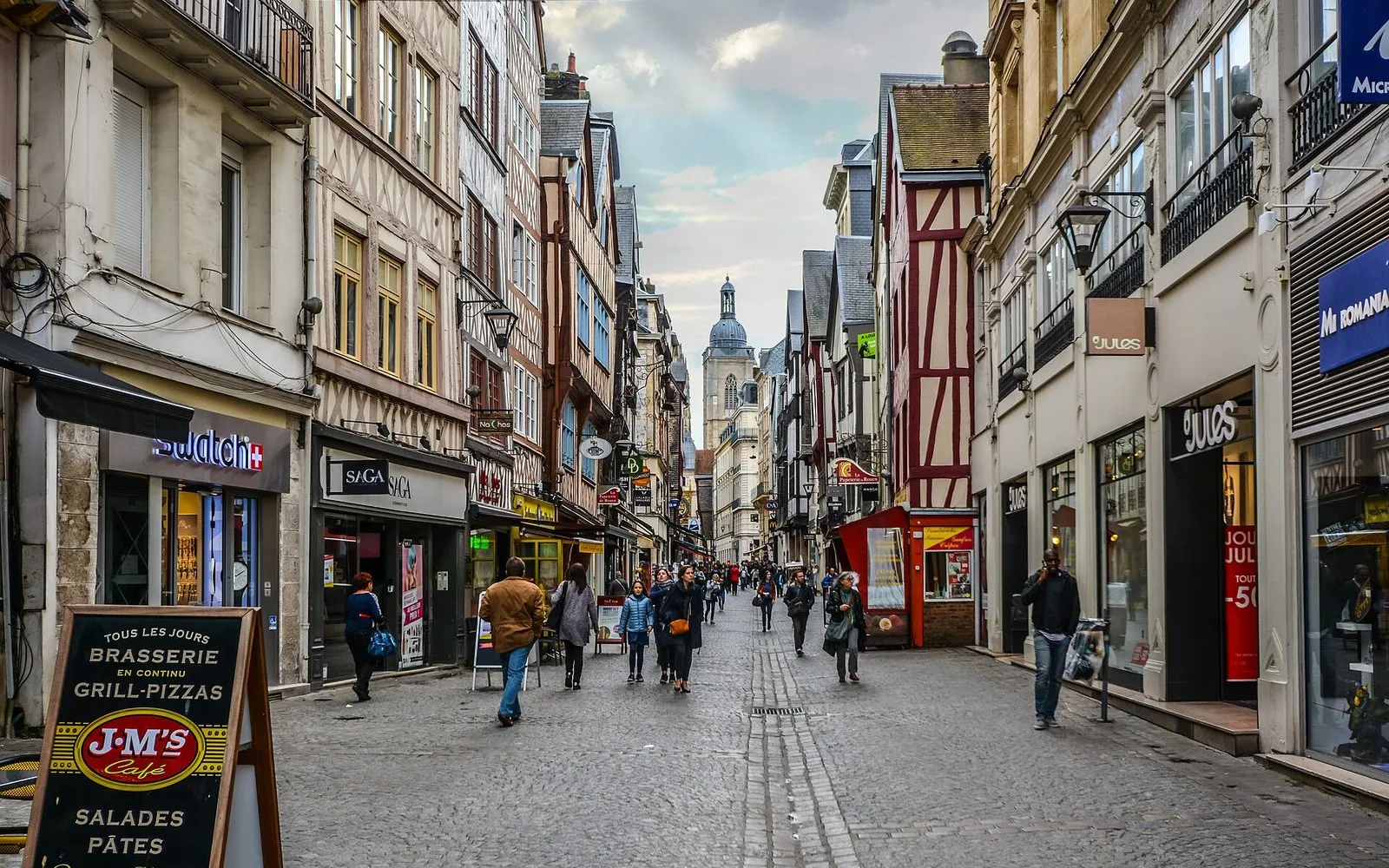
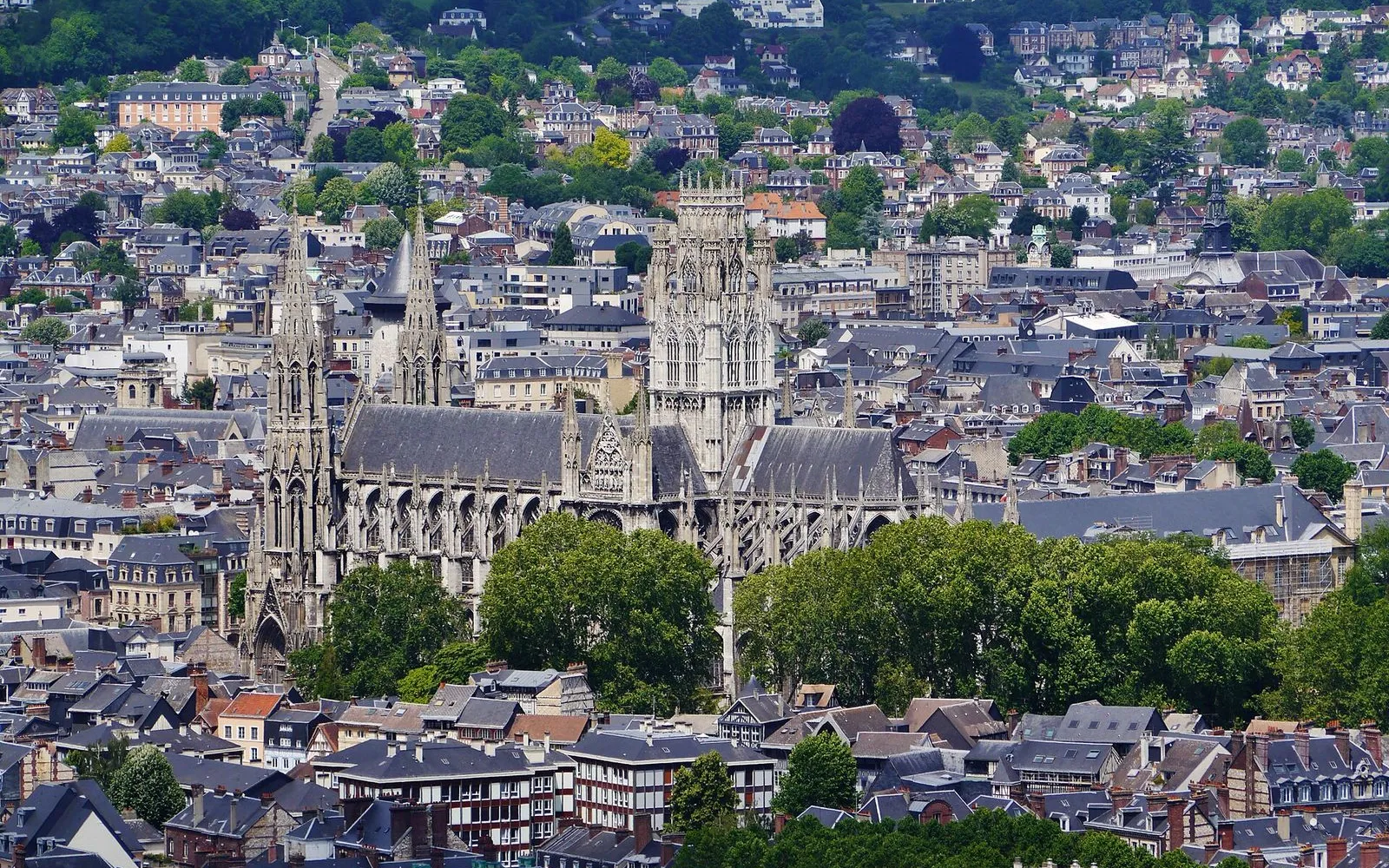
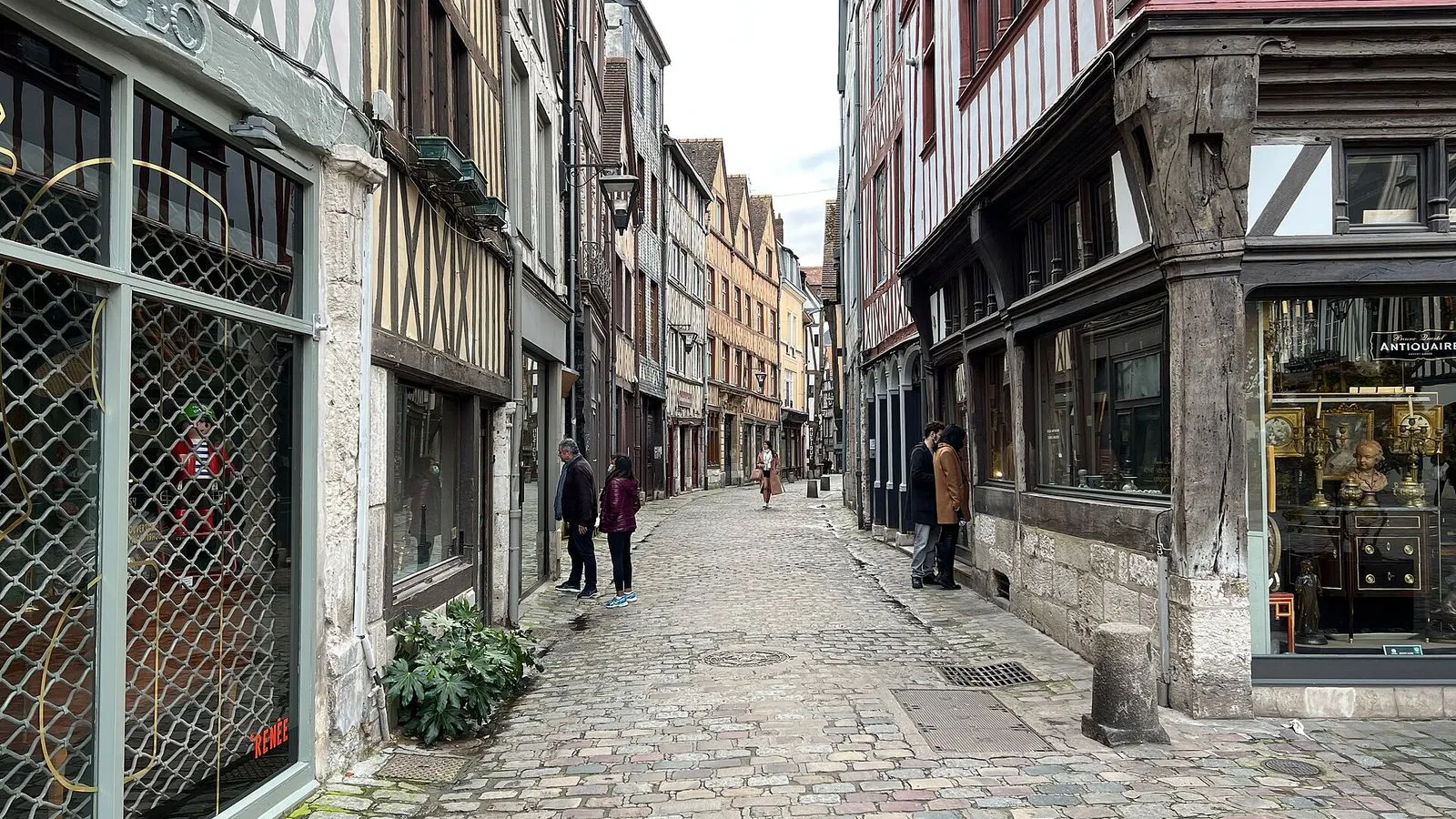
Rouen is full of half-timbered streets that look like stage sets. This walk goes to the quarter where they are still the set of daily life. You start at the west front of Saint-Maclou, a Flamboyant Gothic porch of five carved bays that was built to be read from the street. Then Rue Damiette runs its working antiques trade, with dealers, galleries and a luthier shaping violins in the back of a shop.

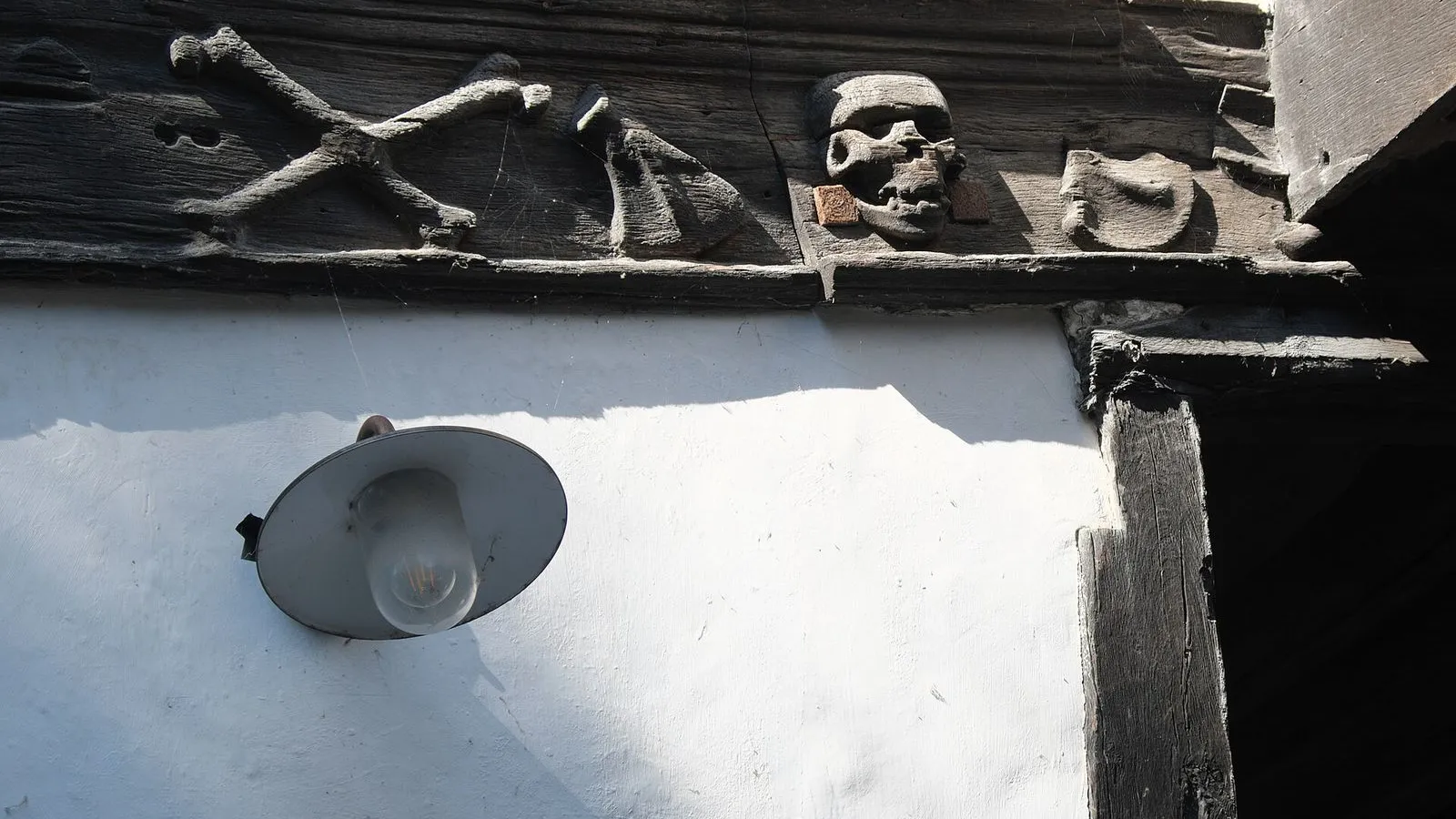
Behind the church, the Aître Saint-Maclou began as a plague cemetery in 1348 and became an ossuary whose timber galleries are carved with skulls and gravediggers' tools. It now holds a craft gallery and a café.

Place Saint-Marc feeds the neighborhood with its Tuesday, Friday, Saturday and Sunday markets, plus brocante stalls from Friday to Sunday. The dyers' stream at Rue Eau-de-Robec, the weavers' hall church of Saint-Vivien, and the Fontaine de la Croix-de-Pierre, Rouen's oldest fountain, close the walk east of the cathedral.

Hear it on the street

Get the turn-by-turn audio guide in the app. The narration plays itself as you reach each stop, hands-free and offline.

Stop by stop

The route

Interactive map of the route. The full stop list below works without it.

Église Saint-MaclouMust see

Photo by Ridiculopathy on Wikimedia Commons

Église Saint-Maclou

0:00

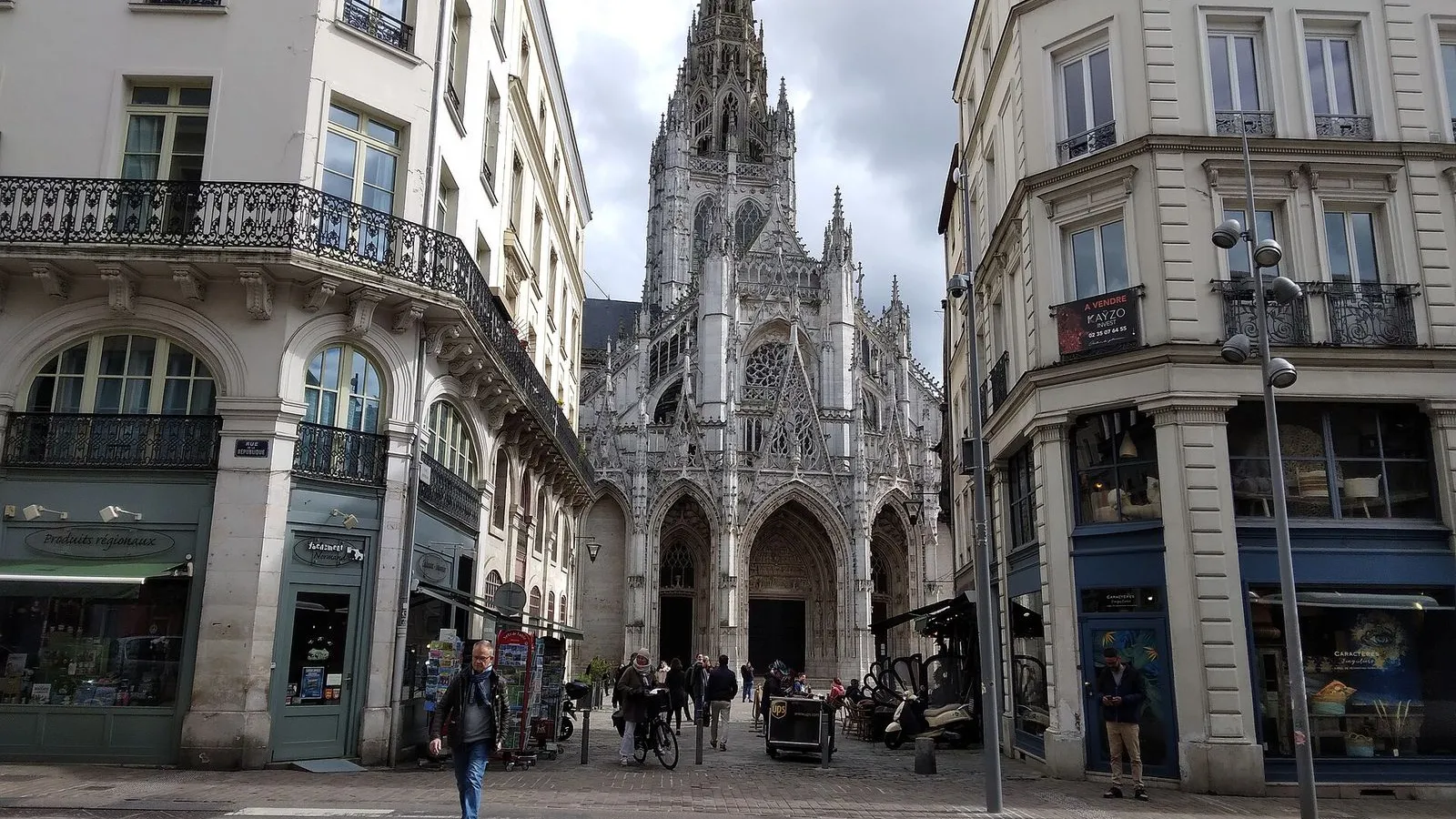
A Flamboyant Gothic front of five carved bays.

You're looking at the west front of Saint-Maclou, the parish church of the quarter this walk covers. Work began in 1437, and the builders never left a plain wall where flame-shaped stone could rise instead. The five-bay porch curves in an arc, each gable cut through with stone tracery, and three of the bays open into doorways. Two of those three hold the real treasure: carved wooden doors by the Renaissance woodworkers Rouen called huchiers.

Look at the medallions on the main door. The timber was bought in 1527, and the carving has long been credited to Jean Goujon, the sculptor who also made the two columns under the organ inside. Today the church keeps unusual hours. The interior opens on Mondays, Saturdays and Sundays, and closes Tuesday through Friday, so on most weekdays the porch is the whole show.

That is no loss, because the parish built this front to be read from the street. A little fountain still leans against the porch at the corner of Rue Martainville and Rue Damiette.
≈1 min walk to the next stop
Rue DamietteLocal pick

Photo by Chabe01 on Wikimedia Commons

Rue Damiette

0:00

The antiques quarter's working spine, dealers and a luthier.

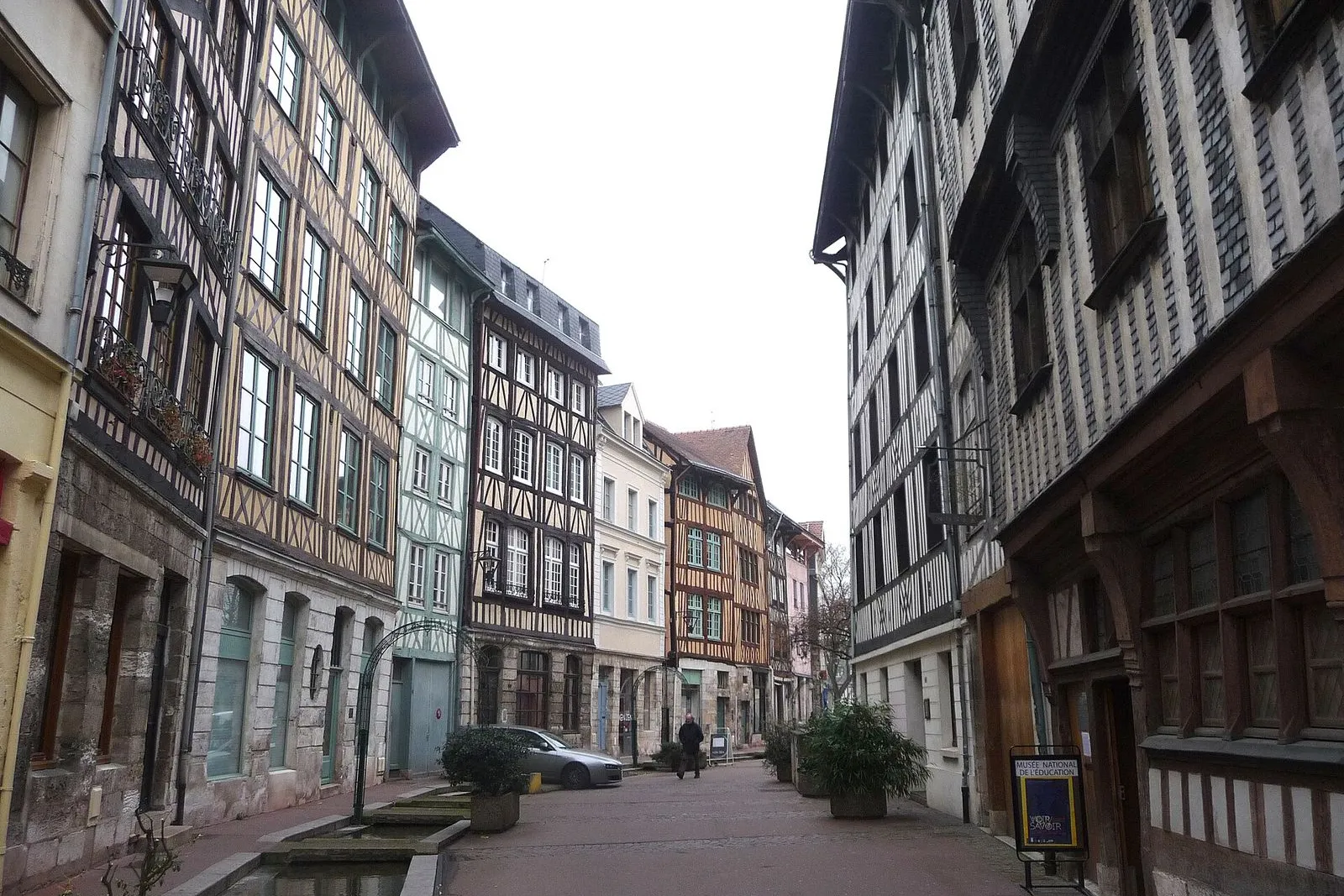
Rue Damiette is where this old quarter stops being a postcard and goes back to work. The antiques trade has run along here for decades, in narrow shopfronts wedged between timber frames that lean slightly with age. The dealers specialise in the small, portable past: prints, silver, glassware, the odd painted cupboard. Halfway up, pause outside the windows and you may hear a luthier shaping a violin, the sound of a plane moving over maple.

Galleries and a few small restaurants fill the gaps, and every sign hangs at a slightly different angle from its neighbor. The street climbs gently toward the church you just left, which is why the parish porch and its fountain close the view behind you. None of this is a theme. These are trades with workbenches in the back rooms, and the notes taped to the glass saying closed for lunch are real.

It is the street local writers mean when they tell someone to go and browse.

≈2 min walk to the next stop
Aître Saint-MaclouMust see

Photo by GFreihalter on Wikimedia Commons

Aître Saint-Maclou

0:00

A plague cemetery turned ossuary, gallery and café.

The courtyard behind the church began as an emergency. In 1348, when the Black Death reached Rouen, the parish ran out of room for its dead and opened this ground as a plague cemetery. Further waves of plague kept it full, and by the 1520s the yard could not take any more. Between 1526 and 1533 the parish built three timber galleries around it, dug up older bones, and stored them in the attics above, freeing the ground below for new graves.

Walk under one of those galleries and look up. The beams are carved with skulls, jawbones, shovels, picks and coffins, the gravedigger's full toolkit, alongside the missals and holy-water sprinklers of the funeral rite. The stone columns carry couples dancing a danse macabre. The courtyard is open to walk into most days of the week, and the galleries now hold the Galerie des arts du feu, along with the Café Hamlet and Gill's pastries.

Over 300,000 people come each year, which makes this the second most visited monument in Rouen after the cathedral.

≈3 min walk to the next stop
Free preview ends here · stops 4 to 7 continue in the app

Place Saint-Marc

A working food and flea market, brocante Friday to Sunday.

in app

Rue Eau-de-Robec

Dyers' houses along a rebuilt, buried millstream.

in app

Église Saint-Vivien

The cloth weavers' hall church, three naves under one roof.

in app

Fontaine de la Croix-de-Pierre

Rouen's oldest fountain, rebuilt around a medieval cross.

in app
Good to know

Before you go

Which days can I go inside Église Saint-Maclou?

Église Saint-Maclou opens its interior on Saturdays, Sundays and Mondays only, from 10:00 to 12:00 and 14:00 to 17:00, extending to 18:00 between 1 April and 30 September. It is closed Tuesday to Friday, so a midweek visit is a walk past the flamboyant west front rather than a way in. The front is the reason most people stop anyway: five bays, a carved porch, and the most elaborate late-Gothic façade in the city.

SourceOffice de Tourisme de Rouen, Église Saint-Maclou
Is the Aître Saint-Maclou open to walk around?

The Aître Saint-Maclou courtyard is free and open every day from 10:00 to 19:00, closing only on 1 January, 1 May and 25 December. Its timber galleries, carved with skulls and gravediggers' tools, now hold a craft gallery and a café, and the courtyard is where the plague cemetery of 1348 once stood. Guided tours cost 7.50 euros and are free under 12.

SourceVille de Rouen, Aître Saint-Maclou
When is the brocante at Place Saint-Marc?

The Saint-Marc brocante runs Friday to Sunday on Place Saint-Marc, alongside the food market, which trades Tuesday, Friday and Saturday from 6:00 to 18:00 and Sunday from 6:00 to 13:30. Sunday morning is the fullest, and it is over by early afternoon, so come before lunch if the stalls are what you are here for. On a Monday, Wednesday or Thursday the square is empty.

SourceVille de Rouen, Marché Saint-Marc

Provenance · last verified August 28, 2026

Built from the Wayside route itself: the stops, their order, and the walk between them.

Photo by Martpan on Wikimedia Commons · CC BY-SA 4.0

Photo by Ridiculopathy on Wikimedia Commons · CC0

Photo by Chabe01 on Wikimedia Commons · CC BY-SA 4.0

Photo by GFreihalter on Wikimedia Commons · CC BY-SA 4.0

Photo by kirkandmimi on Wikimedia Commons · CC0

Photo by Zairon on Wikimedia Commons · CC BY-SA 4.0

Coming soon

Wayside isn't in the app stores yet, but it's in the works. Check back soon.