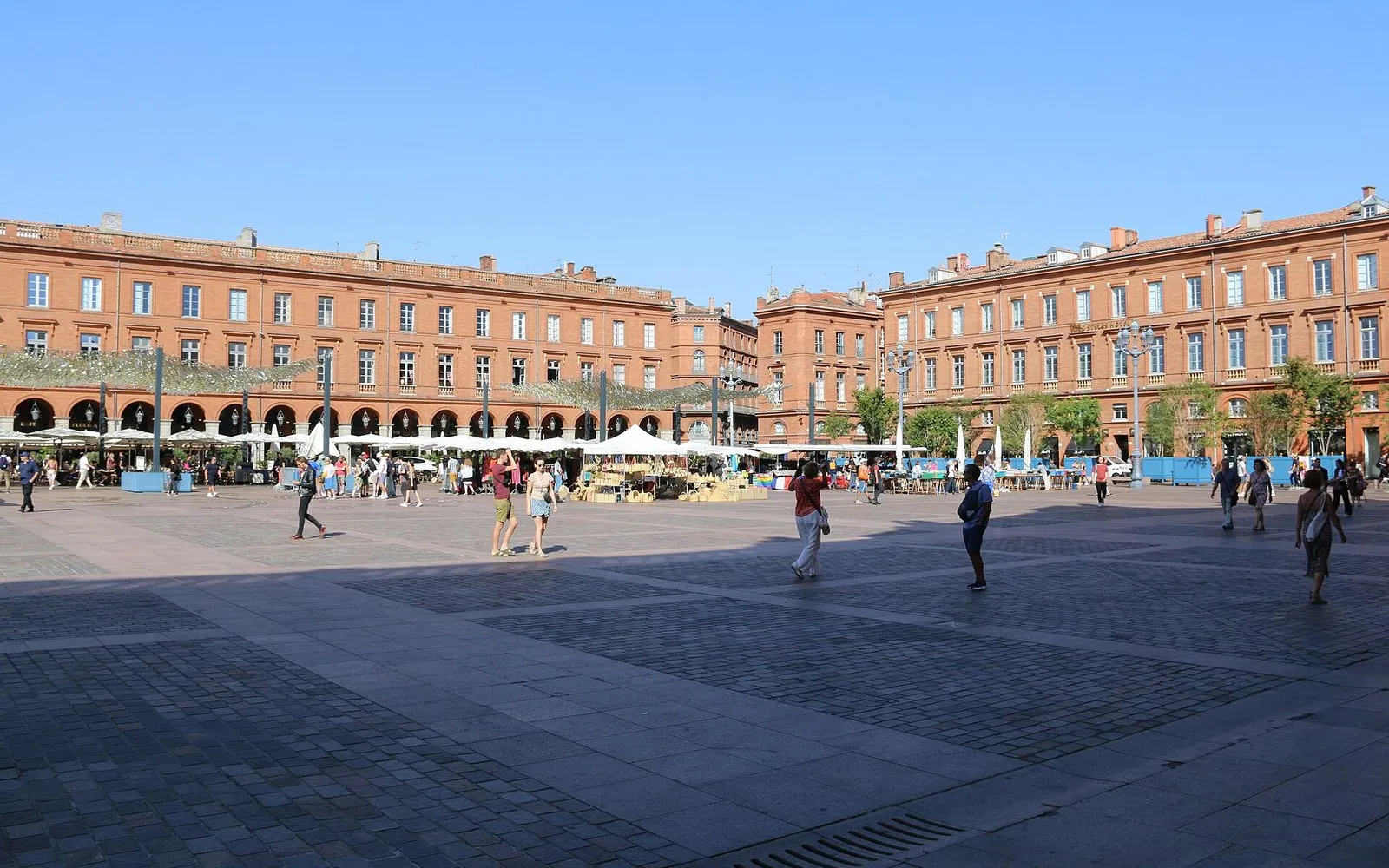
Toulouse · Self-guided audio walk

The Jacobins, Assézat and the Augustins

A brick-and-pastel walk through the merchants' centre of Toulouse, from the Jacobins' palm-tree vault to the Assézat courtyard and a museum that is just waking up again.

  • 7Stops
  • 2 kmDistance
  • 30+ minTime

This walk follows the money that built Toulouse's golden age. It opens in the Couvent des Jacobins, where a double nave and a palm-tree vault of twenty-two ribs still hold up the choir, and where the relics of Thomas Aquinas rest beneath the altar. From there the route drops into Rue Saint-Rome, the old Roman cardo that is now the city's busiest shopping street.

At the Hôtel d'Assézat you step into a courtyard paid for by woad, the blue dye that enriched the Lauragais and its merchants, and the Maison du Bleu de Pastel next door still sells cloth dyed the same way. Notre-Dame de la Daurade faces the Garonne, free to enter after its restoration.

The Musée des Augustins, reopened in December 2025, is only partly open for now, so this tour tells you exactly what you can see. It ends under the trees of Place Saint-Georges, where the market and the restaurants keep the city's everyday life running.

Hear it on the street

Get the turn-by-turn audio guide in the app. The narration plays itself as you reach each stop, hands-free and offline.

Stop by stop

The route

Interactive map of the route. The full stop list below works without it.

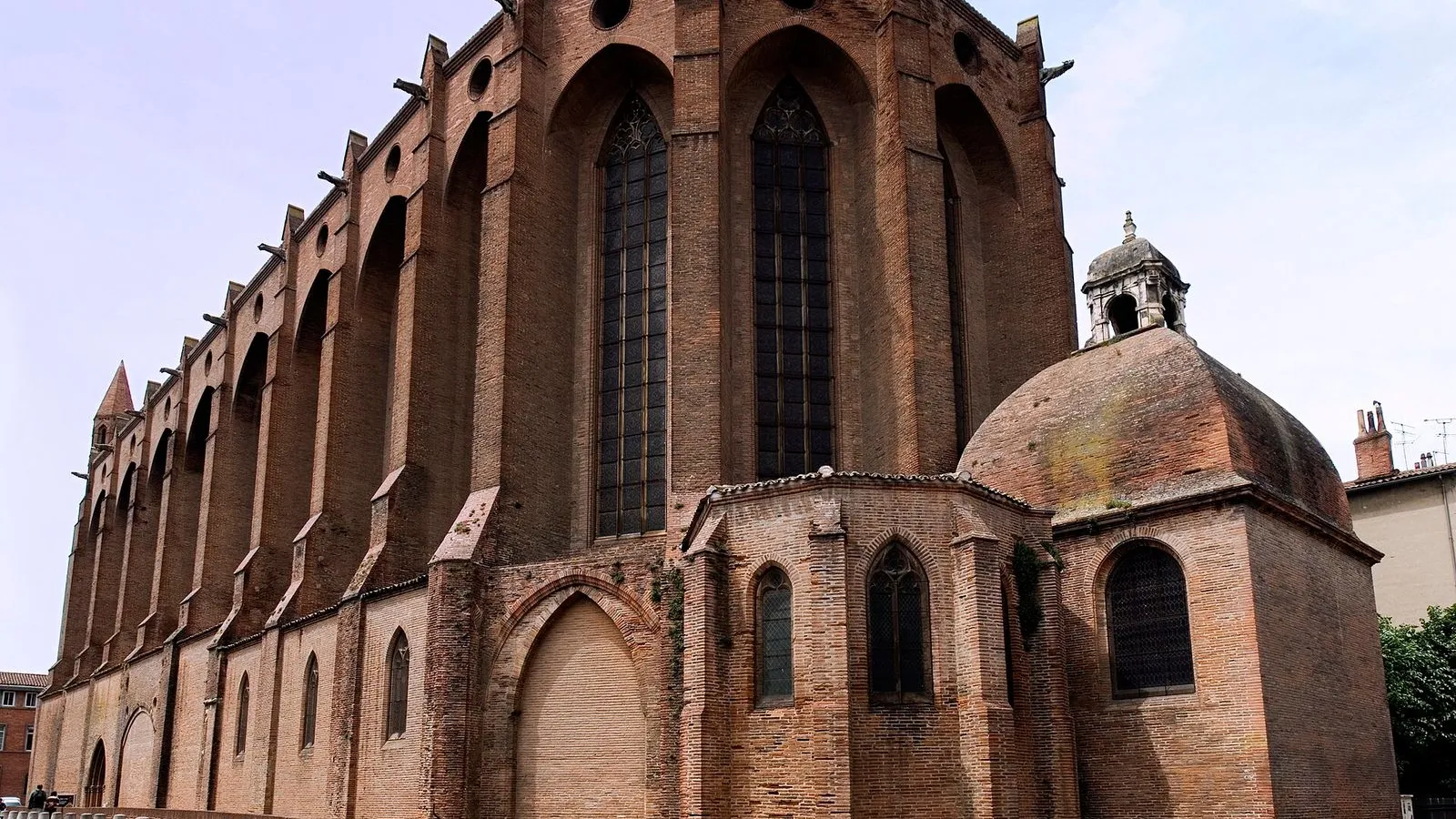
Couvent des JacobinsMust see

Photo by Pom² on Wikimedia Commons

Couvent des Jacobins

0:00

A double nave crowned by the palm-tree vault.

You're inside the oldest Dominican convent, the friars called Jacobins after their Paris house on the rue Saint-Jacques. The order was born in Toulouse in 1216, and this church, built across the thirteenth and fourteenth centuries, was once called the most beautiful Dominican church in Europe. Two equal naves run side by side, separated by a single row of columns down the middle. Walk to the east end.

The last column does not stop the way the others do; it opens into twenty-two ribs that fan out like a palm tree and vault the choir bay, twenty-eight metres overhead. The palm carries only the choir. The rest of the church stands on the central columns, and that is the whole trick. Under the altar rest the relics of Thomas Aquinas, the great Dominican theologian, brought here in the fourteenth century.

For centuries the old university met in these rooms too. The church is free to enter, and a ticket of about 5 euros covers the cloister, chapter house, Saint-Antonin chapel and refectory. The site closes on Mondays, and Thursdays are reserved for booked groups, so a visitor arriving alone that day cannot get past the church. Stand beneath the palm a little longer.

Those twenty-two ribs have been holding this choir up for more than seven centuries.
≈5 min walk to the next stop
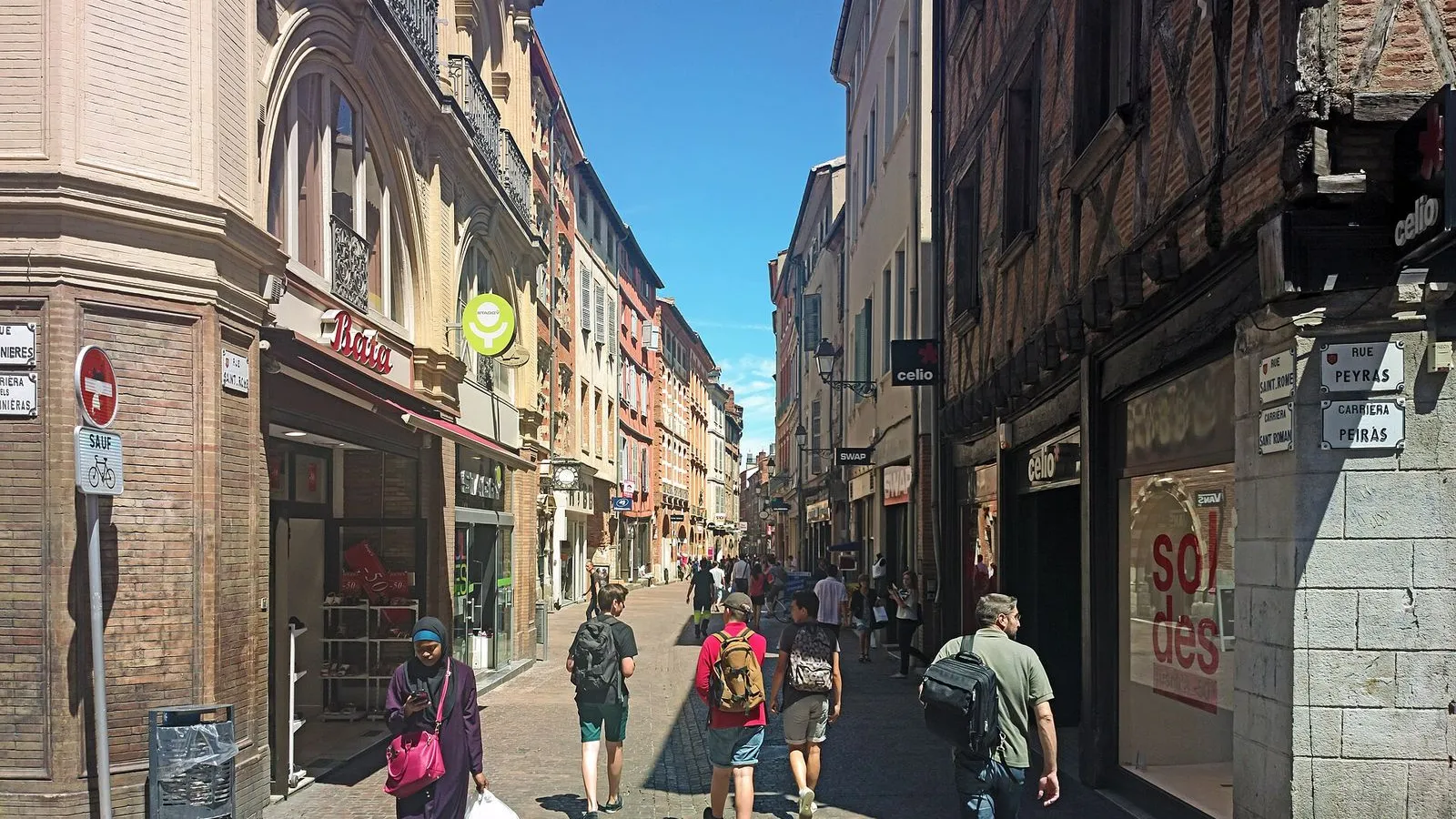
Rue Saint-RomeLocal pick

Photo by Didier Descouens on Wikimedia Commons

Rue Saint-Rome

0:00

The old cardo, now the city's busiest shopping street.

You're on the spine of Roman Toulouse. Rue Saint-Rome follows the cardo maximus, the north-south axis that crossed the walled town, and for much of the Middle Ages it was simply the Grand Rue. Look up past the shopfronts and you'll see the brick and half-timbered facades that merchants raised here between the fifteenth and nineteenth centuries. Some of those merchants grew rich enough to become capitouls, the city's magistrates, and they crowned their houses with towers, like the Serta tower at the four corners of the Changes where the street begins.

This was also the food street. The butchers' stalls once gave part of it the name Bancs-Majous, and a fish hall stood here until the sixteenth century. Saint Dominic and his first friars settled at the church of Saint-Romain on this street in 1216, years before the Jacobins rose. The street has been pedestrian since 1974.

On an ordinary weekend six to seven thousand people walk it, and during the sales the count reaches forty thousand, so it is still a river of people.

≈6 min walk to the next stop
Hôtel d'AssézatMust see

Photo by PierreSelim on Wikimedia Commons

Hôtel d'Assézat

0:00

A woad merchant's Renaissance palace and courtyard.

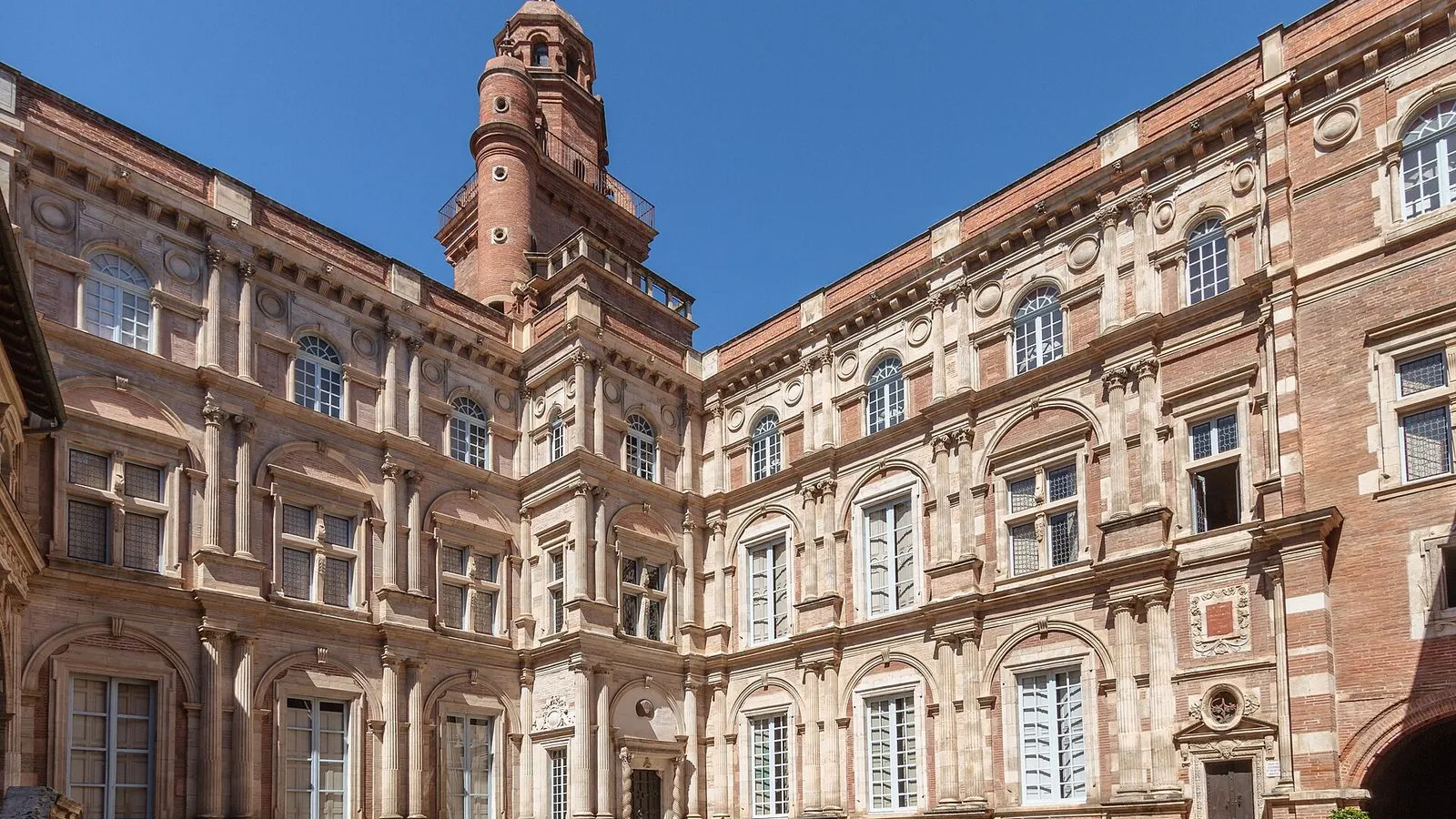
Step through the gateway and you're standing in the courtyard of a fortune made from blue dye. Pierre d'Assézat built this mansion between 1555 and 1562, and he paid for it with pastel, the woad plant that gave sixteenth-century Europe a blue cloth so prized that Toulouse merchants called the crop blue gold. Nicolas Bachelier designed the building, and his son Dominique finished it after Bachelier died on the job. Look at the two facades across from you.

On each one the classical orders climb floor by floor, Doric, then Ionic, then Corinthian, carved in pale stone against the pink brick. That is the language of the Italian Renaissance arriving in a city that still built everything in brick. The corner staircase tower rises high enough to be seen from the street, a merchant showing exactly how far his money reached. The courtyard is free to walk into, and it is the best part.

The Bemberg collection inside, five centuries of painting from Cranach to Bonnard, needs its own ticket.

≈1 min walk to the next stop
Free preview ends here · stops 4 to 7 continue in the app

Maison du Bleu de Pastel

A working shop that keeps the woad blue alive.

in app

Basilique Notre-Dame de la Daurade

The riverside basilica whose name means covered in gold.

in app

Musée des Augustins

A reopened museum inside a Gothic convent cloister.

in app

Place Saint-Georges

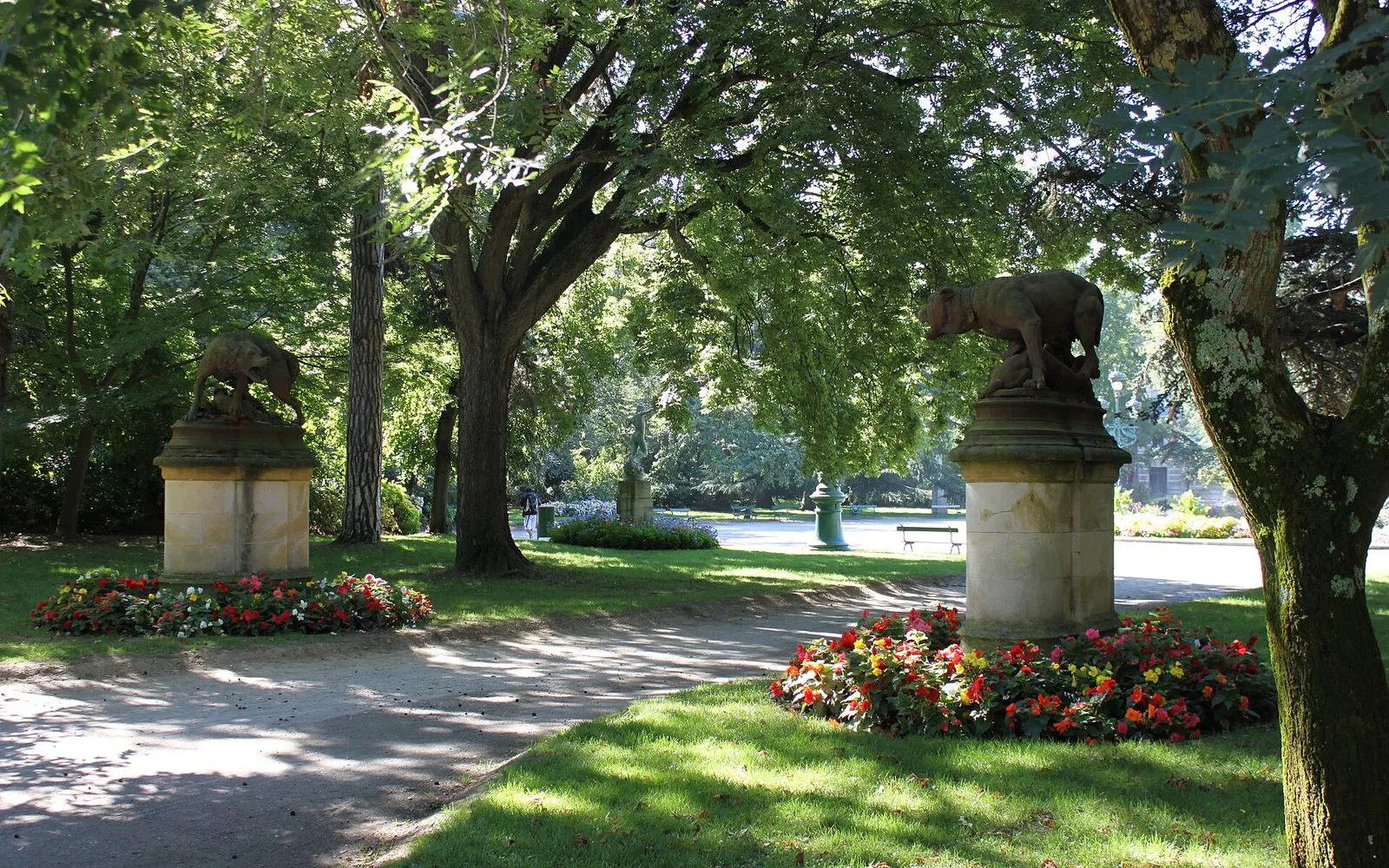
A leafy square of market stalls and restaurant terraces.

in app
Good to know

Before you go

Is the Musée des Augustins fully open?

No, and it helps to know exactly what is open. The museum has reopened on a partial route and shows the Romanesque capitals room, the monumental staircase, the first-floor salons and part of the cloister, while the church and the Gothic rooms remain closed. Entry is €5, and it is free on the first Sunday of the month. It closes on Wednesdays and reserves Tuesdays for groups; on open days it runs from noon to 6pm on weekdays and 10am to 6pm on weekends.

SourceMusée des Augustins: ticket page
How much does this walk cost?

The two paid entries are the Couvent des Jacobins and the Musée des Augustins, each €5, and both are free with the Pass Tourisme. Notre-Dame de la Daurade is free to enter after its restoration, and the woad shop next to the Hôtel d'Assézat is free to browse. That keeps the whole walk to €10 without a pass, or nothing beyond your coffee if you hold the Pass Tourisme.

SourceToulouse Tourisme: Pass TourismeMusée des Augustins: practical information

Provenance · last verified August 27, 2026

Built from the Wayside route itself: the stops, their order, and the walk between them.

Photo by Nick Castelli on Unsplash

Photo by Pom² on Wikimedia Commons · CC BY-SA 3.0

Photo by Didier Descouens on Wikimedia Commons · CC BY-SA 4.0

Photo by PierreSelim on Wikimedia Commons · CC BY-SA 3.0

Photo by Pistolero on Wikimedia Commons · CC BY 3.0

Photo by c gom on Unsplash

Photo by M.Strīķis on Wikimedia Commons · CC BY-SA 3.0

Photo by Didier Descouens on Wikimedia Commons · CC BY-SA 4.0

Photo by FrDr on Wikimedia Commons · CC BY-SA 4.0

Coming soon

Wayside isn't in the app stores yet, but it's in the works. Check back soon.