Sibiu · Self-guided audio walk

The Upper Town's Three Squares

Two hours through the Saxon heart of Sibiu: a baroque palace, a clock tower, the Bridge of Lies, and a Gothic spire.

  • 6Stops
  • 0.8 kmDistance
  • 15+ minTime
The Upper Town's Three Squares

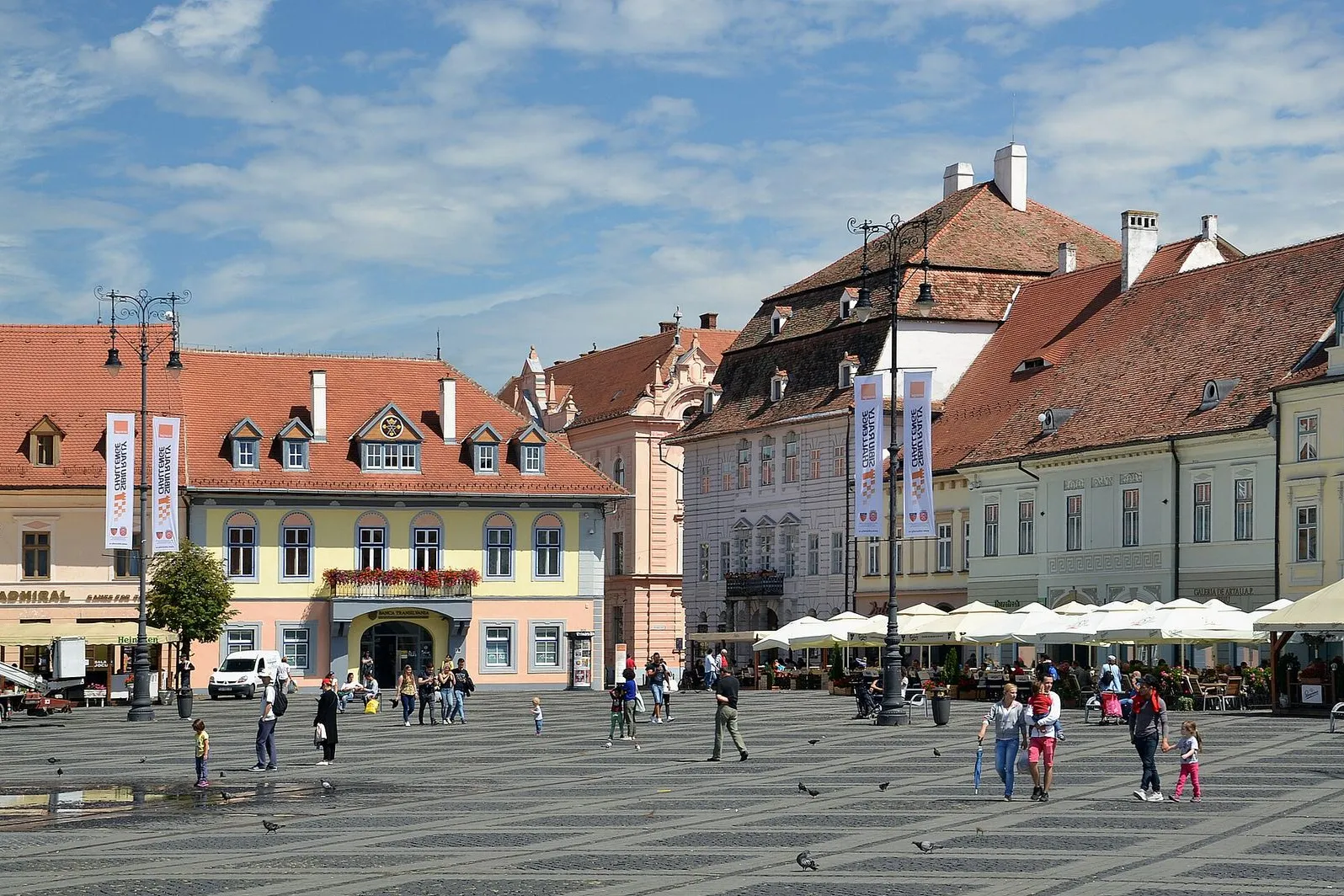
Photo by Pudelek on Wikimedia Commons

Piața Mare, Piața Mică, and Piața Huet were laid out by Sibiu's Saxon patricians, and this longer walk treats each square as the setting it is. You begin at the Brukenthal National Museum, opened in 1817 inside a palace the governor built for his own collections, then climb the Council Tower that links the first two squares. From the Pharmacy Museum and the cast-iron Bridge of Lies you cross into the shadow of the Lutheran Cathedral, then finish south along Strada Mitropoliei at the Gothic Altemberger House. Four of the six stops are interiors, so allow around two hours and move slowly. The reward here is stopping, not passing.

Hear it on the street

Get the turn-by-turn audio guide in the app. The narration plays itself as you reach each stop, hands-free and offline.

Stop by stop

The route

Interactive map of the route. The full stop list below works without it.

Brukenthal National MuseumMust see

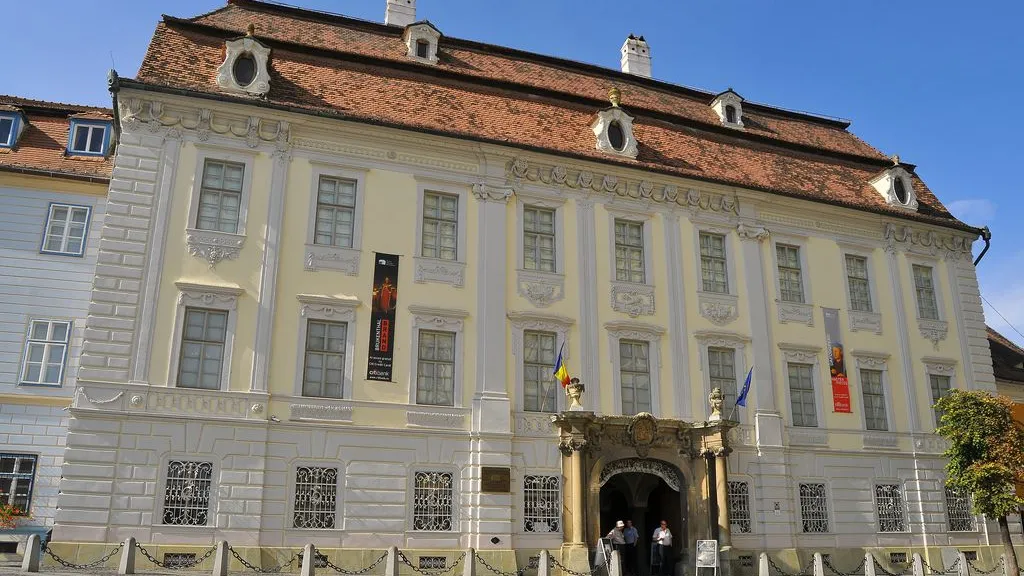
Photo by Dragos Dumitru on Wikimedia Commons

Brukenthal National Museum

0:00

Sibiu's greatest museum, opened in 1817 inside the baroque palace Governor Samuel von Brukenthal built for his own art collection.

You're standing on Piața Mare, in front of the long baroque palace that Samuel von Brukenthal, governor of Transylvania, built between 1778 and 1788. He was one of the few Saxon nobles to rise high at the Habsburg court, and he spent his years in Vienna buying paintings: Flemish, Dutch, Italian, German, and Austrian works, more than a thousand of them by the time he died. In his will he left everything to the Evangelical Church on one condition, that the collection stay open to the public. The doors opened on February 25, 1817, which makes this the oldest museum in Romania and one of the first public collections in this part of Europe.

Inside you can stand before works by Jan van Eyck, Hans Memling, and Pieter Bruegel the Elder, then step into the baron's library of around sixteen thousand volumes. In some rooms the silk wallpaper is still original, and curators say no other European palace has kept its own. Brukenthal's statue stands in the square in front of you, facing the palace he left to the city.
≈3 min walk to the next stop
Council TowerMust see

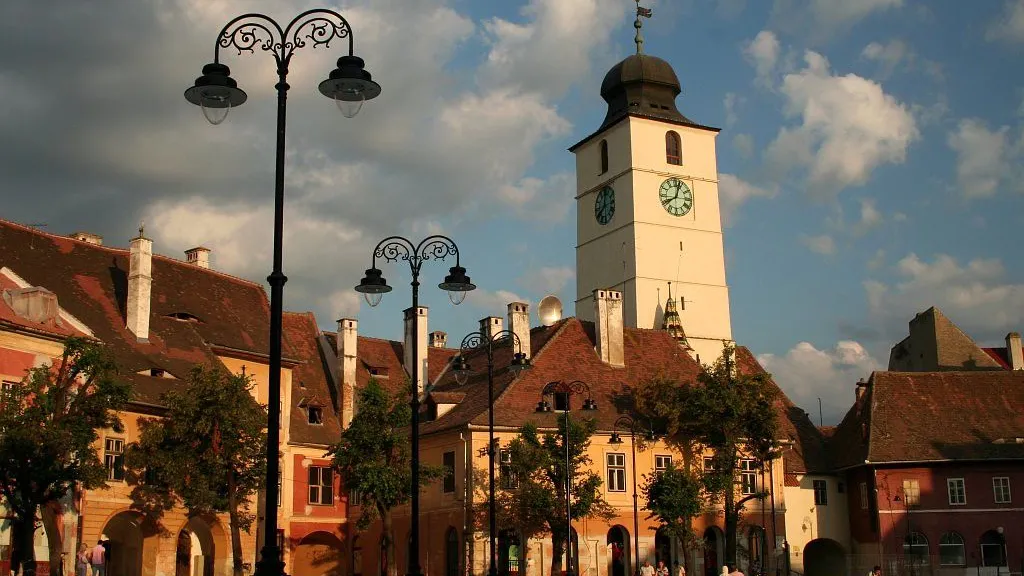
Photo by Camil Ghircoias on Openverse

Council Tower

0:00

The seven-storey clock tower that links Piața Mare and Piața Mică, with a balcony view over the old roofs.

The Council Tower, Turnul Sfatului, has been standing between the Great and Small Squares since the thirteenth century, when it guarded the gate of the city's second ring of walls. It has worked many jobs since then: grain store, fire lookout, prison, even a natural history museum in the 1700s. In 1585 its upper storeys collapsed while a painter named Johann David was working on the arch, and the tower you see now is the rebuild from 1586 to 1588. The ground-floor passage still does its old job, letting you walk straight from one square into the other.

On the south wall, look for the two carved stone lions, leftovers from the thirteenth century. Inside, a narrow spiral stair climbs seven floors, and on the second-to-last one you can watch the clock mechanism turning. The top is an open deck, and from the balcony you see the whole upper town: the red roofs, the cathedral spire to the west, and the mountains on a clear day.

≈1 min walk to the next stop
Pharmacy MuseumLocal pick

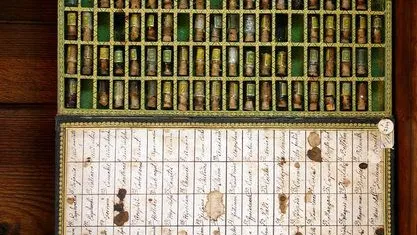
Photo by Unknown authorUnknown author on Wikimedia Commons

Pharmacy Museum

0:00

A sixteenth-century apothecary's house turned museum, with a room devoted to the founder of homeopathy.

This house on Piața Mică is one of the oldest apothecary buildings in Europe. A pharmacy has worked behind these walls since the 1500s, and the trade never really left: the building now holds the History of Pharmacy Museum, opened as part of the Brukenthal complex in 1972. Inside, the rooms are laid out like an old shop, with wooden shelves, painted jars, and brass balances, plus a reconstructed apothecary from an earlier century. There is also a room given over to homeopathy, and it belongs here.

Samuel Hahnemann, the German doctor who founded homeopathy, lived in Sibiu in the 1770s, working as physician and librarian to Governor Brukenthal before he ever published his ideas about medicine. The collection traces that story alongside the older one: how a town like this mixed remedies, weighed powders, and kept its poisons locked apart from its cures. It is a small museum, so it repays a slow lap rather than a quick pass.

≈2 min walk to the next stop
Free preview ends here · stops 4 to 6 continue in the app

Bridge of Lies

Romania's first cast-iron bridge, built in 1859, hanging between Piața Mică and Piața Huet.

in app

Lutheran Cathedral

The Gothic parish church whose tower, a little over 73 metres with four turrets, is the tallest in Transylvania.

in app

Sibiu History Museum

The city's history museum, set in the Altemberger House, the largest civilian Gothic ensemble in Romania.

in app
Good to know

Before you go

How long does this walk take?

The six stops sit close together, but four of them are interiors and two are tower climbs. Allow most of a morning or afternoon if you enter every museum; you can do the route faster if you skip the galleries and only climb the towers.

Which days should I plan for?

Wednesday through Sunday. The Brukenthal Palace, the Pharmacy Museum, and the Altemberger House close on Monday and Tuesday, and the Palace also closes on the first Tuesday of each month.

SourceSibiu County Tourism, The Brukenthal Museum
Do I need to book anything in advance?

No for standard entry; tickets are sold at each museum door. A guided tour of the historical center can be arranged through the tourist office or the museum.

SourceSibiu County Tourism, The History Museum
Is the route accessible?

The squares are cobbled and mostly level, but the Council Tower and the cathedral tower have steep stairs and no lift, so the two climbs are not suitable for everyone.

SourceWikivoyage, Sibiu

Provenance · last verified August 19, 2026

Built from the Wayside route itself: the stops, their order, and the walk between them.

Photo by Pudelek on Wikimedia Commons · CC BY-SA 4.0

Photo by Dragos Dumitru on Wikimedia Commons · CC BY 2.0

Photo by Camil Ghircoias on Openverse · CC BY 2.0

Photo by Unknown authorUnknown author on Wikimedia Commons · CC BY 4.0

Coming soon

Wayside isn't in the app stores yet, but it's in the works. Check back soon.