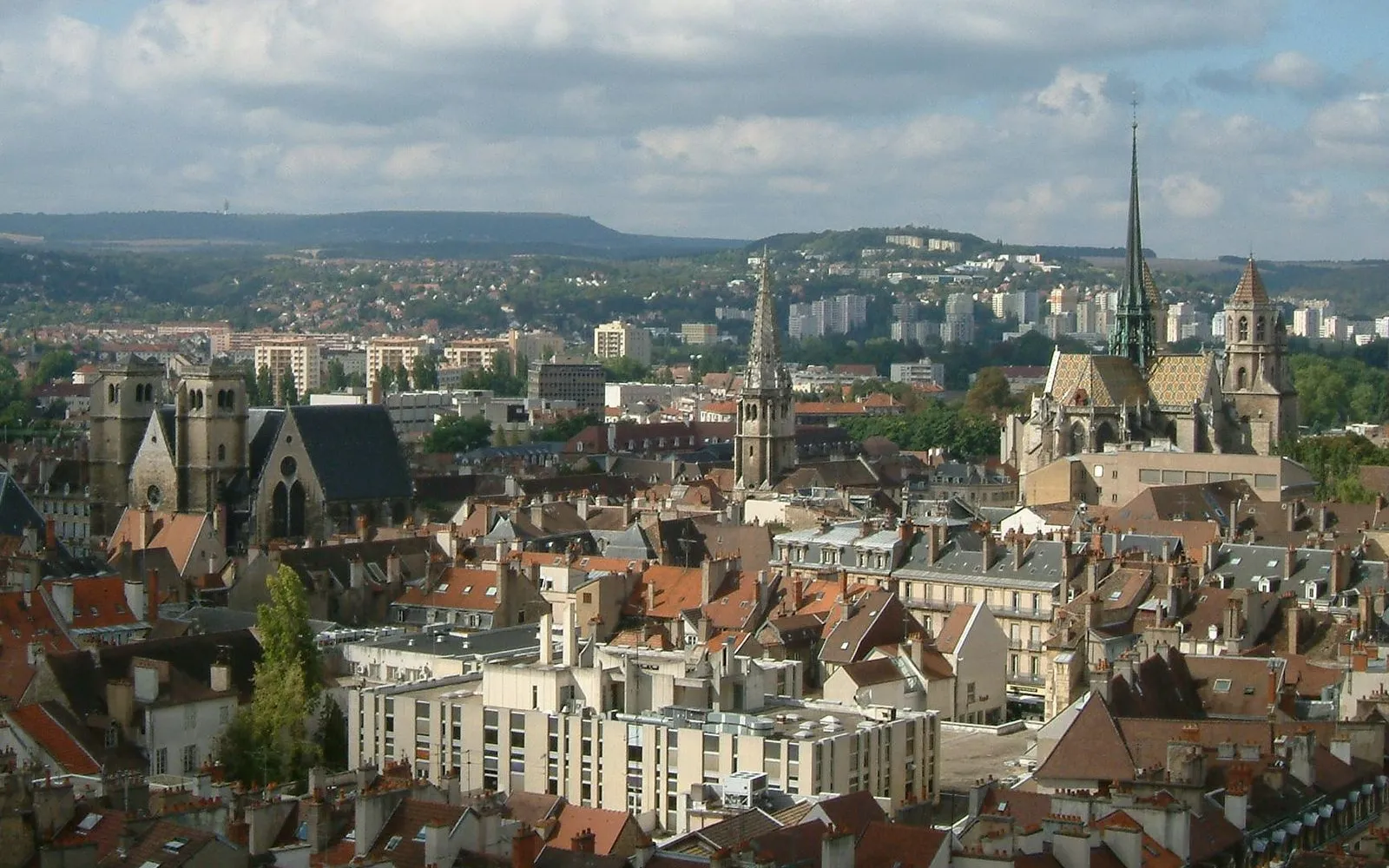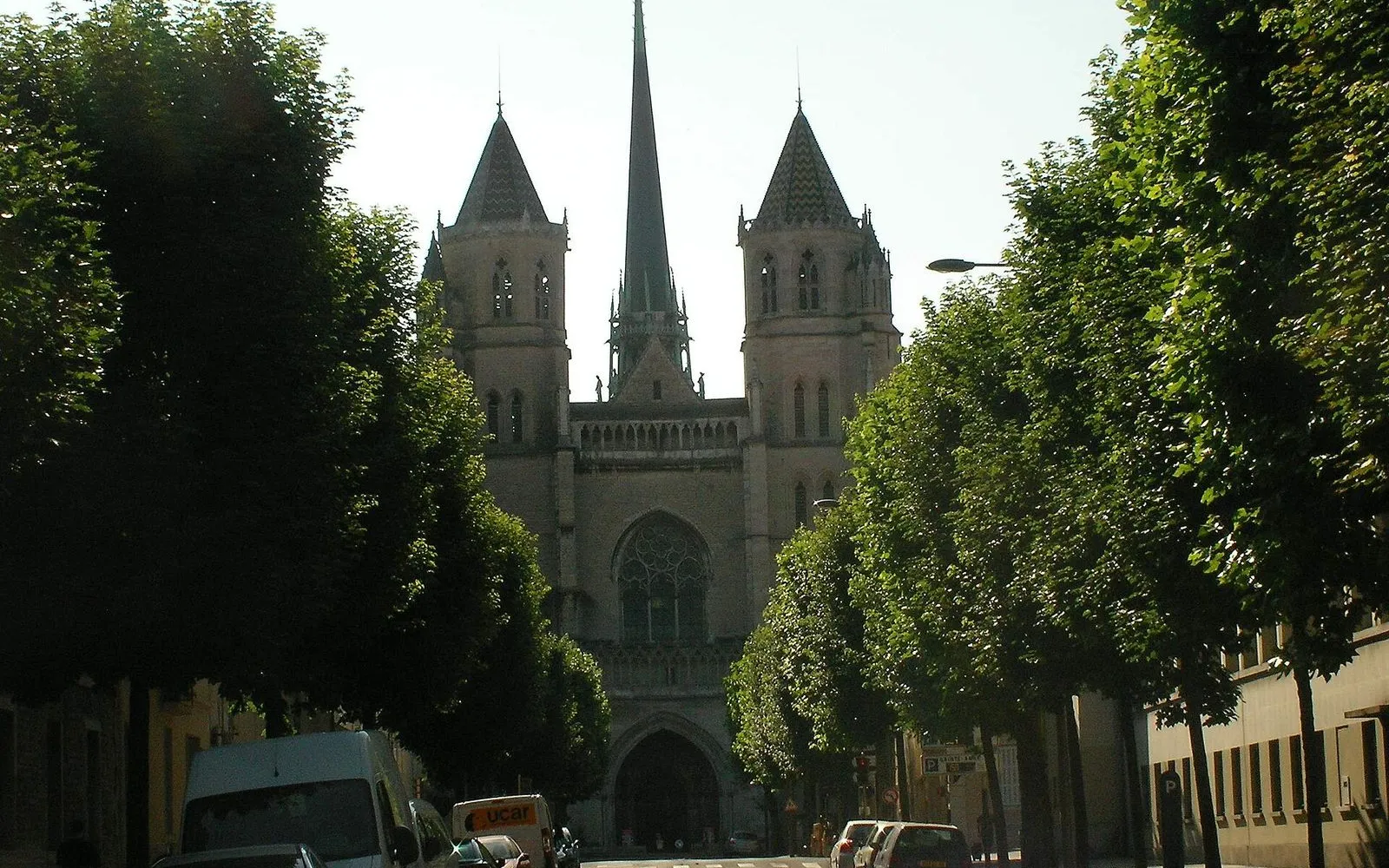
Dijon · Self-guided audio walk

The Antique Dealers' Quarter

Glassmakers, cauldron-makers and basket-weavers named these lanes. The antique dealers who work them now are the latest trade in the same arcaded shopfronts, and this short walk covers the quarter in about twenty minutes.

  • 5Stops
  • 1.1 kmDistance
  • 20+ minTime

Dijon's quartier des antiquaires is the city's browsing walk: a knot of short lanes east of rue de la Chouette where antique dealers work out of fifteenth-century arcades. This route stays inside those lanes, from rue Verrerie to the west front of Saint-Michel.

You start in rue Verrerie, eighty metres of overhanging timber houses, then move through rue Auguste-Comte, rue Chaudronnerie, rue Vannerie and rue Vaillant. On the way: a Renaissance house built around 1603 for a family of cauldron-makers, a private mansion of about 1400 with its stone mullions intact, and the free Musée Rude in the deconsecrated church of Saint-Étienne.

About 20 minutes at a stroll, longer if the windows pull you in. Dealers here often close on Sunday and Monday and over lunch, so treat the shopfronts as the draw. On the third Sunday of most months, the Brocante du Vieux Dijon fills these streets.

Hear it on the street

Get the turn-by-turn audio guide in the app. The narration plays itself as you reach each stop, hands-free and offline.

Stop by stop

The route

Interactive map of the route. The full stop list below works without it.

Maison OyatLocal pick

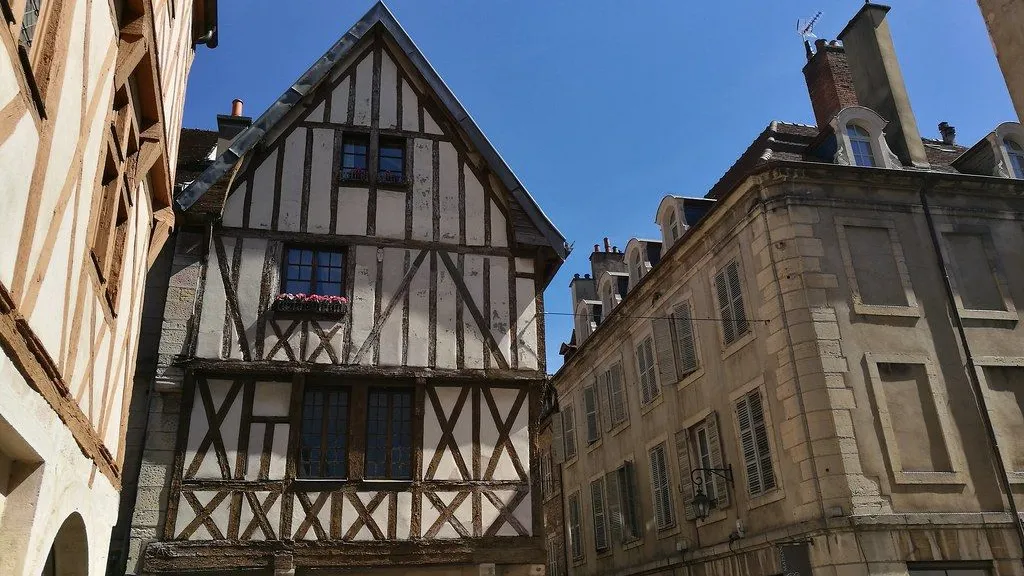
Photo by ell brown on Openverse

Maison Oyat

0:00

Eighty metres of half-timbered houses and antique shopfronts, glassmakers to vintage decor.

You're standing in eighty metres of Dijon's 15th century. The upper storeys over these shopfronts lean out over the pavement, and the ground floors are still open arcades, the same shape they had when glassmakers worked behind them. That trade gave the street its name. Before that it was the pig market, then rue du Sargis, then rue des Tondeurs, after the cloth shearers.

The carved details above the beams look medieval, and most of them went up in the 20th century. At number 2, Maison Oyat opened in 2021 and sells vintage furniture, home decoration, pots and planters, traditional brushes, household linen and work by local makers. Famille Porro Antiquités, at number 16, has been dealing since 1979 in 19th-century paintings, objects and furniture, and opens Tuesday to Saturday. Dealers in this quarter often close on Sundays, Mondays and over lunch, so the windows do more work than the doors.

One detour earns the minute: the courtyard of the Hôtel de Vogüé opens off rue de la Chouette just west of here, free in the daytime.
≈5 min walk to the next stop
Hôtel de NoidentLocal pick

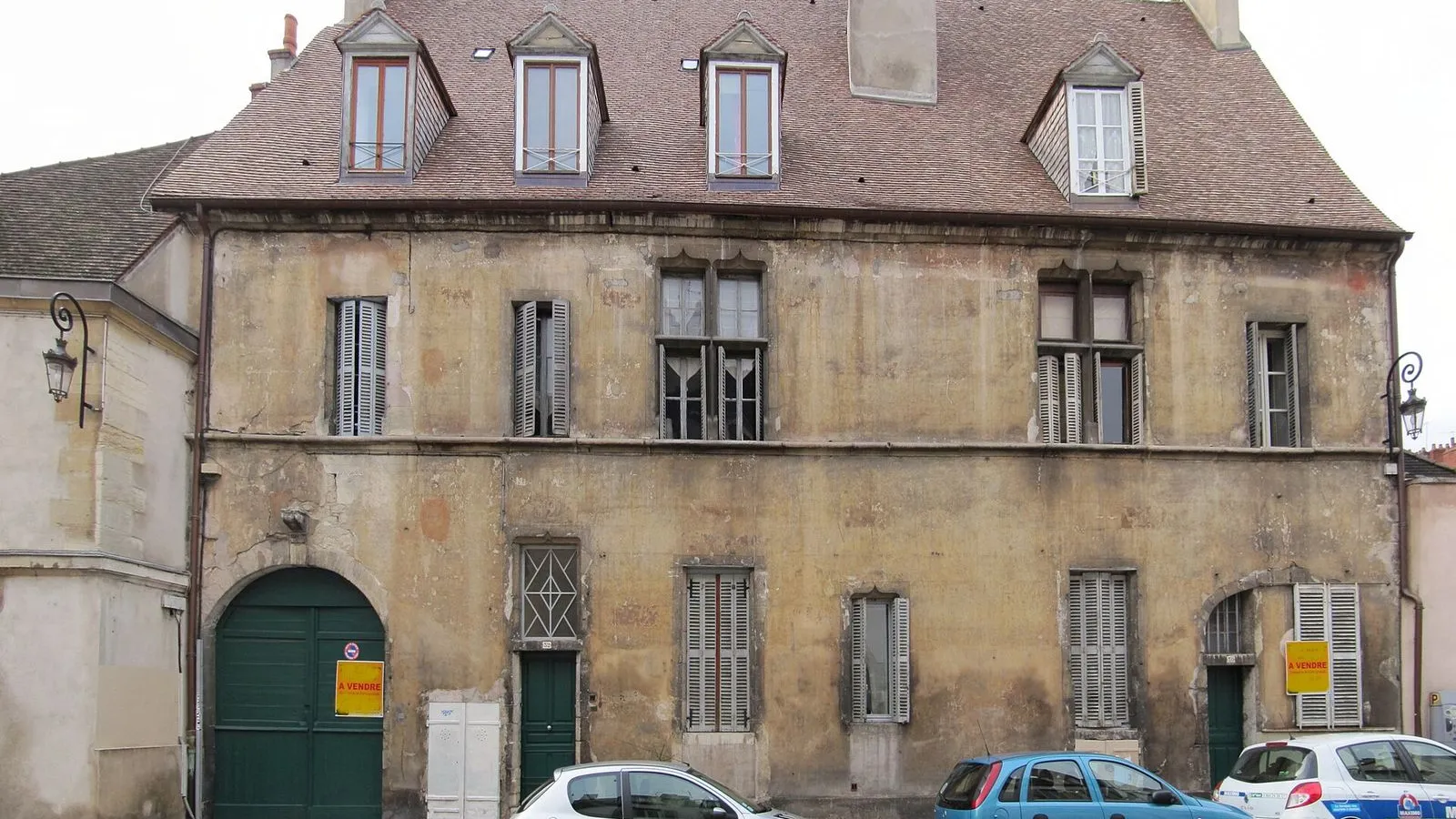
Photo by François de Dijon on Wikimedia Commons

Hôtel de Noident

0:00

A merchant's town house of about 1400, its stone mullions still in place.

Rue Vannerie curves, and the curve is medieval: the lane was cut around whatever stood in its way. Its name comes from the vanniers, the basket-makers who worked here. The Hôtel de Noident, at numbers 30 and 32, went up at the very start of the 15th century for Jehan de Noident, châtelain of Saint-Seine-sur-Vingeanne. A châtelain held a castle in the country and kept a house in town, and this one was his.

Look up at the windows: the stone mullions are still there, the vertical bars that divide each opening, six hundred years after they were set in place. The mansion is listed as a monument historique and has been private for most of its life, which is why the front stays plain and the door gives nothing away. Next door the line of the lane breaks at 32 bis and 32 ter, and that gap has its own story, told on the way to the next stop. The even side of this street has barely changed in two hundred years.

≈3 min walk to the next stop
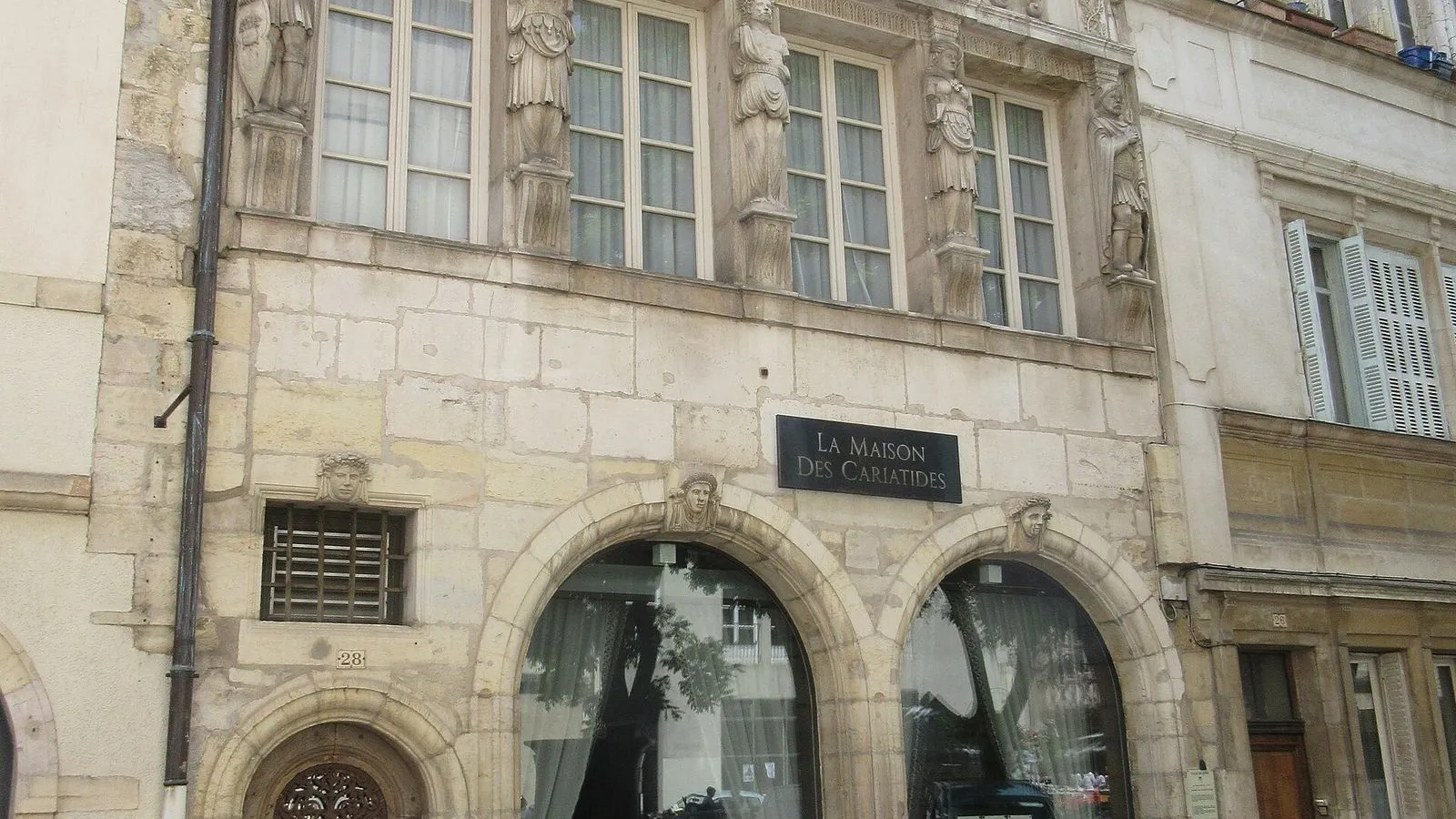
Maison des CariatidesLocal pick

Photo by William Jexpire on Wikimedia Commons

Maison des Cariatides

0:00

A cauldron-maker's Renaissance house of about 1603, caryatids and all.

The street is named for what was made in it. Chaudronnerie means cauldron-making, and the cauldron-makers here earned enough to build in stone. Around 1603 the Pouffier family put up this house at number 28 and carved into its front the caryatids that gave it its name. A restaurant occupies it now, so look at the upper storeys.

The change of material is what makes the house worth a stop. Rue Verrerie is timber, painted and overhanging; this front is cut stone, with regular openings and a proper architectural order, the mark of a family that could pay a mason and wanted the neighbours to know it. That ambition is very Dijon. The trades that made money here in the 16th century built in stone, the way the nobility did.

Rue Auguste-Comte, the lane you climbed on the way here, holds the galleries and the dealers: Galerie 6 and Fouchet at numbers 6 and 19, and a brocante on the third Sunday of the month. Cauldrons, glass, baskets: every lane here carries a trade in its name.

≈4 min walk to the next stop
Free preview ends here · stops 4 to 5 continue in the app

Musée Rude

Free sculpture museum in a deconsecrated church: Rude's Marseillaise in plaster.

in app

Église Saint-Michel

Renaissance front over a Gothic nave, closing the view down rue Vannerie.

in app
Good to know

Before you go

When are the antique dealers open?

Dealers in this quarter often close on Sundays and Mondays and over lunch, so on many days the shop windows are the draw rather than the interiors. On the third Sunday of most months the Brocante du Vieux Dijon fills these lanes with stalls instead.

Is the Musée Rude free, and when does it open?

The Musée Rude is free, like Dijon's other municipal museums; it opens 9:30 to 18:00 from October to May and 10:00 to 18:30 from June to September, and closes on Tuesdays.

SourceDijon Musées
What should I look at in the lanes themselves?

The lanes are the exhibit: rue Verrerie's overhanging timber houses, the Hôtel de Noident, a merchant's house of about 1400 with its stone mullions intact, the Maison des Cariatides of about 1603 and its caryatids, and the view down rue Vannerie to the Renaissance front of Saint-Michel.

Provenance · last verified September 10, 2026

Built from the Wayside route itself: the stops, their order, and the walk between them.

Photo by Fabian Kleiser on Unsplash

Photo by ell brown on Openverse · CC BY-SA 2.0

Photo by François de Dijon on Wikimedia Commons · CC BY-SA 3.0

Photo by William Jexpire on Wikimedia Commons · CC BY-SA 3.0

Photo by Christophe.Finot on Wikimedia Commons · CC BY-SA 2.5

Photo by Gzen92 on Wikimedia Commons · CC BY-SA 4.0

Coming soon

Wayside isn't in the app stores yet, but it's in the works. Check back soon.