Dijon · Self-guided audio walk

Saint-Bénigne and the Abbey Quarter

A walk through the abbey's old town at Dijon's western end: the arch that opened the city, a garden built on its first water supply, the crypt under the cathedral, and the market squares where the quarter lived.

  • 6Stops
  • 1.5 kmDistance
  • 25+ minTime
Saint-Bénigne and the Abbey Quarter

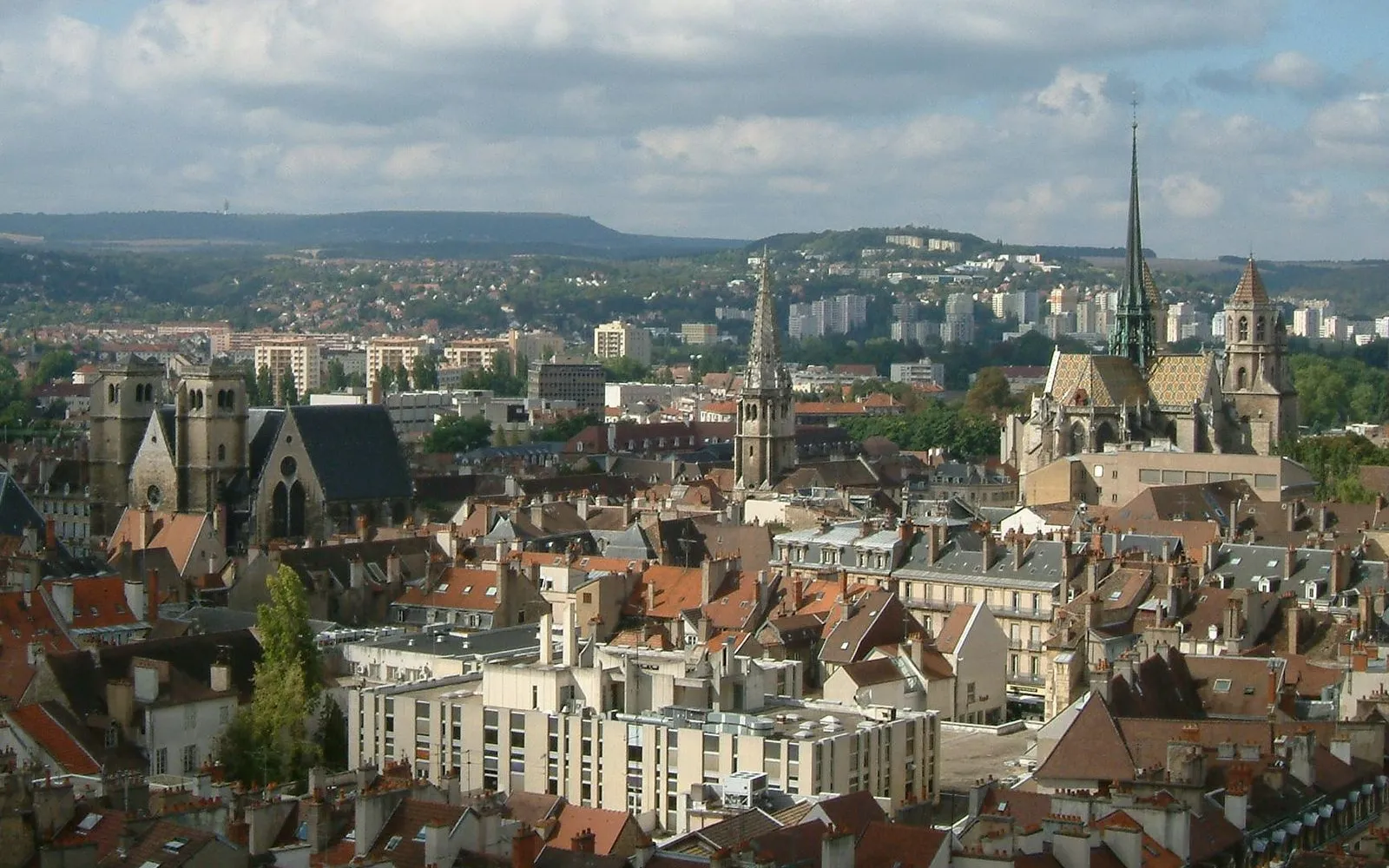
Photo by Gzen92 on Wikimedia Commons

This is the western end of Dijon, and it was a town before the dukes built theirs. The abbey of Saint-Bénigne was founded in 871; its abbot Guillaume de Volpiano began rebuilding in 1001, and the abbey church became the cathedral in 1792. The walk starts in the garden on place Darcy, where Henry Darcy's reservoir brought running water into the city in 1840, and ends at the convent on rue Sainte-Anne, where the museum of Burgundian life rebuilt eleven old Dijon shopfronts.

Between the two: the Porte Guillaume, the arch that closed Dijon on its western side, the cathedral and the crypt beneath it, and two squares that did the quarter's work. One sold wine and gingerbread; the other held a market and, for five centuries, the scaffold.

Dijon's municipal museums have been free since 2004, and the crypt is shown only on a guided visit. Expect a short walk and few crowds.

Hear it on the street

Get the turn-by-turn audio guide in the app. The narration plays itself as you reach each stop, hands-free and offline.

Stop by stop

The route

Interactive map of the route. The full stop list below works without it.

Jardin DarcyLocal pick

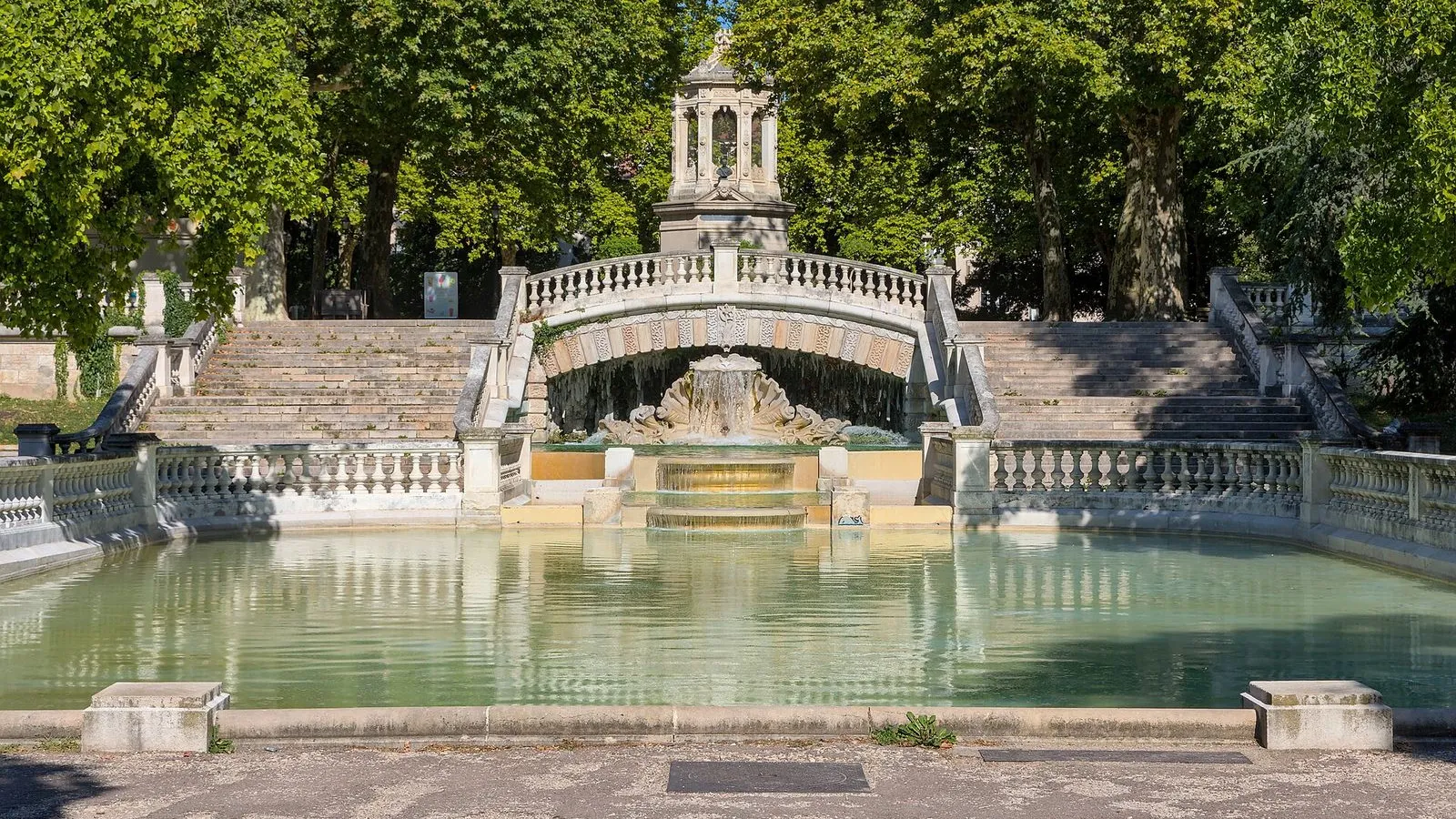
Photo by Benjamin Smith on Wikimedia Commons

Jardin Darcy

0:00

Dijon's first public garden, laid out over Henry Darcy's water reservoir.

The garden you're standing in is the first public garden Dijon ever had, laid out in 1880 by the architect Félix Vionnois. It sits on a water tank. Look for the neo-Renaissance pavilion: it crowns the reservoir Henry Darcy built between 1838 and 1840, 2,300 cubic metres of drinking water carried by an aqueduct 12 kilometres long from the Rosoir spring, high in the Suzon valley. Until then, the city drew its water from wells and springs, for 29,000 people. Darcy's reservoir made Dijon one of the first cities in Europe with running water.

The white bear at the entrance has a story that almost everyone tells wrong. It isn't by François Pompon. It's a tribute from 1937, carved by Henry Martinet in memory of Pompon, the sculptor from Saulieu who died in 1933 and whose polar bear, shown at the Salon d'Automne in 1922, belongs to the Musée d'Orsay. Dijon wanted its own, and Martinet's copy was unveiled on 26 May 1937, in front of a crowd invited for the occasion.
≈4 min walk to the next stop
Porte GuillaumeMust see

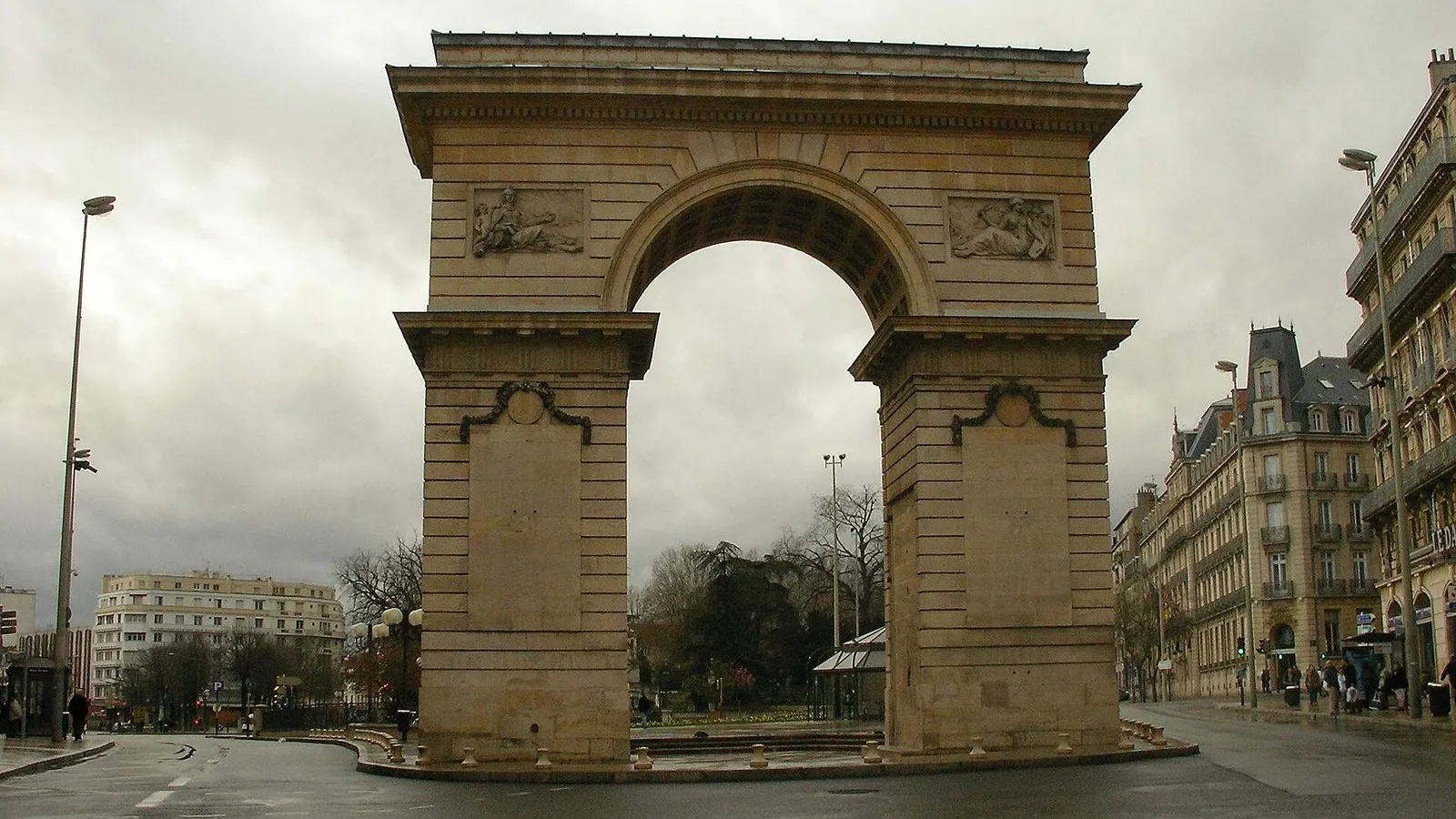
Photo by Gzen92 on Wikimedia Commons

Porte Guillaume

0:00

The 1780s western gate, renamed for the abbot of Saint-Bénigne.

This arch is the last of Dijon's western gates. It went up between 1786 and 1788 as the Porte Condé, a neoclassical arch for a city that was still walled, and the traffic that left town on this side passed under it. In the nineteenth century the name changed, and that change says something about this quarter. Porte Condé honoured a prince of the blood. The new name honoured Guillaume de Volpiano, the monk who arrived at the abbey of Saint-Bénigne in 990 and, eleven years later, began rebuilding it.

Stand at the foot of the arch and look east: rue de la Liberté runs straight to the ducal palace, and the dukes took the city's money, power and crowds that way. Look west and you have the road out of town. The reservoir Darcy built is directly beneath you, and it is still called the reservoir of the Porte Guillaume, after this gate.

≈4 min walk to the next stop
Cathédrale Saint-BénigneMust see

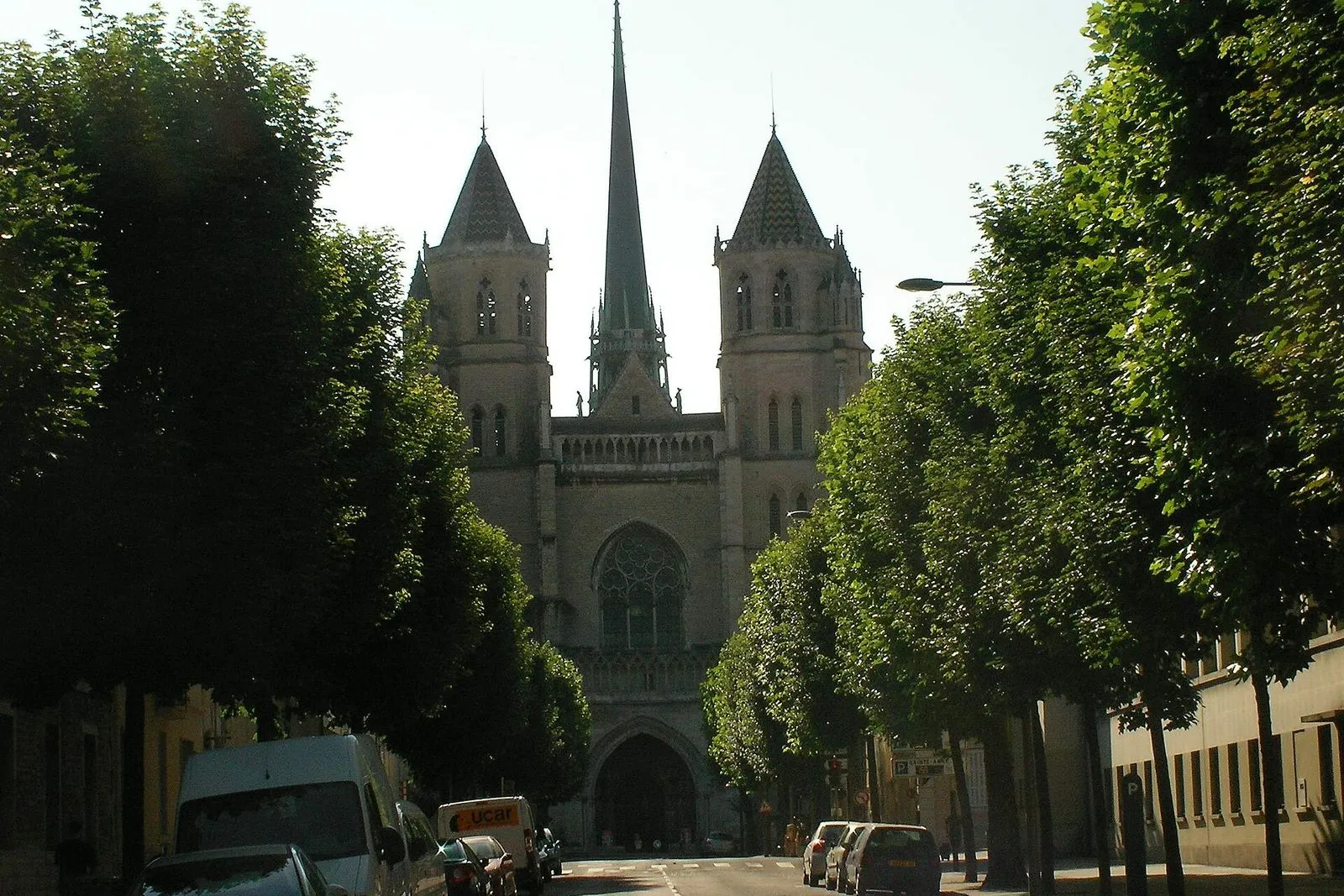
Photo by François de Dijon on Wikimedia Commons

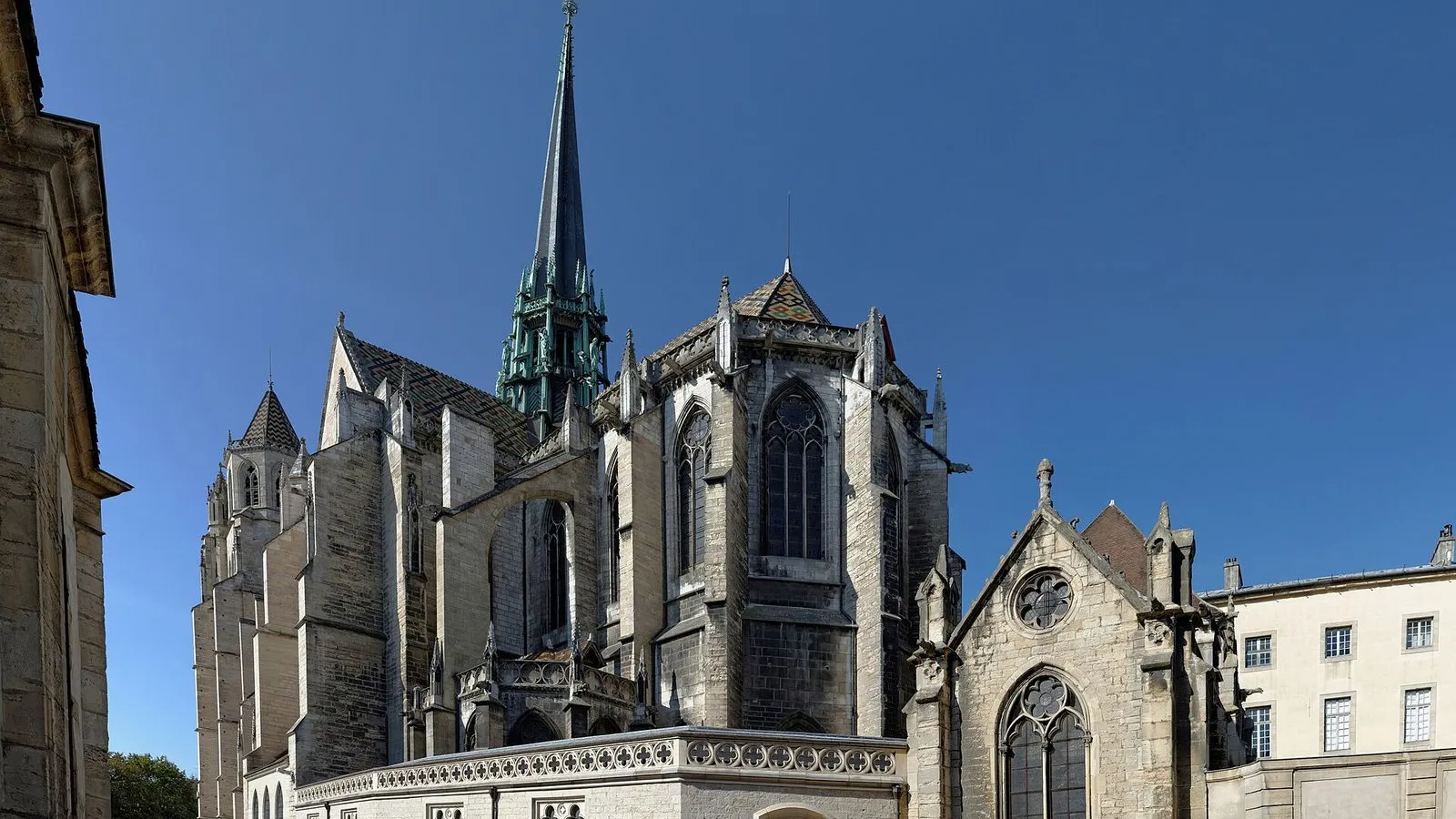
Cathédrale Saint-Bénigne

0:00

Gothic cathedral over a crypt that reopened in 2024.

The abbey of Saint-Bénigne was founded in 871 by Isaac, bishop of Langres. Its most famous abbot, Guillaume de Volpiano, took over in 990 and began rebuilding in 1001. The church he raised stood in front of a rotunda built over the tomb of Saint Bénigne, the martyr this quarter is named for. Almost nothing of that survives above ground: the church you see is Gothic, rebuilt between 1280 and 1393, and the rotunda came down in 1792, the year the abbey church became the cathedral. Its lower level, the crypt, was found again in the nineteenth century and restored from 1858. It reopened in July 2024 after four years of work, and you can only see it on a guided visit at three in the afternoon, for 5 euros, so book ahead.

In the abbey's surviving wing beside the cathedral, the Musée Archéologique keeps Burgundy's finds from prehistory to the Middle Ages. Entry is free, as at every permanent collection in the city's museums since 2004. It closes on Tuesdays, and from November to March it opens only on Wednesday, Saturday and Sunday. The Benedictine dormitory is closed for works.

≈3 min walk to the next stop
Free preview ends here · stops 4 to 6 continue in the app

Place Bossuet

Old place Saint-Jean, where wine and coaches moved through.

in app

Place Émile-Zola

Market and execution square for five centuries, now café terraces.

in app

Musée de la Vie Bourguignonne

Eleven old Dijon shopfronts in the Cistercian nuns' convent.

in app
Good to know

Before you go

How do I see the crypt under Saint-Bénigne?

Only on the guided visit, which runs daily at 15:00: tickets are €5 full price, €3 for students and groups of ten or more, and free for children and jobseekers. Book by phone with the parish on 03 80 30 39 33, especially in busy months.

SourceCathédrale de DijonDiocèse de Dijon
Is the cathedral itself free to visit?

Yes. Dijon's cathedral is open to visitors free of charge, and the ticket applies only to the guided crypt visit at 15:00, so you can step in for the Gothic nave before or after the tour.

SourceCathédrale de Dijon
What is at the end of this walk?

The Musée de la Vie Bourguignonne, in the Cistercian convent on rue Sainte-Anne, where eleven old Dijon shopfronts have been rebuilt and the displays trace Burgundian life from the countryside into the city; it is free and opens 9:30 to 12:30 and 13:30 to 18:00, closed on Tuesdays.

SourceDijon Musées

Provenance · last verified September 12, 2026

Built from the Wayside route itself: the stops, their order, and the walk between them.

Photo by Gzen92 on Wikimedia Commons · CC BY-SA 4.0

Photo by Benjamin Smith on Wikimedia Commons · CC BY-SA 4.0

Photo by Gzen92 on Wikimedia Commons · CC BY-SA 4.0

Photo by François de Dijon on Wikimedia Commons · CC BY-SA 3.0

Photo by Christophe.Finot on Wikimedia Commons · CC BY-SA 2.5

Photo by Fabian Kleiser on Unsplash

Coming soon

Wayside isn't in the app stores yet, but it's in the works. Check back soon.