Rennes · Self-guided audio walk

The Jardin du Thabor

Ten hectares of garden on a hill behind an old abbey, free and open all year, from a Romanesque tower to more than 2,000 varieties of rose.

  • 6Stops
  • 1.5 kmDistance
  • 25+ minTime
The Jardin du Thabor

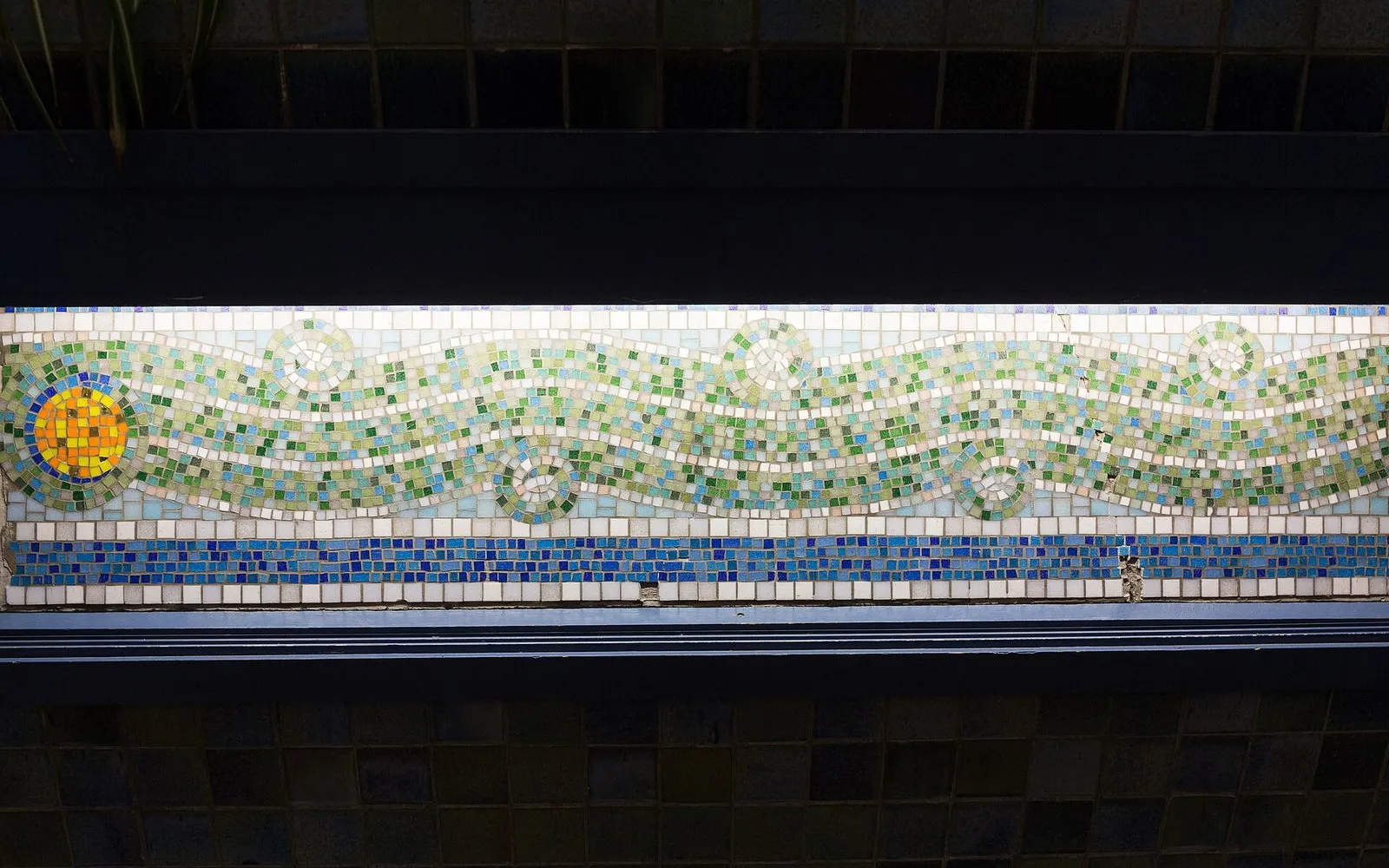
Photo by Lizixi Zhu on Unsplash

Rennes keeps its best garden behind a church. For a thousand years the hill above place Saint-Melaine belonged to the abbey of Saint-Melaine, and the ground the monks gardened became the Jardin du Thabor: ten hectares of parterres, lawns and plant collections, free, open every day of the year, and pulling in around 1.5 million visits.

This walk starts at the abbey church, whose transept and tower base are Romanesque work of the early 12th century, goes in through the gate beside it, and works through the French garden, the orangerie, the hollow the city dug after the fire of 1720, and the botanical garden and rose garden in the east.

Give it an hour. Two if the roses are out. Gates open at 7:30 in the morning and close between 6:30 and 8:30 in the evening, depending on the season.

Hear it on the street

Get the turn-by-turn audio guide in the app. The narration plays itself as you reach each stop, hands-free and offline.

Stop by stop

The route

Interactive map of the route. The full stop list below works without it.

Notre-Dame-en-Saint-MelaineMust see

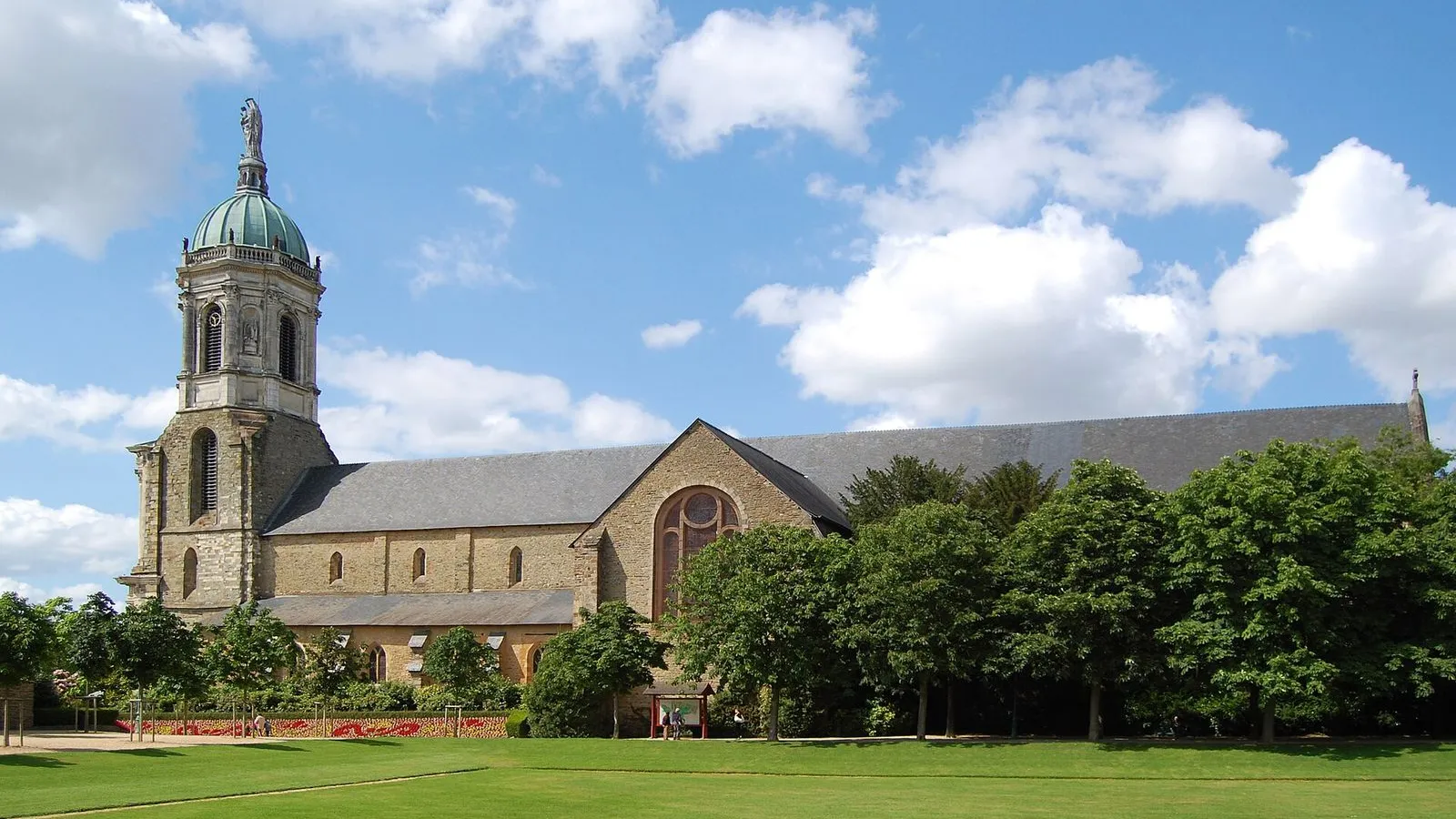
Photo by Pline on Wikimedia Commons

Notre-Dame-en-Saint-Melaine

0:00

The hill's Romanesque abbey church, its tower, and the cloister gallery that survives.

You're on place Saint-Melaine, facing a bell tower that has been rebuilt more than once. The transept and the base of the tower are Romanesque, the work of Abbot Gervais, who led this monastery from 1081 to 1109. Everything after is written on top of it: the choir was remade in the 1300s, the tower was rebuilt in 1432, its carved limestone façade was redone in 1676 by the Corbineau workshop, and in 1855 one more storey went up so that the priest could see his church from across the city.

The monastery was founded in the 6th century on the tomb of Saint Melaine, the first bishop of Rennes, and for a thousand years it owned this hill. One gallery of the cloister the monks built in the 1680s still stands against the old convent buildings, whose west wing was a hospital from 1793 to 1939. The church is open every day, on Sunday in the afternoon only, and you go in from the park side, at the transept.

The ground behind the church was the abbey's kitchen garden and orchard. You're about to walk on it.
≈5 min walk to the next stop
Jardin à la françaiseMust see

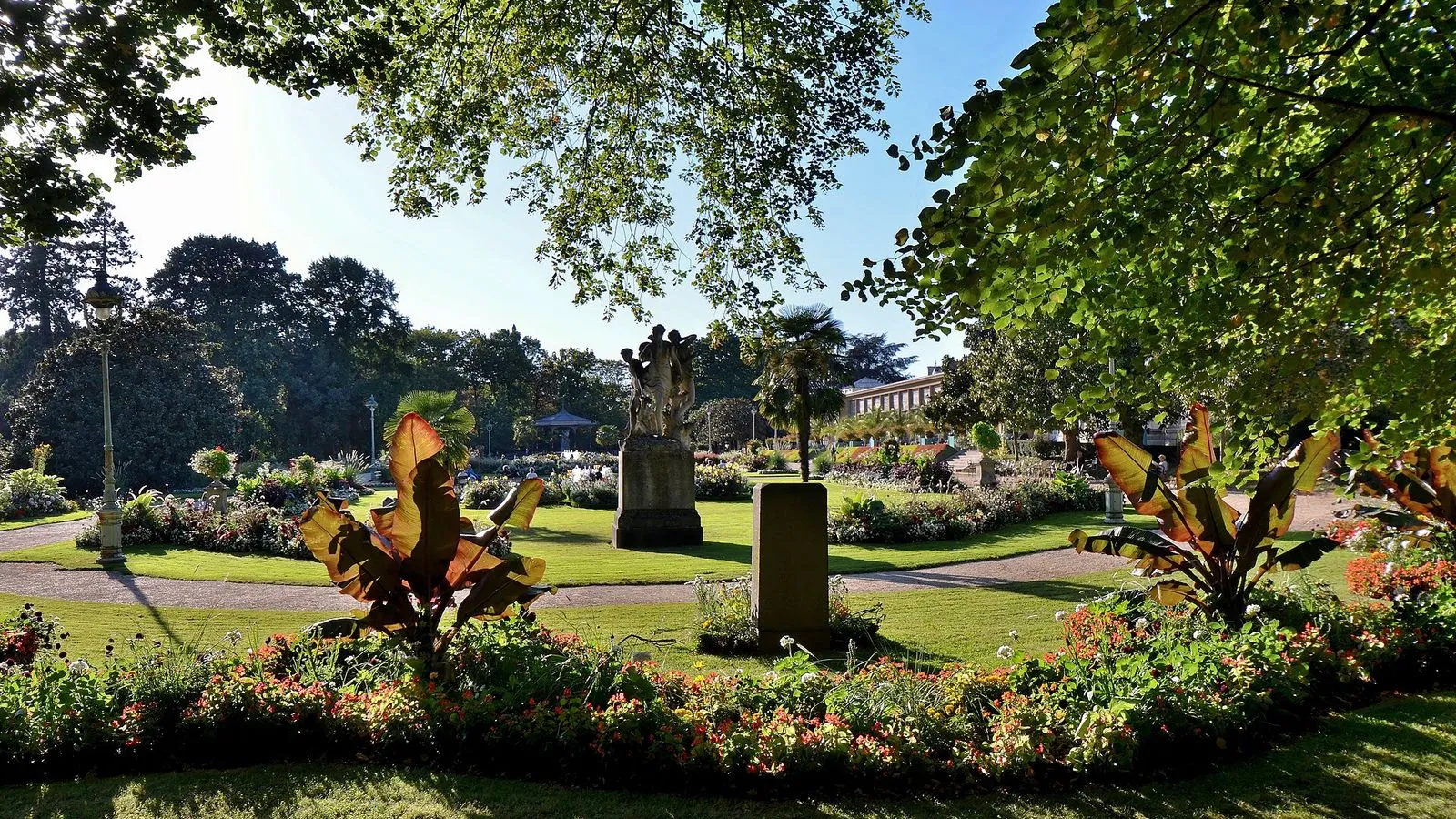
Photo by Morio60 on Wikimedia Commons

Jardin à la française

0:00

Parterres, trimmed cones and oval basins, laid out for the city in the 1860s.

The Bühler brothers, Denis and Eugène, laid out this park between 1866 and 1868. They were nurserymen's sons from Clamart, outside Paris, with about a hundred gardens and parks to their name around France. The mayor of Rennes wanted a French garden, so they gave him one, the only French garden Denis Bühler ever made. The city has kept the plan nearly intact ever since.

Look down at the beds. That tight geometry, clipped shrubs along the edges and coloured leaves inside, is a parterre de broderie, an embroidery bed: the pattern drawn on the ground with plants instead of thread. Four massifs sit symmetrically around two oval basins and their jets, and their shapes deliberately echo the orangerie and its greenhouses standing behind you.

The big cedar on the lawn went in early in the 1800s, before the parterres, and the design was built around it. The sculptures came at the end: Charles Lenoir of Rennes and his students from 1890, plus copies of figures from Versailles that had been shown in Paris in 1889. Twelve gardeners replant the seasonal beds twice a year, some 40,000 plants each time.

≈2 min walk to the next stop
Orangerie du ThaborLocal pick

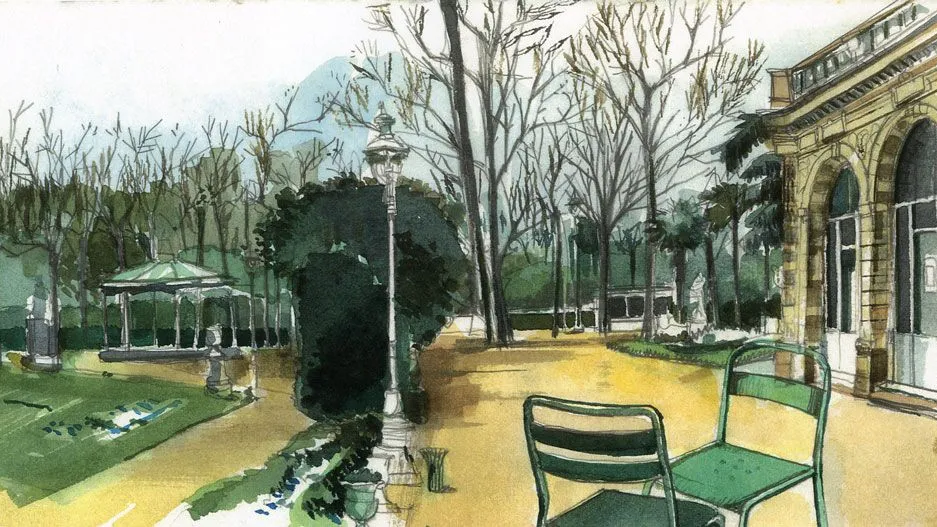
Photo by C.Didou on Wikimedia Commons

Orangerie du Thabor

0:00

Martenot's 1860s orangerie and glasshouses, with free exhibitions in season.

Jean-Baptiste Martenot was the city architect, and everything in this park that isn't green came off his drawing board: the gates, the railings, the bandstand, the aviary, and this range of orangerie and greenhouses, finished in 1863. His glasshouses took their model from the ones at the botanical garden in Bordeaux: three glazed pavilions with balconies and domes, linked by small gallery houses, built in iron and glass.

Look along the walls. The bas-reliefs and the cut names are the great figures of botany and gardening: Linné and de Jussieu on the western pavilion, La Quintinie and Le Nôtre on the eastern one. The building has windows on every side except the north, so the plants inside got light from the garden.

On 17 July 1944 bombs hit the greenhouses. Their replacements went up in concrete in 1956, heavier and plainer than what they replaced, and they are closed to the public. Between spring and autumn the two orangerie buildings at either end often hold free exhibitions: if the doors are open, go in.

≈3 min walk to the next stop
Free preview ends here · stops 4 to 6 continue in the app

L'Enfer

Dug for a water reserve after 1720, never filled, now the park's green theatre.

in app

Jardin botanique du Thabor

Eleven rings of plants, with the rose garden wrapped around them.

in app

Volière

The aviary, and Martenot's cast-iron bandstand a short walk north.

in app
Good to know

Before you go

What does the Thabor cost, and when does it open?

The Thabor is free and opens every day of the year: 7:30 to 20:30 from 1 May to 31 August, 7:30 to 20:00 in March, April and September, and 7:30 to 18:30 from 1 October to 28 February.

SourceOffice de Tourisme, Parc du Thabor
When can you see the orangerie's exhibitions?

The orangerie's exhibitions run from April to October, are free to enter, and follow the park's opening hours; from November to March the rooms stay shut.

SourceVille de Rennes, Orangerie du Thabor
Where are the entrances to the Thabor?

The walk enters from place Saint-Melaine, beside the abbey church of Notre-Dame-en-Saint-Melaine. The park also opens onto rue de Paris, rue de la Palestine and boulevard de la Duchesse Anne, so it is easy to leave by a different gate than the one you came in.

SourceOffice de Tourisme, Parc du Thabor

Provenance · last verified September 26, 2026

Built from the Wayside route itself: the stops, their order, and the walk between them.

Photo by Lizixi Zhu on Unsplash

Photo by Pline on Wikimedia Commons · CC BY-SA 3.0

Photo by Morio60 on Wikimedia Commons · CC BY-SA 2.0

Photo by C.Didou on Wikimedia Commons · CC BY-SA 3.0

Photo by Pymouss on Wikimedia Commons · CC BY-SA 4.0

Photo by Thanh Ly on Unsplash

Coming soon

Wayside isn't in the app stores yet, but it's in the works. Check back soon.