Rennes · Self-guided audio walk

Odorico's Rennes

Two brothers from Friuli tiled Rennes from its fish market to the family bathroom. Follow their work through the streets south and east of the old town, where you can eat over it and swim beside it.

  • 6Stops
  • 1.6 kmDistance
  • 25+ minTime
Odorico's Rennes

Photo by Pymouss on Wikimedia Commons

Rennes is covered in a family's handiwork, most of it at ankle height. The Odoricos came from Friuli, in northern Italy, and opened their mosaic workshop here in 1882, after a spell in Paris on the Opéra Garnier. Two generations later, their tile runs from the wholesale fish market to the bathroom of their own house.

This walk follows it through the streets south and east of the old town: a market fronton in blue letters, a restaurant floor, an Art Deco block faced with gold, and two dining rooms where the pattern is still under the tables. It finishes at the pool Isidore Odorico fils covered in wavelets, where a public swim or the tourist office's guided walk gets you inside. The pool is closed on Mondays, on public holidays and during school holidays.

Plan on about an hour. Come hungry: there is a crêperie along the way and a pool at the end.

Hear it on the street

Get the turn-by-turn audio guide in the app. The narration plays itself as you reach each stop, hands-free and offline.

Stop by stop

The route

Interactive map of the route. The full stop list below works without it.

La Criée, marché centralMust see

Photo by Pymouss on Wikimedia Commons

La Criée, marché central

0:00

Odorico mosaic fronton above stalls that still sell Breton produce.

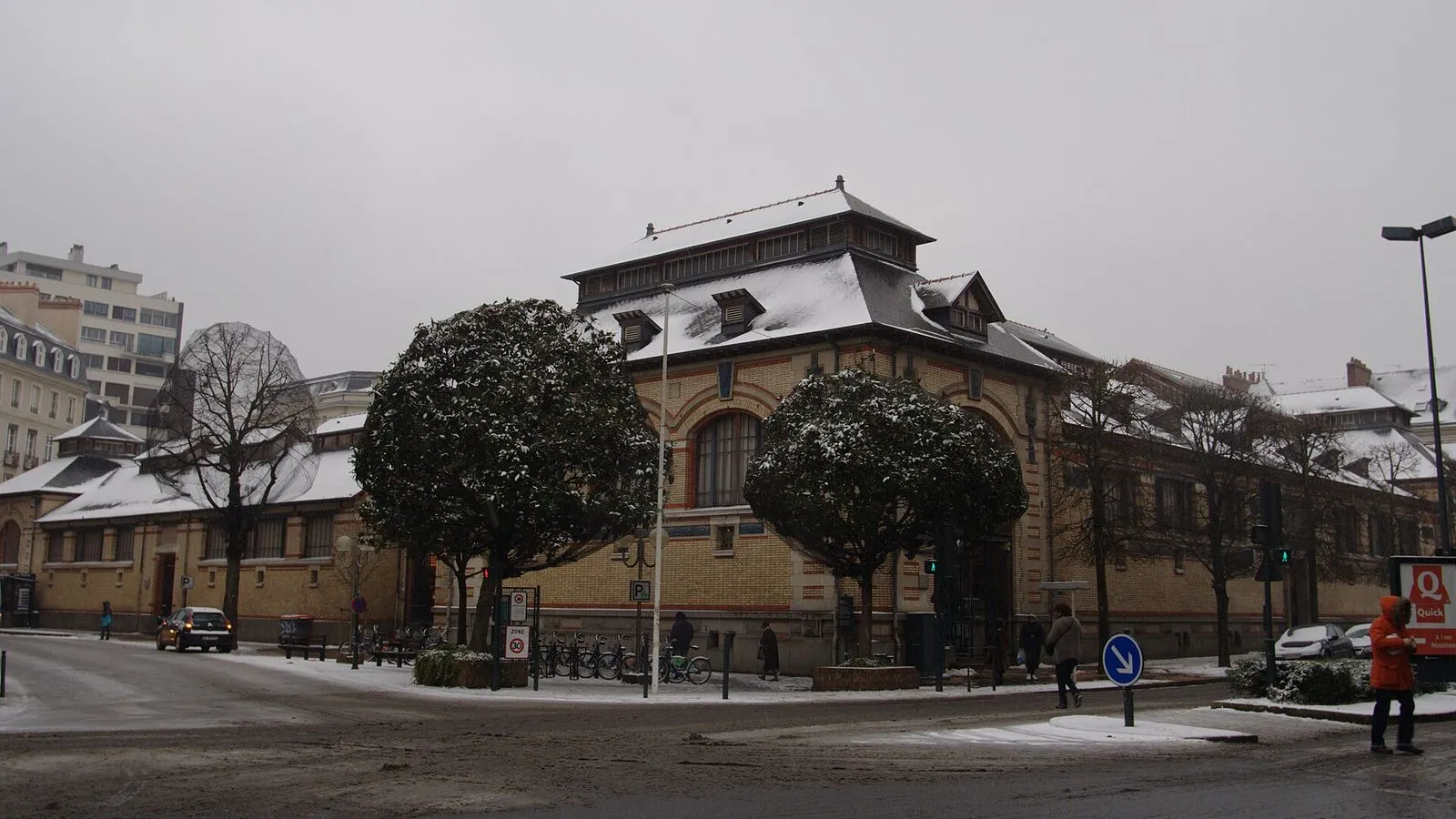
Two brothers from Friuli, Isidore and Vincent Odorico, founded their mosaic firm in Rennes in 1882, after working in Paris on the Opéra Garnier, and their tile still covers the surfaces of this city. Start by looking up.

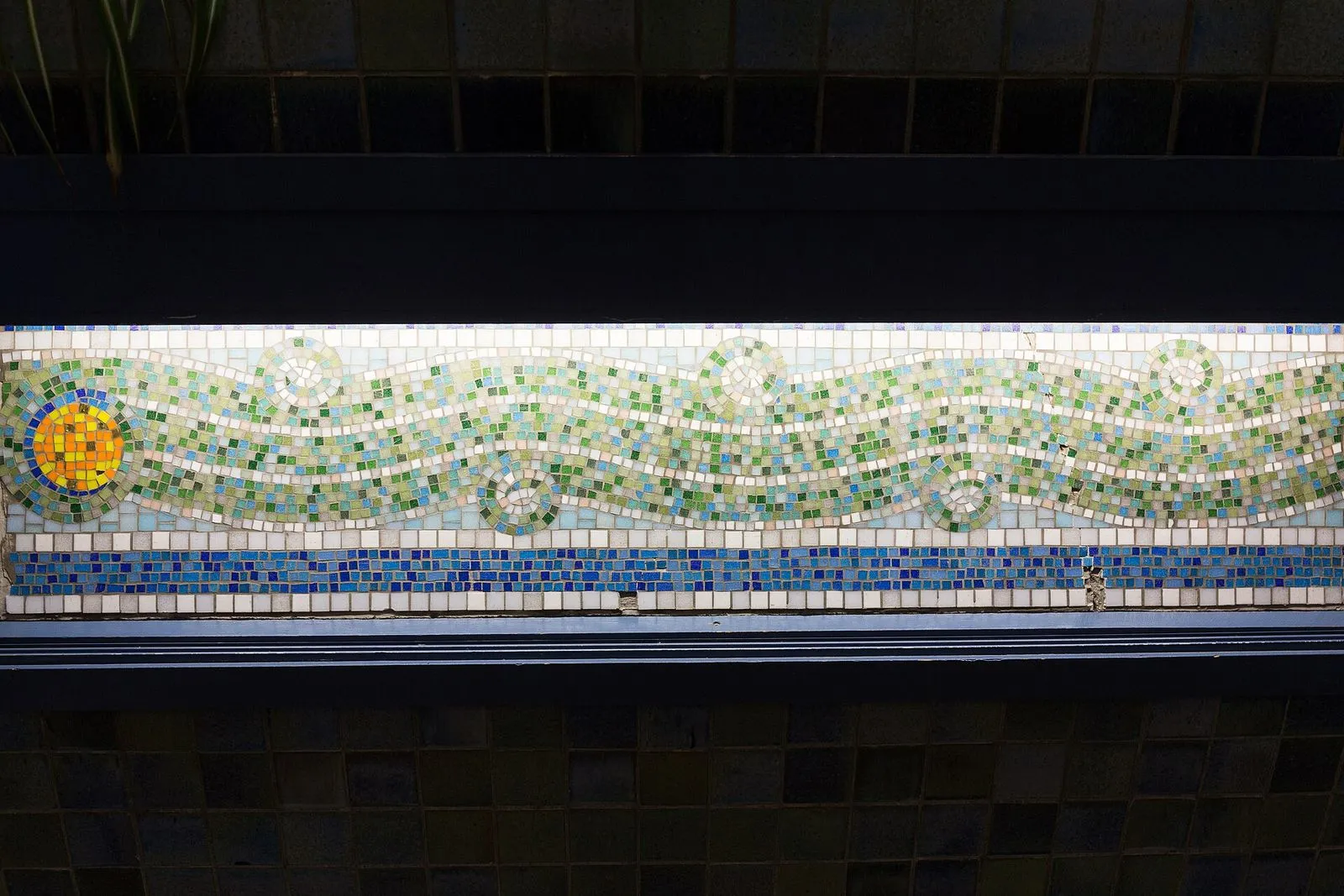
Above the north wing of the central market, the fronton carries a mosaic laid in the 1920s. The words criée municipale are set in geometric blue letters, and beneath them run stylised waves on a ground that shifts from green to yellow.

The halls are the work of Emmanuel Le Ray, the city architect who also designed the Saint-Georges pool. The first stalls opened on 29 April 1923, and the wholesale wing took until 1926 to finish; the room where prices were called out is an art centre today. Fish set the tone of the whole building, which is why the south hall carries the heaviest ornament.

Then go inside. Twenty-eight traders work under the glass here, selling cheese, fish, vegetables and Breton specialities, and this is where you buy lunch.
≈8 min walk to the next stop
Immeuble PoirierLocal pick

Photo by Auregann on Wikimedia Commons

Immeuble Poirier

0:00

Art Deco block faced in gold mosaic, restored in 2016 and 2017.

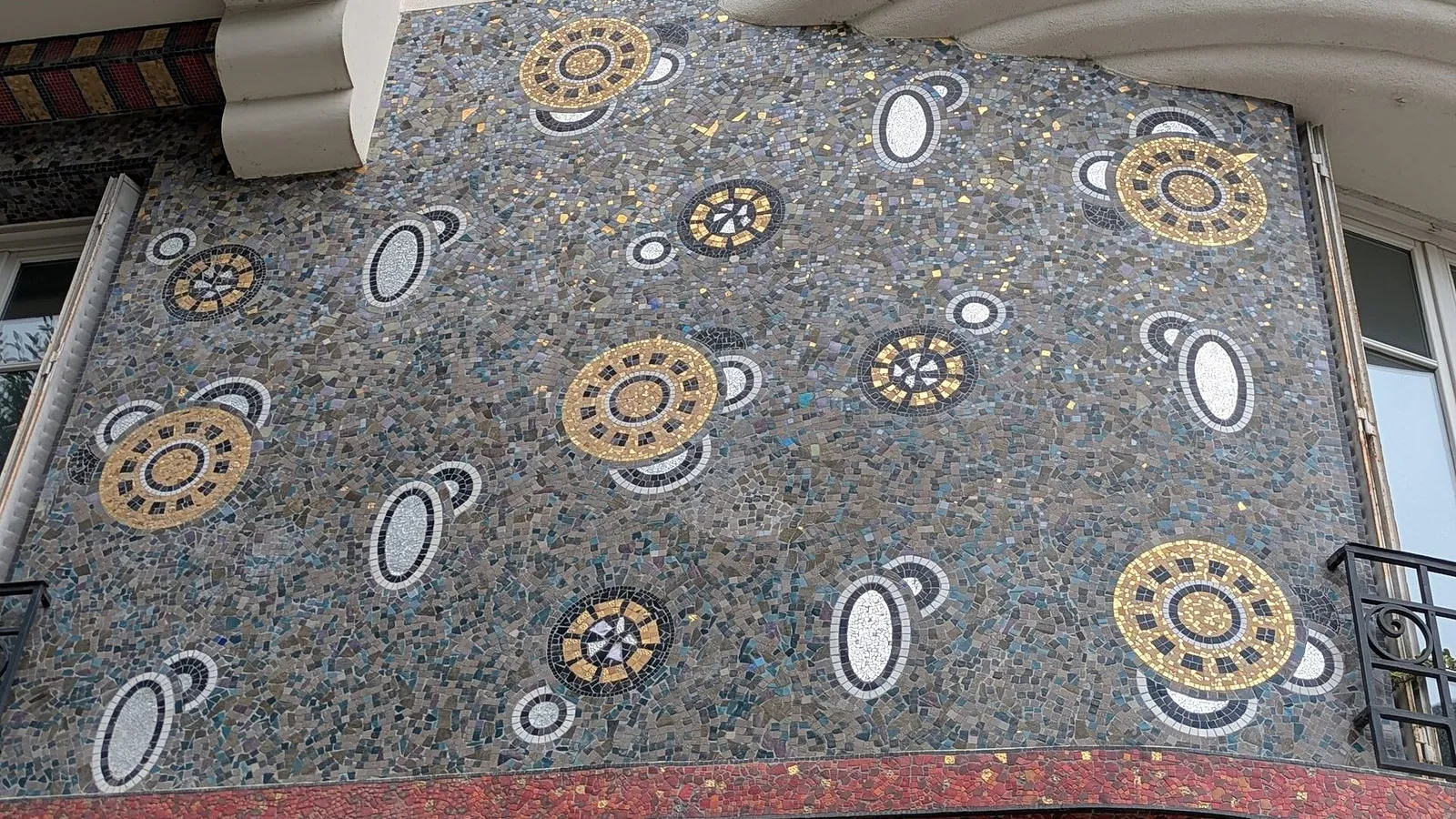
Look up at the corner of the building, where the light catches the gold. The mosaic is made of small squares of glass, smalt, set among matte tiles in grey, blue and green, and Isidore Odorico loved that contrast between dull and brilliant surfaces. Bands of gilded logs, rondins, float across the facade between the windows.

The block takes its name from Jean Poirier, who put it up; the mosaics are signed Odorico. They were restored in 2016 and 2017 by the Patrizio family, whose people come from the same Friulian village as the Odoricos, so the repair work went back to the source.

It is a private apartment building, so this is a pavement stop. Stand back across the avenue for the whole composition: the bands of tile change with the light, and the gold reads differently under cloud and under sun.

By the 1930s the firm's style had moved a long way from its catalogue days. Isidore Odorico fils, born in Rennes in 1893, had studied at the art school, and he drew his own designs instead of copying the pattern books.

≈1 min walk to the next stop
Maison OdoricoLocal pick

Photo by Jacques Le Letty on Wikimedia Commons

Maison Odorico

0:00

Isidore Odorico's own house, finished in 1940 and now a crêperie.

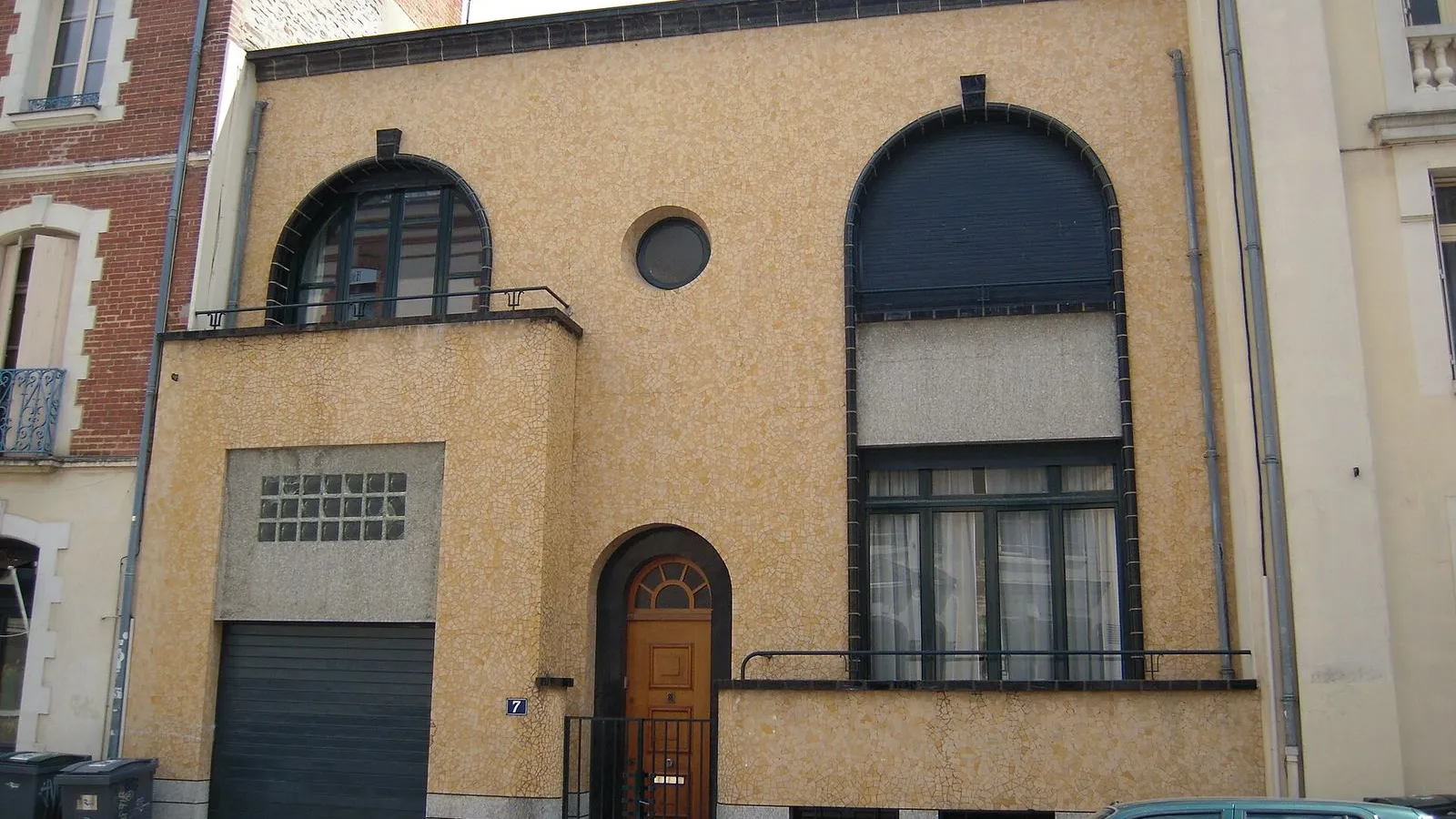
This is the family's own house, and its front is a catalogue of the firm's work. Isidore Odorico fils commissioned it in 1939, and the work finished in 1940, on the site of the firm's first premises.

The facade is smooth yellow stoneware tile, with bands of glossy black stoneware around the openings and a base of veined white marble. The paving runs off the building and across the pavement, so the house spills into the street.

Inside, a mosaic carpet of dark marble covers the hall, and the dining room keeps a geometric floor. The masterpiece is the bathroom: gold smalt with exotic fish, seaweed and coral above the bath.

Round the corner, numbers 10 and 14 rue Dupont des Loges still have floors the firm laid, in the Petite Californie quarter where the family's Rennes trade began. A crêperie called Bretone, which is Italian for Breton, occupies the house now, and the mosaics were restored and left on show. Order a galette and sit inside the pattern.

≈4 min walk to the next stop
Free preview ends here · stops 4 to 6 continue in the app

Pénates, 13 rue Paul Bert

Two restaurant fronts, mosaic outside and in, on one short street.

in app

Jardin Saint-Georges

Garden beside the pool, with a mosaic sign for the vanished public baths.

in app

Piscine Saint-Georges

The 1926 pool with a 96-metre mosaic frieze around the basin.

in app
Good to know

Before you go

How do you see the mosaics inside the Saint-Georges pool?

The pool's mosaics are seen two ways: a public swim, with the pool open Tuesday to Sunday and closed on Mondays, public holidays and school holidays, at €5.70 for an adult and €2.45 for under-18s, or the tourist office's Odorico mosaic walk, which takes you in for from €6.50 with booking required.

SourceRennes Ville et Métropole, Piscine Saint-GeorgesOffice de Tourisme, piscines horaires et tarifsOffice de Tourisme, Odorico et l'art de la mosaïque
When does the Odorico walk run, and in what language?

The Odorico walk runs throughout 2026 and is given in French; it lasts 1.5 to 2 hours, meets at the tourist office at 1 rue Saint-Malo, is free for children under 7, and is included in the Pass Rennes Loisirs. Booking is required.

SourceOffice de Tourisme, Odorico et l'art de la mosaïque
What is the Maison Odorico today?

Maison Odorico is the house Isidore Odorico built for himself, finished in 1940, and its ground floor is a crêperie today, so the family's own address is a place to eat on this walk.

Provenance · last verified September 26, 2026

Built from the Wayside route itself: the stops, their order, and the walk between them.

Photo by Pymouss on Wikimedia Commons · CC BY-SA 4.0

Photo by Pymouss on Wikimedia Commons · CC BY-SA 3.0

Photo by Auregann on Wikimedia Commons · CC BY-SA 4.0

Photo by Jacques Le Letty on Wikimedia Commons · CC BY-SA 4.0

Photo by Thanh Ly on Unsplash

Photo by Lizixi Zhu on Unsplash

Coming soon

Wayside isn't in the app stores yet, but it's in the works. Check back soon.