Brugge · Self-guided audio walk

Sint-Anna, the Jerusalem Chapel and the windmills

An afternoon in Bruges' working east quarter: a pub pouring since 1515, a private chapel built as a copy of Jerusalem, lace still on the bobbins, and a windmill grinding grain on the rampart.

  • 7Stops
  • 1.5 kmDistance
  • 25+ minTime
Sint-Anna, the Jerusalem Chapel and the windmills

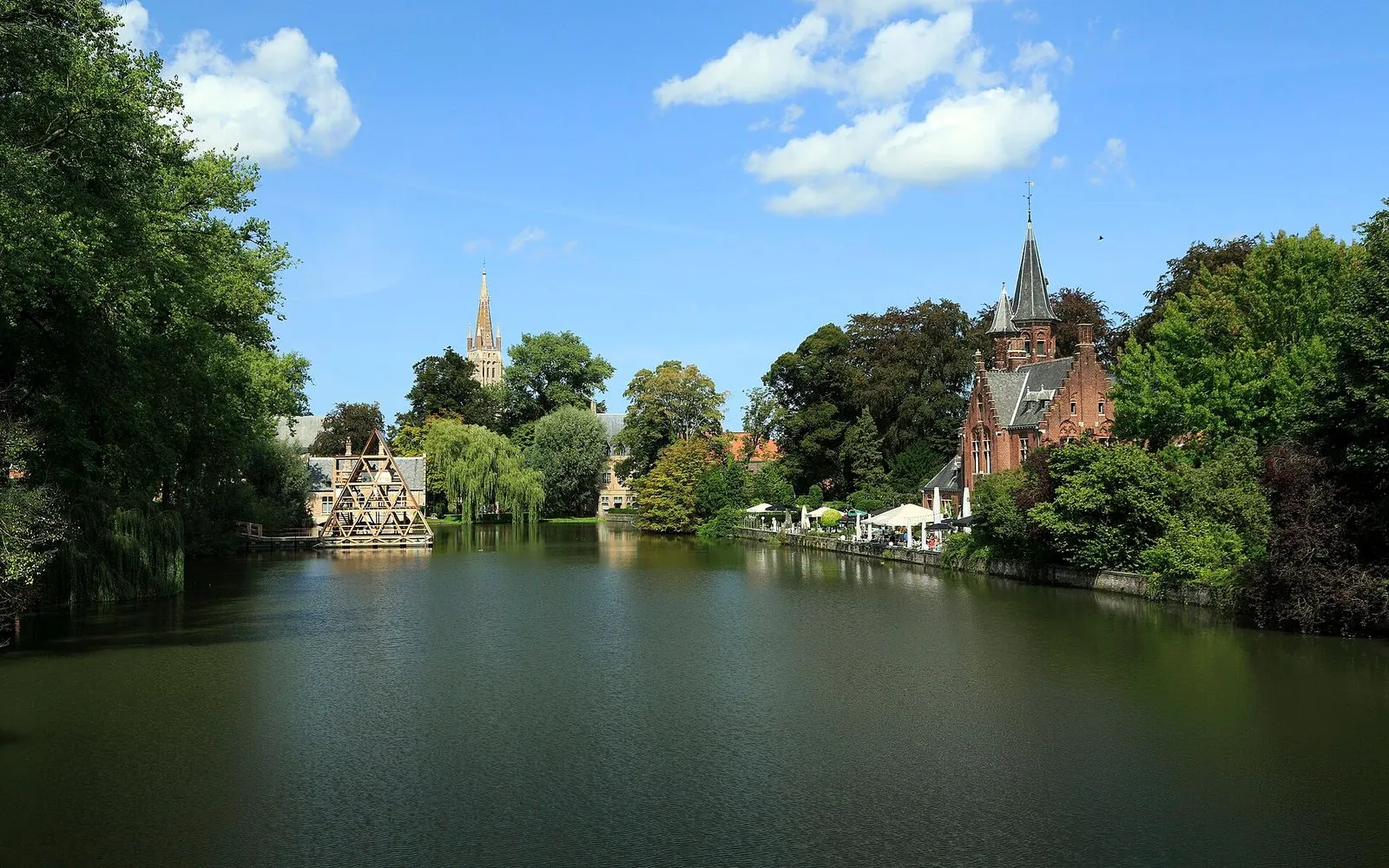
Photo by Ermell on Wikimedia Commons

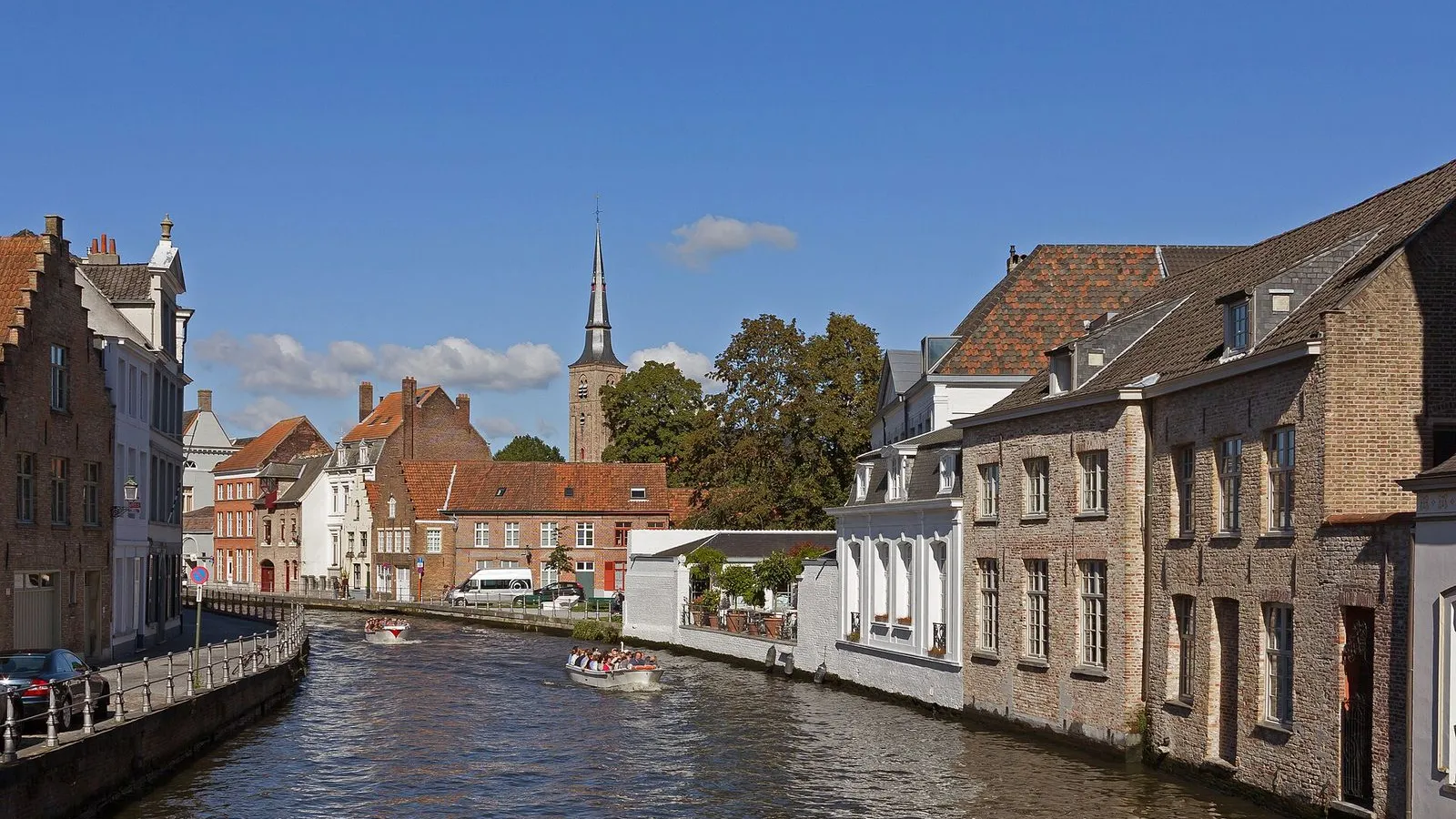
Sint-Anna is the quarter east of the centre, and it is the half of Bruges where people still work: a pub pouring beer since 1515, lacemakers at their bobbins, grain ground on the ramparts. This walk crosses it in about an hour, from the Blekersstraat to the old city gate.

Between April and early November, everything on the route opens together on a Tuesday to Saturday afternoon. The Adornesdomein and the Kantcentrum close on Sundays; the mill and the Volkskundemuseum close on Mondays; in winter the mill opens only on the second Sunday of the month.

The route is barely more than a kilometre on flat ground. The paid entries are the Adornesdomein at eleven euros, the Kantcentrum and the Volkskundemuseum at eight euros each or thirteen for the two, and the mill at five euros.

Hear it on the street

Get the turn-by-turn audio guide in the app. The narration plays itself as you reach each stop, hands-free and offline.

Stop by stop

The route

Interactive map of the route. The full stop list below works without it.

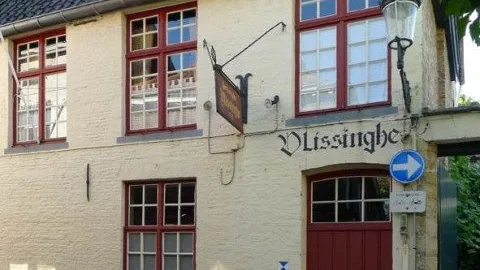
Café VlissingheLocal pick

Photo by Vanderhispallie, Eelkje on Wikimedia Commons

Café Vlissinghe

0:00

Inn since 1515, its taproom catalogued object by object in 2015.

You're standing outside two joined houses on the Blekersstraat, and beer has been poured behind that door since 1515, when a city register first names the place. That makes Vlissinghe the oldest café still running in Bruges. Push the door open. The taproom sits above a cellar, up a stair whose door is cut through by two oval openings, and inside are a black marble fireplace from the 1600s, old Belgian lamps, a stove, and paintings and photographs covering the walls.

The Flemish look of the room goes back to 1869, when the De Meulemeester family rebuilt the pub beside the brewery it owned, and an artists' circle called De Kunstgenegen, founded in 1894, furnished the garden room and left moral proverbs painted over its fireplace. When the café turned five hundred in 2015, the city's heritage office measured, photographed and described every object in the taproom, one by one, and put the whole inventory online. Order something and stay a while. Five hundred years in, this is still somebody's living room.
≈3 min walk to the next stop
Sint-AnnakerkLocal pick

Photo by Michielverbeek on Wikimedia Commons

Sint-Annakerk

0:00

Donor-funded Baroque fittings, and the font where Gezelle was baptised.

Sint-Anna's parish began as the slice of the Sint-Kruis parish that fell inside the city wall of 1297, and it became a parish of its own only in 1668. The church here was wrecked and rebuilt more than once. The parish turned a mansion on this square into a chapel in 1496 and enlarged it into a three-aisled church, consecrated in 1529; around 1580, under the Calvinist city government, it was sold and pulled down. Short of materials, they built a single-aisled Gothic hall church in the 1610s, consecrated in 1621.

For decades the roof frame stayed open over the room: the parish wrote to the bishop to complain that they froze in winter and roasted in summer, and the vault you see went in from 1657. Donors paid for the rest, which earned the church its nickname, the salon church of Bruges. Guido Gezelle was baptised at the shell-shaped font on 1 May 1830, the day he was born on the Rolweg nearby.

≈2 min walk to the next stop
JeruzalemkerkMust see

Photo by Rainer Halama on Wikimedia Commons

Jeruzalemkerk

0:00

A private family chapel built as a copy of Jerusalem.

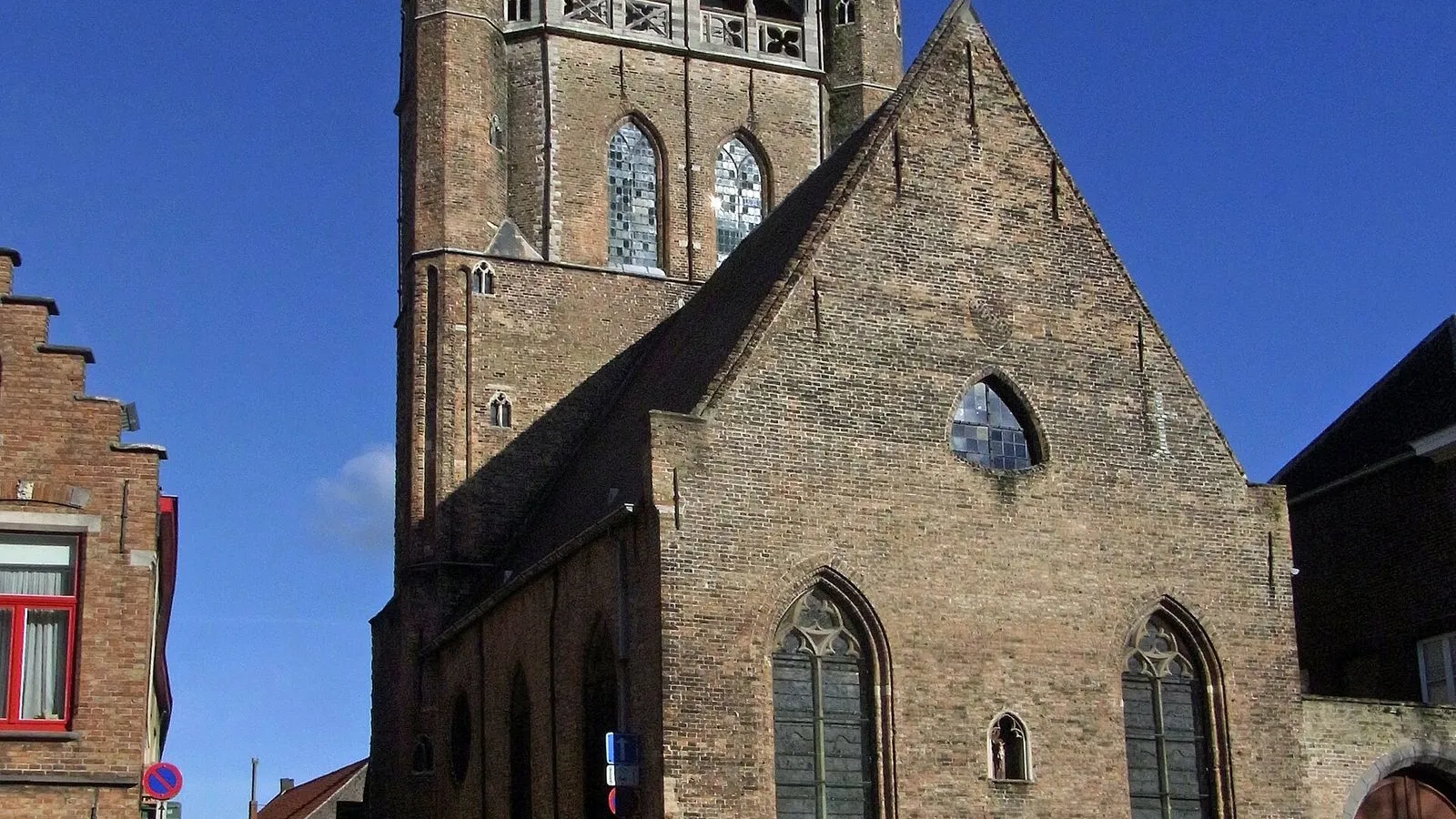
Behind this wall stands one of the few private churches in Belgium, and it still belongs to the family that built it. The Adornes were Genoese merchants who settled in Bruges and grew rich. The brothers Jacob and Pieter built a first chapel here, consecrated in 1429. Shortly after 1470, when Anselm Adornes came home from his own pilgrimage to Jerusalem, the family rebuilt it in one campaign as the copy of the Church of the Holy Sepulchre you see now.

The Jerusalem cross on the tower says where the idea came from. Around the chapel the family laid out almshouses, a courtyard and a garden, and the whole estate still sits behind its wall, entered from the Peperstraat or the Balstraat. Mass is celebrated in the chapel on Saturday mornings and families book it for baptisms. Entry to the estate is eleven euros, and the rooms are tight: groups have to book ahead, and you may get the chapel to yourself.

≈2 min walk to the next stop
Free preview ends here · stops 4 to 7 continue in the app

Balstraat

Lace on the bobbins, and 19th-century life in workers' houses.

in app

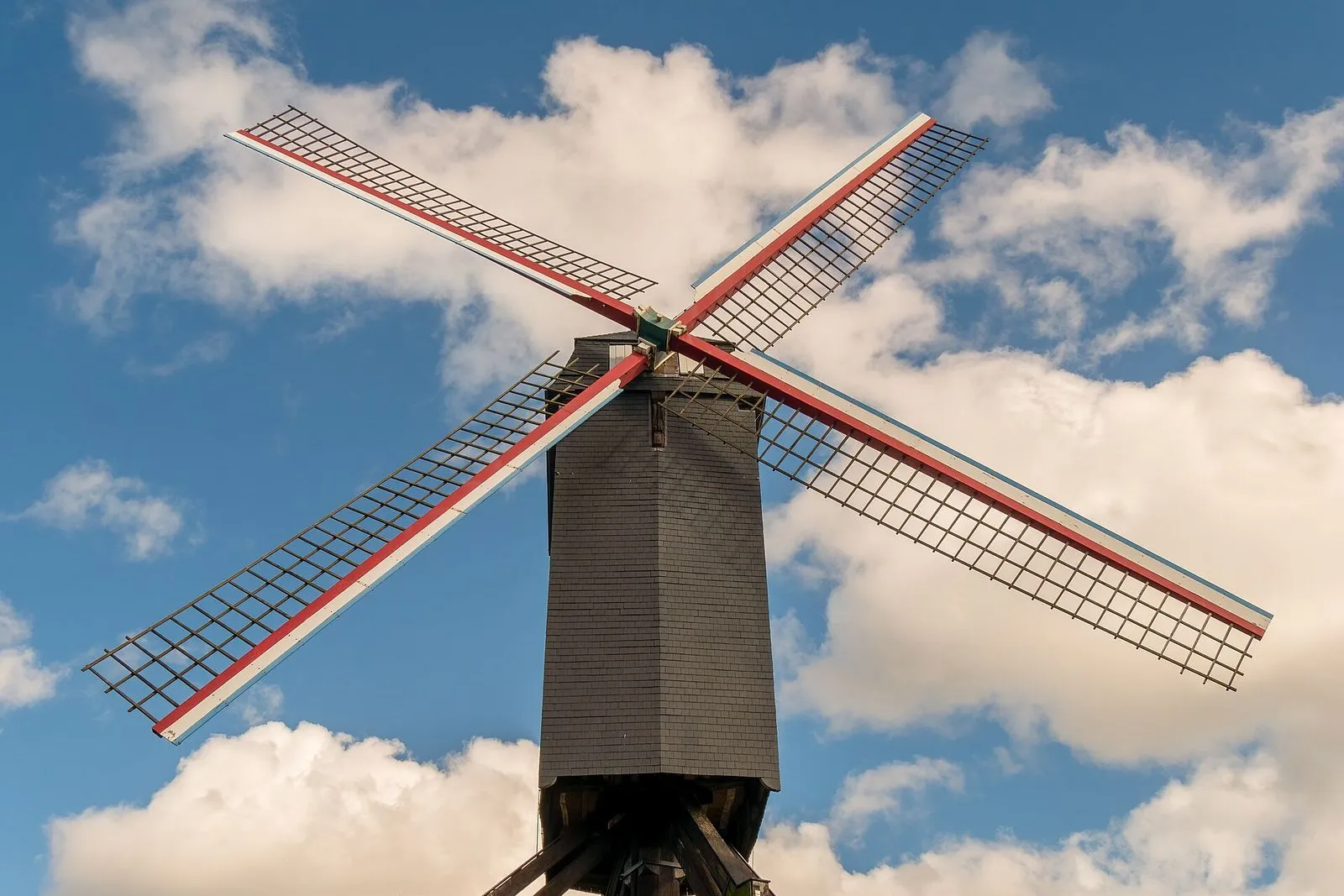
Sint-Janshuismolen

The only mill in Bruges that still grinds grain.

in app

Bonne Chièremolen

A decorative mill brought here from another Flemish town.

in app

Kruispoort

The old gate that closes the walk on the eastern rampart.

in app
Good to know

Before you go

When is everything on the Sint-Anna walk open?

The Sint-Anna walk is a daytime route, and Tuesday to Saturday is its full day. The Adornesdomein with the Jerusalem chapel opens Monday to Saturday 10:00 to 17:00, until 18:00 on Saturdays from April to September, and closes on Sundays and public holidays. The Kantcentrum museum runs Monday to Saturday 09:30 to 17:00 with lace demonstrations from 14:00 to 17:00, also closed on Sundays. Sint-Janshuismolen grinds from 1 April to 2 November, open 09:30 to 12:30 and 13:30 to 17:00, closed on Mondays, and in winter it opens only on the second Sunday of the month.

SourceAdornesdomein: practical informationKantcentrum: info and contactMusea Brugge: Sint-Janshuismolen
What do the tickets on this walk cost?

The Adornesdomein costs €11 for adults, €9 for over-65s and groups of 15 or more, and €7 for ages 7 to 25. The Kantcentrum costs €8, or €6 for ages 12 to 25, over-65s and groups over 15, and the combined ticket with the Volkskundemuseum is €13. Sint-Janshuismolen is €5, €4 under 26 and €2 for ages 13 to 17, free under 13, and free for everyone on Molendag, the last Sunday of April. Tickets for the Adornesdomein are sold only at its reception desk, so bring a card rather than a booking.

SourceAdornesdomein: practical informationKantcentrum: info and contactVisit Bruges: Sint-JanshuismolenMusea Brugge: plan your visit
Where do I eat on this walk?

Café Vlissinghe at Blekersstraat 2 is the obvious stop: an inn since 1515, with its taproom and furnishings catalogued object by object for the 500th year, and open daily from 11:00 to 21:00. It sits at the start of the route, so it works as a lunch before the chapel and the lace, or as the end of the walk before the mills.

SourceCafé Vlissinghe

Provenance · last verified September 27, 2026

Built from the Wayside route itself: the stops, their order, and the walk between them.

Photo by Ermell on Wikimedia Commons · CC BY-SA 4.0

Photo by Vanderhispallie, Eelkje on Wikimedia Commons · CC BY 4.0

Photo by Michielverbeek on Wikimedia Commons · CC BY-SA 4.0

Photo by Rainer Halama on Wikimedia Commons · CC BY-SA 3.0

Photo by Falk2 on Wikimedia Commons · CC BY-SA 4.0

Photo by Michael Maga-ao on Unsplash

Coming soon

Wayside isn't in the app stores yet, but it's in the works. Check back soon.