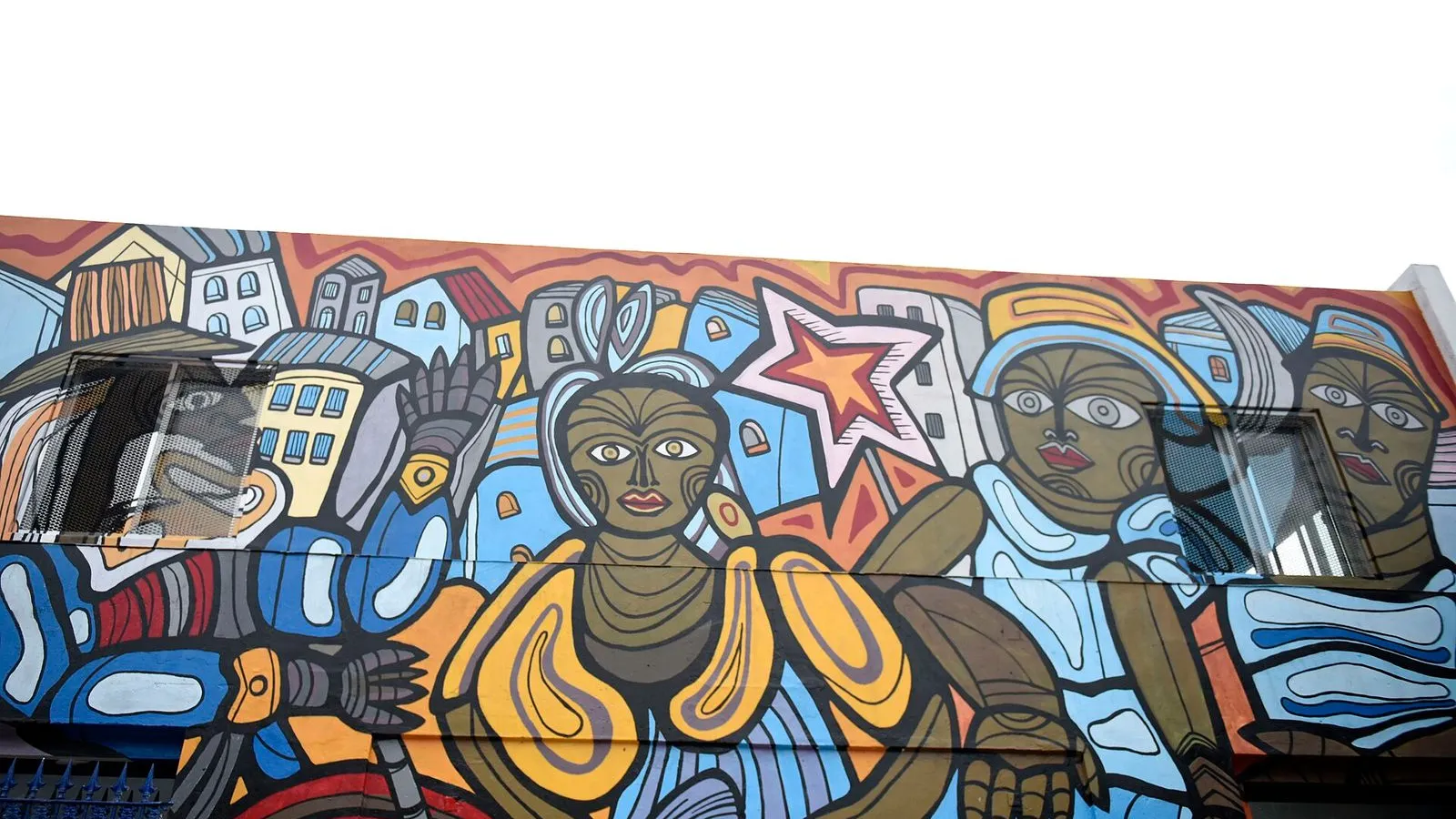
Montevideo · Self-guided audio walk

The Drum Streets of Barrio Sur

A Sunday loop through Montevideo's Afro-Uruguayan south side, from a lost conventillo to the drum calls on the waterfront.

  • 6Stops
  • 3.9 kmDistance
  • 55+ minTime
The Drum Streets of Barrio Sur

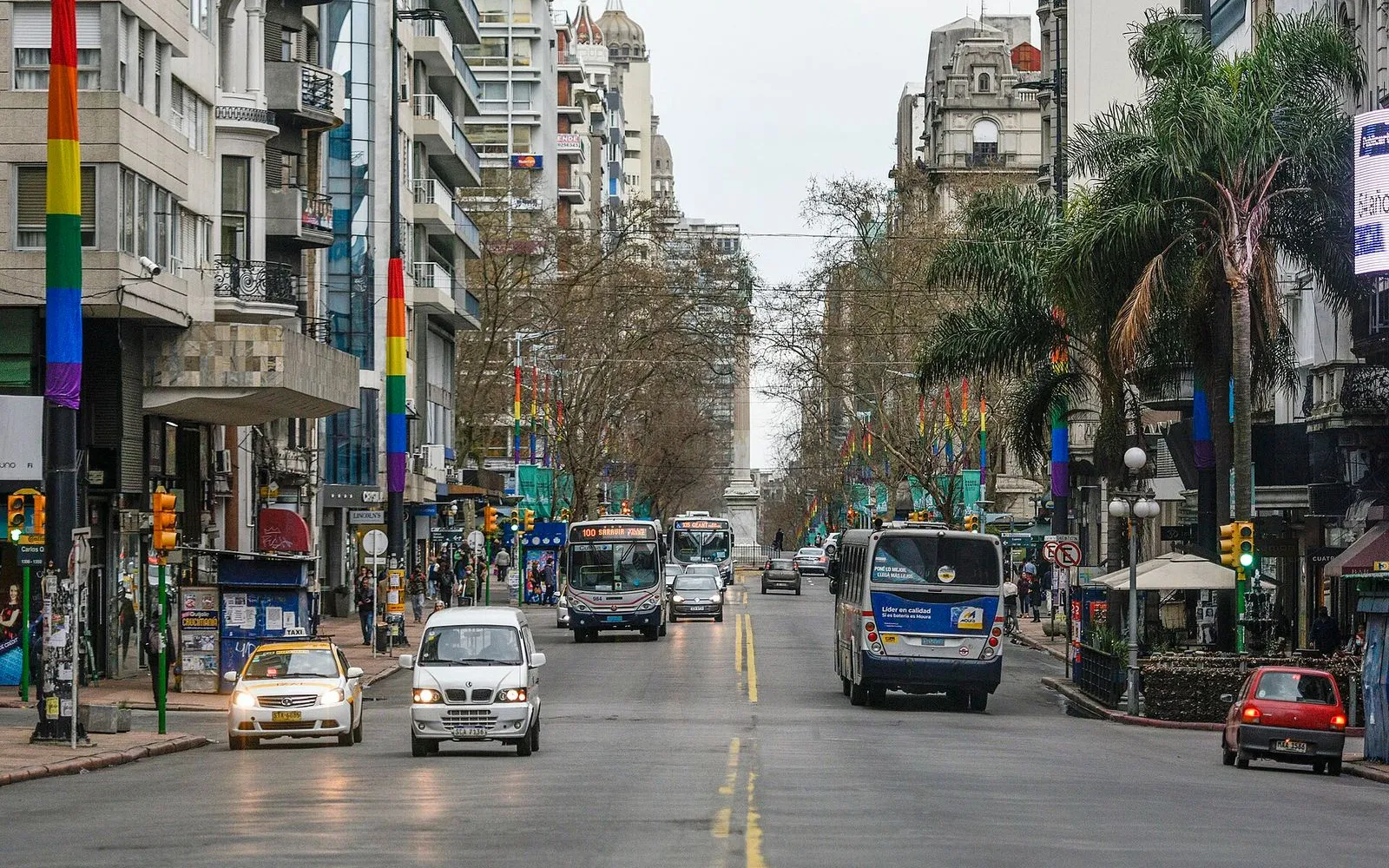
Photo by bullit on Wikimedia Commons

Barrio Sur is the neighborhood where Montevideo's candombe was raised, and on this loop the music is a weekly practice, not a memory. You start at the site of the demolished Conventillo Mediomundo, the courtyard where the drum call took root, then cross Plaza Carlos Gardel and the mural walls of Curuguaty. The walk reaches the Casa de la Cultura Afrouruguaya, where the desfile de llamadas begins, pauses at the 1835 Cementerio Central, and ends on the Rambla Gran Bretaña with the river open in front of you. Come on a Sunday if you can. That is when the comparsas fill these streets with chico, repique and piano drums, and the loop's history becomes sound.

Hear it on the street

Get the turn-by-turn audio guide in the app. The narration plays itself as you reach each stop, hands-free and offline.

Stop by stop

The route

Interactive map of the route. The full stop list below works without it.

Conventillo MediomundoMust see

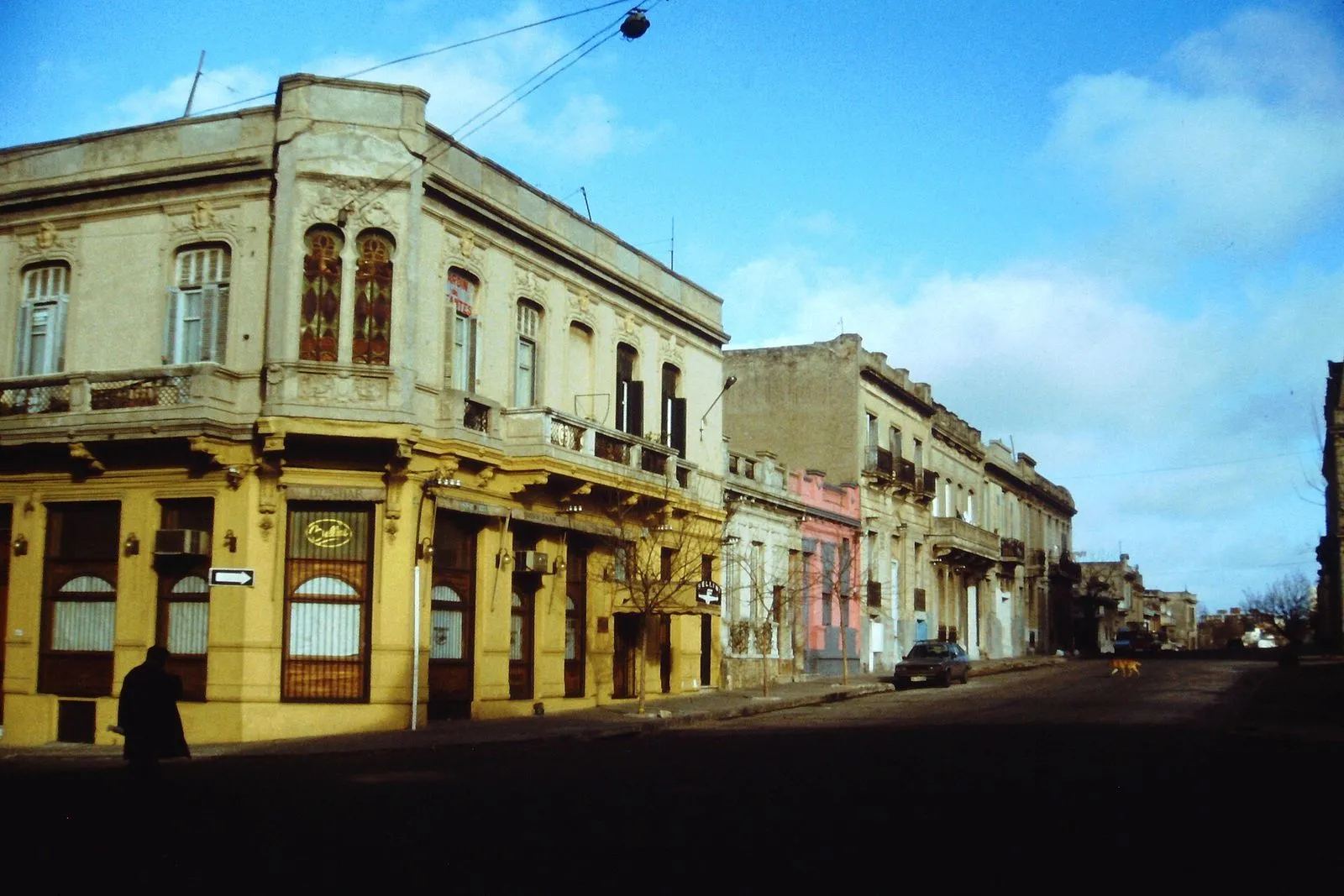
Photo by Artigas Pessio on Wikimedia Commons

Conventillo Mediomundo

0:00

The street corner where the Mediomundo conventillo stood until 1978, remembered by a plaque and a Páez Vilaró mural.

You're on Zelmar Michelini, the street that was called Cuareim when the Mediomundo conventillo filled this block. The building is gone. What remains is this corner and a Carlos Páez Vilaró mural that keeps its people in sight. The conventillo went up in 1885, two floors with 54 rented rooms around one big patio, 32 washbasins and a well.

That courtyard held the drum. Comparsas like Miscelánea Negra and later Morenada grew here, and the rhythm born in the patio became the pulse of Barrio Sur. On December 3, 1978, under the dictatorship, the city cleared the building, citing collapse risk with no engineering report behind the order. The families played one last llamada in the patio before it was demolished days later, after being promised a temporary move and better homes that never arrived.

An apartment block now stands where the conventillo stood, with a 2019 plaque naming the displaced. December 3 is now National Candombe Day, because that last llamada never stopped.

≈2 min walk to the next stop
Plaza Carlos GardelLocal pick

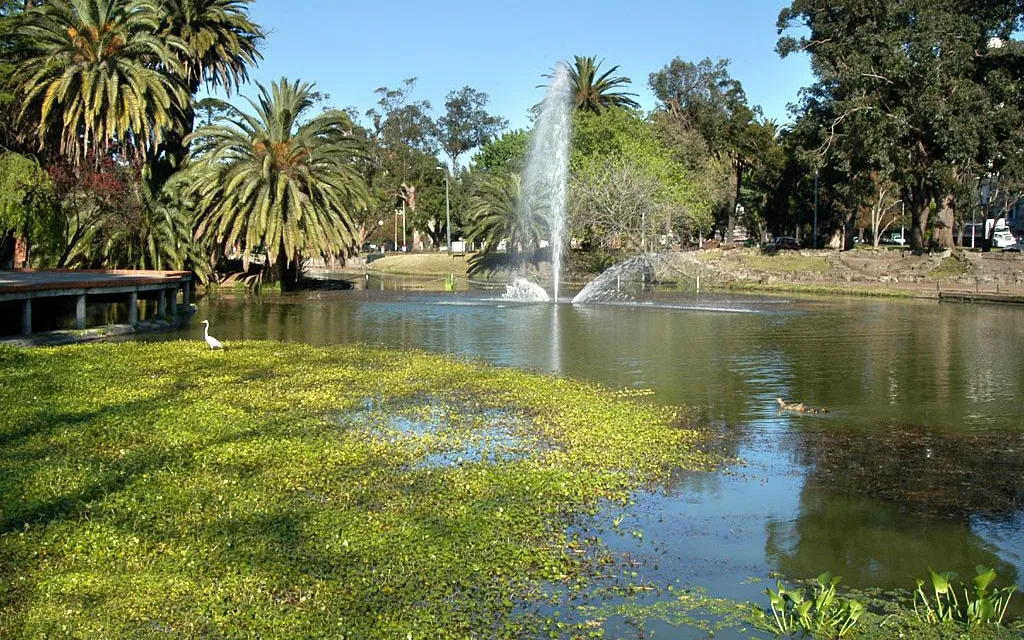
Photo by Sebastián Velásquez on Unsplash

Plaza Carlos Gardel

0:00

A small neighborhood square at the mouth of Curuguaty, named for Carlos Gardel and full of drummers on Sunday evenings.

This small square is the mouth of the candombe pedestrian street. You're at the corner of Gonzalo Ramírez and Zelmar Michelini, where Curuguaty begins, and the plaza takes its name from the tango singer Carlos Gardel. Most days it reads as a quiet pocket of green, a place to catch your breath. On a Sunday it turns into an assembly point, because this is where the neighborhood's comparsas gather before walking their drums through the streets.

The plaza sits at the hinge of the old Barrio Sur grid. A few blocks north is the street once called Cuareim, where Mediomundo stood, and at your back the pedestrian walk leads toward the murals and the Casa de la Cultura. Look toward Gonzalo Ramírez, the avenue that runs west to the cemetery gates, and you can feel how compact this old working-class quarter is. The real moment to be here is after dark on Sunday, when the chico, repique and piano drums line up and the llamada pulls neighbors out of their doorways.

If your schedule allows, return around seven thirty in the evening and follow the sound.

≈1 min walk to the next stop
CuruguatyLocal pick

Photo by Señoritaleona on Wikimedia Commons

Curuguaty

0:00

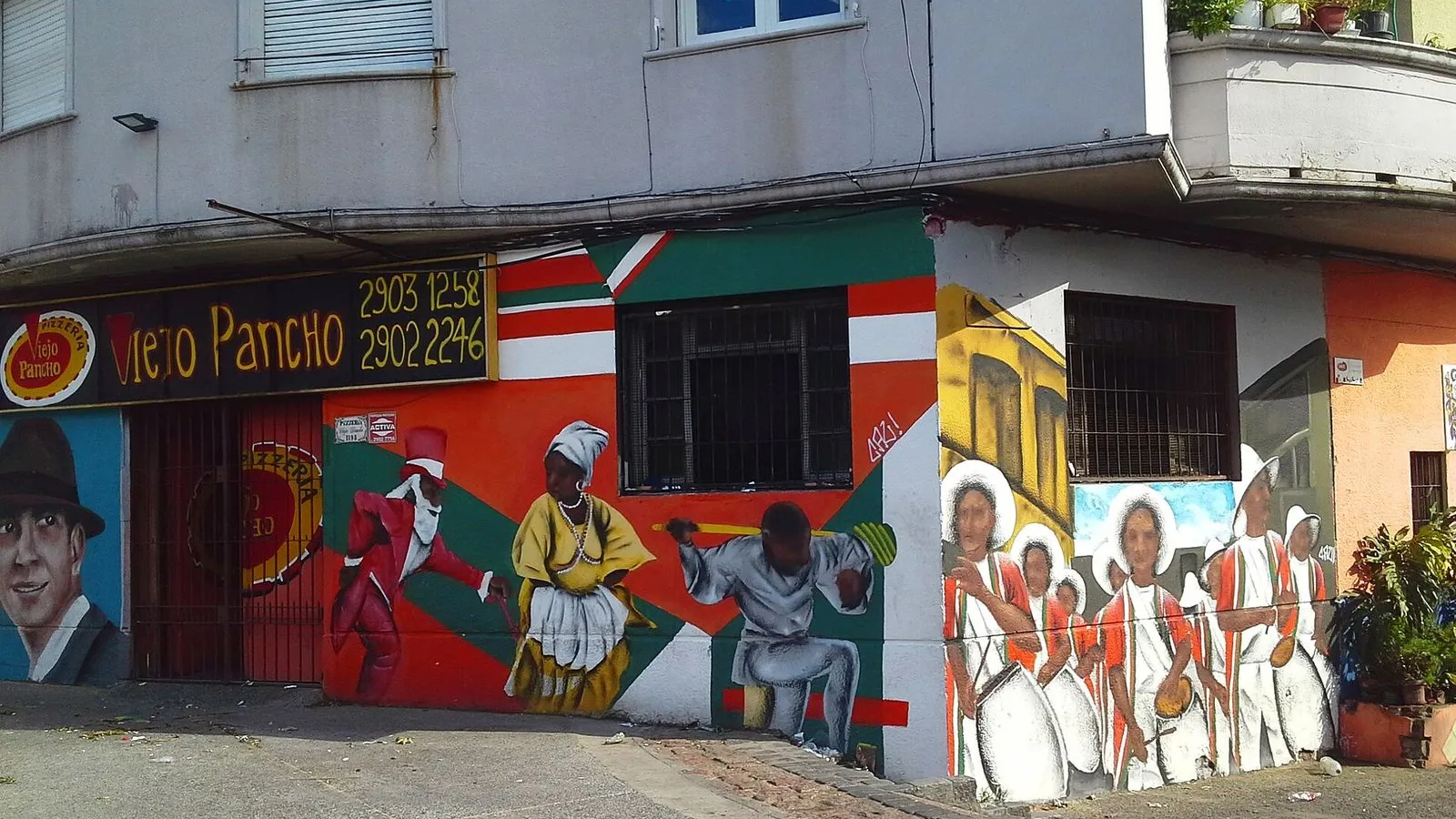
A short pedestrian stretch whose walls are painted with the comparsas and the characters of candombe.

Curuguaty is the short pedestrian stretch that runs from the plaza behind you, and its walls do the talking here. Walk slowly, because this is the one stop on the loop that is entirely for looking. The murals show the comparsas and the fixed cast of candombe. The escobero sweeps a path for the drums with his broom, the mama vieja stands in her long skirt and headwrap, the gramillero carries his top hat and cane.

Some panels remember drummers and neighborhood figures who have died, painted bright against the old stone paving underfoot. The street keeps its history in its name, too. It was called Paraguay until 1915, and in 2007 the city added the title Peatonal del Candombe, the Candombe Pedestrian Walk. That name is not decoration.

The comparsa Cuareim 1080, named for the lost conventillo's address, and Tangó, founded by the dancer Martha Gularte, both keep their homes on this street. Look from the walls to the doorways and you are reading a living institution, not a memorial.

≈16 min walk to the next stop
Free preview ends here · stops 4 to 6 continue in the app

Casa de la Cultura Afrouruguaya

A mid-nineteenth-century house on Isla de Flores, now the working home of Afro-Uruguayan culture and the start of the llamadas.

in app

Cementerio Central

The city's 1835 neoclassical cemetery, with the Panteón Nacional beneath its rotunda.

in app

Plaza República Argentina

The small waterfront plaza where Rambla Gran Bretaña ends, facing the old Usina del Gas and the open Río de la Plata.

in app
Good to know

Before you go

What day should I walk Barrio Sur?

Sunday. That is when the comparsas practice in the streets of Barrio Sur with the chico, repique and piano drums, and Plaza Carlos Gardel fills with drummers. Midweek the same streets are quiet, so you will see the murals but not the music.

Where do the Llamadas start?

The desfile de llamadas sets off from the Casa de la Cultura Afrouruguaya on Isla de Flores, the mid nineteenth century house that is the working home of Afro-Uruguayan culture. During carnival in February the parade runs from there along the streets of Barrio Sur.

Provenance · last verified August 20, 2026

Built from the Wayside route itself: the stops, their order, and the walk between them.

Photo by bullit on Wikimedia Commons · CC BY 3.0

Photo by Artigas Pessio on Wikimedia Commons · CC BY-SA 4.0

Photo by Sebastián Velásquez on Unsplash

Photo by Señoritaleona on Wikimedia Commons · CC BY-SA 4.0

Photo by Intendencia de Montevideo on Wikimedia Commons · CC BY-SA 4.0

Photo by Vince Alongi on Openverse · CC BY 2.0

Photo by Helge Høifødt on Wikimedia Commons · CC BY-SA 3.0

Coming soon

Wayside isn't in the app stores yet, but it's in the works. Check back soon.