Montevideo · Self-guided audio walk

The Avenue That Built Upward

Read Avenida 18 de Julio at street level, then from the 22nd floor.

  • 7Stops
  • 1.6 kmDistance
  • 25+ minTime
The Avenue That Built Upward

Photo by Intendencia de Montevideo on Wikimedia Commons

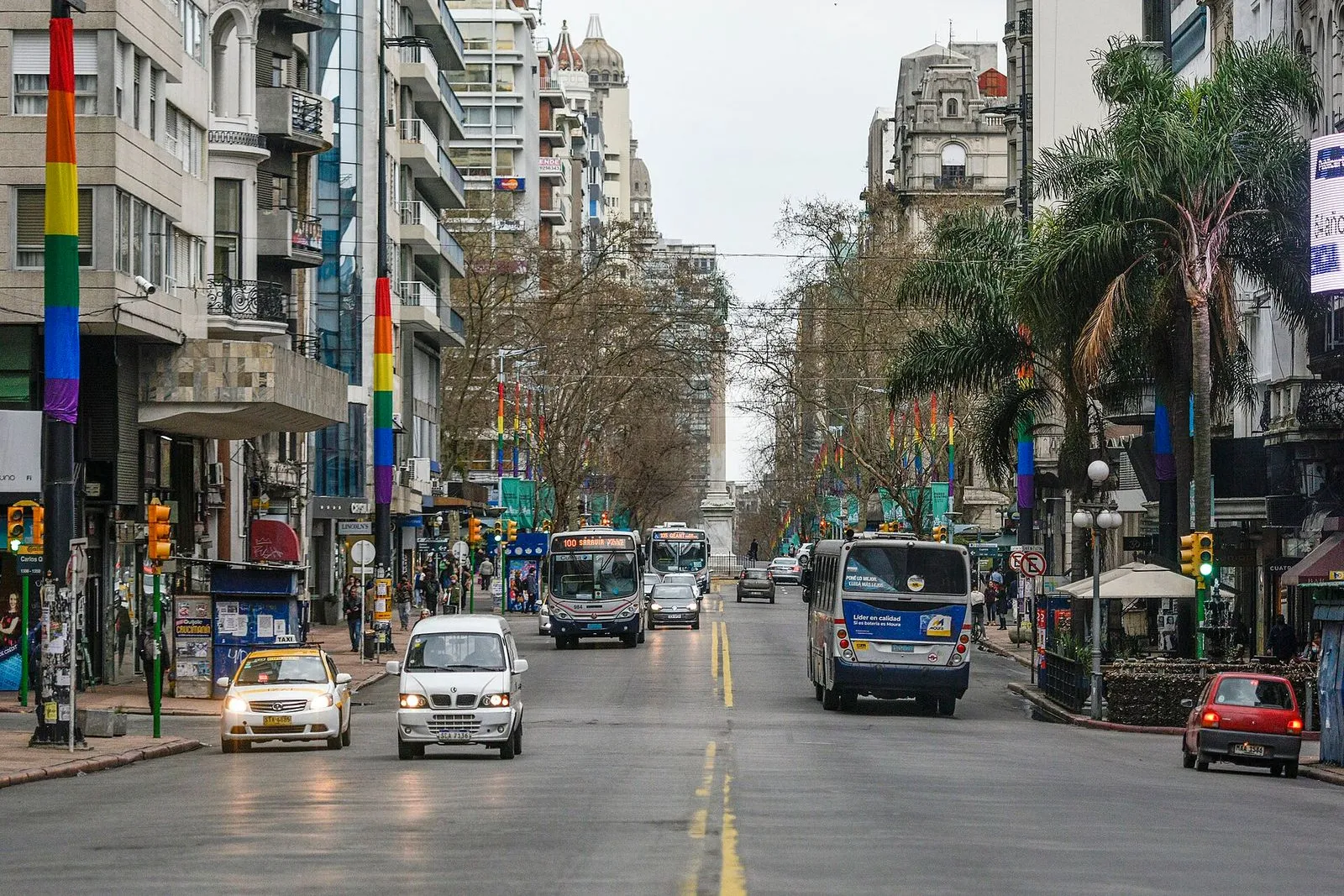
Avenida 18 de Julio is where Montevideo reached upward in the 1920s and 1930s, and this walk reads that working avenue close up. You start at the white, expressionist Edificio Lapido and follow the street past the free Museo del Gaucho y la Moneda, two leafy plazas, and the craft stalls of the Mercado de los Artesanos, before reaching the stepped Art Deco tower of Palacio Díaz.

The anchor is the Palacio Municipal, the city's headquarters. Inside, the Museo de Historia del Arte covers almost three thousand square metres, from pre-Columbian and African pieces to ancient and Oriental collections. Then the free panoramic lookout on the twenty-second floor opens the whole centre and coast below, the same avenue you have just read from the pavement.

Hear it on the street

Get the turn-by-turn audio guide in the app. The narration plays itself as you reach each stop, hands-free and offline.

Stop by stop

The route

Interactive map of the route. The full stop list below works without it.

Edificio LapidoMust see

Photo by Felipe Restrepo Acosta on Wikimedia Commons

Edificio Lapido

0:00

The white expressionist tower where the evening paper La Tribuna Popular once set its type.

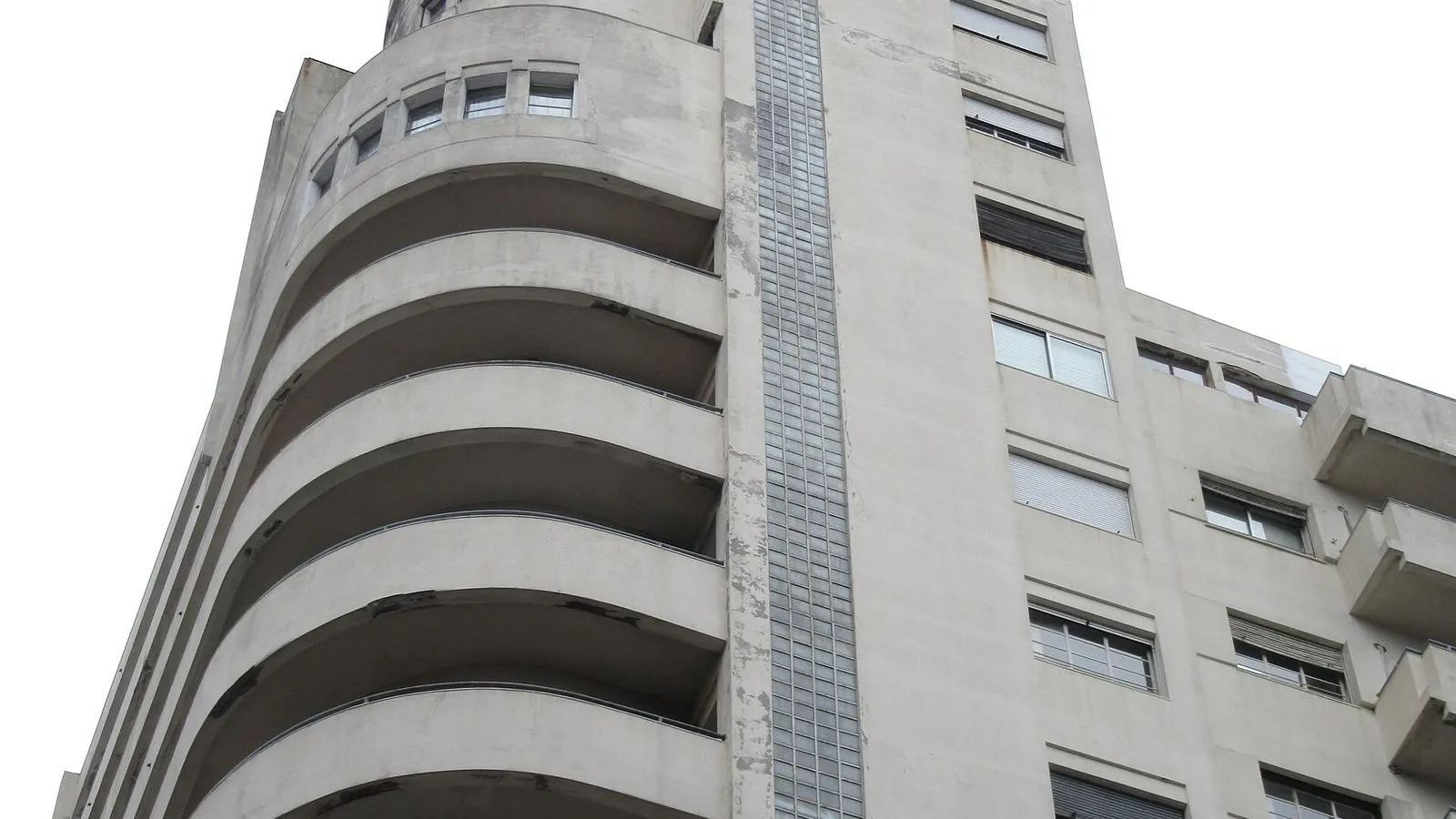
You're on Avenida 18 de Julio, at the foot of Edificio Lapido. It went up between 1930 and 1933, designed by architects Juan María Aubriot and Ricardo Valabrega for the evening paper La Tribuna Popular. Presses, newsroom, shops, and apartments all shared this one white concrete block. Look at the stair tower.

A single ribbon of glass climbs its face and stops at a small lookout at the top, lit from below, which is what gives the building its expressionist pull. Then count the balconies: row on row of deep white slabs, stacked like lines of type ready for the press. Aubriot borrowed from Dutch modernism for those clean, sober faces, and the reinforced concrete frame let the tower rise higher than its neighbours. It has been a national historic monument since 1989.

When you're ready, keep Plaza Independencia behind you and walk about a hundred metres to the corner of Julio Herrera y Obes.
≈2 min walk to the next stop
Museo del Gaucho y la MonedaMust see

Photo by Andrés Franchi Ugart… on Wikimedia Commons

Museo del Gaucho y la Moneda

0:00

The free museum of gaucho culture and Uruguayan money, set in the eclectic Palacio Heber Jackson.

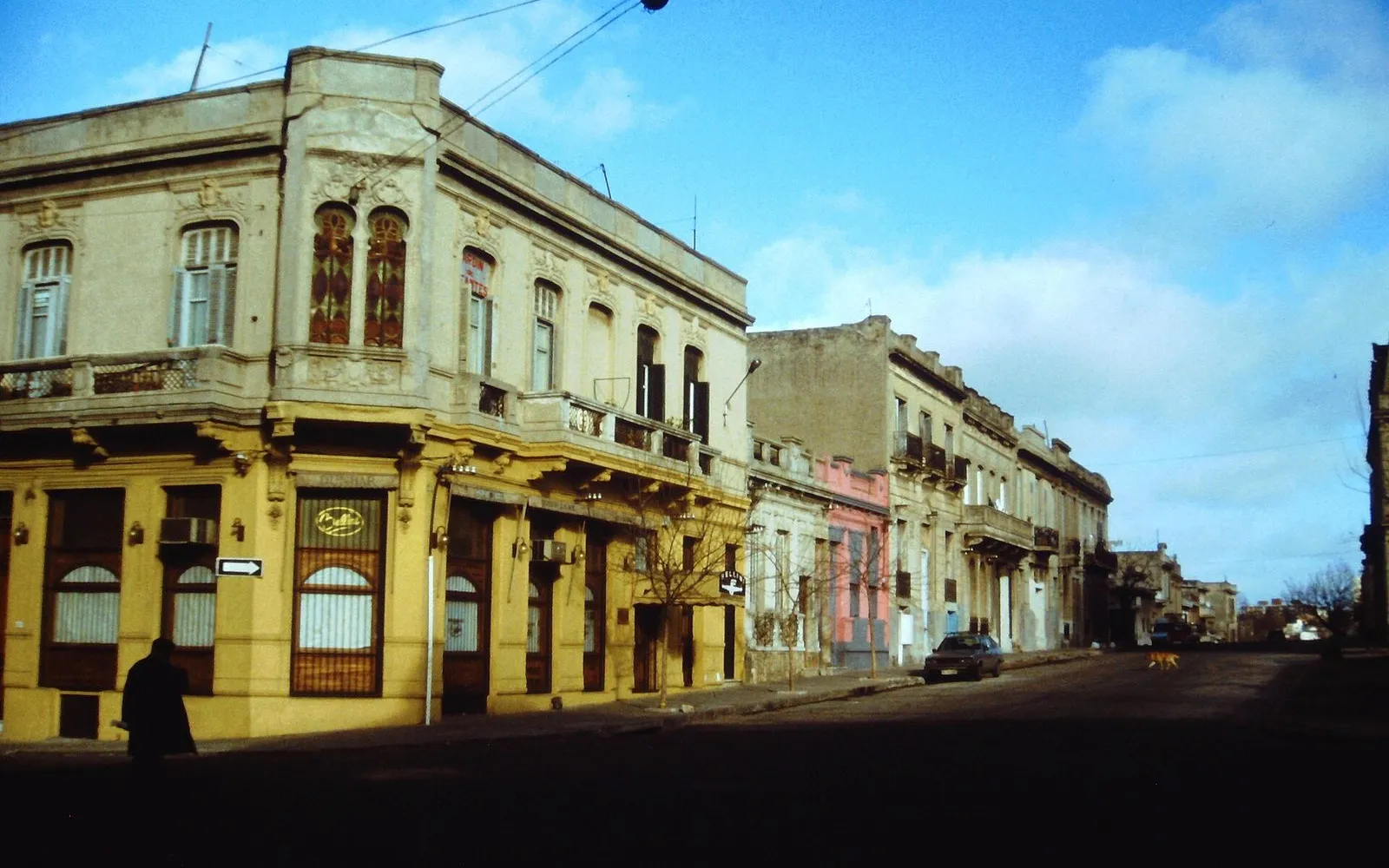
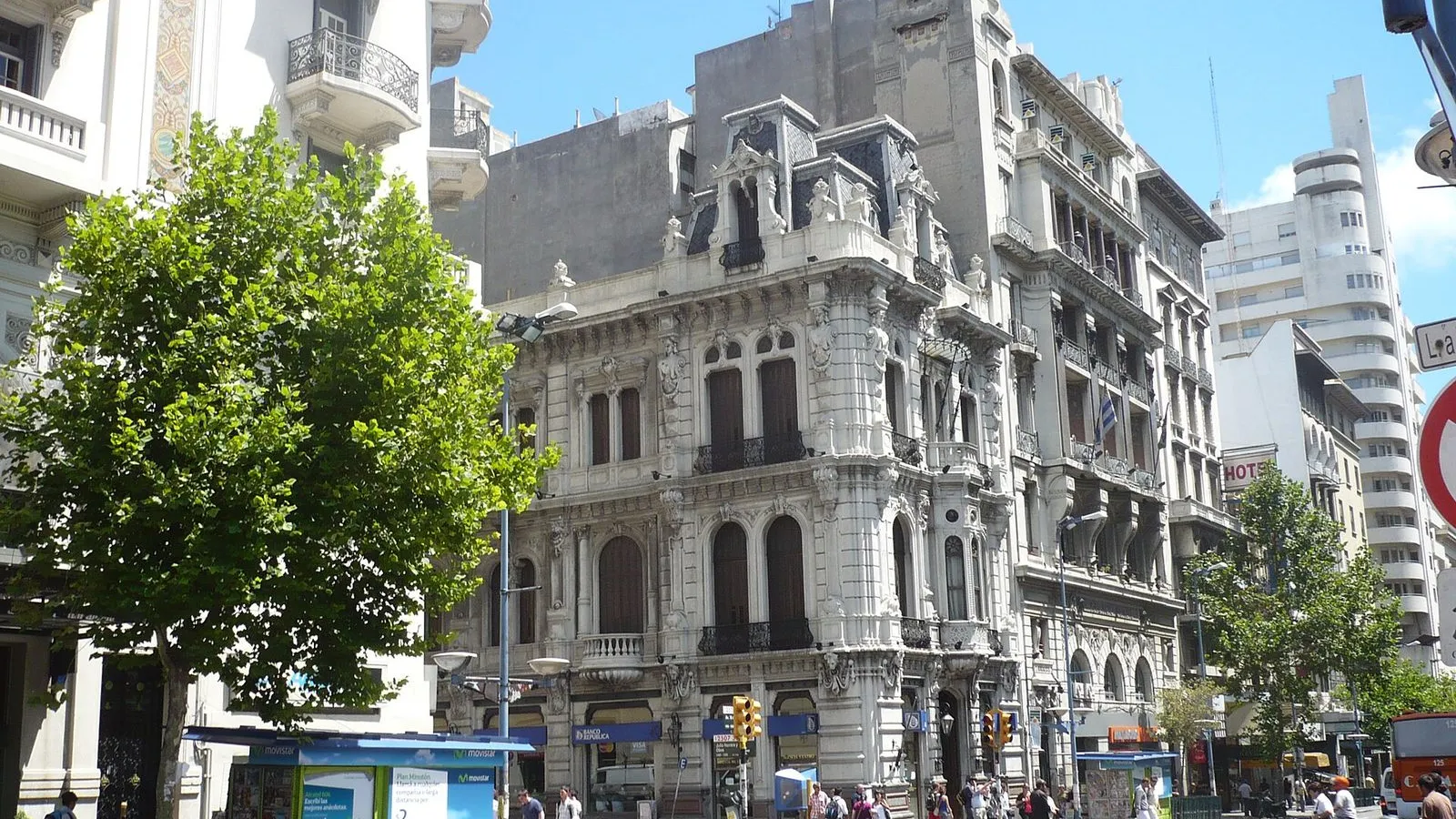
This is Palacio Heber Jackson, an 1890s mansion that became home to the Museo del Gaucho y la Moneda, and entry is free. The house began as a family residence in the eclectic taste of the late nineteenth century, then passed to Banco República. Inside, two collections share the rooms. One follows the gaucho, the horseman of the open countryside, through criollo silverwork, knives, paintings, and sculptures by José Belloni and José Luis Zorrilla de San Martín.

The other follows the country's money, from colonial coins to the banknotes in your pocket. Marble and high ceilings keep the feel of a private home, so the objects read as things a family actually kept, not exhibits in a hall. Before you go in, notice the corner: the mansion steps back from the avenue and gives the modern Lapido tower you just left a little room to breathe. The museum is small enough to see comfortably in a quarter hour.

≈2 min walk to the next stop
Plaza FabiniLocal pick

Photo by Ricohin on Wikimedia Commons

Plaza Fabini

0:00

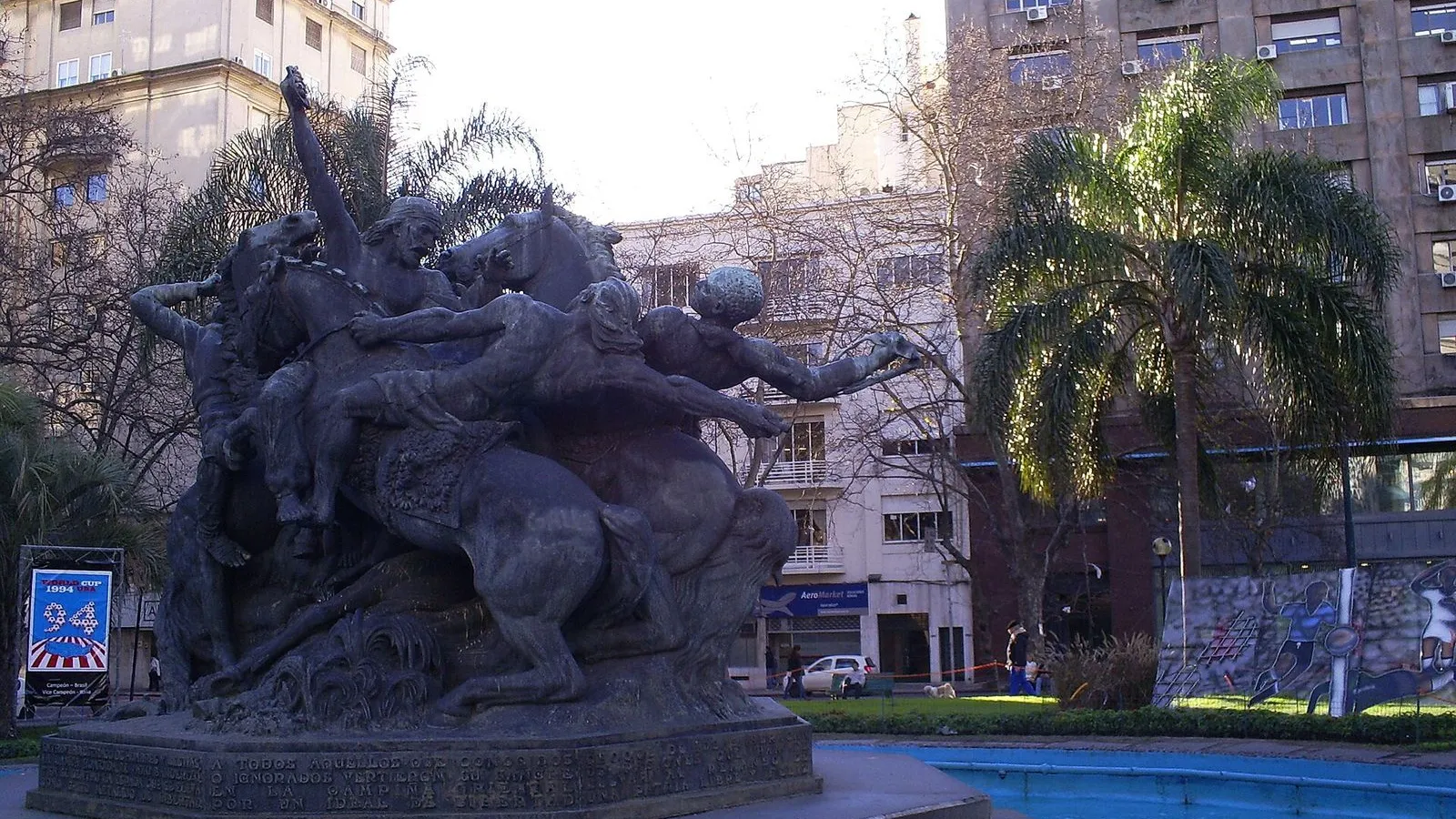
The leafy square locals call Plaza del Entrevero, with José Belloni's bronze of tangled riders at its heart.

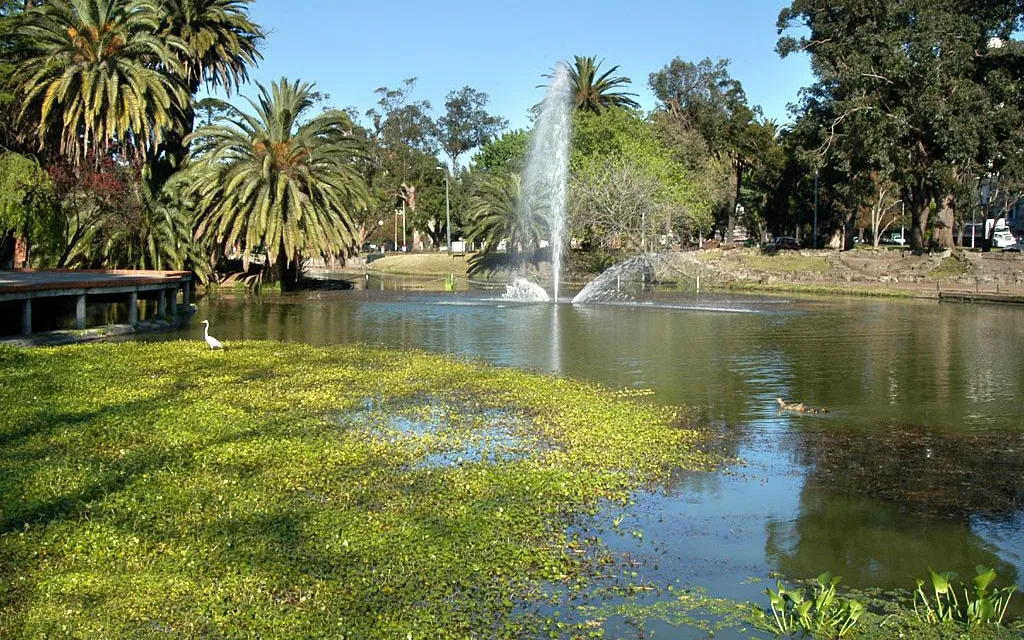
Plaza Fabini is the avenue's green pause, and nearly everyone calls it Plaza del Entrevero. The word entrevero means a scuffle, and the bronze at the centre shows just that: mounted men locked together, horses rearing, bodies tangled, all of it cast by José Belloni. The piece arrived here in the late 1960s and turns a traffic island into a scene of motion. Around you, the banks and office towers of the 1930s shoulder the square, but the plaza keeps its own rhythm.

Office workers cut through it at lunch, kids feed pigeons near the fountain, and old men play chess on the benches in the afternoon. The square carries the name of Juan Pedro Fabini. Stand near the sculpture and look back toward the Lapido tower; you can see the whole first leg of the walk in one line.

≈4 min walk to the next stop
Free preview ends here · stops 4 to 7 continue in the app

Plaza de Cagancha

A formal oval square crowned by the Column of Peace, and the green heart of the Centro.

in app

Mercado de los Artesanos

The Monday-to-Saturday craft hall where Uruguayan makers sell leather, mates, textiles, and silver.

in app

Palacio Díaz

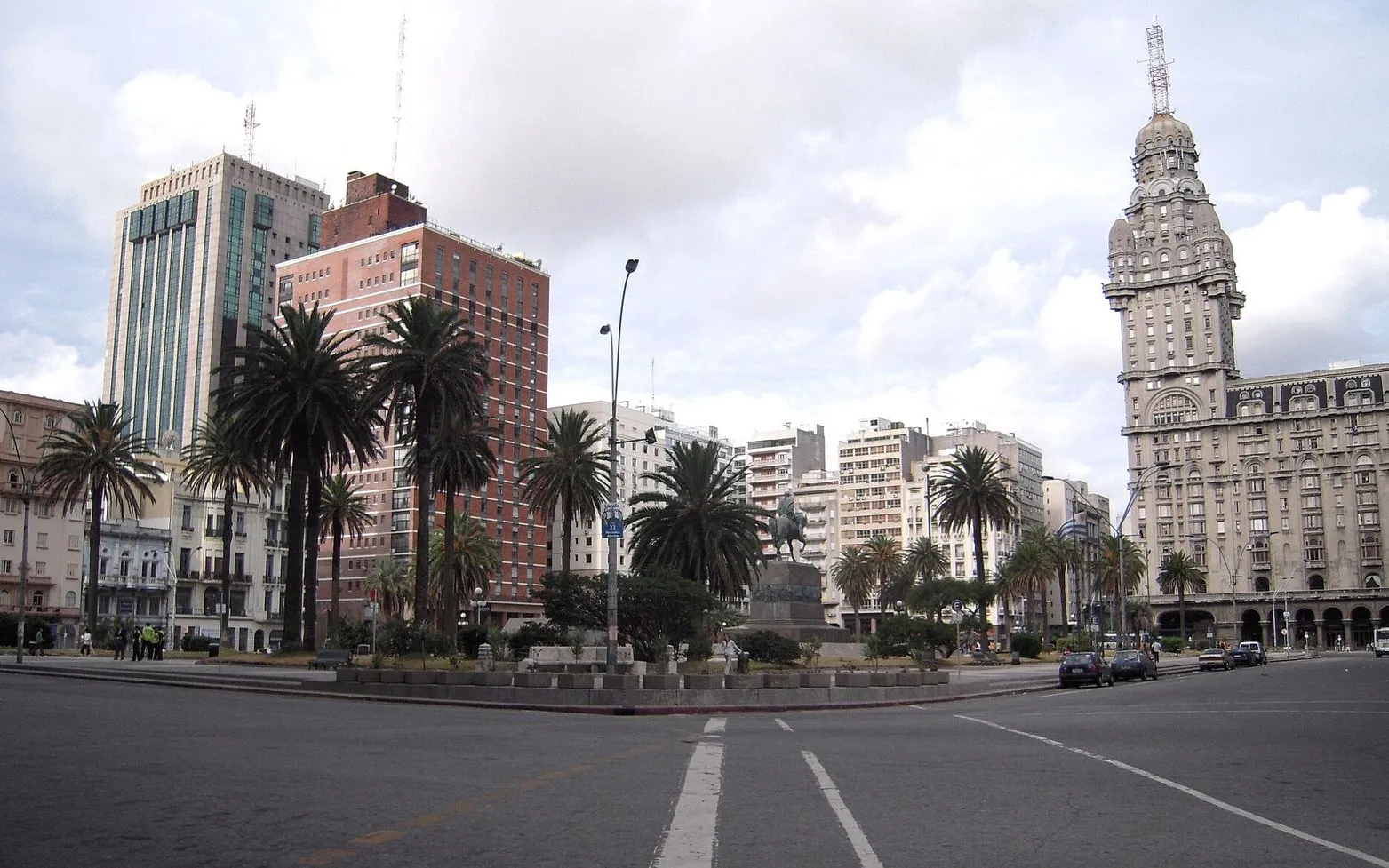
The 1929 Art Deco tower whose stepped volumes end in a single soaring shaft.

in app

Palacio Municipal de Montevideo

The city's headquarters, home to the Museo de Historia del Arte and a free 22nd-floor lookout.

in app
Good to know

Before you go

Is the 22nd floor lookout at the Palacio Municipal free, and when is it open?

It is free and open every day from 11:00 to 19:00. Enter at Soriano 1372 at the corner of Ejido and take the panoramic elevator up. The lookout closes during orange or red weather alerts.

SourceDescubrí Montevideo
Where is the Museo del Gaucho y la Moneda now?

The museum moved into the Banco República's central hall at Cerrito 351. It is free and open Monday to Saturday from 10:00 to 18:00, and it closes on January 1, May 1, July 18, December 25 and December 31.

SourceFundación Banco República

Provenance · last verified August 20, 2026

Built from the Wayside route itself: the stops, their order, and the walk between them.

Photo by Intendencia de Montevideo on Wikimedia Commons · CC BY-SA 4.0

Photo by Felipe Restrepo Acosta on Wikimedia Commons · CC BY-SA 4.0

Photo by Andrés Franchi Ugart… on Wikimedia Commons · CC BY-SA 3.0

Photo by Ricohin on Wikimedia Commons · CC BY-SA 4.0

Photo by bullit on Wikimedia Commons · CC BY 3.0

Photo by Vince Alongi on Openverse · CC BY 2.0

Photo by Helge Høifødt on Wikimedia Commons · CC BY-SA 3.0

Coming soon

Wayside isn't in the app stores yet, but it's in the works. Check back soon.