Bristol · Self-guided audio walk

Arnos Vale Cemetery

45 wooded acres, free to walk in, a mile from Temple Meads: a walk from the Bath Road gates past Greek-revival chapels, the Rajah's chhatri, and up to a view over the city.

  • 6Stops
  • 0.9 kmDistance
  • 20+ minTime
Arnos Vale Cemetery

Photo by Jaggery on Wikimedia Commons

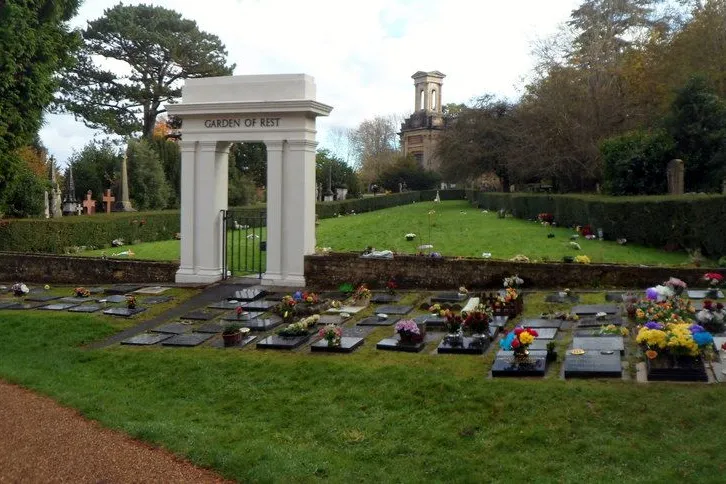
Arnos Vale Cemetery opened in 1839 as the South West's first garden cemetery: 45 acres of hillside, bought by a company when Bristol's churchyards were full, and laid out by Charles Underwood in the style of a Greek necropolis. Two chapels, one Anglican and one for everyone else, sit above two separate burial grounds.

This walk starts at the Bath Road gates, where the East Lodge shop keeps the free trail leaflets, then passes the chhatri of Raja Rammohun Roy and follows the Ceremonial Way up to the Anglican chapel and its crypt exhibition. From there it climbs into the woods for the view over the city, then comes back down to finish at the Nonconformist chapel, now the Spielman Centre, for coffee in the cafe.

Entry is free, the chapels, shop and cafe open every day, and the walking stays on marked paths.

Hear it on the street

Get the turn-by-turn audio guide in the app. The narration plays itself as you reach each stop, hands-free and offline.

Stop by stop

The route

Interactive map of the route. The full stop list below works without it.

East LodgeMust see

Photo by Jaggery on Wikimedia Commons

East Lodge

0:00

Bath Road gates, Doric lodges, and the shop that keeps the trail leaflets.

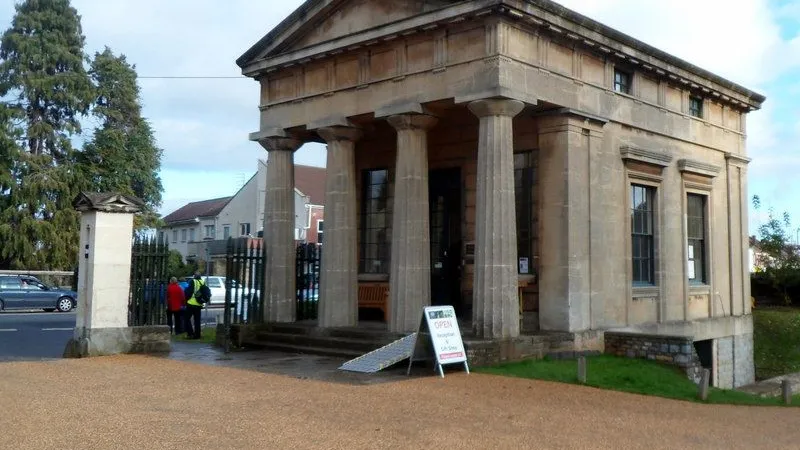
You're standing at the Bath Road gates of Arnos Vale, and the two small stone lodges either side are the first clue about what this place is. They're Doric, plain as a temple, and they were designed by Charles Underwood, the local architect who laid the whole cemetery out in the style of a Greek necropolis. The company that built it was founded in 1837, when Bristol's churchyards were running out of room, and the first burial came in 1839, a woman called Mary Breillat. Forty-five acres of hillside, bought by shareholders, and the gates have stayed free to walk through.

The East Lodge is the visitor reception, and the gift shop inside keeps the free trail leaflets, so pick one up before you start. The cemetery was built with two chapels and two burial grounds, one for Anglicans, one for everyone else. Baptists, Unitarians, Quakers, all through a different door. A burial place laid out to keep its dead in two separate camps.
≈1 min walk to the next stop
Chhatri of Raja Rammohun RoyMust see

Photo by Rodw on Wikimedia Commons

Chhatri of Raja Rammohun Roy

0:00

Bath stone chhatri over the tomb of Raja Rammohun Roy.

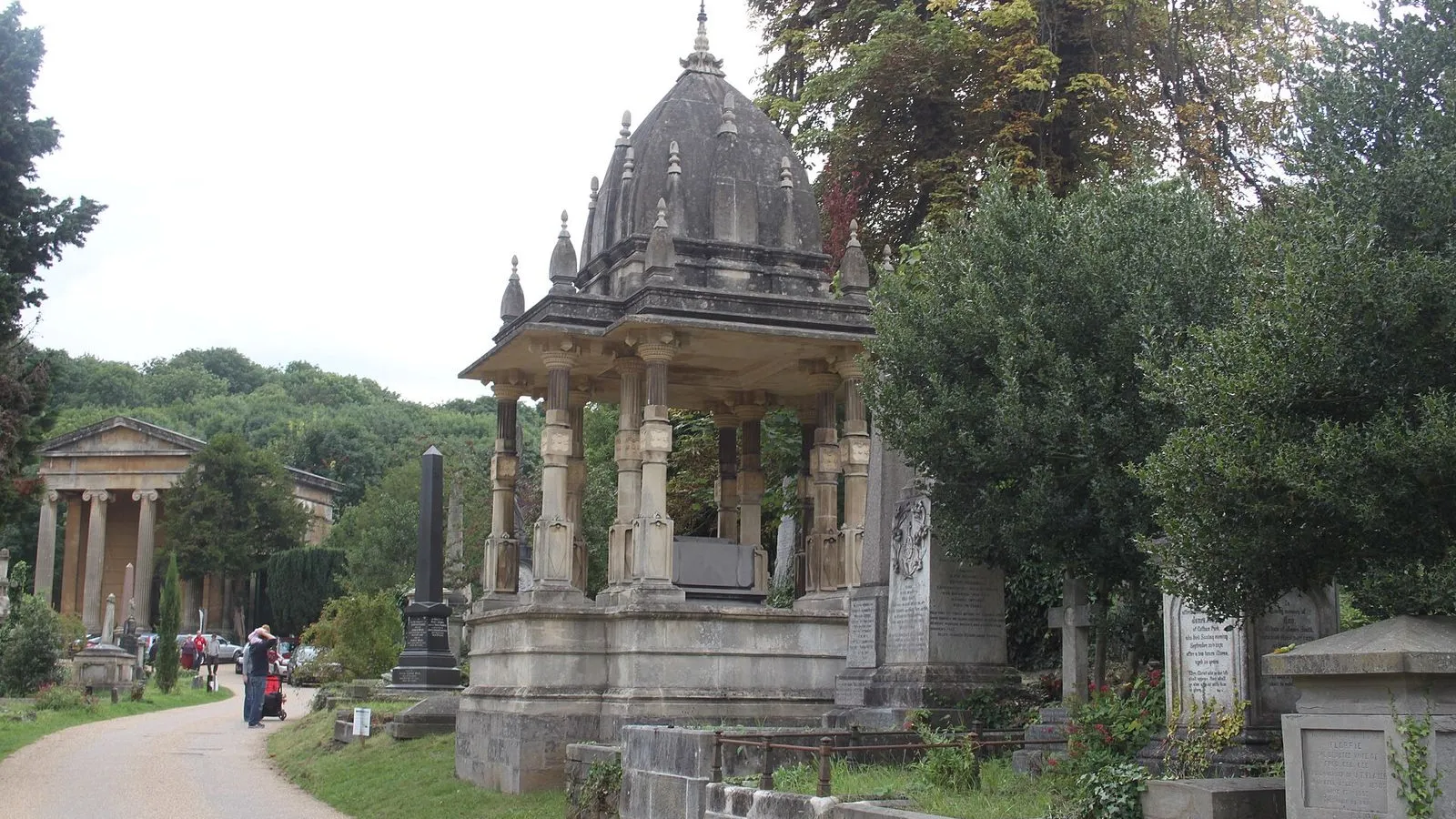
This is the chhatri, the stone canopy over the tomb of Raja Rammohun Roy, and it's the reason pilgrims come here from West Bengal. Roy was a scholar and reformer who mastered Greek, Hebrew and Latin, wrote books on grammar, geography and geometry, and published newspapers. He arrived in Bristol in 1833 to visit Unitarian friends and died that September of meningitis, at a house in Stapleton. He had asked to be buried in freehold ground away from Christian graves, so that he would not lose his caste or cost his children their inheritance, so they buried him in the garden.

In 1843 his coffin was moved up here, into the non-consecrated half of the cemetery, and lowered seven feet into a brick vault. The chhatri was raised over it soon afterwards, designed by the artist William Prinsep in Bath stone. Look at the back of the monument for the plain slab that marked the grave first, replaced on the front by the present epitaph about seventy years later. Every September the cemetery holds a commemoration for the man it calls the founder of modern India.

≈1 min walk to the next stop
Ceremonial WayLocal pick

Photo by Jarred Kyle on Unsplash

Ceremonial Way

0:00

The processional drive the cemetery was designed around.

This is the Ceremonial Way, the drive the cemetery was designed around. It was made for processions. The hearse came in through the gates you just walked through, and the mourners followed it up the slope to whichever chapel the family had a right to use. Look how wide it is, wide enough for carriages on a wet afternoon.

When the cemetery opened, this hillside was open fields, not woodland. On a clear day the Victorians could see the smoke and the industries along the River Avon, below them. Since then the trees have done what trees do. The cemetery planted the fashionable evergreens of the day along here, Himalayan cedar, monkey puzzle, Austrian pine, Irish yew, and much of the lower ground has grown over so thoroughly that it reads as Gothic now rather than the tidy park it once was.

Twenty-five of the monuments standing among these trees are listed, and somewhere on this hillside are the graves of George Muller, who ran orphan houses in the city, and Mary Carpenter, who set up schools for Bristol's poorest children.

≈2 min walk to the next stop
Free preview ends here · stops 4 to 6 continue in the app

Anglican Chapel

Corinthian chapel with a crypt exhibition on the Great War.

in app

Viewpoint over the city

High path where the trees open onto the city.

in app

Nonconformist Mortuary Chapel

Ionic chapel for the nonconformists, now the Spielman Centre and its cafe.

in app
Good to know

Before you go

Does Arnos Vale Cemetery charge admission?

No. Entry is free, the chapels, shop and café open every day, and the East Lodge shop at the Bath Road gates keeps the free trail leaflets.

What should I look for at Arnos Vale?

Two Greek-revival chapels, one Anglican and one for everyone else, the chhatri of Raja Rammohun Roy, the Ceremonial Way the cemetery was designed around, and a high path where the trees open onto the city. Coffee afterwards comes from the café in the former Nonconformist chapel.

Is the cemetery walk difficult?

It stays on marked paths, but Arnos Vale is 45 wooded acres on a hillside, so there is a climb up to the viewpoint and a descent back to the Spielman Centre. The Bath Road gates are the start, and they are the stop closest to Temple Meads.

Keep exploring

More walks in Bristol

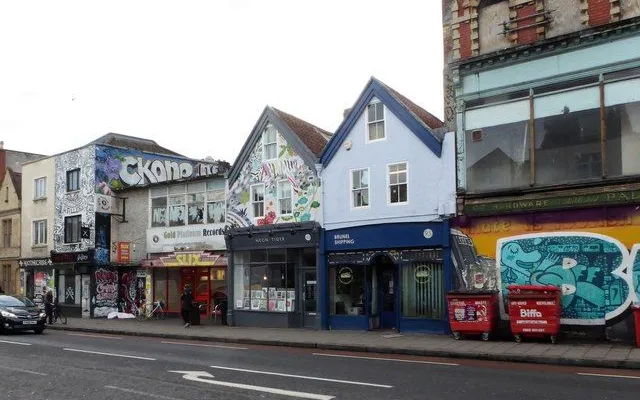
Stokes Croft and MontpelierThe hidden side

Stokes Croft and Montpelier

Banksy's teddy bear, a bombed-out gap nobody can agree on, a china workshop, a co-op café and a station painted with schoolchildren: one short street that has spent decades deciding who owns it.

7 stops1.2 km25+ min
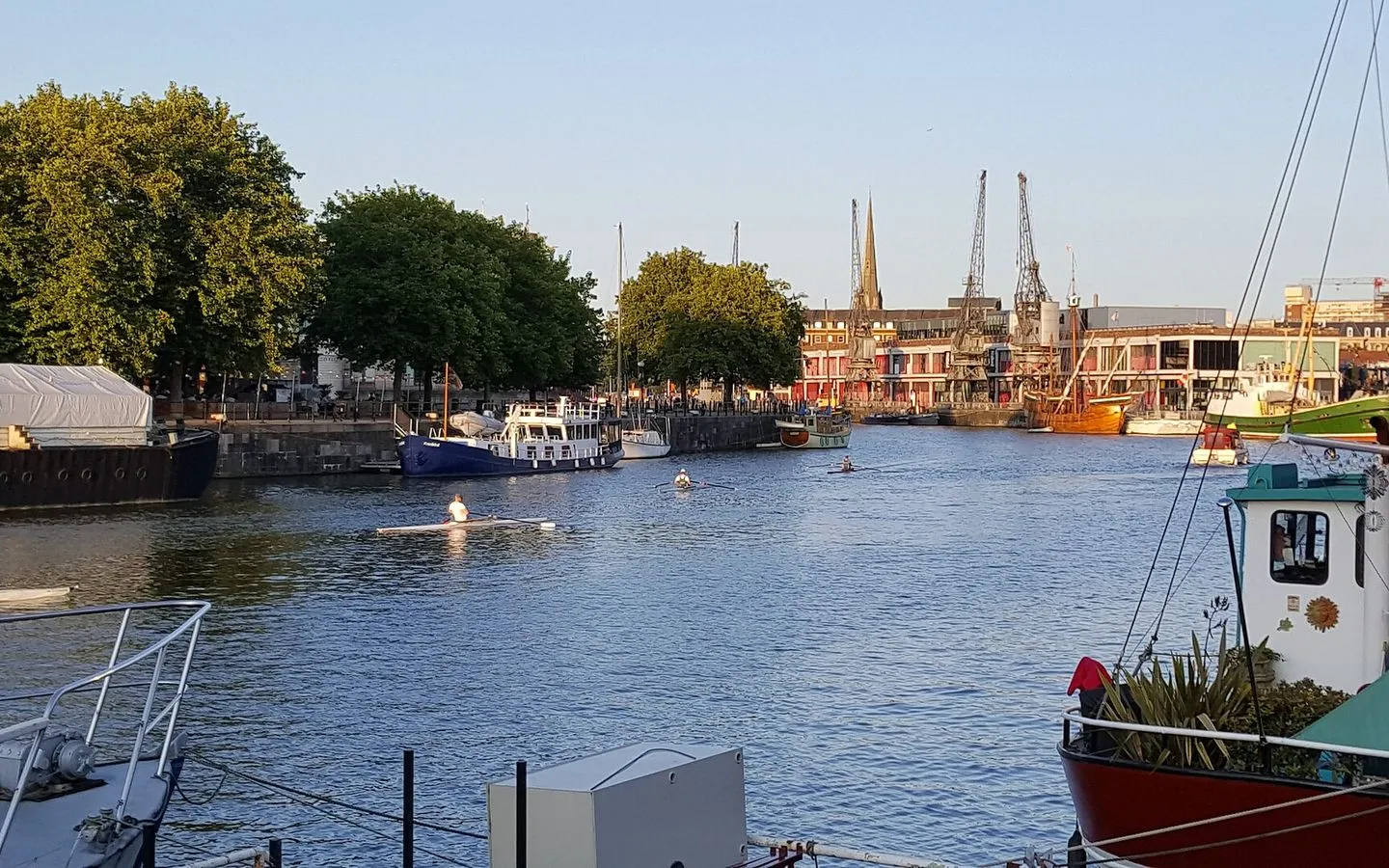
Harbourside and the Working HarbourThe local mix

Harbourside and the Working Harbour

Bristol's Floating Harbour, from the Watershed to the sluices: a cinema in Victorian transit sheds, a gallery in a warehouse, working cranes, container lunch counters, Brunel's ship in her dock, and the sluices that hold the water.

8 stops2.7 km45+ min
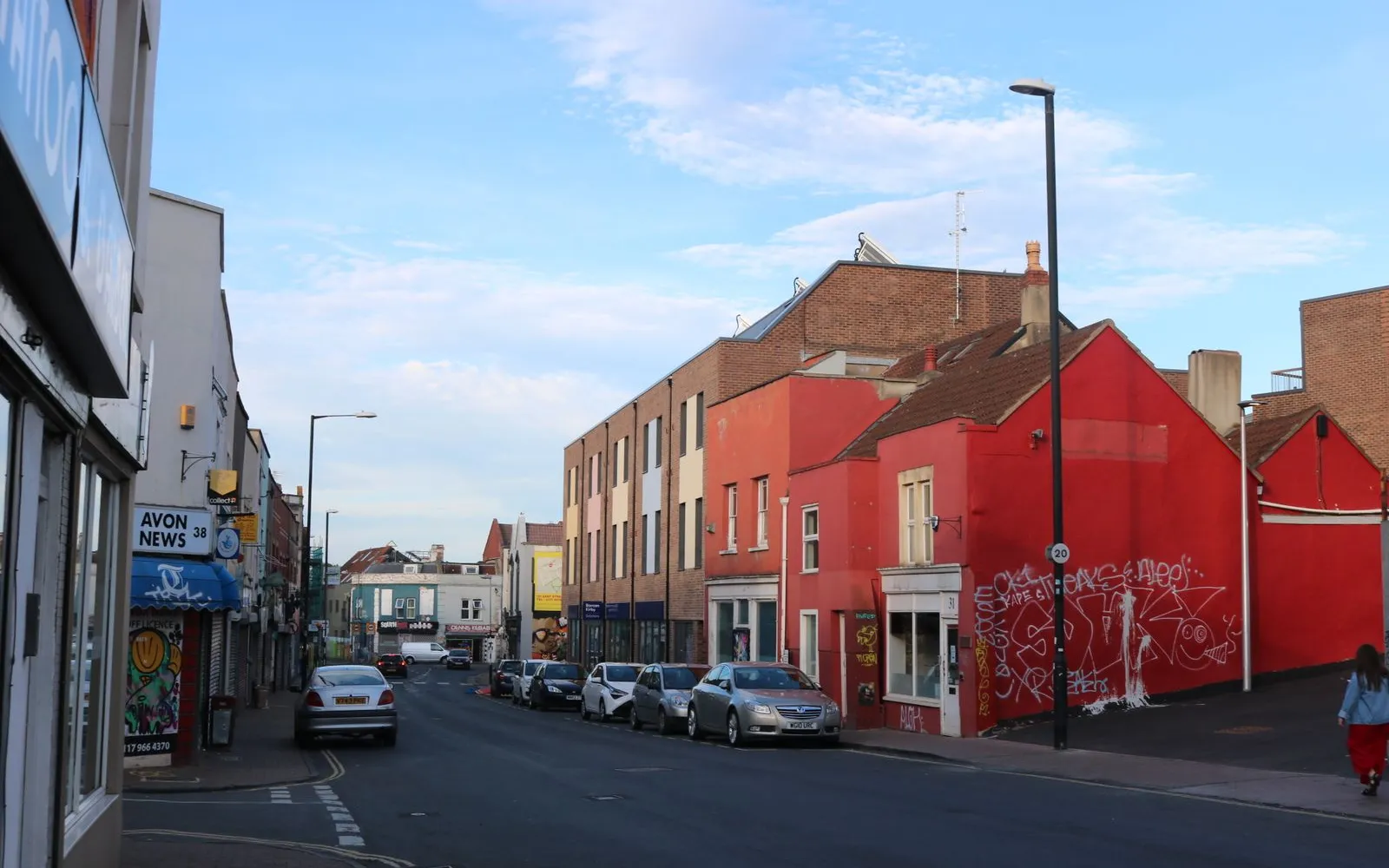
North StreetThe hidden side

North Street

Ten minutes over the water from Wapping Wharf, North Street runs west through Southville: six murals above a row of shops, a bookshop worth crossing town for, and a tobacco works that became a theatre.

6 stops1.2 km20+ min
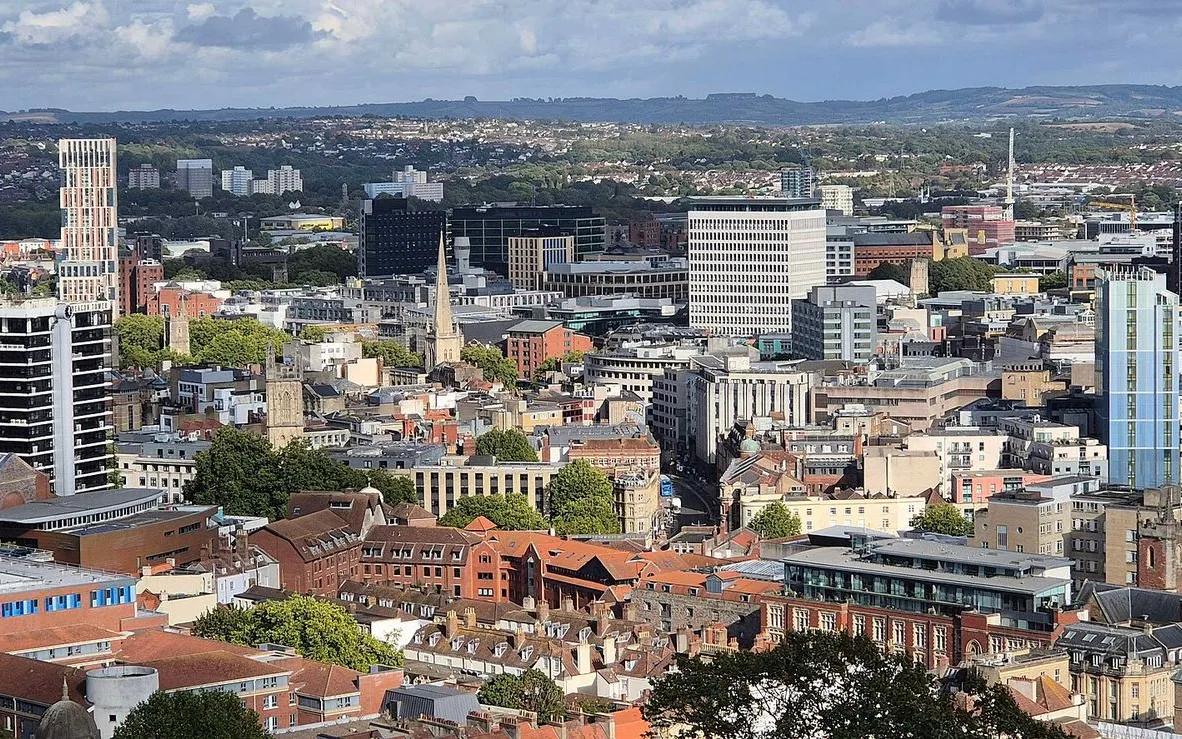
Old City and the Merchant QuarterThe local mix

Old City and the Merchant Quarter

Bristol's old trading core still works: a cathedral, the city's most famous Banksy, a stairway finished in 1669, a market inside a 1743 exchange, a theatre that opened in 1766, and the merchants' Georgian square on the marsh.

9 stops2.4 km40+ min
Gloucester RoadThe hidden side

Gloucester Road

Six stops on the middle stretch of Gloucester Road: sweets by the scoop, loose wholefoods, Turkish bakes, coffee, bread, a bookshop opened in 2021, and Bristol art with Cary Grant on the wall.

6 stops0.9 km20+ min
Clifton Village and the Suspension BridgeThe local mix

Clifton Village and the Suspension Bridge

A Georgian village on the edge of a gorge, an observatory in an old windmill, and a bridge you cross on foot. Lanes, views and engineering, ending at a free museum on the far side.

8 stops2 km35+ min

Provenance · last verified September 27, 2026

Built from the Wayside route itself: the stops, their order, and the walk between them.

Photo by Jaggery on Wikimedia Commons · CC BY-SA 2.0

Photo by Jaggery on Wikimedia Commons · CC BY-SA 2.0

Photo by Rodw on Wikimedia Commons · CC BY-SA 3.0

Photo by Jarred Kyle on Unsplash

Photo by Eirian Evans on Wikimedia Commons · CC BY-SA 2.0

Photo by Lewis Clarke on Wikimedia Commons · CC BY-SA 2.0

Photo by David Howard on Wikimedia Commons · CC BY-SA 2.0

Photo by Captain Galaxy on Wikimedia Commons · CC BY 4.0

Photo by Derek Harper on Wikimedia Commons · CC BY-SA 2.0

Photo by Jarred Kyle on Unsplash

Coming soon

Wayside isn't in the app stores yet, but it's in the works. Check back soon.