Avignon · Self-guided audio walk

Place de l'Horloge and the Old Town

The clock tower that has rung the hour since 1471, a market under a wall of living plants, and the everyday old town in between.

  • 5Stops
  • 1.3 kmDistance
  • 20+ minTime
Place de l'Horloge and the Old Town

Photo by Elliott Brown from Birmingham, United Kingdom on Wikimedia Commons

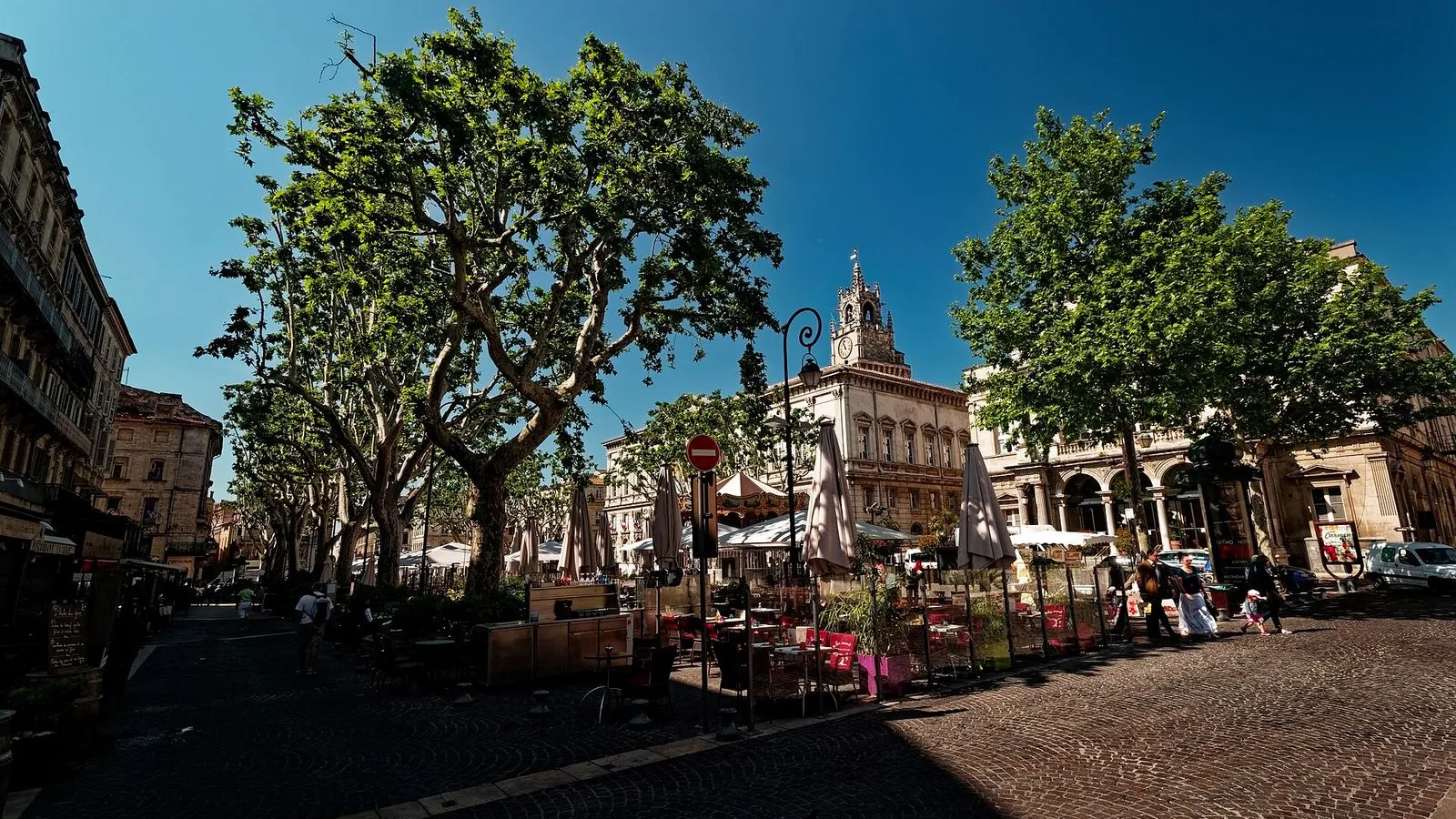
Place de l'Horloge is where Avignon does its daily business, and this walk follows that rhythm from the civic square to the market stalls. You will pass the town hall wrapped around a Gothic clock tower whose wooden jacquemarts have struck the hours since 1471, and the Italian-style opera house facing it.

A block away, the free church of Saint-Agricol keeps the relics of the city's patron saint, and the route ends at Les Halles, the covered market open Tuesday to Sunday mornings with Patrick Blanc's living wall on its north facade. Along the way, the free Musée Calvet opens its 18th-century mansion and its paintings for nothing. This is the Avignon locals actually use, the quiet counterpart to the papal monuments.

Hear it on the street

Get the turn-by-turn audio guide in the app. The narration plays itself as you reach each stop, hands-free and offline.

Stop by stop

The route

Interactive map of the route. The full stop list below works without it.

Place de l'HorlogeMust see

Photo by Txllxt TxllxT on Wikimedia Commons

Place de l'Horloge

0:00

The square that holds Avignon's civic heart, from the jacquemarts striking the hour to the neoclassical town hall and the Italian-style opera house.

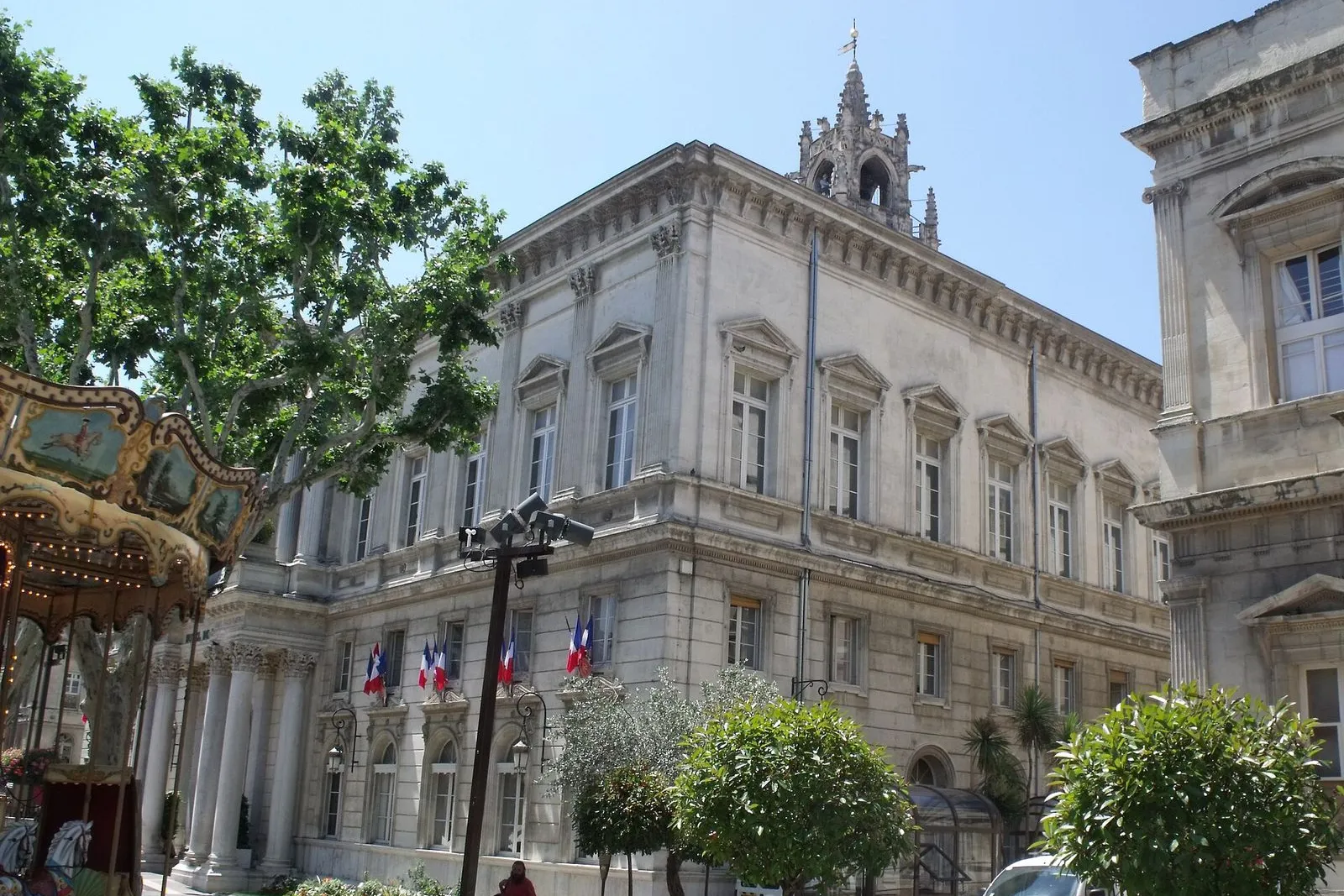
You are standing in the square Avignon treats as its living room. The Gothic tower rising behind the town hall was finished around 1363, and since 1471 its two wooden figures, Jacques and Jacotte, have struck the bell on the hour. The neoclassical town hall you see was built between 1845 and 1851, wrapped right around that older tower. Prosper Mérimée joked that the tower pokes out like the partridge necks in a Pithiviers pâté. Facing you across the square, the opera house rebuilt in 1847 works in the Italian style, with statues of Molière and Corneille by its door. This whole place sat on the old Roman forum, so the town has been doing its business here for a very long time.
≈2 min walk to the next stop
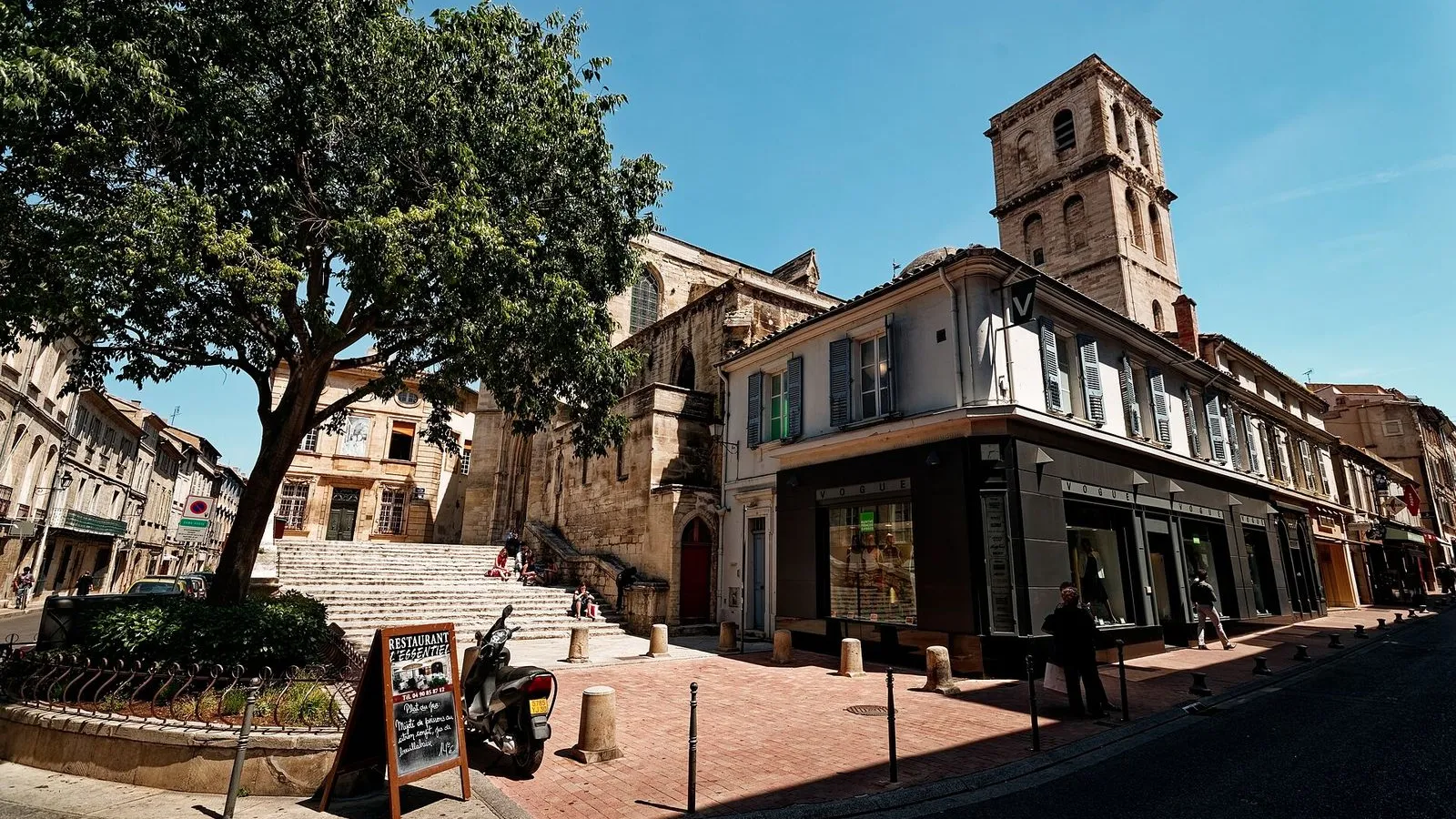
Église Saint-AgricolLocal pick

Photo by Txllxt TxllxT on Wikimedia Commons

Église Saint-Agricol

0:00

A 14th-century church that keeps the relics of Saint Agricol, Avignon's patron saint, behind its baroque altar.

One block off the square, this church is where Avignon keeps its patron. Saint Agricol was bishop here around the late 600s, and his relics still rest in a lead casket inside the baroque high altar, carved by Jean-Baptiste II Péru in 1767. The building itself went up in the early 1300s, replacing an older church from the Fustiers quarter, and Pope John XXII raised it to a collegiate church in 1321. It is the only church in Avignon from that century with side aisles. Look inside for paintings by Simon de Châlons and Nicolas Mignard, two of the best names of the Avignon school. Entry is free.

≈4 min walk to the next stop
Musée CalvetMust see

Photo by Txllxt TxllxT on Wikimedia Commons

Musée Calvet

0:00

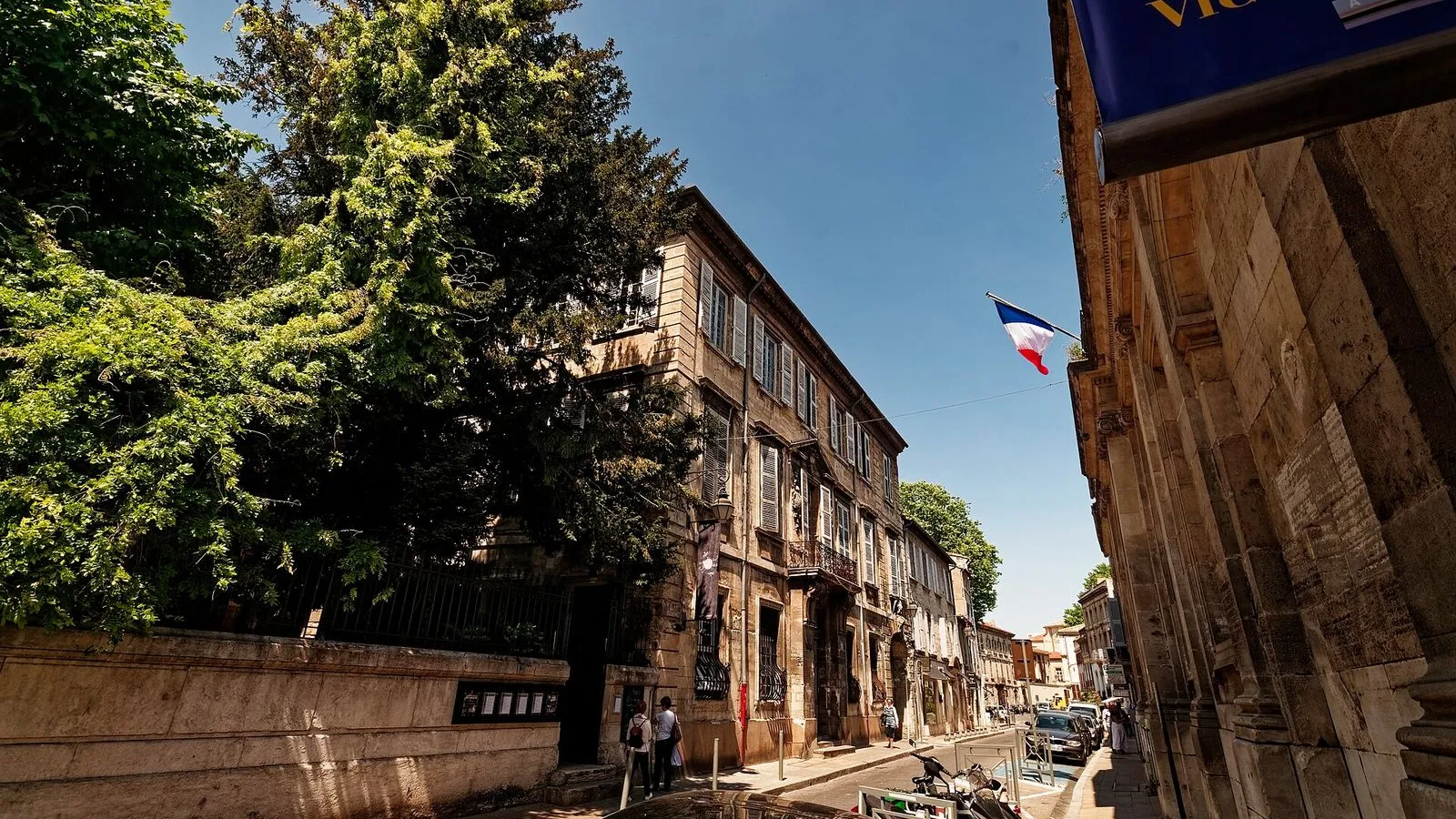
A free fine-arts museum in an 18th-century mansion on rue Joseph Vernet, packed with the Avignon school and a surprising Egyptian room.

You are at the entrance to one of France's most generous museums, and admission has been free since 2018. The building is the Hôtel de Villeneuve-Martignan, begun in the 1740s by the architect Jean-Baptiste Franque for a young city councillor and his wife, Henriette-Victoire de Sade, and never quite finished after the money ran out in 1754. The city bought it in 1833 to hold the collection that doctor Esprit Calvet left to Avignon in 1810. Inside you will find the Avignon school from the Renaissance to the Revolution, a whole gallery devoted to the Vernet family of painters, works by Manet and Bonnard, and three rooms of Egyptian pieces. The garden's big trees were already famous enough for Stendhal to mention them in 1837.

≈7 min walk to the next stop
Free preview ends here · stops 4 to 5 continue in the app

Rue des Marchands

The old merchant street that links the clock square to the market quarter, still doing the same job it has done for centuries.

in app

Les Halles d'Avignon

The covered market on Place Pie and the morning crowd around it, open Tuesday to Sunday from 6 am to 2 pm, with Patrick Blanc's living wall on its north facade.

in app
Good to know

Before you go

Is Les Halles open every day?

No. Les Halles opens Tuesday to Sunday from 6:00 to 14:00 and is closed on Monday, except during the July festival when hours can extend. Go before 14:00 for the full market.

SourceLes Halles d'Avignon
Are the museums on this walk free?

The Musée Calvet is free, and it fills an 18th-century mansion with Avignon school paintings and an Egyptian room. Collection Lambert charges for its temporary exhibitions, so check its current price before you go.

What makes Place de l'Horloge worth a stop?

It holds the town hall and the Gothic clock tower whose jacquemarts have struck the hour since 1471, with the Italian-style opera house facing it.

Provenance · last verified August 22, 2026

Built from the Wayside route itself: the stops, their order, and the walk between them.

Photo by Elliott Brown from Birmingham, United Kingdom on Wikimedia Commons · CC BY 2.0

Photo by Txllxt TxllxT on Wikimedia Commons · CC BY-SA 4.0

Photo by Txllxt TxllxT on Wikimedia Commons · CC BY-SA 4.0

Photo by Txllxt TxllxT on Wikimedia Commons · CC BY-SA 4.0

Photo by Txllxt TxllxT on Wikimedia Commons · CC BY-SA 4.0

Photo by Herbert Frank from Wien (Vienna), AT on Wikimedia Commons · CC BY 2.0

Coming soon

Wayside isn't in the app stores yet, but it's in the works. Check back soon.