Ghent · Self-guided audio walk

Gravensteen and the Patershol

Where Ghent butchered, tanned and hoisted, it now eats and drinks. A walk round the castle: mustard scooped from a barrel, torture instruments in a cellar, and the square where the city's biggest party still starts.

  • 7Stops
  • 1.1 kmDistance
  • 20+ minTime
Gravensteen and the Patershol

Photo by Michielverbeek on Wikimedia Commons

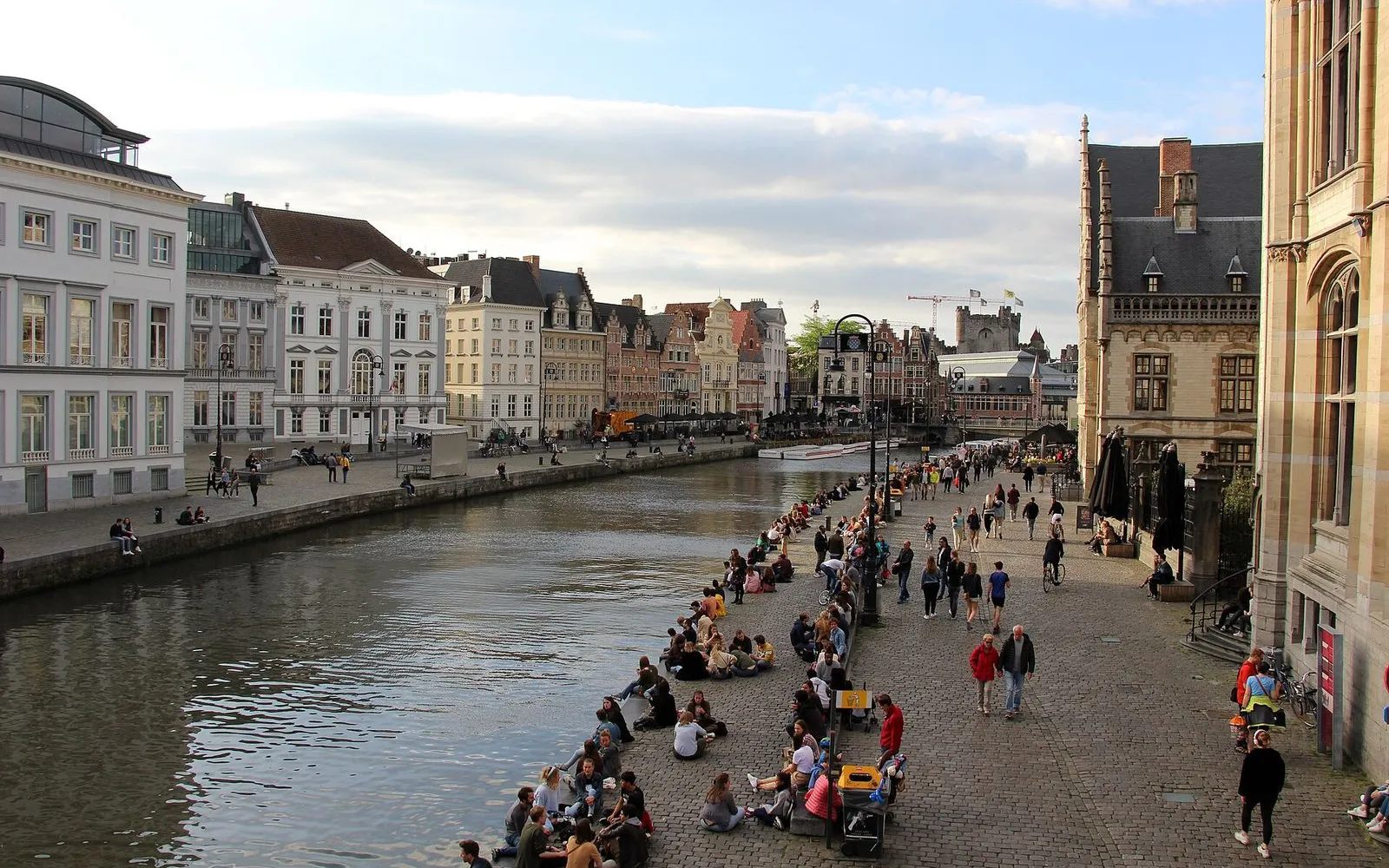
Ghent's Patershol is a quarter built for work, which now mostly serves dinner. This walk starts on Groentenmarkt, where a mustard shop has been scooping from the same barrel for two centuries, crosses Sint-Veerleplein for the Gravensteen, and then slips into the lanes behind the castle: the monastery that is now an art hall, the streets named for tanners and shoemakers, and the Kraanlei, where a wooden crane once unloaded wine.

It ends on Vrijdagmarkt, market since 1199, and at Sint-Jacobs, where the Gentse Feesten were revived at a café table in 1969. The Gravensteen is the one paid stop, and it earns it.

Count on about half an hour of walking and listening, longer if you go inside the castle, with food and drink the whole way.

Hear it on the street

Get the turn-by-turn audio guide in the app. The narration plays itself as you reach each stop, hands-free and offline.

Stop by stop

The route

Interactive map of the route. The full stop list below works without it.

GroentenmarktLocal pick

Photo by karel291 on Wikimedia Commons

Groentenmarkt

0:00

A fish market turned vegetable square, with mustard still scooped from the barrel.

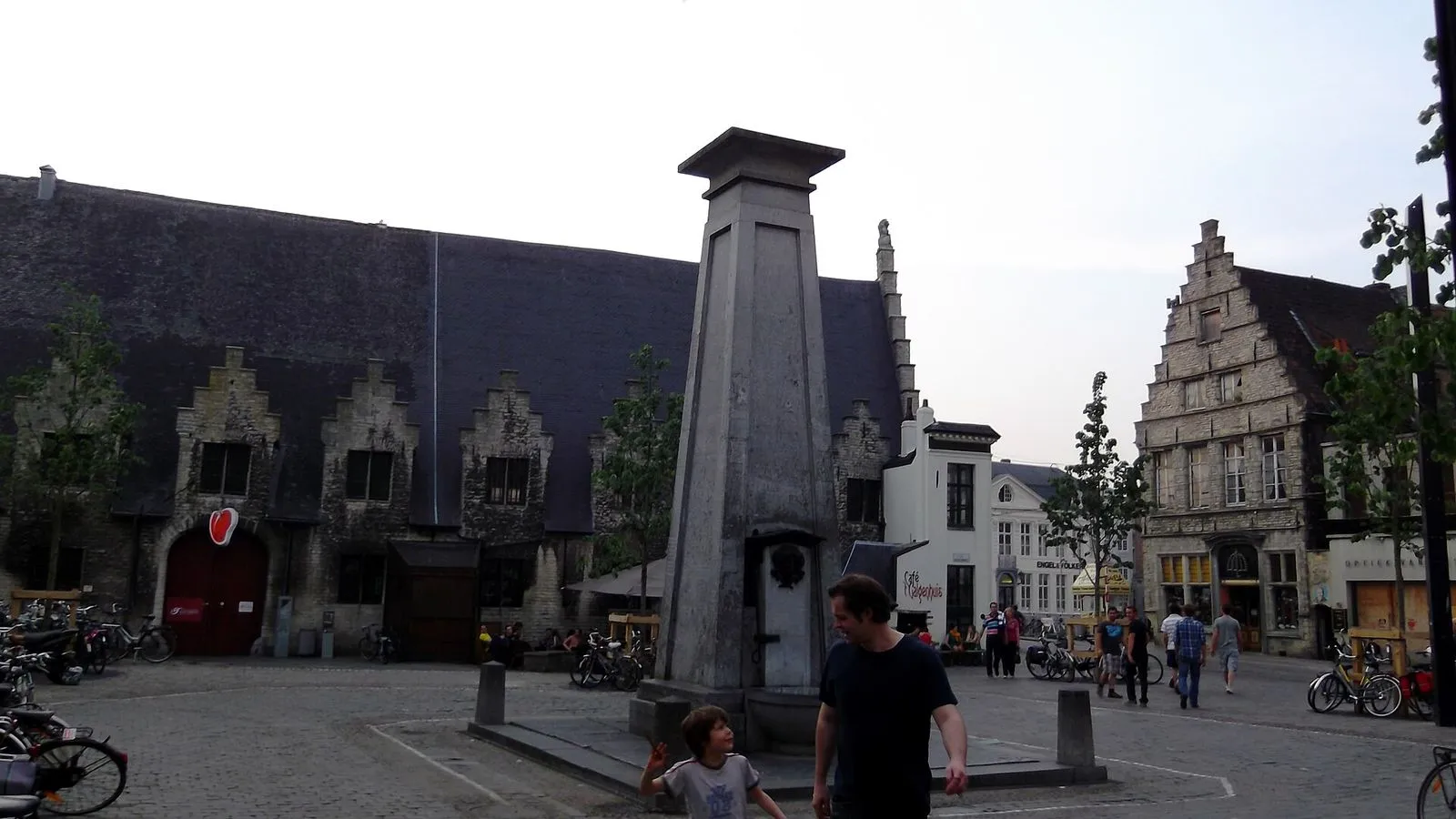
You're standing on what served as Ghent's fish market until the end of the 17th century, which is why the square still looks like a place of business rather than a stage. Two trades left their mark on it. The first is the Groot Vleeshuis, the covered meat hall the butchers' guild raised in the early 15th century, with the fish supply arriving by canal that ran under the building. It's under scaffolding for a restoration that runs to about the end of March 2027, so take it from the outside.

The second trade is still open. At number 3, behind a threshold worn hollow, Tierenteyn-Verlent sells mustard the way it has for two centuries: it's made in the cellar below, pumped up into a wooden barrel beside the counter, and scooped, while you watch, into hand-turned stone pots. Regulars bring their empty pot back to be filled again. The shop sign says 1790, though Petrus Tierenteyn, the man behind the recipe, was born in 1788.

≈3 min walk to the next stop
GravensteenMust see

Photo by Jolien E. on Unsplash

Gravensteen

0:00

The count's castle, its torture chamber, and a comedian in your ear.

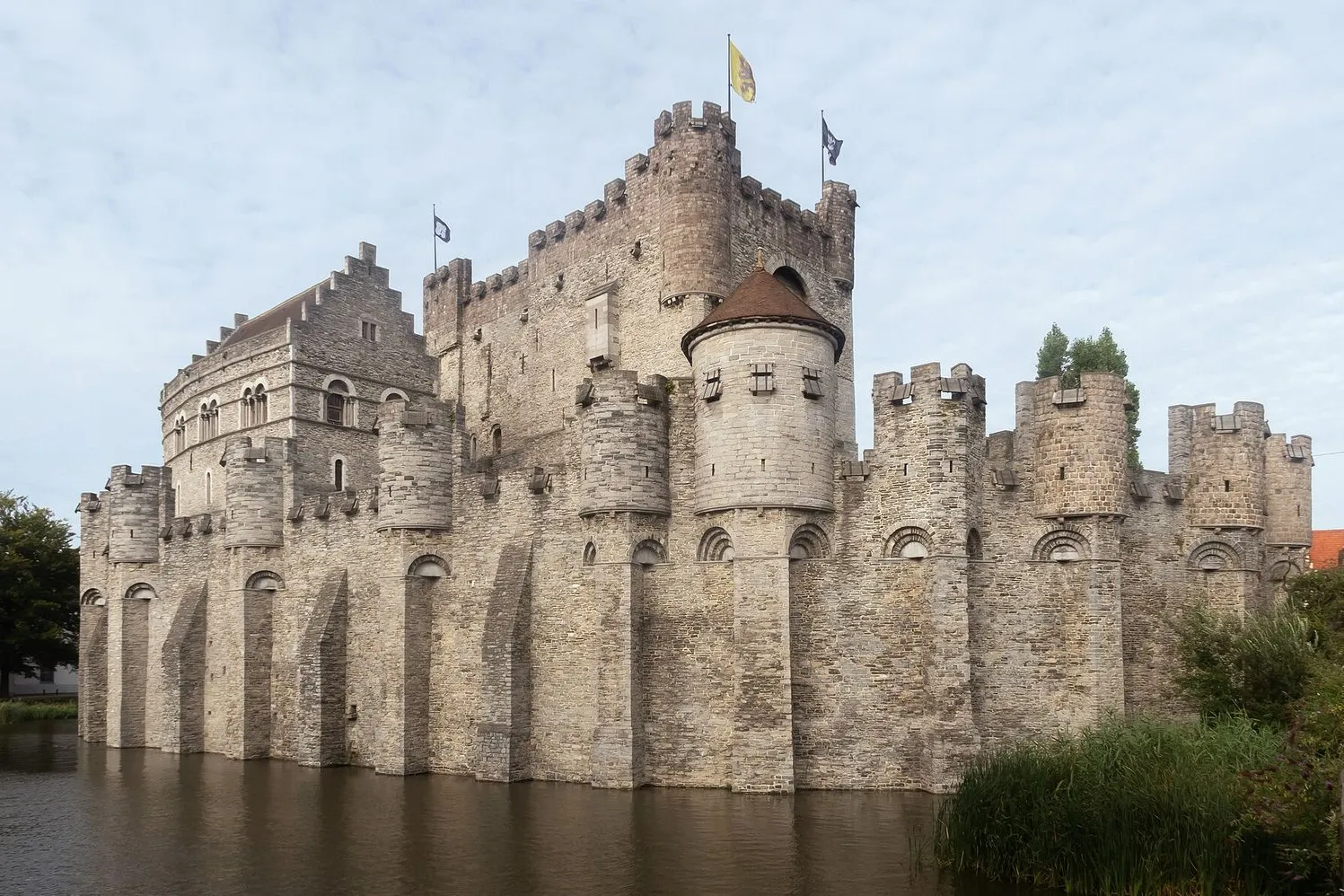
What rises in front of you is the Gravensteen, the castle Philip of Alsace built as count of Flanders, on an island that had been fortified since the 10th century. Philip turned the count's stone hall into the fortress you see, and then the building spent centuries changing jobs. From the early 15th century the Council of Flanders sat inside it, so the count's castle became a courthouse, and later a prison. One of those jobs is still on show.

The old storeroom in the cellar holds Ghent's collection of torture instruments, kept together in a low, rough room. If you go in, the tablet you're handed at the counter carries a comic audio tour written and narrated by the Ghent comedian Wouter Deprez, with drawings by Randall Casaer and eighteen video fragments, and it comes with your ticket. Deprez starts with Philip of Alsace and wanders off into crusaders and courtly love. Allow an hour and a half.

≈3 min walk to the next stop
Kunsthal GentLocal pick

Photo by Nieuwe haas on Wikimedia Commons

Kunsthal Gent

0:00

A Carmelite monastery where contemporary art has taken the church.

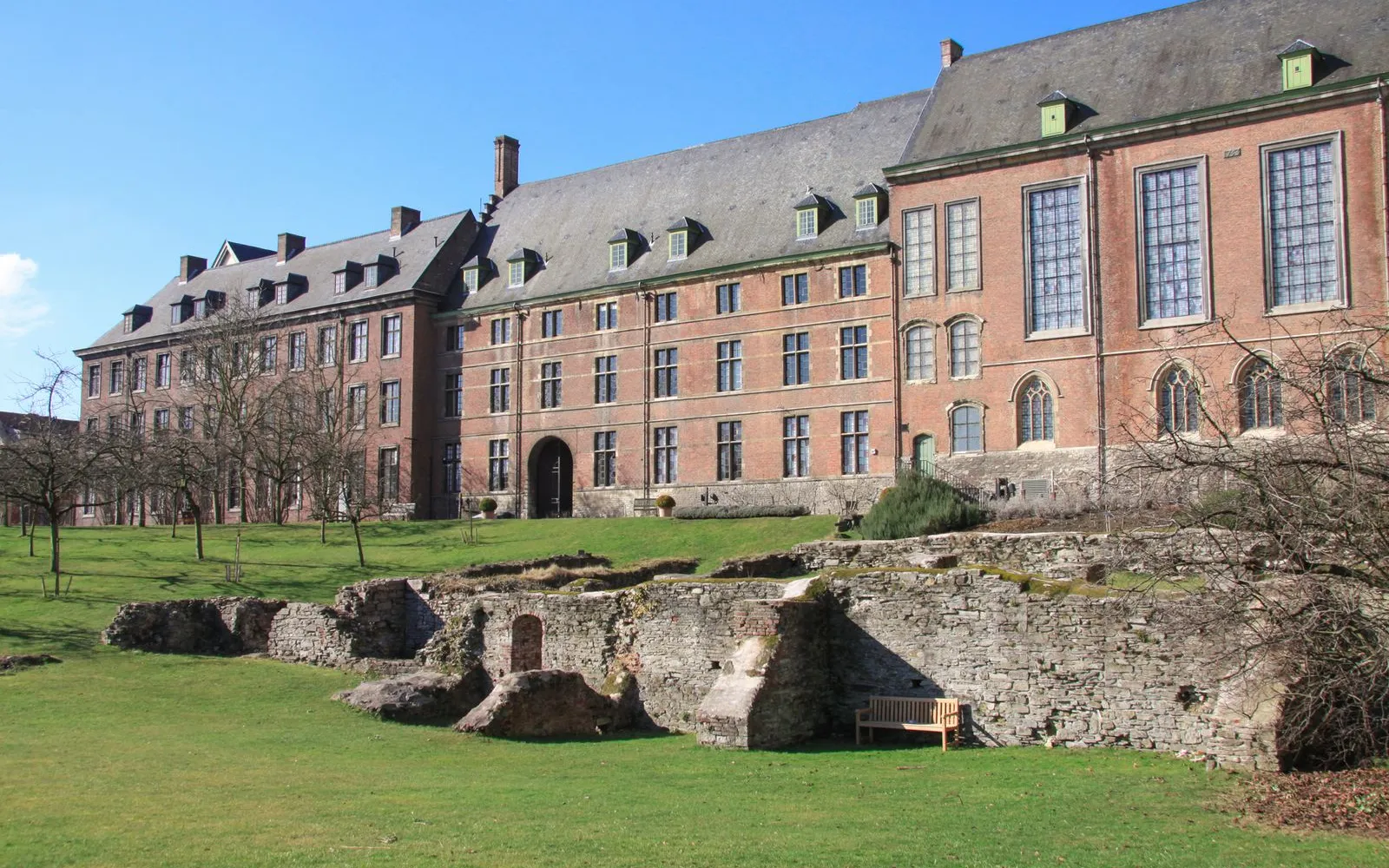
This plain doorway leads into a monastery that stopped being one. The Carmelites reached Ghent in 1272, pushed out of Mount Carmel in Haifa, where their order began, and the people here called them Vrouwebroers because they honoured Mary. By 1287 they held the old refuge of Cambron Abbey on this street, and they built for the next four centuries: a church, two cloisters, an infirmary, a brewery. The brewery sat on top of the Plotersgracht so it had water, and neighbours could draw from a vaulted passage underneath.

That water is where the quarter's name comes from, patershol. The last Carmelite left in 1841, and the buildings have been busy ever since, as an archaeological museum, a folklore museum, a store for opera scenery, and social housing. Since January 2019 the church and the old house have housed Kunsthal Gent, which shows contemporary art in exhibitions with no closing date. At weekends you can walk in and pay what you can; on weekdays the rooms are an artists' workplace.

≈2 min walk to the next stop
Free preview ends here · stops 4 to 7 continue in the app

Plotersgracht

Medieval lanes, a filled-in canal, and restaurants in almost every doorway.

in app

Huis van Alijn

The city's daily life museum, in a 14th-century almshouse on the water.

in app

Vrijdagmarkt

Market since 1199, and a bronze Artevelde pointing at England.

in app

Sint-Jacobskerk

Belgium's oldest Romanesque church with two towers, where the city's feast began.

in app
Good to know

Before you go

What does the Gravensteen ticket cost, and what is included?

The Gravensteen costs €15 for adults, audio guide included, voiced by the Flemish comedian Wouter Deprez. Ghent residents and UiTPAS holders pay €10.50, ages 19 to 25 pay €7.50, ages 13 to 18 pay €3, and children up to 12 go free. The castle is open daily 10:00 to 18:00 with last tickets at 16:40.

SourceHistorische Huizen Gent: Gravensteen tarievenVisit Gent: Gravensteen
When is the market on Vrijdagmarkt?

The Vrijdagmarkt market is held on Fridays; the Saturday market ended in September 2026. The square itself has been a market since 1199, with the bronze Artevelde pointing at England.

Where do we eat around this walk?

The Patershol is the restaurant quarter: the lanes off Plotersgracht have restaurants in almost every doorway, and the mustard on Groentenmarkt is still scooped from the barrel. The Groot Vleeshuis on Groentenmarkt is closed for restoration until about the end of March 2027, so make the square a mustard and shopping stop and eat in the Patershol.

Provenance · last verified September 27, 2026

Built from the Wayside route itself: the stops, their order, and the walk between them.

Photo by Michielverbeek on Wikimedia Commons · CC BY-SA 4.0

Photo by karel291 on Wikimedia Commons · CC BY 3.0

Photo by Jolien E. on Unsplash

Photo by Nieuwe haas on Wikimedia Commons · CC BY-SA 4.0

Photo by Wernervc on Wikimedia Commons · CC BY-SA 3.0

Photo by Fred Romero from Paris, France on Wikimedia Commons · CC BY 2.0

Coming soon

Wayside isn't in the app stores yet, but it's in the works. Check back soon.