New York City · Self-guided audio walk

Midtown Manhattan: The Greatest Skyline on Foot

From the triangular audacity of the Flatiron to the electric chaos of Times Square, this is Midtown as it was meant to be experienced — one triumphant mile on foot.

  • 8Stops
  • 137 minOn foot
  • 4.8 kmDistance
Midtown Manhattan: The Greatest Skyline on Foot

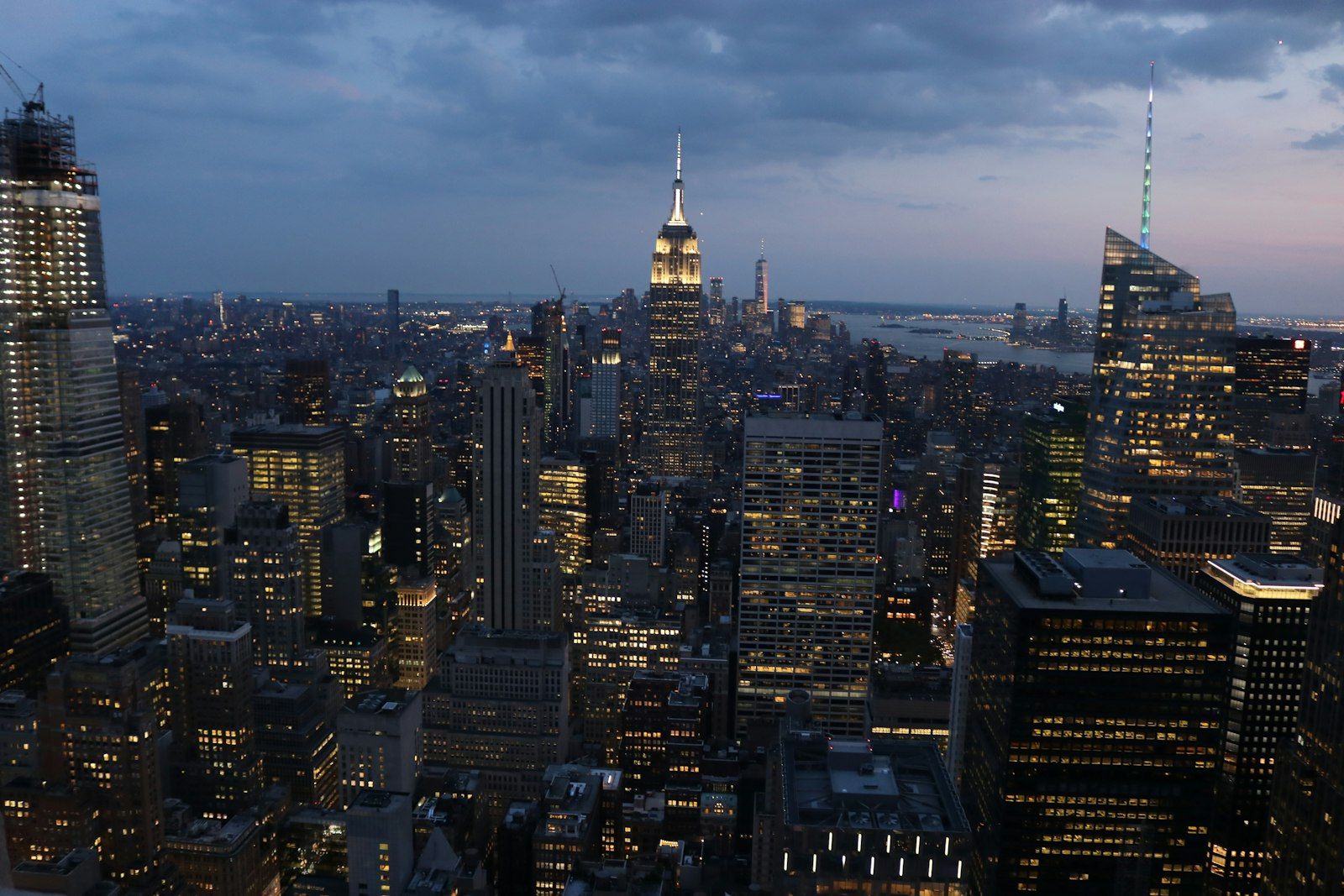
No city on earth concentrates this much ambition into this little space. In a single south-to-north sweep through Midtown, you move through a century of New York's grandest architectural gestures — Art Deco towers that still make your neck crane, Beaux-Arts palaces built to outlast empires, and a park that slips between skyscrapers like a long exhale.

The route is deliberately progressive: each stop raises the stakes. You begin at the Flatiron's impossible wedge and end at the sensory overload of Times Square, threading Grand Central's celestial ceiling, the Chrysler's eagle-crowned crown, and the gilded Prometheus of Rockefeller Center along the way.

At a relaxed sightseeing pace — pausing for photos, poking into lobbies — the walk runs around two hours. Every stop is free to approach from the outside; several reward a few minutes inside. Wear comfortable shoes and come hungry: Midtown's side streets are full of places to fuel up.

Hear it on the street

Get the turn-by-turn audio guide in the app. The narration plays itself as you reach each stop, hands-free and offline.

Stop by stop

The route

Interactive map of the route. The full stop list below works without it.

Must see

Flatiron Building & Madison Square Park

The triangular skyscraper that rewrote the rules of New York architecture.

You are standing at one of the most photographed corners in New York City, and the reason is right in front of you. The Flatiron Building rises like the prow of an enormous stone ship — twenty-two stories of limestone and terra cotta wedged into the acute angle where Broadway crosses Fifth Avenue at Twenty-third Street. When it was completed in nineteen oh two, New Yorkers were convinced it would topple in the first serious wind. It didn't. Designed by Daniel Burnham, the building used a revolutionary steel skeleton that let it soar to nearly three hundred feet without the thick masonry walls that older buildings required. Spin around for a moment and take in Madison Square Park behind you. It is one of the quietest green spaces in the lower Midtown grid — shaded benches, a good coffee kiosk, and a clear view of the building's famous sharp nose. The park also has a legitimate claim to history: the original Madison Square Garden — a lavish venue designed by Stanford White — once stood on its northeast corner. From here the whole walk opens northward. Broadway and Fifth Avenue diverge ahead of you, and Midtown proper begins.

Open in Google Maps
≈15 min walk to the next stop
Empire State BuildingMust see

Empire State Building

The Art Deco titan that still defines the Manhattan skyline after ninety years.

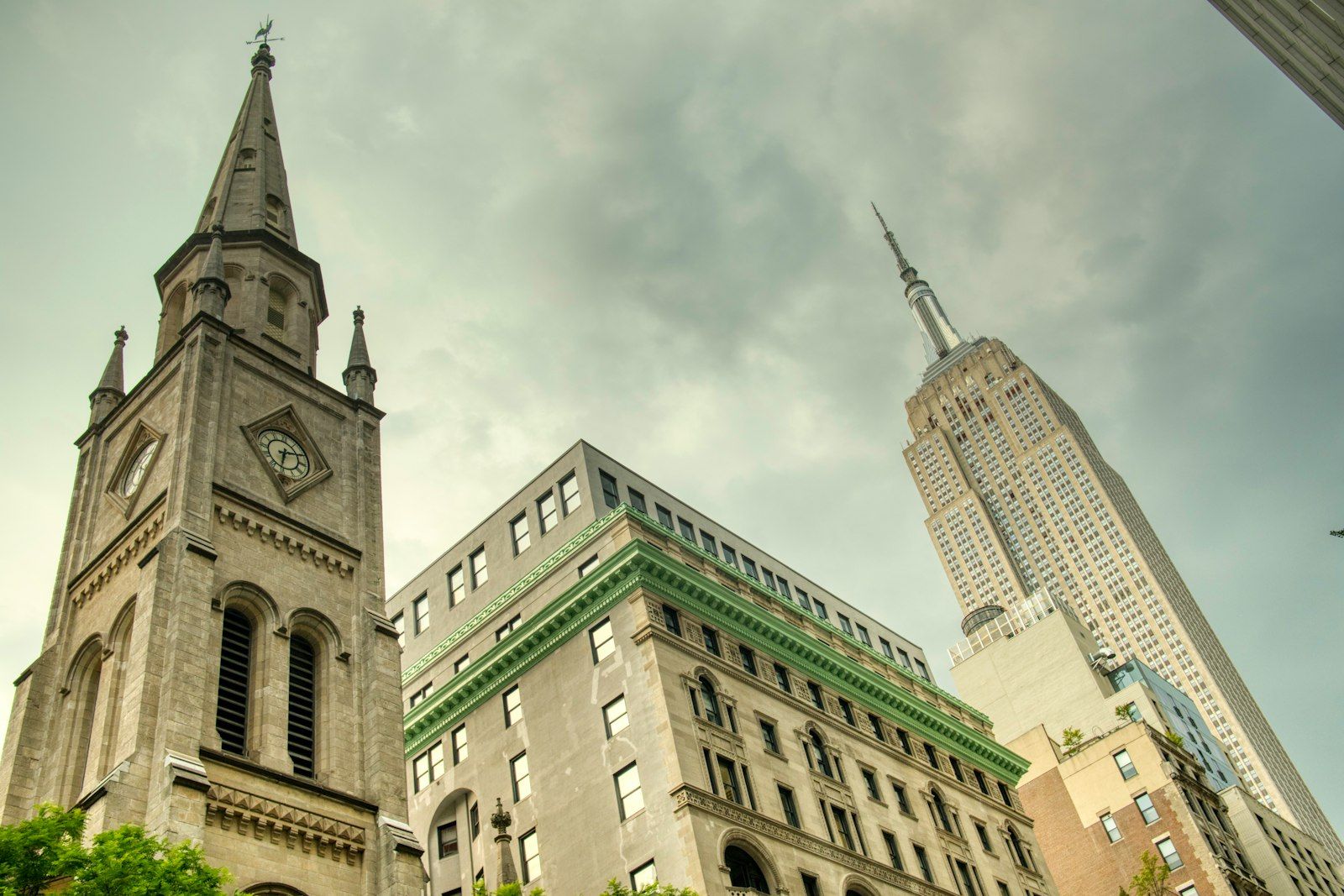
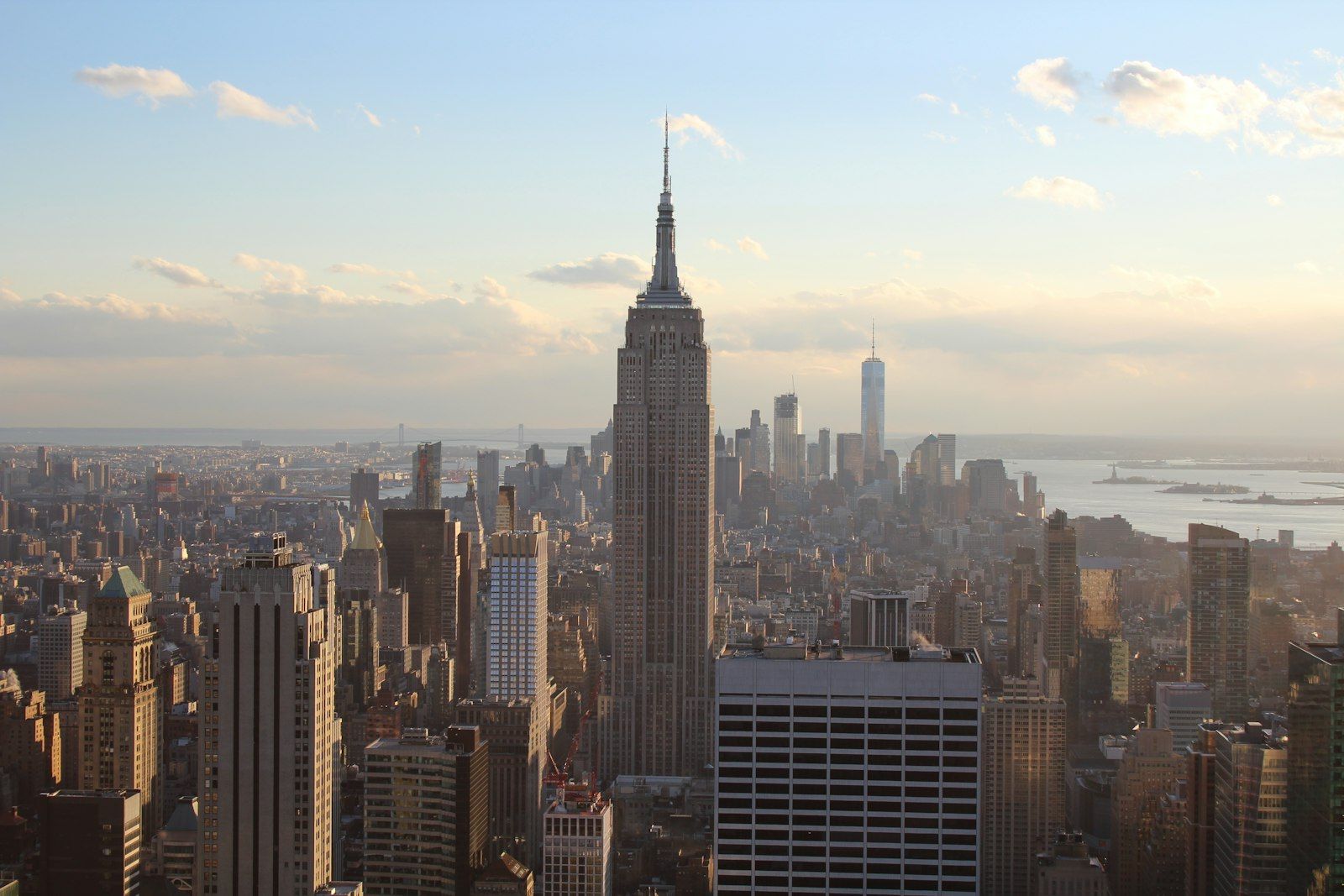
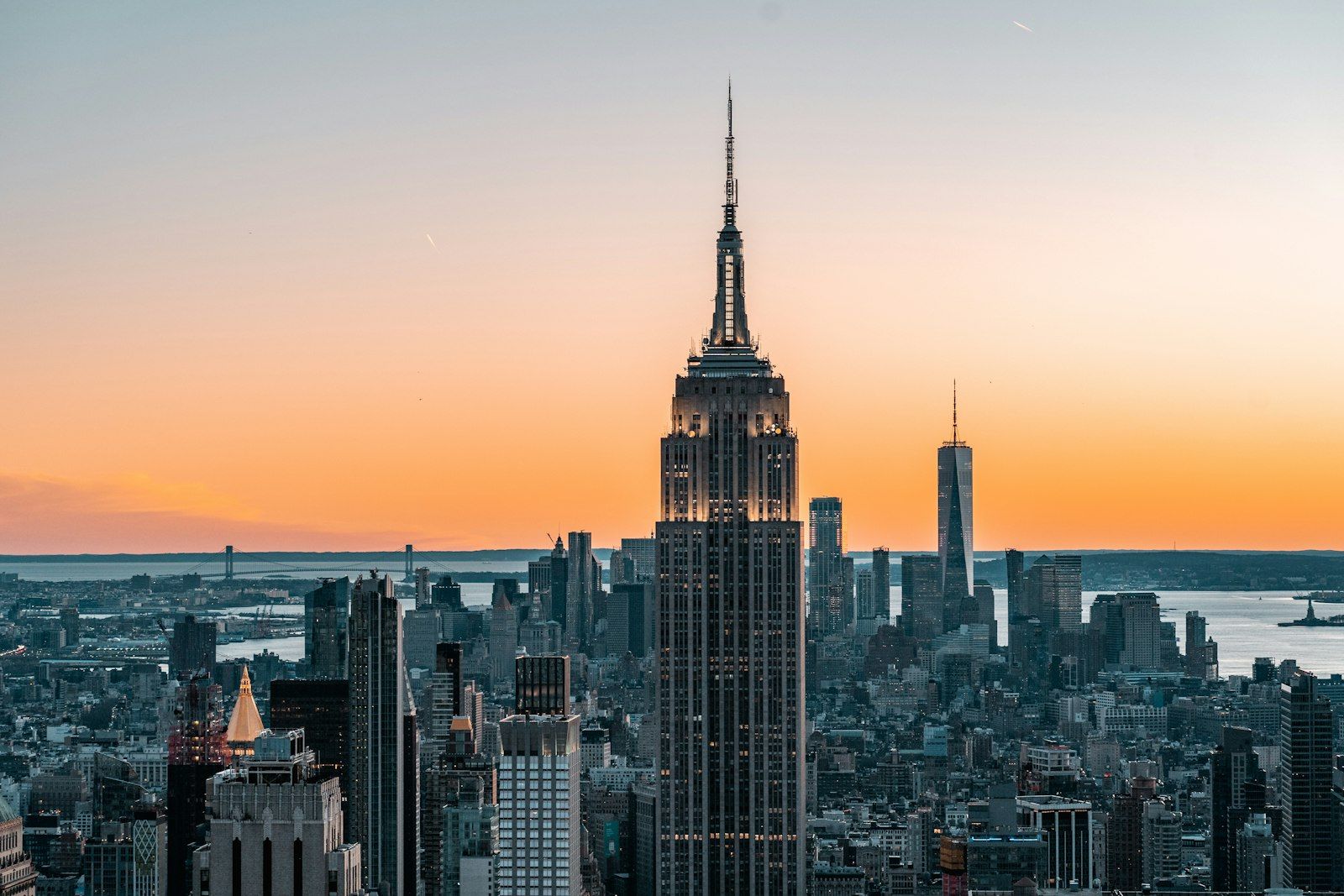
Tilt your head back. All the way back. The Empire State Building rises one thousand two hundred and fifty feet above the street — and that is just to the top floor. Add the spire and antenna and you hit one thousand four hundred and fifty-four feet. For forty years after it opened in nineteen thirty-one it was the tallest building in the world, and it was built in an almost absurd hurry: construction began on the seventeenth of March, nineteen thirty, and the whole thing was finished in just four hundred and ten days. That is four and a half floors of steel framework rising every single week. The architects were Shreve, Lamb and Harmon, and the style is pure Art Deco — setback tiers climbing toward a needle that was originally designed as a mooring mast for dirigibles. It never worked as one, but the image is still wonderful. Step into the lobby if you have not already: the ceiling murals and aluminum reliefs are among the finest Art Deco interiors in the city, and the Landmarks Preservation Commission agrees — the lobby is itself a designated landmark. If you want to go up to the eighty-sixth-floor observatory, budget at least an extra forty-five minutes. Otherwise, the view from here on Fifth Avenue is plenty dramatic.

Open in Google Maps
≈10 min walk to the next stop
Must see

New York Public Library & Bryant Park

A Beaux-Arts marble palace flanked by a park that is Manhattan's best-kept breather.

You are standing before the Stephen A. Schwarzman Building — the main branch of the New York Public Library — and it is one of the great civic gestures in American architecture. The building was designed by Carrère and Hastings in the Beaux-Arts style and opened in nineteen eleven, and it sits on this block of Fifth Avenue between Fortieth and Forty-second Street with the serene confidence of something built to last forever. Two marble lions flank the front steps: they have been here since opening day, and a mayor during the Great Depression named them Patience and Fortitude to reflect the qualities New Yorkers would need to survive hard times. The names stuck. If you step inside the main hall, you will find one of the most beautiful reading rooms in the world — a vast, cathedral-like space with painted ceilings and long oak tables where anyone can sit and read. It is free, it is open, and it is a reminder that New York built civic institutions with the same ambition it applied to commerce. Now walk around to the back. Behind the library, Bryant Park opens up — a green rectangle ringed by plane trees, with movable chairs and a gravel promenade. It is one of the best places in Midtown to simply stop and breathe before continuing north.

Open in Google Maps
≈7 min walk to the next stop
Grand Central TerminalMust see

Grand Central Terminal

The cathedral of American rail travel, with a ceiling that makes you forget you are commuting.

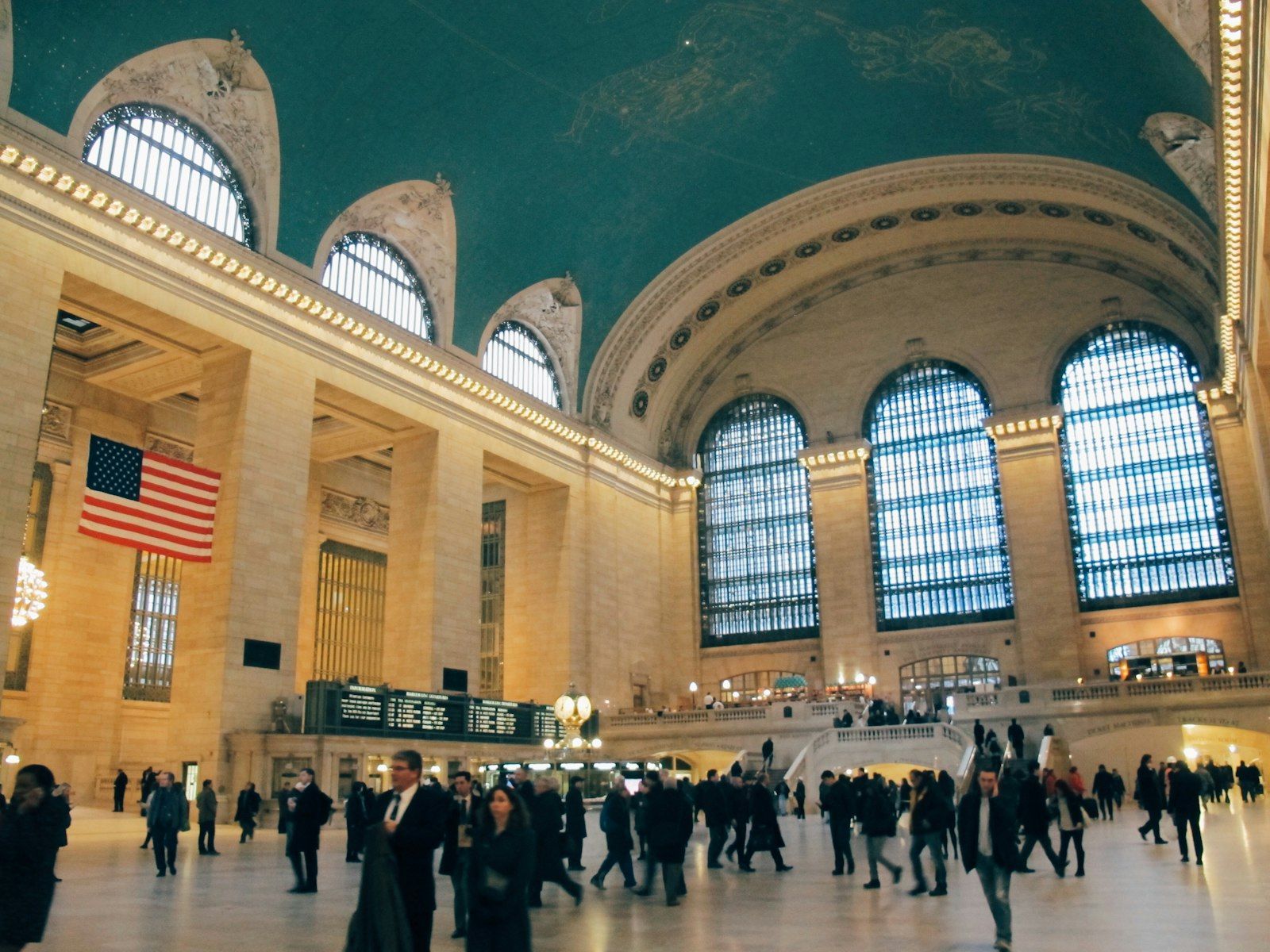
Walk east on Forty-second Street and enter Grand Central Terminal from the Vanderbilt Avenue side or through any of the street-level doors — then stop the moment you step inside the Main Concourse and look up. The vaulted ceiling soars one hundred and twenty feet overhead, painted in turquoise with the constellations of the winter sky picked out in gold leaf. There are two thousand five hundred stars up there, and when the terminal opened on the second of February, nineteen thirteen, that ceiling was the largest painted mural in the United States. The building was designed by the firms Reed and Stem and Warren and Wetmore, and it replaced an earlier Grand Central Depot that Cornelius Vanderbilt had built in eighteen seventy-one. By the nineteen fifties, declining rail traffic convinced the owners to consider demolishing it entirely — one proposal called for an eighty-story tower on this very site. A preservation campaign led in part by Jacqueline Kennedy Onassis saved it, and the terminal was declared a New York City landmark in nineteen seventy-eight. Spend a few minutes exploring the lower level and the famous Whispering Gallery near the Oyster Bar — two people standing in opposite corners of the arched corridor can hear each other's whispers perfectly. The acoustics still astonish.

Open in Google Maps
≈3 min walk to the next stop
Chrysler BuildingLocal pick

Chrysler Building

The most beautiful skyscraper ever built, and most New Yorkers walk past it every day.

Step out of Grand Central onto Lexington Avenue and look one block north. The Chrysler Building is right there, its eagle-headed gargoyles jutting from the sixty-first floor and its stainless-steel crown radiating arcs of light like a metallic sunrise. This is, by the judgment of many architects and nearly all passersby, the single most beautiful skyscraper ever built — and it is startlingly undervisited considering how much it deserves your attention. Designed by William Van Alen and completed in nineteen thirty, the Chrysler Building was the tallest building in the world for exactly eleven months — until the Empire State Building you just left surpassed it. Van Alen had assembled the spire secretly inside the building's frame and raised it through the roof in a single dramatic move to beat out a rival who was also racing for the height record. The eagles at the sixty-first floor are modeled on Chrysler automobile hood ornaments, and the steel cladding of the crown has never been painted — it is original, and it still gleams. The lobby is open to the public on weekdays. The floor is African marble, the ceiling murals depict transportation and industry, and the elevator doors are inlaid with exotic woods. Walk in if you can — it takes only five minutes and it is extraordinary.

Open in Google Maps
≈13 min walk to the next stop
St. Patrick's CathedralMust see

St. Patrick's Cathedral

Gothic Revival grandeur holding its own between Midtown's glass towers.

You have emerged onto Fifth Avenue at Fiftieth Street, and across the street the twin spires of Saint Patrick's Cathedral rise three hundred and thirty feet above the sidewalk, framing a slice of open sky in the middle of the most expensive real estate corridor on earth. The contrast with the glass and steel towers crowding around it is part of what makes this place so striking — it looks as if it wandered in from medieval France and simply refused to leave. The cathedral was designed by James Renwick Jr., and its cornerstone was laid on the fifteenth of August, eighteen fifty-eight. It opened on the twenty-fifth of May, eighteen seventy-nine — though the spires were not completed until October of eighteen eighty-eight. The exterior is white marble from Massachusetts and New York, and in its day it was the largest Gothic Revival church in the United States. Step inside. The nave is three hundred and thirty feet long, the ceiling vaults climb to one hundred feet, and the stained-glass windows — made in Chartres and Birmingham among other places — cast long pools of colored light across the stone floor. Fifty-first Street runs right along the north wall, and the skyscrapers of Midtown press in from every direction, but inside it is genuinely quiet. Take a moment.

Open in Google Maps
≈4 min walk to the next stop
Rockefeller CenterMust see

Rockefeller Center

The greatest urban planning project of the Depression era, still humming with life.

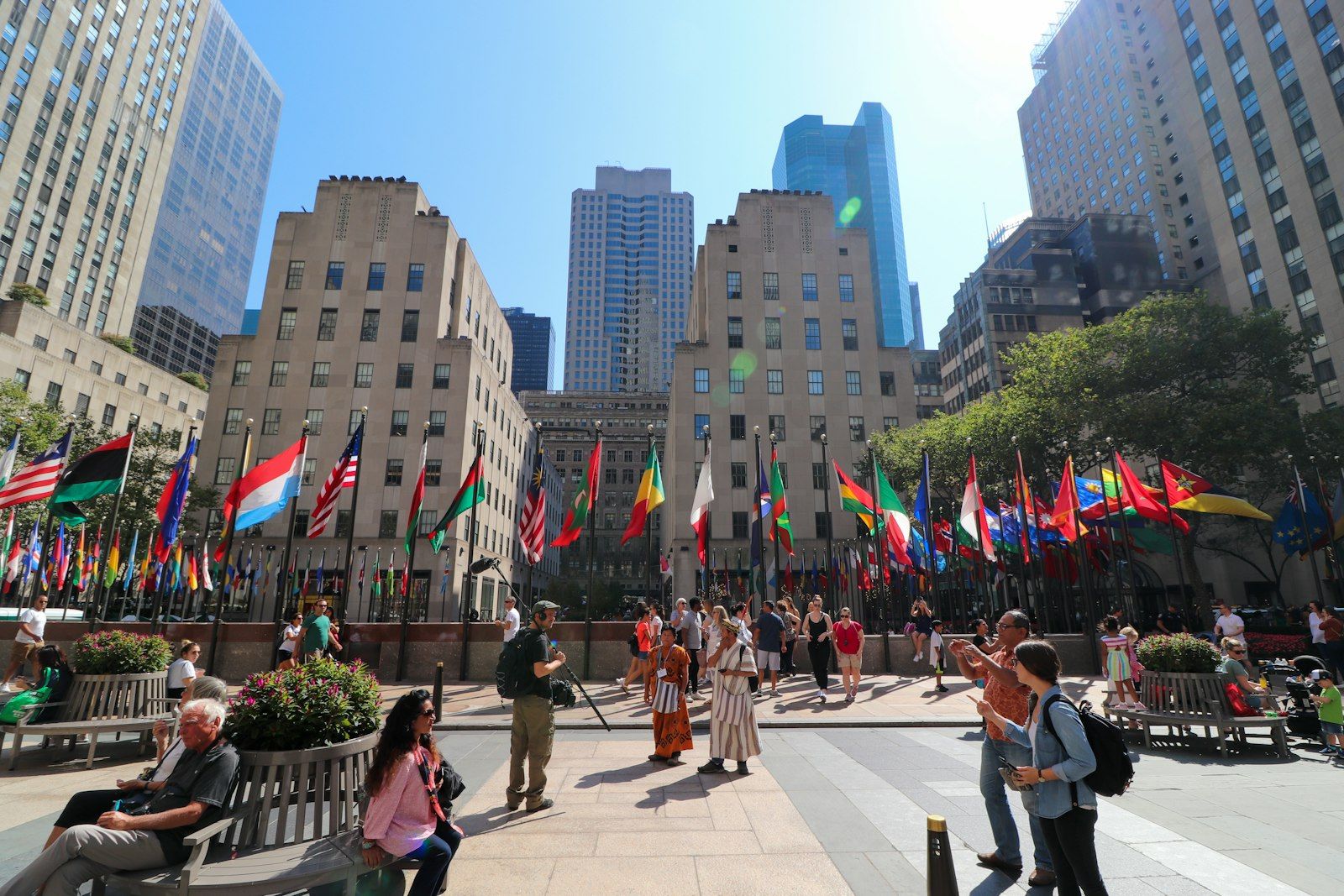
Cross Fifth Avenue and walk west through the Channel Gardens — the long, narrow promenade between the British Empire Building on your left and La Maison Française on your right. These two six-story limestone buildings frame a series of fountain pools and seasonal plantings that funnel your eye straight toward Thirty Rockefeller Plaza, the seventy-story centerpiece tower rising directly ahead. The Channel Gardens were designed this way on purpose: they are a visual axis, an invitation to keep walking. At the end of the Channel Gardens, you arrive at the sunken plaza in front of Thirty Rockefeller Plaza, watched over by the gilded bronze statue of Prometheus. Cast in nineteen thirty-four by sculptor Paul Manship, Prometheus is holding the fire he stole from the gods in his outstretched hand. In winter the plaza becomes the most famous ice-skating rink in the world; in summer it fills with café tables. Either way, the gold catches the light beautifully. Rockefeller Center as a complex covers twenty-two acres and nineteen buildings — all fourteen of the original Art Deco structures were completed between nineteen thirty-one and nineteen forty. The whole thing was commissioned and built during the Great Depression, which makes its scale and confidence almost miraculous. It became a New York City landmark in nineteen eighty-five.

Open in Google Maps
≈10 min walk to the next stop
Times SquareMust see

Times Square

The crossroads of the world — overwhelming, absurd, and completely unforgettable.

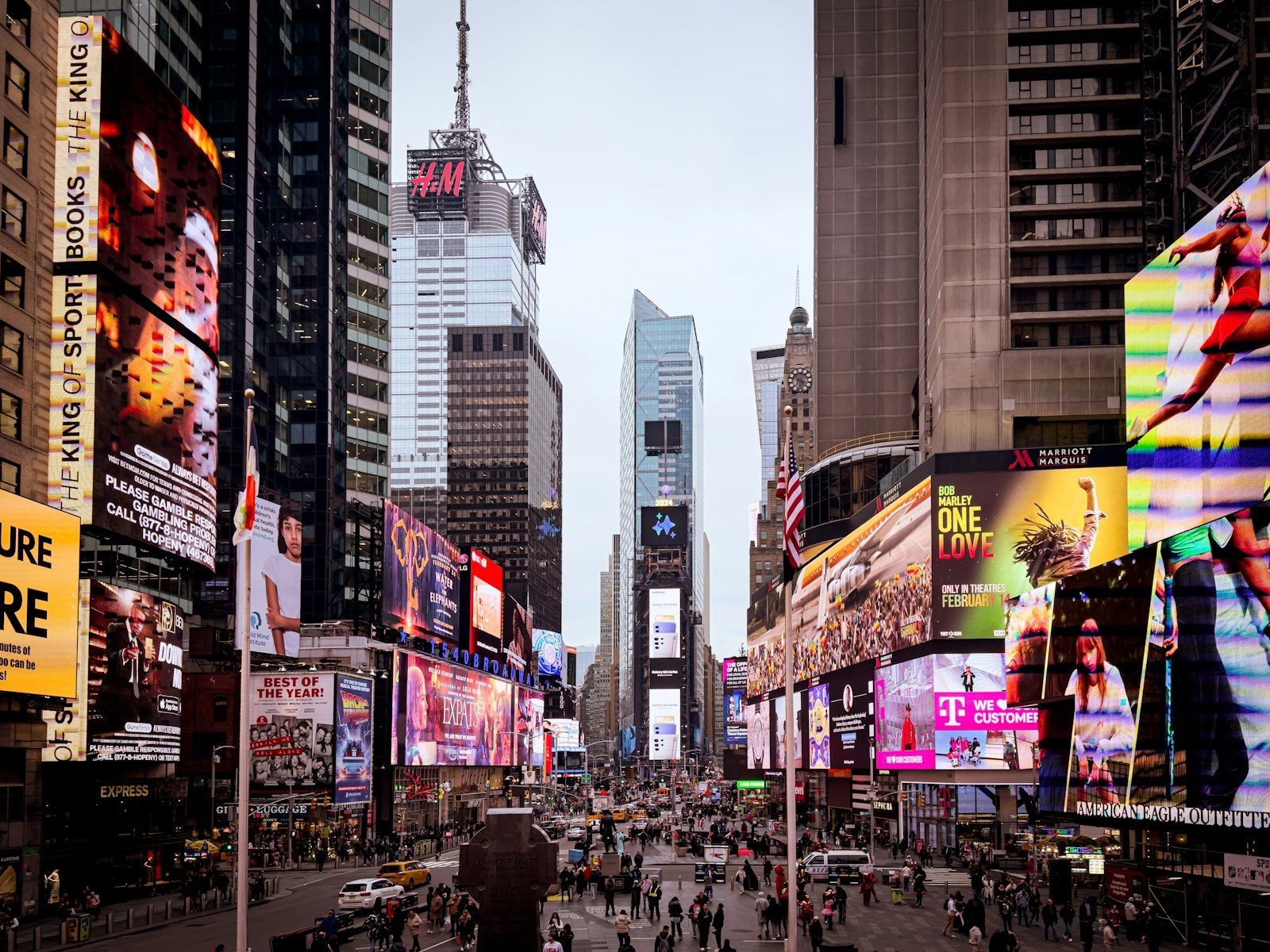
Walk west on Forty-ninth or Fiftieth Street and step into Broadway. You are now in Times Square, and the first thing you notice is that the scale of everything changes. The billboards are not advertisements — they are buildings made of light, stacked ten, fifteen stories high, competing with each other for your attention. The noise is different here too: honking, music from competing speakers, someone in a superhero costume asking for a tip, the churn of the crowd moving in every direction at once. Times Square is named after the New York Times, which moved its headquarters to the new Times Tower at this intersection in nineteen oh four and marked the occasion with a fireworks display on New Year's Eve — the beginning of a tradition that has continued, with a ball drop replacing the fireworks, every year since. The square occupies the bowtie intersection where Broadway crosses Seventh Avenue between Forty-second and Forty-seventh Street, and on a busy evening more than three hundred thousand people pass through it. The best thing to do here is exactly what feels wrong: slow down. Find a spot on one of the pedestrian plazas — the red bleacher steps between Forty-sixth and Forty-seventh Street are perfect — and just watch. The city is performing for you. This is where your walk ends, in the most New York possible way: completely surrounded by it.

Open in Google Maps
Good to know

Before you go

Is the Midtown Manhattan: The Greatest Skyline on Foot walk free?

Your first tour is free, no account needed. After that you can buy tours one at a time, or subscribe for access to every city. Cancel whenever you want.

How far is it, and how long does it take?

The route runs about 4.8 km across 8 stops and takes roughly 137 min at an easy pace, plus however long you linger along the way.

When should I start?

Any time of day works. You can pause at any stop and pick the route back up later, so there is no need to finish it in one go.

Does the audio work offline?

Yes. Download the walk over Wi-Fi before you set out and the audio, map, and directions all run offline. Handy for skipping roaming charges abroad.

Coming soon

Wayside isn't in the app stores yet, but it's in the works. Check back soon.